CremeBrulee writes:
“That's the problem with this shit. Any name you might come up with will have some sort of stigma attached to it by someone. I guess you could start naming things after inanimate objects...”
I don’t think we will ever run out of genuine patriots and heroes who fought for worthy American (and universal) values. You are right, though, that we needn’t name forts after Generals only. Sure there may always be differences concerning this or that name, but at least let us not choose the names of men who fought against the United States in a war that defended slavery.
Or ideas even. Ft. Liberty, Ft. Freedom, Ft. Independence. I am not up to date on naming conventions for the military. Once you go down the rabbit hole of changing names though, you should be prepared to change everything named after anything or anyone to suit the whims of how people feel about something at any given time or according to their political ideology.
I love the idea of Ft. Liberty, Ft. Freedom, Ft. Independence. It would be hard to change these names once folks got used to them. Even the South during the Civil War claimed it was fighting for these ideals. Plus, maybe, hopefully, it would have a salutary subliminal influence on our military, and serve as a reminder of what we are supposed to be fighting for when we fight overseas.
This is meant as an insult to southern Americans, and it would be seen that way.
This is about insulting and marginalizing a group of people.
This is proof that Diversity and Multi-culturalism, as ideas and policy goals, were always lies.
Renaming Fort Benning — named after a diehard racist Confederate slaveholder (see comment #110) — calling it say “Fort Liberty“ — would be an “insult to Southern Americans...” ?
Not to any Americans (wherever they live) ... with their heads screwed on right!
CremeBrulee writes:
“That's the problem with this shit. Any name you might come up with will have some sort of stigma attached to it by someone. I guess you could start naming things after inanimate objects...”
I don’t think we will ever run out of genuine patriots and heroes who fought for worthy American (and universal) values. You are right, though, that we needn’t name forts after Generals only. Sure there may always be differences concerning this or that name, but at least let us not choose the names of men who fought against the United States in a war that defended slavery.
Or ideas even. Ft. Liberty, Ft. Freedom, Ft. Independence. I am not up to date on naming conventions for the military. Once you go down the rabbit hole of changing names though, you should be prepared to change everything named after anything or anyone to suit the whims of how people feel about something at any given time or according to their political ideology.
I love the idea of Ft. Liberty, Ft. Freedom, Ft. Independence. It would be hard to change these names once folks got used to them. Even the South during the Civil War claimed it was fighting for these ideals. Plus, maybe, hopefully, it would have a salutary subliminal influence on our military, and serve as a reminder of what we are supposed to be fighting for when we fight overseas.
This is meant as an insult to southern Americans, and it would be seen that way.
This is about insulting and marginalizing a group of people.
This is proof that Diversity and Multi-culturalism, as ideas and policy goals, were always lies.
Renaming Fort Benning — named after a diehard racist Confederate slaveholder (see comment #110) — calling it say “Fort Liberty“ — would be an “insult to Southern Americans...” ?
Not to any Americans (wherever they live) ... with their heads screwed on right!
SUre it would. It would be saying that Southern history and heritage is a shame that they bear, that they alone among all groups, are not allowed to celebrate their history.
That is an insult. YOur denial of that obvious fact is also offensive.
CremeBrulee writes:
“That's the problem with this shit. Any name you might come up with will have some sort of stigma attached to it by someone. I guess you could start naming things after inanimate objects...”
I don’t think we will ever run out of genuine patriots and heroes who fought for worthy American (and universal) values. You are right, though, that we needn’t name forts after Generals only. Sure there may always be differences concerning this or that name, but at least let us not choose the names of men who fought against the United States in a war that defended slavery.
Or ideas even. Ft. Liberty, Ft. Freedom, Ft. Independence. I am not up to date on naming conventions for the military. Once you go down the rabbit hole of changing names though, you should be prepared to change everything named after anything or anyone to suit the whims of how people feel about something at any given time or according to their political ideology.
I love the idea of Ft. Liberty, Ft. Freedom, Ft. Independence. It would be hard to change these names once folks got used to them. Even the South during the Civil War claimed it was fighting for these ideals. Plus, maybe, hopefully, it would have a salutary subliminal influence on our military, and serve as a reminder of what we are supposed to be fighting for when we fight overseas.
This is meant as an insult to southern Americans, and it would be seen that way.
This is about insulting and marginalizing a group of people.
This is proof that Diversity and Multi-culturalism, as ideas and policy goals, were always lies.
Renaming Fort Benning — named after a diehard racist Confederate slaveholder (see comment #110) — calling it say “Fort Liberty“ — would be an “insult to Southern Americans...” ?
Not to any Americans (wherever they live) ... with their heads screwed on right!
SUre it would. It would be saying that Southern history and heritage is a shame that they bear, that they alone among all groups, are not allowed to celebrate their history.
That is an insult. YOur denial of that obvious fact is also offensive.
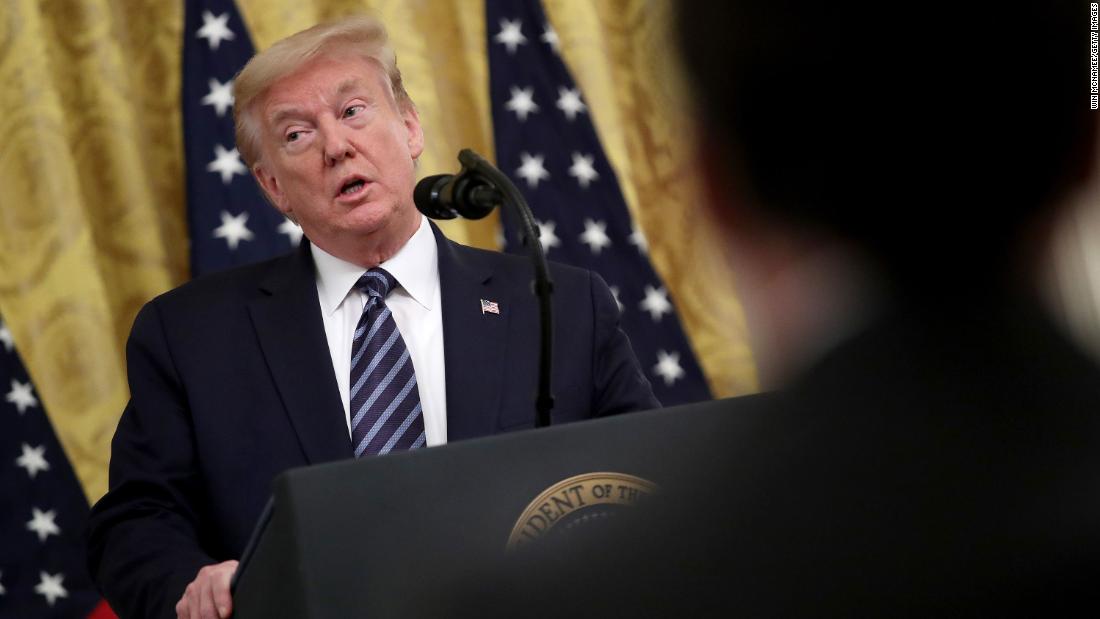
President Donald Trump said Wednesday he opposes any effort by the US military to rename the nearly one dozen major bases and installations that bear the names of Confederate military commanders.
CremeBrulee writes:
“That's the problem with this shit. Any name you might come up with will have some sort of stigma attached to it by someone. I guess you could start naming things after inanimate objects...”
I don’t think we will ever run out of genuine patriots and heroes who fought for worthy American (and universal) values. You are right, though, that we needn’t name forts after Generals only. Sure there may always be differences concerning this or that name, but at least let us not choose the names of men who fought against the United States in a war that defended slavery.
Or ideas even. Ft. Liberty, Ft. Freedom, Ft. Independence. I am not up to date on naming conventions for the military. Once you go down the rabbit hole of changing names though, you should be prepared to change everything named after anything or anyone to suit the whims of how people feel about something at any given time or according to their political ideology.
I love the idea of Ft. Liberty, Ft. Freedom, Ft. Independence. It would be hard to change these names once folks got used to them. Even the South during the Civil War claimed it was fighting for these ideals. Plus, maybe, hopefully, it would have a salutary subliminal influence on our military, and serve as a reminder of what we are supposed to be fighting for when we fight overseas.
This is meant as an insult to southern Americans, and it would be seen that way.
This is about insulting and marginalizing a group of people.
This is proof that Diversity and Multi-culturalism, as ideas and policy goals, were always lies.
Renaming Fort Benning — named after a diehard racist Confederate slaveholder (see comment #110) — calling it say “Fort Liberty“ — would be an “insult to Southern Americans...” ?
Not to any Americans (wherever they live) ... with their heads screwed on right!
SUre it would. It would be saying that Southern history and heritage is a shame that they bear, that they alone among all groups, are not allowed to celebrate their history.
That is an insult. YOur denial of that obvious fact is also offensive.
No, it is not. But thank you for not denying that this is about shaming them.
My point stands. This is an insult to Southern Americans.
THis is about marginalizing them as a group, so that their voice and interests can be ignored.
rightwinger has admitted that he sees this as the future for all white people in America, a permanent reduction to Second Class status, where we will be oppressed, and discriminated against, for all time, with no legal or political recourse.
He considers that an Utopia, that he, in his own little way, is actively working towards.
Fort Bragg was named before General Bragg became a Confederate soldier. He was still in the Union at the time. that is probably the sole exception in that regard.
Maybe not. But I don't like the tone of all this. It's too judgmental. If it offends people, change it, move it, whatever. But a bunch of Yankees with a political agenda shouldn't be the ones forcing that change. Let the South sort it out. Statue by statue, base by base. This is the first I heard of anyone bitching about Fort "Bragg." Now the Army is elbowing it's way to the front of the appeasers to say "We might change the names of our bases named for Confederates." Three years ago, they wouldn't have anything to do with it. As far as I know, it was the Army that introduced this into the conversation.
I could be wrong.
But I'm serious the judgmental, rubbing their noses in it tone disheartens me. We've got enough divisiveness in this country right now without refighting the ******* Civil War that's been over 150 years. Just my opinion. No offense meant.
In their minds it isn't over. And it won't be until we've removed all reminders of it. Those statues and place names are of people who fought against the US. We shouldn't glorify them for it. This is 150 years overdue.
In their minds it isn't over. And it won't be until we've removed all reminders of it. Those statues and place names are of people who fought against the US. We shouldn't glorify them for it. This is 150 years overdue.
Think that would fix the Catalonia secession problem?? Or are you just ignorant and uninterested about historic regional differences??? You keep on pushing these divisions and see what happens..
Your racist Democrat party is committing the LONGEST and most PAINFUL public suicide of a political party on record in history...
The situation here isn't even remotely similar to Catalonia. They were a fully independent country at one time, with their own language, customs, and whatnot.
The southern US was never anything but the southern US. They were never independent or distinct. They just failed to mature as the rest of the world did.
False equivalency is FALSE. It's right there in the name.
We can see who has “Snowflake Sensibilities” in this discussion. It is all those who are triggered by a simple bipartisan suggestion for name changes coming out of the Republican-led Armed Services Committee of the Senate. Reactionary and aggrieved white knuckleheads who wave fake Confederate Flags, like the one below, advocate hanging Liberals as “Traitors.” They just show the depth of the problem. Fortunately, they only represent an extreme rightwing minority.
But many decent people also rationalize or raise irrelevant partisan arguments opposing the renaming of bases. This is sad and unnecessary, and ultimately self-defeating. Why does this happen?
Generations of American soldiers have been raised believing that it was perfectly appropriate to fly real Confederate Flags at military bases, or wear such emblems, or testify in southern courts flying these banners, or having their State Capitols fly them. Those old flags have almost all disappeared today as state by state symbolic remnants of the Jim Crow era have been removed. Hopefully now our national armed forces will also rectify the error of naming our military bases after real diehard racist defenders of human slavery, like Fort Benning (see #110 above).
Let us hope that the new names of bases won’t reflect present problems and obsessions in our society. Can you imagine them renaming them “Fort General Dynamics,” “Raytheon Air Force Base,” “Fort Take Their Oil” or “Better Dead Than Red Naval Station”?
- - -
Marion Morrison screams: “Yet somehow not as overdue as your hanging for being a traitorous POS.”
CremeBrulee writes:
“That's the problem with this shit. Any name you might come up with will have some sort of stigma attached to it by someone. I guess you could start naming things after inanimate objects...”
I don’t think we will ever run out of genuine patriots and heroes who fought for worthy American (and universal) values. You are right, though, that we needn’t name forts after Generals only. Sure there may always be differences concerning this or that name, but at least let us not choose the names of men who fought against the United States in a war that defended slavery.
Or ideas even. Ft. Liberty, Ft. Freedom, Ft. Independence. I am not up to date on naming conventions for the military. Once you go down the rabbit hole of changing names though, you should be prepared to change everything named after anything or anyone to suit the whims of how people feel about something at any given time or according to their political ideology.
I love the idea of Ft. Liberty, Ft. Freedom, Ft. Independence. It would be hard to change these names once folks got used to them. Even the South during the Civil War claimed it was fighting for these ideals. Plus, maybe, hopefully, it would have a salutary subliminal influence on our military, and serve as a reminder of what we are supposed to be fighting for when we fight overseas.
This is meant as an insult to southern Americans, and it would be seen that way.
This is about insulting and marginalizing a group of people.
This is proof that Diversity and Multi-culturalism, as ideas and policy goals, were always lies.
Renaming Fort Benning — named after a diehard racist Confederate slaveholder (see comment #110) — calling it say “Fort Liberty“ — would be an “insult to Southern Americans...” ?
Not to any Americans (wherever they live) ... with their heads screwed on right!
SUre it would. It would be saying that Southern history and heritage is a shame that they bear, that they alone among all groups, are not allowed to celebrate their history.
That is an insult. YOur denial of that obvious fact is also offensive.
No, it is not. But thank you for not denying that this is about shaming them.
My point stands. This is an insult to Southern Americans.
THis is about marginalizing them as a group, so that their voice and interests can be ignored.
rightwinger has admitted that he sees this as the future for all white people in America, a permanent reduction to Second Class status, where we will be oppressed, and discriminated against, for all time, with no legal or political recourse.
He considers that an Utopia, that he, in his own little way, is actively working towards.
President Donald Trump said Wednesday he opposes any effort by the US military to rename the nearly one dozen major bases and installations that bear the names of Confederate military commanders.
President Donald Trump said Wednesday he opposes any effort by the US military to rename the nearly one dozen major bases and installations that bear the names of Confederate military commanders.
Nathan Bedford Forrest, Confederate cavalry commander in the American Civil War who was often described as a ‘born military genius.’ He is also one of the most controversial figures from the Civil War era, having led a massacre of African American troops and having served as the first grand...
www.britannica.com
On April 12, 1864, Forrest’s command surrounded Fort Pillow, a small Union installation on the Mississippi River about 40 miles (65 km) north of Memphis. After failing to negotiate the fort’s surrender, Forrest ordered his men to take the outnumbered garrison (which was made up African Americans, southern unionists, and Confederate deserters) by force. The battle that ensued was characterized by close-quarters combat, chaos, and the almost total breakdown of command and control. Despite contradictory evidence regarding Forrest’s orders and response to the actions of his troops, it is clear that in many instances Forrest’s men killed African American soldiers who were attempting to surrender. During the battle and subsequent massacre, between 277 and 295 Union troops—most of whom were black—were killed. Although it was conducted by two Republicans (one of whom was a leading Radical Republican) and had clear propagandistic purposes, a congressional investigation committee verified the slaughter.
Forrest’s notoriety only increased when, in 1867, he became the first grand wizard of the original Ku Klux Klan (KKK), a secret hate organization that employed terror in pursuit of its white supremacist agenda. Although the extent of Forrest’s influence in the KKK is disputed, at the very least his prestige served to expand membership rolls.
The 1868 Democratic National Convention was held at Tammany Hall in New York City between July 4, and July 9, 1868. The slogan for the 1868 Democratic National Convention was, "This is a White Man's Country, Let White Men Rule".[1] The convention was notable for the return of Democratic Party politicians from the southern states.
The Klan's activity infiltrated the Democratic Party's campaign for the presidential election of 1868. Prominent ex-Confederates, including Forrest, the Grand Wizard of the Klan, and South Carolina's Wade Hampton, attended as delegates at the 1868 Democratic Convention, held at Tammany Hall headquarters at 141 East 14th Street in New York City.[159] Forrest rode to the convention on a train that stopped in a small Northern town along the way, where he faced a protester who wanted to fight the "damned butcher" of Fort Pillow.[160] Former Governor of New York Horatio Seymour was nominated as the Democratic presidential candidate, while Forrest's friend, Frank Blair, Jr. was nominated as the Democratic vice presidential candidate, Seymour's running mate. [161] The Seymour-Blair Democratic ticket's campaign slogan was: "Our Ticket, Our Motto, This Is a White Man's Country; Let White Men Rule." [161] The Democratic Party platform denounced the Reconstruction Acts as unconstitutional, void, and revolutionary.[162] The party advocated termination of the Freedman's Bureau and any government policy designed to aid blacks in the South. [162] These developments worked to the advantage of the Republicans, who focused on the Democratic Party's alleged disloyalty during and after the Civil War.[162]
As a matter of fact, Forrest was actually the KEYNOTE SPEAKER at the Democrats' 1868 Convention!!!
President Donald Trump said Wednesday he opposes any effort by the US military to rename the nearly one dozen major bases and installations that bear the names of Confederate military commanders.
Nathan Bedford Forrest, Confederate cavalry commander in the American Civil War who was often described as a ‘born military genius.’ He is also one of the most controversial figures from the Civil War era, having led a massacre of African American troops and having served as the first grand...
www.britannica.com
On April 12, 1864, Forrest’s command surrounded Fort Pillow, a small Union installation on the Mississippi River about 40 miles (65 km) north of Memphis. After failing to negotiate the fort’s surrender, Forrest ordered his men to take the outnumbered garrison (which was made up African Americans, southern unionists, and Confederate deserters) by force. The battle that ensued was characterized by close-quarters combat, chaos, and the almost total breakdown of command and control. Despite contradictory evidence regarding Forrest’s orders and response to the actions of his troops, it is clear that in many instances Forrest’s men killed African American soldiers who were attempting to surrender. During the battle and subsequent massacre, between 277 and 295 Union troops—most of whom were black—were killed. Although it was conducted by two Republicans (one of whom was a leading Radical Republican) and had clear propagandistic purposes, a congressional investigation committee verified the slaughter.
Forrest’s notoriety only increased when, in 1867, he became the first grand wizard of the original Ku Klux Klan (KKK), a secret hate organization that employed terror in pursuit of its white supremacist agenda. Although the extent of Forrest’s influence in the KKK is disputed, at the very least his prestige served to expand membership rolls.
The 1868 Democratic National Convention was held at Tammany Hall in New York City between July 4, and July 9, 1868. The slogan for the 1868 Democratic National Convention was, "This is a White Man's Country, Let White Men Rule".[1] The convention was notable for the return of Democratic Party politicians from the southern states.
The Klan's activity infiltrated the Democratic Party's campaign for the presidential election of 1868. Prominent ex-Confederates, including Forrest, the Grand Wizard of the Klan, and South Carolina's Wade Hampton, attended as delegates at the 1868 Democratic Convention, held at Tammany Hall headquarters at 141 East 14th Street in New York City.[159] Forrest rode to the convention on a train that stopped in a small Northern town along the way, where he faced a protester who wanted to fight the "damned butcher" of Fort Pillow.[160] Former Governor of New York Horatio Seymour was nominated as the Democratic presidential candidate, while Forrest's friend, Frank Blair, Jr. was nominated as the Democratic vice presidential candidate, Seymour's running mate. [161] The Seymour-Blair Democratic ticket's campaign slogan was: "Our Ticket, Our Motto, This Is a White Man's Country; Let White Men Rule." [161] The Democratic Party platform denounced the Reconstruction Acts as unconstitutional, void, and revolutionary.[162] The party advocated termination of the Freedman's Bureau and any government policy designed to aid blacks in the South. [162] These developments worked to the advantage of the Republicans, who focused on the Democratic Party's alleged disloyalty during and after the Civil War.[162]
As a matter of fact, Forrest was actually the KEYNOTE SPEAKER at the Democrats' 1868 Convention!!!
President Donald Trump said Wednesday he opposes any effort by the US military to rename the nearly one dozen major bases and installations that bear the names of Confederate military commanders.
Nathan Bedford Forrest, Confederate cavalry commander in the American Civil War who was often described as a ‘born military genius.’ He is also one of the most controversial figures from the Civil War era, having led a massacre of African American troops and having served as the first grand...
www.britannica.com
On April 12, 1864, Forrest’s command surrounded Fort Pillow, a small Union installation on the Mississippi River about 40 miles (65 km) north of Memphis. After failing to negotiate the fort’s surrender, Forrest ordered his men to take the outnumbered garrison (which was made up African Americans, southern unionists, and Confederate deserters) by force. The battle that ensued was characterized by close-quarters combat, chaos, and the almost total breakdown of command and control. Despite contradictory evidence regarding Forrest’s orders and response to the actions of his troops, it is clear that in many instances Forrest’s men killed African American soldiers who were attempting to surrender. During the battle and subsequent massacre, between 277 and 295 Union troops—most of whom were black—were killed. Although it was conducted by two Republicans (one of whom was a leading Radical Republican) and had clear propagandistic purposes, a congressional investigation committee verified the slaughter.
Forrest’s notoriety only increased when, in 1867, he became the first grand wizard of the original Ku Klux Klan (KKK), a secret hate organization that employed terror in pursuit of its white supremacist agenda. Although the extent of Forrest’s influence in the KKK is disputed, at the very least his prestige served to expand membership rolls.
The 1868 Democratic National Convention was held at Tammany Hall in New York City between July 4, and July 9, 1868. The slogan for the 1868 Democratic National Convention was, "This is a White Man's Country, Let White Men Rule".[1] The convention was notable for the return of Democratic Party politicians from the southern states.
The Klan's activity infiltrated the Democratic Party's campaign for the presidential election of 1868. Prominent ex-Confederates, including Forrest, the Grand Wizard of the Klan, and South Carolina's Wade Hampton, attended as delegates at the 1868 Democratic Convention, held at Tammany Hall headquarters at 141 East 14th Street in New York City.[159] Forrest rode to the convention on a train that stopped in a small Northern town along the way, where he faced a protester who wanted to fight the "damned butcher" of Fort Pillow.[160] Former Governor of New York Horatio Seymour was nominated as the Democratic presidential candidate, while Forrest's friend, Frank Blair, Jr. was nominated as the Democratic vice presidential candidate, Seymour's running mate. [161] The Seymour-Blair Democratic ticket's campaign slogan was: "Our Ticket, Our Motto, This Is a White Man's Country; Let White Men Rule." [161] The Democratic Party platform denounced the Reconstruction Acts as unconstitutional, void, and revolutionary.[162] The party advocated termination of the Freedman's Bureau and any government policy designed to aid blacks in the South. [162] These developments worked to the advantage of the Republicans, who focused on the Democratic Party's alleged disloyalty during and after the Civil War.[162]
As a matter of fact, Forrest was actually the KEYNOTE SPEAKER at the Democrats' 1868 Convention!!!
President Donald Trump said Wednesday he opposes any effort by the US military to rename the nearly one dozen major bases and installations that bear the names of Confederate military commanders.
Nathan Bedford Forrest, Confederate cavalry commander in the American Civil War who was often described as a ‘born military genius.’ He is also one of the most controversial figures from the Civil War era, having led a massacre of African American troops and having served as the first grand...
www.britannica.com
On April 12, 1864, Forrest’s command surrounded Fort Pillow, a small Union installation on the Mississippi River about 40 miles (65 km) north of Memphis. After failing to negotiate the fort’s surrender, Forrest ordered his men to take the outnumbered garrison (which was made up African Americans, southern unionists, and Confederate deserters) by force. The battle that ensued was characterized by close-quarters combat, chaos, and the almost total breakdown of command and control. Despite contradictory evidence regarding Forrest’s orders and response to the actions of his troops, it is clear that in many instances Forrest’s men killed African American soldiers who were attempting to surrender. During the battle and subsequent massacre, between 277 and 295 Union troops—most of whom were black—were killed. Although it was conducted by two Republicans (one of whom was a leading Radical Republican) and had clear propagandistic purposes, a congressional investigation committee verified the slaughter.
Forrest’s notoriety only increased when, in 1867, he became the first grand wizard of the original Ku Klux Klan (KKK), a secret hate organization that employed terror in pursuit of its white supremacist agenda. Although the extent of Forrest’s influence in the KKK is disputed, at the very least his prestige served to expand membership rolls.
The 1868 Democratic National Convention was held at Tammany Hall in New York City between July 4, and July 9, 1868. The slogan for the 1868 Democratic National Convention was, "This is a White Man's Country, Let White Men Rule".[1] The convention was notable for the return of Democratic Party politicians from the southern states.
The Klan's activity infiltrated the Democratic Party's campaign for the presidential election of 1868. Prominent ex-Confederates, including Forrest, the Grand Wizard of the Klan, and South Carolina's Wade Hampton, attended as delegates at the 1868 Democratic Convention, held at Tammany Hall headquarters at 141 East 14th Street in New York City.[159] Forrest rode to the convention on a train that stopped in a small Northern town along the way, where he faced a protester who wanted to fight the "damned butcher" of Fort Pillow.[160] Former Governor of New York Horatio Seymour was nominated as the Democratic presidential candidate, while Forrest's friend, Frank Blair, Jr. was nominated as the Democratic vice presidential candidate, Seymour's running mate. [161] The Seymour-Blair Democratic ticket's campaign slogan was: "Our Ticket, Our Motto, This Is a White Man's Country; Let White Men Rule." [161] The Democratic Party platform denounced the Reconstruction Acts as unconstitutional, void, and revolutionary.[162] The party advocated termination of the Freedman's Bureau and any government policy designed to aid blacks in the South. [162] These developments worked to the advantage of the Republicans, who focused on the Democratic Party's alleged disloyalty during and after the Civil War.[162]
As a matter of fact, Forrest was actually the KEYNOTE SPEAKER at the Democrats' 1868 Convention!!!
President Donald Trump said Wednesday he opposes any effort by the US military to rename the nearly one dozen major bases and installations that bear the names of Confederate military commanders.
Nathan Bedford Forrest, Confederate cavalry commander in the American Civil War who was often described as a ‘born military genius.’ He is also one of the most controversial figures from the Civil War era, having led a massacre of African American troops and having served as the first grand...
www.britannica.com
On April 12, 1864, Forrest’s command surrounded Fort Pillow, a small Union installation on the Mississippi River about 40 miles (65 km) north of Memphis. After failing to negotiate the fort’s surrender, Forrest ordered his men to take the outnumbered garrison (which was made up African Americans, southern unionists, and Confederate deserters) by force. The battle that ensued was characterized by close-quarters combat, chaos, and the almost total breakdown of command and control. Despite contradictory evidence regarding Forrest’s orders and response to the actions of his troops, it is clear that in many instances Forrest’s men killed African American soldiers who were attempting to surrender. During the battle and subsequent massacre, between 277 and 295 Union troops—most of whom were black—were killed. Although it was conducted by two Republicans (one of whom was a leading Radical Republican) and had clear propagandistic purposes, a congressional investigation committee verified the slaughter.
Forrest’s notoriety only increased when, in 1867, he became the first grand wizard of the original Ku Klux Klan (KKK), a secret hate organization that employed terror in pursuit of its white supremacist agenda. Although the extent of Forrest’s influence in the KKK is disputed, at the very least his prestige served to expand membership rolls.
The 1868 Democratic National Convention was held at Tammany Hall in New York City between July 4, and July 9, 1868. The slogan for the 1868 Democratic National Convention was, "This is a White Man's Country, Let White Men Rule".[1] The convention was notable for the return of Democratic Party politicians from the southern states.
The Klan's activity infiltrated the Democratic Party's campaign for the presidential election of 1868. Prominent ex-Confederates, including Forrest, the Grand Wizard of the Klan, and South Carolina's Wade Hampton, attended as delegates at the 1868 Democratic Convention, held at Tammany Hall headquarters at 141 East 14th Street in New York City.[159] Forrest rode to the convention on a train that stopped in a small Northern town along the way, where he faced a protester who wanted to fight the "damned butcher" of Fort Pillow.[160] Former Governor of New York Horatio Seymour was nominated as the Democratic presidential candidate, while Forrest's friend, Frank Blair, Jr. was nominated as the Democratic vice presidential candidate, Seymour's running mate. [161] The Seymour-Blair Democratic ticket's campaign slogan was: "Our Ticket, Our Motto, This Is a White Man's Country; Let White Men Rule." [161] The Democratic Party platform denounced the Reconstruction Acts as unconstitutional, void, and revolutionary.[162] The party advocated termination of the Freedman's Bureau and any government policy designed to aid blacks in the South. [162] These developments worked to the advantage of the Republicans, who focused on the Democratic Party's alleged disloyalty during and after the Civil War.[162]
As a matter of fact, Forrest was actually the KEYNOTE SPEAKER at the Democrats' 1868 Convention!!!
President Donald Trump said Wednesday he opposes any effort by the US military to rename the nearly one dozen major bases and installations that bear the names of Confederate military commanders.
Nathan Bedford Forrest, Confederate cavalry commander in the American Civil War who was often described as a ‘born military genius.’ He is also one of the most controversial figures from the Civil War era, having led a massacre of African American troops and having served as the first grand...
www.britannica.com
On April 12, 1864, Forrest’s command surrounded Fort Pillow, a small Union installation on the Mississippi River about 40 miles (65 km) north of Memphis. After failing to negotiate the fort’s surrender, Forrest ordered his men to take the outnumbered garrison (which was made up African Americans, southern unionists, and Confederate deserters) by force. The battle that ensued was characterized by close-quarters combat, chaos, and the almost total breakdown of command and control. Despite contradictory evidence regarding Forrest’s orders and response to the actions of his troops, it is clear that in many instances Forrest’s men killed African American soldiers who were attempting to surrender. During the battle and subsequent massacre, between 277 and 295 Union troops—most of whom were black—were killed. Although it was conducted by two Republicans (one of whom was a leading Radical Republican) and had clear propagandistic purposes, a congressional investigation committee verified the slaughter.
Forrest’s notoriety only increased when, in 1867, he became the first grand wizard of the original Ku Klux Klan (KKK), a secret hate organization that employed terror in pursuit of its white supremacist agenda. Although the extent of Forrest’s influence in the KKK is disputed, at the very least his prestige served to expand membership rolls.
The 1868 Democratic National Convention was held at Tammany Hall in New York City between July 4, and July 9, 1868. The slogan for the 1868 Democratic National Convention was, "This is a White Man's Country, Let White Men Rule".[1] The convention was notable for the return of Democratic Party politicians from the southern states.
The Klan's activity infiltrated the Democratic Party's campaign for the presidential election of 1868. Prominent ex-Confederates, including Forrest, the Grand Wizard of the Klan, and South Carolina's Wade Hampton, attended as delegates at the 1868 Democratic Convention, held at Tammany Hall headquarters at 141 East 14th Street in New York City.[159] Forrest rode to the convention on a train that stopped in a small Northern town along the way, where he faced a protester who wanted to fight the "damned butcher" of Fort Pillow.[160] Former Governor of New York Horatio Seymour was nominated as the Democratic presidential candidate, while Forrest's friend, Frank Blair, Jr. was nominated as the Democratic vice presidential candidate, Seymour's running mate. [161] The Seymour-Blair Democratic ticket's campaign slogan was: "Our Ticket, Our Motto, This Is a White Man's Country; Let White Men Rule." [161] The Democratic Party platform denounced the Reconstruction Acts as unconstitutional, void, and revolutionary.[162] The party advocated termination of the Freedman's Bureau and any government policy designed to aid blacks in the South. [162] These developments worked to the advantage of the Republicans, who focused on the Democratic Party's alleged disloyalty during and after the Civil War.[162]
As a matter of fact, Forrest was actually the KEYNOTE SPEAKER at the Democrats' 1868 Convention!!!
Fort Bragg was named before General Bragg became a Confederate soldier. He was still in the Union at the time. that is probably the sole exception in that regard.
President Donald Trump said Wednesday he opposes any effort by the US military to rename the nearly one dozen major bases and installations that bear the names of Confederate military commanders.
Name them in accordance with military identification tradition: Fort A, Unit issue, 1 EACH. Fort B, Unit issue 1 EACH. Joint bases can be named Joint Base, Unit issue, 2 EACH.
OR
Name them after actual Medal of Honor winners. No politics and the US didn't issue Medals of Honor to soldiers in the Confederacy.