Edgetho
Diamond Member
- Mar 27, 2012
- 22,805
- 16,011
- 2,405
As of now, the full trade agreement is classified, except the few parts leaked by Wikileaks.
A complete and utter ******* LIE from the same liberturdian scumbags that predicted a 'giant sucking sound' headed for Mexico.
liberturdians are scum. Stupid, Lying SCUM
Top 9 Myths About The Trans-Pacific Partnership
Myth 5: TPP is being negotiated via a dangerous and unprecedented level of secrecy!
Totally false. Probably the most-repeated myth right now isn’t even related to TPA but instead to the TPP, which is still being negotiated. According to the anti-TPA script, the TPP is so secret that nobody knows what’s in it, and—much like Obamacare legislation—nobody, not even Congress, will know what’s in it until the agreement is passed into law. Once again, however, nothing could be further from the truth:
- First, Obama’s USTR and Congress have been consulting on the TPP since December 14, 2009, when then-USTR Kirk
- Second, USTR has provided “access to the full negotiating texts for any Member of Congress, including for Members to view at their convenience in the Capitol, accompanied by staff members with appropriate security clearance.” This access began in 2012, and several House members and senators—both supportive of TPA (like Mike Lee) and opposed (like Sens. Jeff Sessions and Elizabeth Warren, as well as Rep. Rosa DeLauro)—have reviewed the draft negotiating texts. Moreover, the level of security surrounding these TPP texts isn’t part of some scary Obama administration plot; it’s set by Congress (which, as you’ll recall, is controlled by Republicans these days). A U.S. government official confirmed to me that “the Senate and House security offices determine the procedures for viewing classified material in the Capitol reading room where the TPP text is kept for Members—not the administration… some people claim that it’s more difficult to view military or intelligence information, but it’s all subject to the same rules that are set and enforced by Capitol security.”
- Third, USTR has engaged the public on the TPP via published reports and “stakeholder meetings” with groups like labor unions, consumer groups, and, of course, corporations and trade associations. Some of these stakeholders have evenreviewed the negotiating texts and US proposals. Admittedly, the official texts aren’t available to the general public, but this is common practice for all FTAs (as a quick Google search reveals) and for good reason: just like other high-value negotiations among private parties or governments, revealing draft proposals before a deal is struck emboldens the opposition, undermines the parties’ negotiating positions, and exposes negotiators to public scrutiny over provisions that might not even be in a final deal. Publishing draft FTA texts would make completing a deal difficult, if not impossible, and it’s thus no coincidence the most vocal advocates for “full transparency” in free trade negotiations are actually those most opposed to free trade.It’s also important to understand just how unoriginal this “secrecy” canard is:
Yes, protectionists have been using the same “secrecy” lines for over 20 years. In fact, if you replaced “NAFTA” with “TPP” in those old Ross Perot commercials, they’d be almost indistinguishable from the ones on our TVs today.
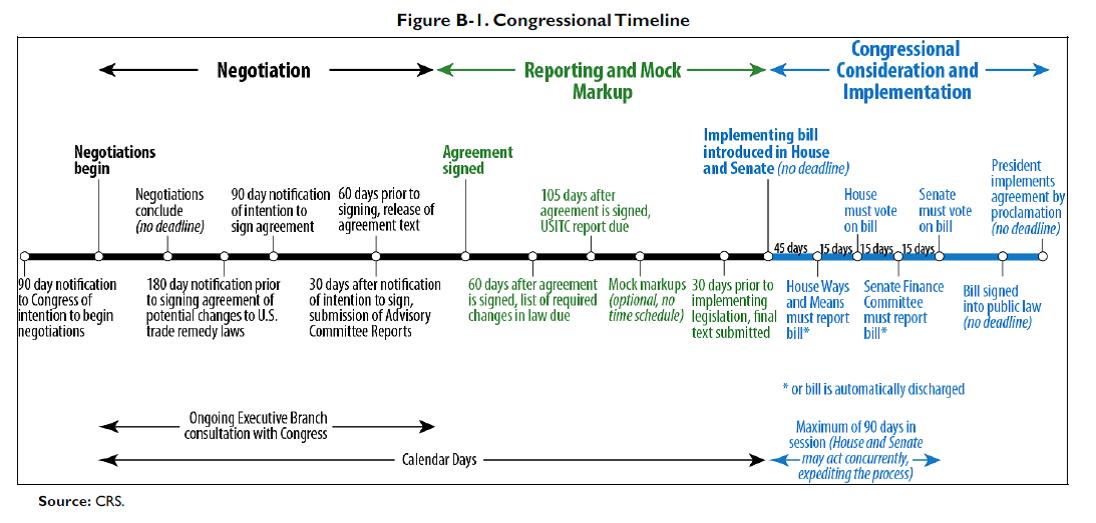
- Finally, unlike the oft-analogized Obamacare legislation, the actual text of any final TPP deal will be required by law to be publicly available (online) for months—yes,months—before Congress votes on it. As you can see from the table below (source), under TPA the president must make the entire text of any trade agreement, including TPP, available to the public for 60 days before he can even sign it.Once it’s signed, Congress will have weeks, maybe months, to scour the deal, hold “mock markups” in various committees, and suggest changes to the agreement before the president sends Congress legislation implementing the FTA for a final vote. Also, within 105 days of the FTA’s signing, the U.S. International Trade Commission must issue a report on the deal’s economic impact—again prior those bills being submitted to Congress. And once the bills finally are submitted, Congress will then have up to 90 legislative days (which is like five months in normal human days) to review the bills and hold final votes.