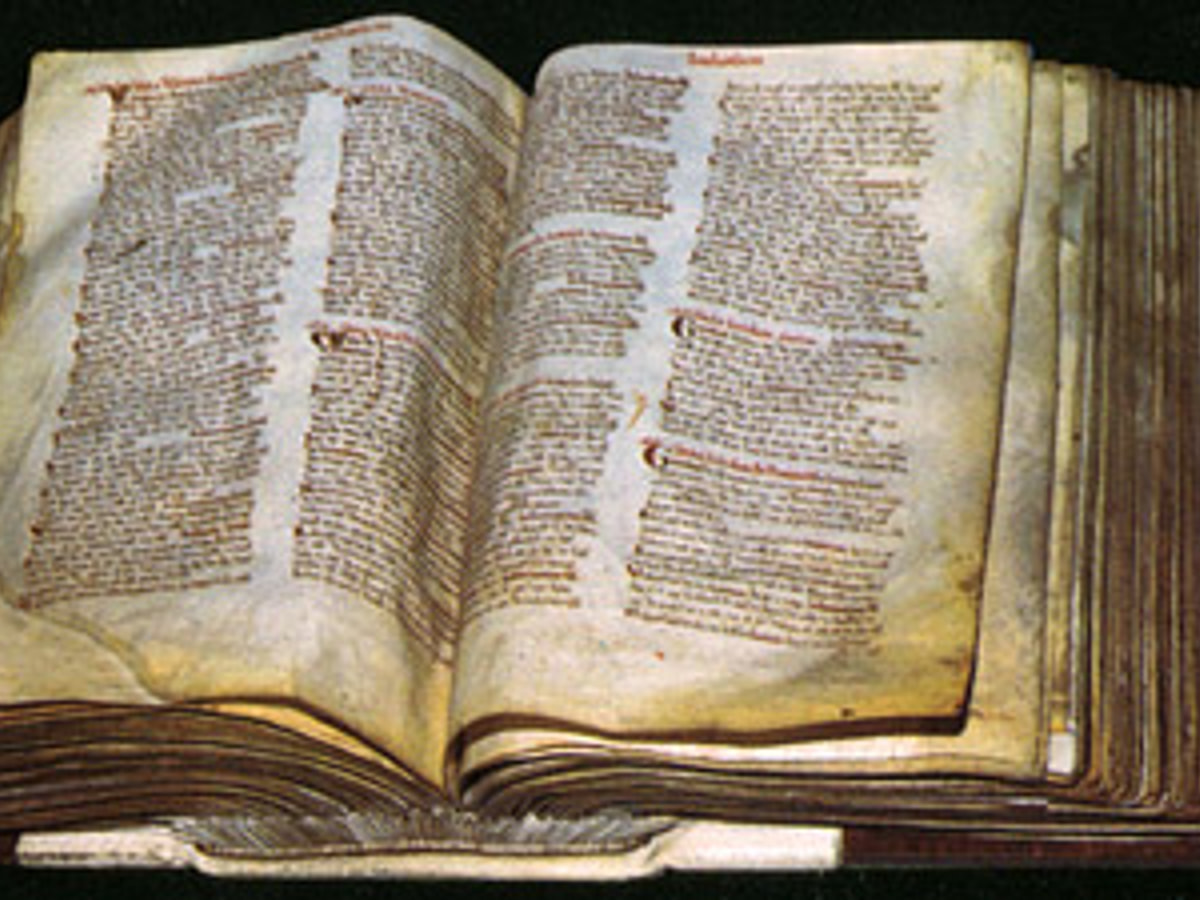
Domesday Book (
/ˈduːmzdeɪ/ DOOMZ-day; the
Middle English spelling of "Doomsday Book") is a manuscript record of the "
Great Survey" of much of England and parts of Wales completed in 1086 at the behest of King William I, known as
William the Conqueror.
[1] The manuscript was originally known by the
Latin name
Liber de Wintonia, meaning "Book of
Winchester", where it was originally kept in the royal treasury.
[2] The
Anglo-Saxon Chronicle states that in 1085 the king sent his agents to survey every
shire in England, to list his holdings and dues owed to him.
[3]
Written in
Medieval Latin, it was
highly abbreviated[a] and included some vernacular native terms without Latin equivalents. The survey's main purpose was to record the annual value of every piece of landed property to its lord, and the resources in land, labour force, and livestock from which the value derived.
The name "Domesday Book" came into use in the 12th century.
[4] Richard FitzNeal wrote in the
Dialogus de Scaccario (c. 1179) that the book was so called because its decisions were unalterable, like those of the
Last Judgment, and its sentence could not be quashed.
[5]
The manuscript is held at
The National Archives at
Kew, London. Domesday was first printed in full in 1783; and in 2011 the Open Domesday site made the manuscript available online.
[6]
The book is an invaluable primary source for modern historians and
historical economists. No survey approaching the scope and extent of Domesday Book was attempted again in Britain until the
1873 Return of Owners of Land (sometimes termed the "Modern Domesday")
[7] which presented the first complete, post-Domesday picture of the distribution of landed property in the
United Kingdom.
[8]