berg80
Diamond Member
- Oct 28, 2017
- 35,224
- 28,686
- 2,820
I suppose one could make the argument the conservatives on the SC get the nod for gutting the VRA. The recent ruling effectively nullifying Sec. 2 of the law, having unleashed a rush by southern states to gerrymander districts with minority representation out of existence. But R gerrymandering was already well on its way before the Court decided to once again legislate from the bench.
Writing for the majority in Callais v. Louisiana, Justice Samuel Alito wrote that the court was not striking down Section 2 of the VRA, but rather “properly” interpreting it as “impos[ing] liability only when circumstances give rise to a strong inference that intentional discrimination occurred.”
Justice Elena Kagan, in dissent, accused the majority of making changes that “eviscerate the law.”
The ruling effectively invalidates Section 2 of the VRA as it has been understood for four decades without explicitly striking down the statute. It now will require proof of intentional discrimination — something Congress did not write into the law and that’s extremely difficult for plaintiffs to show.
 www.democracydocket.com
To be sure, both D's and R's have engaged in the ugly practice of gerrymandering throughout our history. Boiled down to its essence, it is and always has been a perversion of a representative democracy. Which is why Dem's tried to pass legislation mandating that independent commissions draw district maps in the future. R's rejected the idea. We're coming to understand why.
AI Overview
H.R. 1 (the For the People Act) and subsequent legislation like the Redistricting Reform Act of 2025 aim to eliminate partisan gerrymandering by requiring all states to use 15-member independent redistricting commissions (IRCs) to draw congressional maps.
So, it appears the hands down winner in causing an unprecedented number of R controlled states to enact legislation allowing for mid-cycle redistricting (which normally happens every 10 years following the census), and the consequent reaction by Dem controlled states to the aforementioned perversion, is.........well........it goes without saying. Of note, R's have typically used their control of state legislatures in order to permit the gerrymandering while D's have sought the input of the people by passing referendums. The VA Supreme Court having taken away the right of majority rule after the people voted to allow for new maps to be drawn.
trump has expressed concern he will be impeached again if the D's take the House in the fall. Then there's the matter of the House holding hearings and using its constitutional authority of oversight (something the R's have abdicated) that also has to be concerning for Don. Though two years isn't nearly long enough to hold the regime to account for all its abuses. Which explains his motivation for trying to rig the midterms in the R's favor. To be clear, rigging the election on a national scale is exactly what he's trying to do. It's an abomination like no other in our history.
But while he is responsible for trying to put another nail in democracy's coffin, is he to blame for the success to date? Or are the R's in control of state legislatures and governor's mansions really to blame? They could have stood up for the principles on which the country was founded like the seven state reps in Indiana did. The ones targeted by trump for being primaried out of office. Nothing prevented Greg Abbott from telling trump he could not in good conscience do what he was being asked. R legislative leaders could have refused to participate in an anti-democratic scheme they knew to be wrong. Voters in IN could have shown their support for the reps who so obviously did the right thing.
The point being trump is powerless without his enablers. He only gets to lead the country down this path if enough people follow. The existential question for the times is how to get them to stop following.
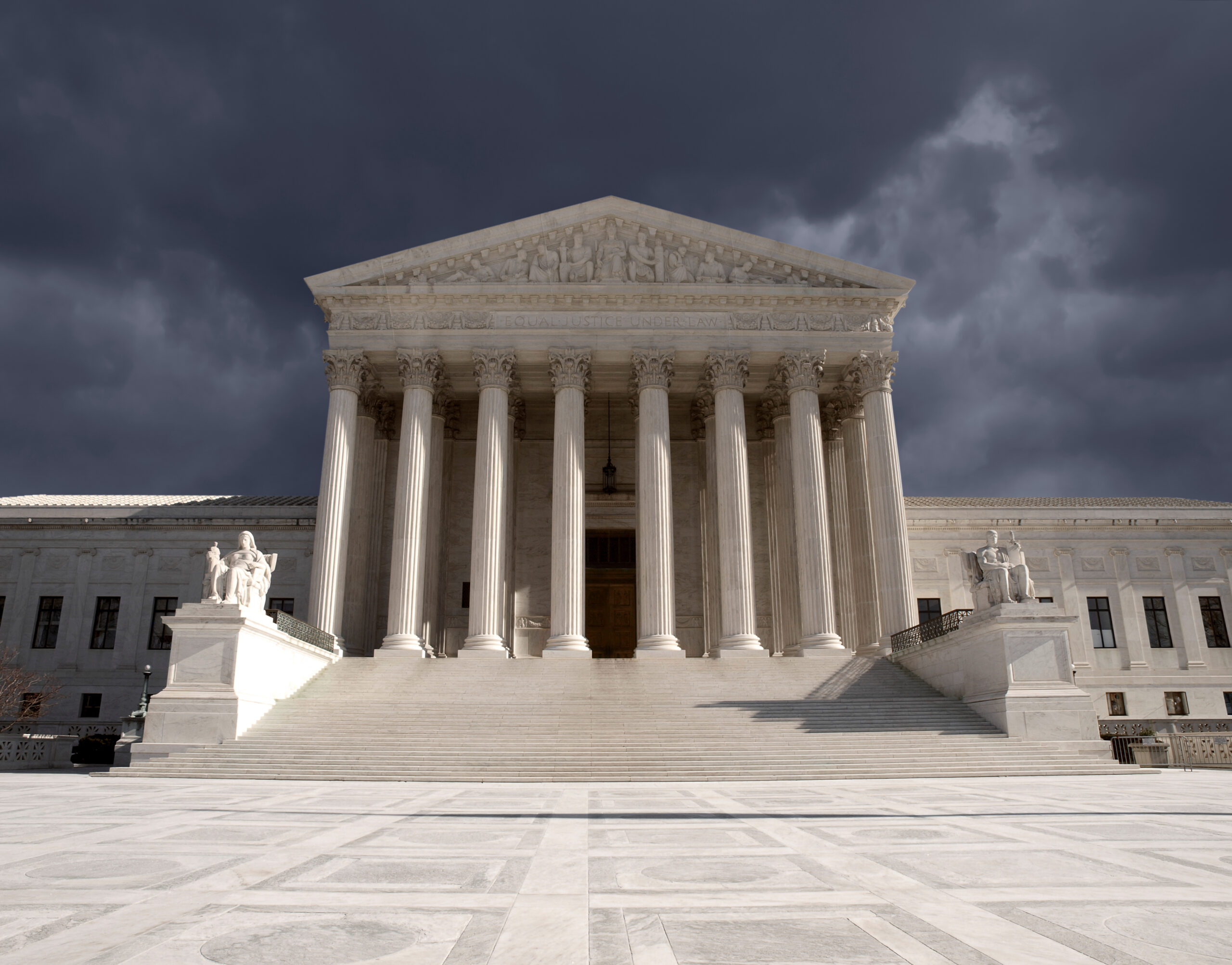
Supreme Court guts Voting Rights Act, greenlights GOP gerrymanders
In a 6-3 decision, the U.S. Supreme Court kneecapped the Voting Rights Act (VRA), the landmark civil rights law that restricted racial gerrymandering and racial discrimination in voting for sixty years.Writing for the majority in Callais v. Louisiana, Justice Samuel Alito wrote that the court was not striking down Section 2 of the VRA, but rather “properly” interpreting it as “impos[ing] liability only when circumstances give rise to a strong inference that intentional discrimination occurred.”
Justice Elena Kagan, in dissent, accused the majority of making changes that “eviscerate the law.”
The ruling effectively invalidates Section 2 of the VRA as it has been understood for four decades without explicitly striking down the statute. It now will require proof of intentional discrimination — something Congress did not write into the law and that’s extremely difficult for plaintiffs to show.
Supreme Court guts Voting Rights Act, greenlights GOP gerrymanders
Justice Elena Kagan, in dissent, accused the majority of making changes that "eviscerate the law."
www.democracydocket.com
To be sure, both D's and R's have engaged in the ugly practice of gerrymandering throughout our history. Boiled down to its essence, it is and always has been a perversion of a representative democracy. Which is why Dem's tried to pass legislation mandating that independent commissions draw district maps in the future. R's rejected the idea. We're coming to understand why.
AI Overview
H.R. 1 (the For the People Act) and subsequent legislation like the Redistricting Reform Act of 2025 aim to eliminate partisan gerrymandering by requiring all states to use 15-member independent redistricting commissions (IRCs) to draw congressional maps.
So, it appears the hands down winner in causing an unprecedented number of R controlled states to enact legislation allowing for mid-cycle redistricting (which normally happens every 10 years following the census), and the consequent reaction by Dem controlled states to the aforementioned perversion, is.........well........it goes without saying. Of note, R's have typically used their control of state legislatures in order to permit the gerrymandering while D's have sought the input of the people by passing referendums. The VA Supreme Court having taken away the right of majority rule after the people voted to allow for new maps to be drawn.
trump has expressed concern he will be impeached again if the D's take the House in the fall. Then there's the matter of the House holding hearings and using its constitutional authority of oversight (something the R's have abdicated) that also has to be concerning for Don. Though two years isn't nearly long enough to hold the regime to account for all its abuses. Which explains his motivation for trying to rig the midterms in the R's favor. To be clear, rigging the election on a national scale is exactly what he's trying to do. It's an abomination like no other in our history.
But while he is responsible for trying to put another nail in democracy's coffin, is he to blame for the success to date? Or are the R's in control of state legislatures and governor's mansions really to blame? They could have stood up for the principles on which the country was founded like the seven state reps in Indiana did. The ones targeted by trump for being primaried out of office. Nothing prevented Greg Abbott from telling trump he could not in good conscience do what he was being asked. R legislative leaders could have refused to participate in an anti-democratic scheme they knew to be wrong. Voters in IN could have shown their support for the reps who so obviously did the right thing.
The point being trump is powerless without his enablers. He only gets to lead the country down this path if enough people follow. The existential question for the times is how to get them to stop following.