Well it depends on what you mean by the term "liberal democrat".
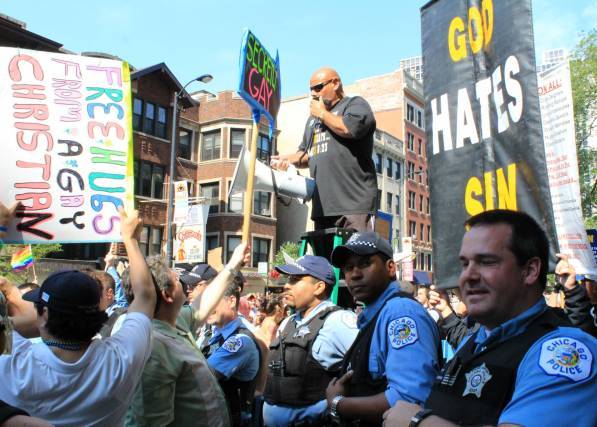
I concede that liberals, or at least traditional liberals, used to say that they would defend your right to free speech even if they disagreed with it. But today Leftists have infiltrated the country to the point that about half the country now wants to repeal the First Amendment and ban "offensive" speech.
Cato has the best explanation. Conflating liberals and the far left and then demonize the liberal as somehow a Femi-nazi or enviro-nazi, or even a Demo-nazi has poisoned the dialog and has made compromise a four letter word.
"Today, those who subscribe to the principles of the American Revolution — individual liberty, limited government, the free market, and the rule of law — call themselves by a variety of terms, including conservative, libertarian, classical liberal, and liberal. We see problems with all of those terms. “Conservative” smacks of an unwillingness to change, of a desire to preserve the status quo. Only in America do people seem to refer to free‐market capitalism — the most progressive, dynamic, and ever‐changing system the world has ever known — as conservative. Additionally, many contemporary American conservatives favor state intervention in some areas, most notably in trade and into our private lives.
“Classical liberal” is a bit closer to the mark, but the word “classical” fails to capture the contemporary vibrancy of the ideas of freedom.
“Liberal” may well be the perfect word in most of the world — the liberals in societies from China to Iran to South Africa to Argentina tend to be supporters of human rights and free markets — but its meaning has clearly been altered in the contemporary United States.
The Jeffersonian philosophy that animates Cato’s work has increasingly come to be called “libertarianism” or “market liberalism.” It combines an appreciation for entrepreneurship, the market process, and lower taxes with strict respect for civil liberties and skepticism about the benefits of both the welfare state and foreign military adventurism.
This vision brings the wisdom of the American Founders to bear on the problems of today. As did the Founders, it looks to the future with optimism and excitement, eager to discover what great things women and men will do in the coming century. Market liberals appreciate the complexity of a great society, recognizing that socialism and government planning are just too clumsy for the modern world. It is — or used to be — the conventional wisdom that a more complex society needs more government, but the truth is just the opposite. The simpler the society, the less damage government planning does. Planning is cumbersome in an agricultural society, costly in an industrial economy, and impossible in the information age. Today collectivism and planning are outmoded and backward, a drag on social progress.
Libertarians have a cosmopolitan, inclusive vision for society. We applaud the progressive extension of the promises of the Declaration of Independence to more people, especially to women, African‐Americans, religious minorities, and gay and lesbian people. Our greatest challenge today is to continue to extend the promise of political freedom and economic opportunity to those who are still denied it, in our own country and around the world."

www.cato.org