Navigation
Install the app
How to install the app on iOS
Follow along with the video below to see how to install our site as a web app on your home screen.
Note: This feature may not be available in some browsers.
More options
Style variation
You are using an out of date browser. It may not display this or other websites correctly.
You should upgrade or use an alternative browser.
You should upgrade or use an alternative browser.
Reshaping US aid to the Palestinians
- Thread starter Coyote
- Start date

Sixties Fan
Diamond Member
- Mar 6, 2017
- 73,999
- 12,795
- 2,290
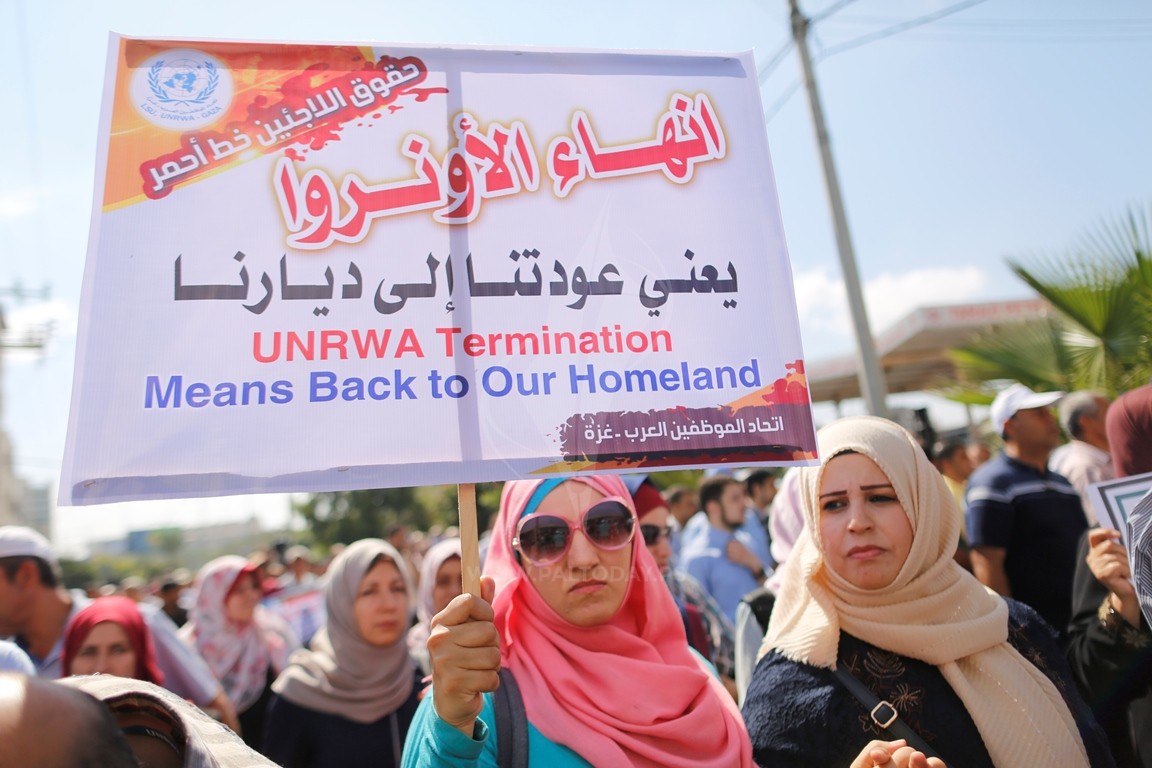
"UNRWA Termination Means Back to Our Homeland" is a poor English translation of "UNRWA can only fire us when we return to our ancestor's homes in Israel."
When one stays on welfare long enough, it appears to be a human right.
(full article online)
"@UNRWA must remain until we return to our homeland" ~ Elder Of Ziyon - Israel News

- Thread starter
- #343
B
Nor can you ignore the fact that the Palestinians are being singled out for issues other donor recipients have.
But you can't ignore the issues raised in the last paragraph either.This article has a good analysis of aid both negative and positive.
Aid and its limits in Palestine
It notes:
Given that it is generally accepted that one of the main objectives of aid is to encourage socioeconomic development, the data on Palestine's economy makes for sober reading. Major indicators do not demonstrate any linear relationship between sustainable economic performance and the billions of dollars in aid received. Growth rates have been volatile and unemployment is consistently estimated at 25%. Palestine is one of the worst places in the world to work, public and private debts have reached unprecedented levels, 25% of Palestinians live in poverty, 80% of Gaza’s population is aid dependent, and 50% of Palestinians are food insecure. The only economic growth achieved has been in the West Bank and this has largely been jobless growth coming off a low base, driven by private consumption and fueled by bank borrowing and one-off public expenditure projects.
On the social level, aid continues to serve an important humanitarian purpose across the West Bank and Gaza. Even though nearly a quarter of Palestinians remain poor, aid has been successful at alleviating some of the impacts of that poverty, at least in the short-term, by providing regular food assistance, cash for work programs, and water supplies. The education and health sectors have also benefited from international aid. The literacy rate in Palestine has improved significantly since 1994 and it's now at 97%. In addition, the PA and other donors play a central role in providing health insurance and constructing healthcare centers. However, the sustainability of these sectors is questionable as aid creates dependency at both provider and consumer levels.
Of course the limitations under which the PA and Palestinian economy operate also impede the effectiveness of aid. Without control of natural resources, borders, and 60% of the West Bank (Area C), the Palestinian economy and the PA lack the foundational assets required for effective and sustainable growth, even with substantial aid disbursements. Then there is the division of the West Bank and Gaza into two distinct geographical zones with different economic characteristics that hamper development. The West Bank is also further fragmented into separated population hubs connected by an Israeli-controlled road network that services hundreds of Israeli settlements and military bases while impacting the most basic of economic activities.
There are many reasons why the level of aid has declined. Firstly, many donor countries have cut their global development and humanitarian assistance budgets in recent years. Secondly, regional developments may have diverted aid disbursements from Palestine to other destinations with greater humanitarian needs such as Iraq, Syria and Yemen. Finally, donor fatigue related to both the gridlocked peace process and the PA’s deteriorating democracy and human rights records should not be underestimated. These factors are also also affecting opinion at home. The last time elections were held in Palestine was in 2006 and the State of Palestine's President Mahmoud Abbas is in his 12th year of what was initially supposed to be a four-year term.
The words of flacaltenn and Shusha ring a bell...
Nor can you ignore the fact that the Palestinians are being singled out for issues other donor recipients have.
Last edited:

P F Tinmore
Diamond Member
- Dec 6, 2009
- 86,824
- 4,933
- 1,815
The "international community" created their need to be on welfare. Israel stole or destroyed everything they need to support themselves while the rest of the world sat around with their thumb up their ass.
"UNRWA Termination Means Back to Our Homeland" is a poor English translation of "UNRWA can only fire us when we return to our ancestor's homes in Israel."
When one stays on welfare long enough, it appears to be a human right.
(full article online)
"@UNRWA must remain until we return to our homeland" ~ Elder Of Ziyon - Israel News
- Thread starter
- #345
I want to point out why I find the term Arab Muslims offensive when talking about Palestinians. It is a subtle and deliberate way of denying them their identity.I find it interesting that she constantly refers to Arab Muslims. Not Palestinians.There are a hell of a lot of Arab speaking Christians.What does that have to with the fact they aren’t all Muslim, that the Christians call themselves and identify as Palestinian but you insist on referring to them all as Arab Muslims?
Language -Arabic
Nation - Arabic
Legislation - Sharia.
Questions?
Is there a constructive point anywhere in that post?
I answered You question directly, these are basic official facts of all of the Palestinian governments.
I fail to see how this insistence changes anything, enlighten me.

Shusha
Gold Member
- Dec 14, 2015
- 16,620
- 3,820
- 290
I want to point out why I find the term Arab Muslims offensive when talking about Palestinians. It is a subtle and deliberate way of denying them their identity.I find it interesting that she constantly refers to Arab Muslims. Not Palestinians.There are a hell of a lot of Arab speaking Christians.What does that have to with the fact they aren’t all Muslim, that the Christians call themselves and identify as Palestinian but you insist on referring to them all as Arab Muslims?
Language -Arabic
Nation - Arabic
Legislation - Sharia.
Questions?
Is there a constructive point anywhere in that post?
I answered You question directly, these are basic official facts of all of the Palestinian governments.
I fail to see how this insistence changes anything, enlighten me.
Like calling the Jewish people "Zionist"? Or "settlers". Or "colonial foreigners". Or "occupiers".
- Thread starter
- #347
I want to point out why I find the term Arab Muslims offensive when talking about Palestinians. It is a subtle and deliberate way of denying them their identity.I find it interesting that she constantly refers to Arab Muslims. Not Palestinians.There are a hell of a lot of Arab speaking Christians.Language -Arabic
Nation - Arabic
Legislation - Sharia.
Questions?
Is there a constructive point anywhere in that post?
I answered You question directly, these are basic official facts of all of the Palestinian governments.
I fail to see how this insistence changes anything, enlighten me.
Like calling the Jewish people "Zionist"? Or "settlers". Or "colonial foreigners". Or "occupiers".
Exactly!!! Or more analogous...calling them European invaders, denying their Jewish identity and their heritage of place.
- Thread starter
- #348
I will add a caveat...calling them settlers. They call themselves settlers, those who choose to build settlements and out posts in disputed/occupied territory.I want to point out why I find the term Arab Muslims offensive when talking about Palestinians. It is a subtle and deliberate way of denying them their identity.I find it interesting that she constantly refers to Arab Muslims. Not Palestinians.There are a hell of a lot of Arab speaking Christians.
Is there a constructive point anywhere in that post?
I answered You question directly, these are basic official facts of all of the Palestinian governments.
I fail to see how this insistence changes anything, enlighten me.
Like calling the Jewish people "Zionist"? Or "settlers". Or "colonial foreigners". Or "occupiers".
Exactly!!! Or more analogous...calling them European invaders, denying their Jewish identity and their heritage of place.
Shusha
Gold Member
- Dec 14, 2015
- 16,620
- 3,820
- 290
I will add a caveat...calling them settlers. They call themselves settlers, those who choose to build settlements and out posts in disputed/occupied territory.I want to point out why I find the term Arab Muslims offensive when talking about Palestinians. It is a subtle and deliberate way of denying them their identity.I find it interesting that she constantly refers to Arab Muslims. Not Palestinians.Is there a constructive point anywhere in that post?
I answered You question directly, these are basic official facts of all of the Palestinian governments.
I fail to see how this insistence changes anything, enlighten me.
Like calling the Jewish people "Zionist"? Or "settlers". Or "colonial foreigners". Or "occupiers".
Exactly!!! Or more analogous...calling them European invaders, denying their Jewish identity and their heritage of place.
Except that "settlers" and "occupiers" are used around here, and generally, as a negative term denoting those who have no right to be in the disputed territories and is never used for Arabs. So the purpose of using it is to deny Jewish historical rights to the territory and otherize them.
What I would like to see is the same word used for all the peoples who assert claims to the place under dispute.
- Thread starter
- #350
I will add a caveat...calling them settlers. They call themselves settlers, those who choose to build settlements and out posts in disputed/occupied territory.I want to point out why I find the term Arab Muslims offensive when talking about Palestinians. It is a subtle and deliberate way of denying them their identity.I find it interesting that she constantly refers to Arab Muslims. Not Palestinians.
Like calling the Jewish people "Zionist"? Or "settlers". Or "colonial foreigners". Or "occupiers".
Exactly!!! Or more analogous...calling them European invaders, denying their Jewish identity and their heritage of place.
Except that "settlers" and "occupiers" are used around here, and generally, as a negative term denoting those who have no right to be in the disputed territories and is never used for Arabs. So the purpose of using it is to deny Jewish historical rights to the territory and otherize them.
What I would like to see is the same word used for all the peoples who assert claims to the place under dispute.
Settlers isn’t a perjorative. It accurately describes who they are and what they are attempting to do. And again, it is their term for themselves. Occupiers would be a perjorative.
Shusha
Gold Member
- Dec 14, 2015
- 16,620
- 3,820
- 290
I will add a caveat...calling them settlers. They call themselves settlers, those who choose to build settlements and out posts in disputed/occupied territory.I want to point out why I find the term Arab Muslims offensive when talking about Palestinians. It is a subtle and deliberate way of denying them their identity.
Like calling the Jewish people "Zionist"? Or "settlers". Or "colonial foreigners". Or "occupiers".
Exactly!!! Or more analogous...calling them European invaders, denying their Jewish identity and their heritage of place.
Except that "settlers" and "occupiers" are used around here, and generally, as a negative term denoting those who have no right to be in the disputed territories and is never used for Arabs. So the purpose of using it is to deny Jewish historical rights to the territory and otherize them.
What I would like to see is the same word used for all the peoples who assert claims to the place under dispute.
Settlers isn’t a perjorative. It accurately describes who they are and what they are attempting to do. And again, it is their term for themselves. Occupiers would be a perjorative.
Let's call all of the Arabs "settlers" then. The Great March of Settlers.

RoccoR
Gold Member
RE: Reshaping US aid to the Palestinians
※→ Shusha, Coyote, et al,
I think we are beginning a little tough on each other here.
No matter which way you look at the issues there "should not" be any "contempt" here (although in reality there is).
- Disapproval, yes!
- Contempt no!
(COMMENT)Let's call all of the Arabs "settlers" then. The Great March of Settlers.Settlers isn’t a perjorative. It accurately describes who they are and what they are attempting to do. And again, it is their term for themselves. Occupiers would be a perjorative.
The Great (whatever → fill in the blank) is a campaign theme. And the "Settler" terminology is a reality (no question). This terminology does not imply the deportation or forcibly transferring of any group from one place to the next. That is an important fact to understand when discussing the Jewish Settlers from a sovereign territory in Israel to Area "C" in the territories. (An extremely important distinction in that separate discussion.)
Let's not get confused between "salesmanship and imagery" with "truth in reality." While relatively unimportant here, in a higher order of discussions (elsewhere), it makes a difference.
Most Respectfully,
R
- Thread starter
- #353
They aren’t. Just like all the Jews aren’t. It is a specific subgroup engaging in a specific activity which in their view is repopulating biblical lands they feel was promised to them (and which serves the political purpose of securing Area C for Israel). Referring to Palestinians as Arab Muslims removes their identity as Palestinians, and when posters use that term repeatedly use that term in discussions like this I want to know why. It is no different than calling Israeli Jews European invaders. It is diminishing their identity. It makes just a bunch of outsiders with no historical rights or claims to the region.I will add a caveat...calling them settlers. They call themselves settlers, those who choose to build settlements and out posts in disputed/occupied territory.Like calling the Jewish people "Zionist"? Or "settlers". Or "colonial foreigners". Or "occupiers".
Exactly!!! Or more analogous...calling them European invaders, denying their Jewish identity and their heritage of place.
Except that "settlers" and "occupiers" are used around here, and generally, as a negative term denoting those who have no right to be in the disputed territories and is never used for Arabs. So the purpose of using it is to deny Jewish historical rights to the territory and otherize them.
What I would like to see is the same word used for all the peoples who assert claims to the place under dispute.
Settlers isn’t a perjorative. It accurately describes who they are and what they are attempting to do. And again, it is their term for themselves. Occupiers would be a perjorative.
Let's call all of the Arabs "settlers" then. The Great March of Settlers.
Sixties Fan
Diamond Member
- Mar 6, 2017
- 73,999
- 12,795
- 2,290
One seems to forget why Jews have had to "actually" re-settle in Judea, Samaria, The Jewish Quarter of Jerusalem and part of Gaza after 1967.They aren’t. Just like all the Jews aren’t. It is a specific subgroup engaging in a specific activity which in their view is repopulating biblical lands they feel was promised to them (and which serves the political purpose of securing Area C for Israel). Referring to Palestinians as Arab Muslims removes their identity as Palestinians, and when posters use that term repeatedly use that term in discussions like this I want to know why. It is no different than calling Israeli Jews European invaders. It is diminishing their identity. It makes just a bunch of outsiders with no historical rights or claims to the region.I will add a caveat...calling them settlers. They call themselves settlers, those who choose to build settlements and out posts in disputed/occupied territory.Exactly!!! Or more analogous...calling them European invaders, denying their Jewish identity and their heritage of place.
Except that "settlers" and "occupiers" are used around here, and generally, as a negative term denoting those who have no right to be in the disputed territories and is never used for Arabs. So the purpose of using it is to deny Jewish historical rights to the territory and otherize them.
What I would like to see is the same word used for all the peoples who assert claims to the place under dispute.
Settlers isn’t a perjorative. It accurately describes who they are and what they are attempting to do. And again, it is their term for themselves. Occupiers would be a perjorative.
Let's call all of the Arabs "settlers" then. The Great March of Settlers.
Jews were Expelled from their homes, businesses, schools, synagogues, etc in all of those areas.
Jews will never be allowed to re-settle in their homeland in TransJordan. The Hashemites have not allowed them to reside there since 1925.
The Jewish people have always settled and re-settled in their ancient homeland. It is a command, to settle their land.
On the other hand, Muslims in general are commanded to settle the world.
Palestinians have the right to stay where they have settled since 1920. Israel has never said otherwise.
On the other hand, one only has to hear or read what the Muslim leaders say about Jews being allowed to be sovereign over any part of their ancient homeland.
Whether Secular or Religious "subgroups" of Jews, it has been a matter of the Jewish people realizing that they cannot live in a world where they cannot be sovereign of any part of their homeland and defend it, just as their ancestors did.
Considering that ALL Jews were expelled from the "biblical lands" of Judea and Samaria and the Jewish Quarter of Jerusalem, why is it that any Jew does not have the right to repopulate those areas with Jewish presence, if they can?
It was taken by force from them.
They are the ones mostly being attacked by "subgroups" (?) of Muslim extremists (?) who are following the rules of the Quran, when it comes to Jews.
Aid to these leaders who insist in teaching only hatred to Jews and destruction of Israel should not continue in any form.
And still, Israel helps the Palestinians in every way it can, from electricity, clean water, etc. And will continue to do so.
Neither Egypt, nor Jordan, nor the Arab League bothered to create infrastructure for the Arabs living in Gaza and Judea and Samaria between 1948 to 1967. Or before that.
Israel did that, after 1967. And continues to offer all the Palestinians need, via jobs, health care and education in order to minimize the number of Palestinians who will be incited by the
PA and Hamas curriculums of hatred for Jews and destruction of Israel . And UNWRA is very much responsible for a huge part of that.
Time to defund the hatred.
How to make the Palestinian leaders respect the Oslo Accord and follow in putting away that education of hatred? Or working towards making most Palestinians want to have peace with Israel instead of wanting to destroy it?
Had Arafat and Abbas spent one second doing that, Israel and the Palestinians would now be as close to a Peace Treaty as Egypt and Jordan got.
But, as I said before, Egypt and Jordan had good leaders who saw the misery the wars against Israel brought them, and they were NOT being financed by every Arab country and the West to do so.
Defund the Hatred.
It is the only way for a future Peace treaty.
All win in the end.
Last edited:
RoccoR
Gold Member
RE: Reshaping US aid to the Palestinians
※→ et al,
I'm not sure that it is a good strategy to recognize that forced relocation of the enemy population should be brought-up as a form of Regional Customary Law. (WE force them out when WE win - and - THEY force us out when THEY win.) Neither the Israelis or the Arab League member can predict with any cetainty what the ramifications will be in the future. (Two wrongs don't make a right.)
While "defunding hatred" has a nice ring to it, but it actually takes several generations (if not more) to arrive at a point when past difference no longer have any meaning; which is very different from - no longer a trigger for confrontation.
Most Respectfully,
R
※→ et al,
I'm not sure that it is a good strategy to recognize that forced relocation of the enemy population should be brought-up as a form of Regional Customary Law. (WE force them out when WE win - and - THEY force us out when THEY win.) Neither the Israelis or the Arab League member can predict with any cetainty what the ramifications will be in the future. (Two wrongs don't make a right.)
While "defunding hatred" has a nice ring to it, but it actually takes several generations (if not more) to arrive at a point when past difference no longer have any meaning; which is very different from - no longer a trigger for confrontation.
Most Respectfully,
R
Sixties Fan
Diamond Member
- Mar 6, 2017
- 73,999
- 12,795
- 2,290
Israel did not force the Arabs to flee. Most fled because their leaders and the Jordanians told them to do so, as not to be in the way.RE: Reshaping US aid to the Palestinians
※→ et al,
I'm not sure that it is a good strategy to recognize that forced relocation of the enemy population should be brought-up as a form of Regional Customary Law. (WE force them out when WE win - and - THEY force us out when THEY win.) Neither the Israelis or the Arab League member can predict with any cetainty what the ramifications will be in the future. (Two wrongs don't make a right.)
While "defunding hatred" has a nice ring to it, but it actually takes several generations (if not more) to arrive at a point when past difference no longer have any meaning; which is very different from - no longer a trigger for confrontation.
Most Respectfully,
R
Israel did its outmost to keep the Arabs from leaving Israel, as can be witnessed by the Arabs in the North remaining.
The Jordanians, and we are talking of Judea, Samaria and the Jewish Quarter of Jerusalem, planned on not leaving any Jews in those areas, just as they made sure that no Jew could reside in TransJordan after they received that land in 1925.
The wrong, from what has happened since 1920, has come from the Muslims demanding that they have all the land, and that no Jews would preferably be leaving in them.
TranJordan and Gaza had already been depopulated of Jews by 1925, and then Hebron in 1929, before they did the same in 1948.
The Jewish people wanted to live in peace, and said so.
The Arabs wanted all of the land of the Mandate for themselves just as they had gotten in the other Mandates.
All for the Arabs, none for the indigenous people, Muslims or not.
Yes, I do know that "defunding hatred" sounds nice, and will not work unless all are on board to start with, and that it would take a few generations. It always does.
The leaders chosen by the Palestinians continue to be the ones who incite against the existence of Israel.
As I said, it would have been easier if it were like as it was with Egypt and Jordan. Or if it had been only the Palestinian Arabs versus the Palestinian Jews until 1948.
But it was not, and it continues to be that way.
Mainly because it is not a Palestinian/ Israeli issue, but the Muslim Arab Nation against Israel. It has been that from the start.
What I am trying to say is that, the less aid of any kind the Palestinians and other Muslims who hate Jews/Israel get, the better.
It has to start somewhere, stop somewhere.
Many Muslim countries have stopped giving aid to the Palestinians . Europe needs to stop doing it as well.
Peace, or the desire for it, will not come if the Palestinian Leaders keep getting everything they want and continue to make their populations suffer and unable to revolt against them.
Could a Palestinian Spring happen at some point?
They have tried to. But they have no weapons and power, and will continue to be that way. And we know to whom the power of being President for the Palestinians will go.
The US has every right to cut aid to the Palestinians especially as two American Citizens were targeted, especially for being Americans.
More need to do so, but they will not. Many countries are already making up for the aid the US has cut off.
The UN is taken over by Muslim countries.
The EU is taken by those who do not like Israel.
It has simply developed into a no win situation, where hard decisions need to be made against continuing to feed the PLO, Fatah, the PA and Hamas, who continue to send out the same message.
It has slowly come to where we are, it should slowly go back to what it was before when so many got involved in the conflict to the point as to not allow the Israelis and Palestinian Arabs to come to a solution by themselves, as it usually is the case.
P F Tinmore
Diamond Member
- Dec 6, 2009
- 86,824
- 4,933
- 1,815
Israel did not force the Arabs to flee. Most fled because their leaders and the Jordanians told them to do so, as not to be in the way.RE: Reshaping US aid to the Palestinians
※→ et al,
I'm not sure that it is a good strategy to recognize that forced relocation of the enemy population should be brought-up as a form of Regional Customary Law. (WE force them out when WE win - and - THEY force us out when THEY win.) Neither the Israelis or the Arab League member can predict with any cetainty what the ramifications will be in the future. (Two wrongs don't make a right.)
While "defunding hatred" has a nice ring to it, but it actually takes several generations (if not more) to arrive at a point when past difference no longer have any meaning; which is very different from - no longer a trigger for confrontation.
Most Respectfully,
R
Israel did its outmost to keep the Arabs from leaving Israel, as can be witnessed by the Arabs in the North remaining.
The Jordanians, and we are talking of Judea, Samaria and the Jewish Quarter of Jerusalem, planned on not leaving any Jews in those areas, just as they made sure that no Jew could reside in TransJordan after they received that land in 1925.
The wrong, from what has happened since 1920, has come from the Muslims demanding that they have all the land, and that no Jews would preferably be leaving in them.
TranJordan and Gaza had already been depopulated of Jews by 1925, and then Hebron in 1929, before they did the same in 1948.
The Jewish people wanted to live in peace, and said so.
The Arabs wanted all of the land of the Mandate for themselves just as they had gotten in the other Mandates.
All for the Arabs, none for the indigenous people, Muslims or not.
Yes, I do know that "defunding hatred" sounds nice, and will not work unless all are on board to start with, and that it would take a few generations. It always does.
The leaders chosen by the Palestinians continue to be the ones who incite against the existence of Israel.
As I said, it would have been easier if it were like as it was with Egypt and Jordan. Or if it had been only the Palestinian Arabs versus the Palestinian Jews until 1948.
But it was not, and it continues to be that way.
Mainly because it is not a Palestinian/ Israeli issue, but the Muslim Arab Nation against Israel. It has been that from the start.
What I am trying to say is that, the less aid of any kind the Palestinians and other Muslims who hate Jews/Israel get, the better.
It has to start somewhere, stop somewhere.
Many Muslim countries have stopped giving aid to the Palestinians . Europe needs to stop doing it as well.
Peace, or the desire for it, will not come if the Palestinian Leaders keep getting everything they want and continue to make their populations suffer and unable to revolt against them.
Could a Palestinian Spring happen at some point?
They have tried to. But they have no weapons and power, and will continue to be that way. And we know to whom the power of being President for the Palestinians will go.
The US has every right to cut aid to the Palestinians especially as two American Citizens were targeted, especially for being Americans.
More need to do so, but they will not. Many countries are already making up for the aid the US has cut off.
The UN is taken over by Muslim countries.
The EU is taken by those who do not like Israel.
It has simply developed into a no win situation, where hard decisions need to be made against continuing to feed the PLO, Fatah, the PA and Hamas, who continue to send out the same message.
It has slowly come to where we are, it should slowly go back to what it was before when so many got involved in the conflict to the point as to not allow the Israelis and Palestinian Arabs to come to a solution by themselves, as it usually is the case.
The right to return does no depend on why they left. It is irrelevant. If they were forced out, studying abroad, on a business trip, or whatever, they have the right to return to their homes.Israel did not force the Arabs to flee. Most fled because their leaders and the Jordanians told them to do so, as not to be in the way.
LA RAM FAN
Diamond Member
- Mar 1, 2008
- 52,128
- 19,492
- 2,250
"without regard to human suffering"
Palestinians = ******* terrorists... smh


other way around charlie.LOL. Israeli's- ******* terrorists.


rylah
Gold Member
- Jun 10, 2015
- 24,355
- 5,238
- 290
Israel did not force the Arabs to flee. Most fled because their leaders and the Jordanians told them to do so, as not to be in the way.RE: Reshaping US aid to the Palestinians
※→ et al,
I'm not sure that it is a good strategy to recognize that forced relocation of the enemy population should be brought-up as a form of Regional Customary Law. (WE force them out when WE win - and - THEY force us out when THEY win.) Neither the Israelis or the Arab League member can predict with any cetainty what the ramifications will be in the future. (Two wrongs don't make a right.)
While "defunding hatred" has a nice ring to it, but it actually takes several generations (if not more) to arrive at a point when past difference no longer have any meaning; which is very different from - no longer a trigger for confrontation.
Most Respectfully,
R
Israel did its outmost to keep the Arabs from leaving Israel, as can be witnessed by the Arabs in the North remaining.
The Jordanians, and we are talking of Judea, Samaria and the Jewish Quarter of Jerusalem, planned on not leaving any Jews in those areas, just as they made sure that no Jew could reside in TransJordan after they received that land in 1925.
The wrong, from what has happened since 1920, has come from the Muslims demanding that they have all the land, and that no Jews would preferably be leaving in them.
TranJordan and Gaza had already been depopulated of Jews by 1925, and then Hebron in 1929, before they did the same in 1948.
The Jewish people wanted to live in peace, and said so.
The Arabs wanted all of the land of the Mandate for themselves just as they had gotten in the other Mandates.
All for the Arabs, none for the indigenous people, Muslims or not.
Yes, I do know that "defunding hatred" sounds nice, and will not work unless all are on board to start with, and that it would take a few generations. It always does.
The leaders chosen by the Palestinians continue to be the ones who incite against the existence of Israel.
As I said, it would have been easier if it were like as it was with Egypt and Jordan. Or if it had been only the Palestinian Arabs versus the Palestinian Jews until 1948.
But it was not, and it continues to be that way.
Mainly because it is not a Palestinian/ Israeli issue, but the Muslim Arab Nation against Israel. It has been that from the start.
What I am trying to say is that, the less aid of any kind the Palestinians and other Muslims who hate Jews/Israel get, the better.
It has to start somewhere, stop somewhere.
Many Muslim countries have stopped giving aid to the Palestinians . Europe needs to stop doing it as well.
Peace, or the desire for it, will not come if the Palestinian Leaders keep getting everything they want and continue to make their populations suffer and unable to revolt against them.
Could a Palestinian Spring happen at some point?
They have tried to. But they have no weapons and power, and will continue to be that way. And we know to whom the power of being President for the Palestinians will go.
The US has every right to cut aid to the Palestinians especially as two American Citizens were targeted, especially for being Americans.
More need to do so, but they will not. Many countries are already making up for the aid the US has cut off.
The UN is taken over by Muslim countries.
The EU is taken by those who do not like Israel.
It has simply developed into a no win situation, where hard decisions need to be made against continuing to feed the PLO, Fatah, the PA and Hamas, who continue to send out the same message.
It has slowly come to where we are, it should slowly go back to what it was before when so many got involved in the conflict to the point as to not allow the Israelis and Palestinian Arabs to come to a solution by themselves, as it usually is the case.The right to return does no depend on why they left. It is irrelevant. If they were forced out, studying abroad, on a business trip, or whatever, they have the right to return to their homes.Israel did not force the Arabs to flee. Most fled because their leaders and the Jordanians told them to do so, as not to be in the way.
Not really, but be careful it works both ways:
using Your argument, until that last Jewish home in the region is not returned to its' rightful Jewish descendants, all of claimed Arab property is compensation.
Last edited:
rylah
Gold Member
- Jun 10, 2015
- 24,355
- 5,238
- 290
B
But you can't ignore the issues raised in the last paragraph either.This article has a good analysis of aid both negative and positive.
Aid and its limits in Palestine
It notes:
Given that it is generally accepted that one of the main objectives of aid is to encourage socioeconomic development, the data on Palestine's economy makes for sober reading. Major indicators do not demonstrate any linear relationship between sustainable economic performance and the billions of dollars in aid received. Growth rates have been volatile and unemployment is consistently estimated at 25%. Palestine is one of the worst places in the world to work, public and private debts have reached unprecedented levels, 25% of Palestinians live in poverty, 80% of Gaza’s population is aid dependent, and 50% of Palestinians are food insecure. The only economic growth achieved has been in the West Bank and this has largely been jobless growth coming off a low base, driven by private consumption and fueled by bank borrowing and one-off public expenditure projects.
On the social level, aid continues to serve an important humanitarian purpose across the West Bank and Gaza. Even though nearly a quarter of Palestinians remain poor, aid has been successful at alleviating some of the impacts of that poverty, at least in the short-term, by providing regular food assistance, cash for work programs, and water supplies. The education and health sectors have also benefited from international aid. The literacy rate in Palestine has improved significantly since 1994 and it's now at 97%. In addition, the PA and other donors play a central role in providing health insurance and constructing healthcare centers. However, the sustainability of these sectors is questionable as aid creates dependency at both provider and consumer levels.
Of course the limitations under which the PA and Palestinian economy operate also impede the effectiveness of aid. Without control of natural resources, borders, and 60% of the West Bank (Area C), the Palestinian economy and the PA lack the foundational assets required for effective and sustainable growth, even with substantial aid disbursements. Then there is the division of the West Bank and Gaza into two distinct geographical zones with different economic characteristics that hamper development. The West Bank is also further fragmented into separated population hubs connected by an Israeli-controlled road network that services hundreds of Israeli settlements and military bases while impacting the most basic of economic activities.
There are many reasons why the level of aid has declined. Firstly, many donor countries have cut their global development and humanitarian assistance budgets in recent years. Secondly, regional developments may have diverted aid disbursements from Palestine to other destinations with greater humanitarian needs such as Iraq, Syria and Yemen. Finally, donor fatigue related to both the gridlocked peace process and the PA’s deteriorating democracy and human rights records should not be underestimated. These factors are also also affecting opinion at home. The last time elections were held in Palestine was in 2006 and the State of Palestine's President Mahmoud Abbas is in his 12th year of what was initially supposed to be a four-year term.
The words of flacaltenn and Shusha ring a bell...
Nor can you ignore the fact that the Palestinians are being singled out for issues other donor recipients have.
Don't ignore, but disagree.
Jews have been able to develop functioning economies with much less than that in every place on earth, without special help from anybody but themselves. Palestinians just want to conveniently blame Israel and the world for their failures as a society - so that everyone provides for them.
Stop the blackmail, being dysfunctional is not a human right to be protected.
Similar threads

- Replies
- 3
- Views
- 281


- Replies
- 221
- Views
- 2K


New Topics
-
 Does Erika Kirk support pedophiles? This woman thinks so
- Started by ColonelAngus
- Replies: 6
-
-

-

-


