.
conflict: from peaceful protest to civil war
By Lina SinjabBBC News, Damascus
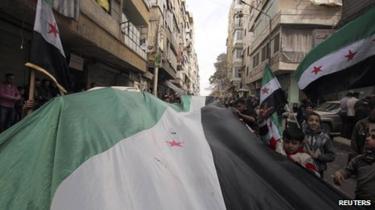
Image captionIn opposition held areas, the new Syrian flag has a green, not red, band
Two years ago, no-one thought that Syrian citizens would take to the street, shouting out loud calling for freedom and change.
The heavy sense of dictatorship and memories of the 1980s made Syrians think the wave of change in the region would never come to their country.
But it did happen. At first, people were surprised, but above all shocked that their government would fire on peaceful protesters in Deraa. Every day, the death toll increased and in reaction more people took to the street.
The movement started as protests calling for more freedom and dignity. The way the government handled the events since those first days drove more and more people to oppose President Bashar al-Assad.
At first, no-one was calling for the regime to fall. Many people had hopes that the young president would respond to their calls and punish those of the security forces who killed innocent civilians.
But the wave of killings and arrests, torture and humiliation targeting people who were not even involved in the demonstrations drove many who steered clear of politics to join the protest movement.
Voices silenced
Today, government shelling has silenced the voices of peaceful protest. Demonstrators are no longer giving roses to soldiers and security men chanting: "One, one, one, the Syrian people are one."
Ghaith Matar, the activist who initiated the practice of handing a rose and a bottle of water to troops, was found murdered in Daryya in mid-2011.
No more men and women are dancing in public squares to the sound of freedom songs made popular by Ibrahim al-Qashoush, who composed "Go, Go Bashar" in Hama.
He too was killed and dumped in a river, his throat cut and his vocal cords removed.
No protesters in Damascus throw rubber balls with the word "freedom" written on them to bounce about outside the president's home.