DENMARK - 03/16/2017
Rising temperatures mean shrinking villages in coastal Greenland
However, even the oldest people in Kulusuk are starting to leave. One of my friends, who is 60 years old, left for Denmark because she felt too lonely in the village.
"The ice is melting, so we can’t really teach our children our traditions"
Climate change explains a lot. Everything is changing rapidly. Now, it freezes over later in the year and the ice melts earlier. Winter is growing shorter. Because of these environmental changes, it is becoming difficult to pass on traditions to the children. For example, locals can no longer go to certain islands by sled because the ice isn’t solid or thick enough. It doesn’t extend far enough either. Residents are so used to doing everything on ice that they find it hard to adapt.
This year, the ice had all melted by mid-April. This is much earlier than usual and people feel quite disorientated. However, I do think that the locals are starting to connect what is happening in their village with the idea of global climate change. More and more researchers are coming to the region and asking the villagers questions about it.
I want to emphasise the fact that locals aren’t overly concerned about losing their traditions; they are just wondering how to adapt. The fear that climate change will destroy the culture of indigenous peoples is really more of a concern of educated people who don’t actually live in the Arctic.
The temperature of the ocean is slowly rising, which means that new species that local people are not used to hunting are moving into the waters around Greenland.
Rising temperatures mean shrinking villages in coastal Greenland
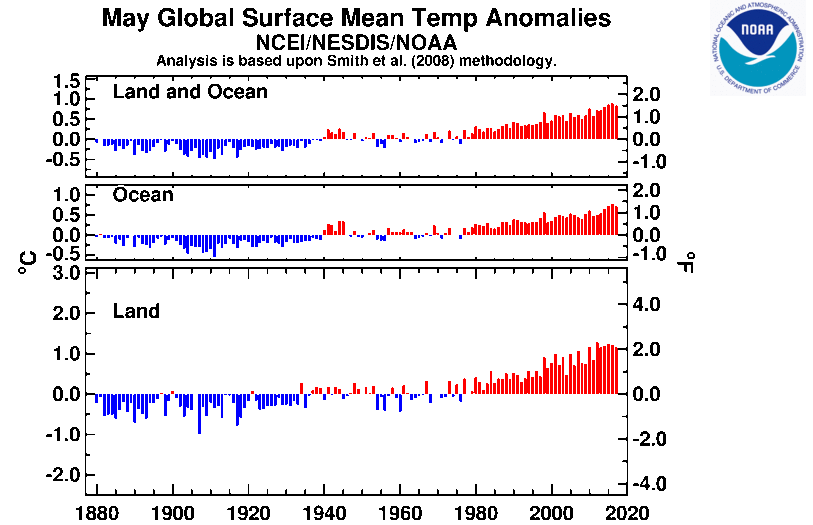
This is the real story of Greenland. A day's anomalous temperature, or even that of a week, is hardly a blip compared to the ongoing warming that is affecting everything in that land.