Do you have a link to these "mountains of evidence"?
One is the discovery of soft tissue in dinosaur bones.
Another is,
"In 1967 Robert L. Liscomb, a petroleum geologist working for Shell Oil Company, discovered well-preserved bones in Alaska along the Colville River. As the bones were fresh, not permineralized, he assumed that these were recently deposited, perhaps belonging to a mammoth or bison. Twenty years later scientists recognized the bones as belonging to the duck-billed dinosaur
Edmontosaurus. Other bones found in this deposit belong to horned dinosaurs, and various carnivorous dinosaurs (including a pygmy
Tyrannosaurus).
An article on Liscomb’s bones states: “The bones are stained a dark red brown but otherwise display little permineralization, crushing, or distortion.” (Davies, Kylie L., “Duckbill Dinosaurs (
Hadrosauridae, Ornithisichia) from the North Slope of Alaska,”
Journal of Paleontology 61, 1987, pp. 198-200.) Other researchers have found similar frozen dinosaur bones. For example, in 1987, while working with scientists from Memorial University on Bylot Island, just east of the northern tip of Baffin Island, a young Canadian Eskimo picked up such a bone fragment. It was identified within days as part of the lower jaw of a duck-billed dinosaur. (Helder, Margaret, “Fresh Dinosaur Bones Found,”
Creation Ex Nihilo 14, 1992, p. 16.) In 2015 an article was published entitled “A New Arctic Hadrosaurid from the Prince Creek Formation.” It states: “The hadrosaurid remains are almost entirely disarticulated, show little evidence of weathering, predation, or trampling, and are typically uncrushed and unpermineralized” (Hirotsugu Mori, et. al.,
Acta Palaeontologica Polonica, Sept. 22, 2015, p. 3.).
While freezing biological material like collagen obviously inhibits decay and helps preserve structure (from your left over turkey dinner to reptile bones) there are limits to how long it can be preserved. Is it reasonable to expect frozen bones to remain in this pristine condition for 60 million years?"
Dinosaur bones have be radiocarbon dated!
"
Carbon 14 Dating of Dinosaur Bones

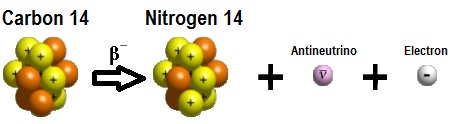
Carbon 14 (C-14) dating is used to establish the age of skeletons, fossils, and other items composed of material that was once alive. Very precise analysis from modern mass spectrometers can establish the date the living material in the sample stopped taking in carbon from the environment (the point of death). Because C-14 has such a short half-life (radioactively decaying into Nitrogen 14), all detectable C-14 should have disappeared well before 100,000 years. But careful analysis by researchers has substantiated the presence of Carbon 14 in dinosaur bones. Critics suggested that the samples became contaminated with modern Carbon 14. However, Carboniferous coal was carefully extracted from deep within mines (far below the layers containing dinosaur remains) and fully sealed till lab analysis. It was found to still contain Carbon 14! (Baumgardner, et. al., “Measurable 14C in Fossilized Organic Materials,”
Fifth ICC Paper, August 2003.)
In 2012, researchers analyzed multiple dinosaur bone samples from Texas, Alaska, Colorado, and Montana. C-14 dating revealed that they are less than 39,000 years old. These remarkable findings were presented by the German physicist Dr. Thomas Seiler at a conference sponsored by the American Geophysical Union (AGU) and the Asia Oceania Geosciences Society (AOGS) in Singapore. But apparently this evidence was unacceptable to influential evolutionists who subsequently found out about it. The abstract was removed from the conference website by two chairmen because they could not accept the findings. Unwilling to challenge the data openly, they erased the report from public view without a word to the authors or even to the AOGS officers!"
Evolution is fake science or else their scientists will not hide the truthful evidence.