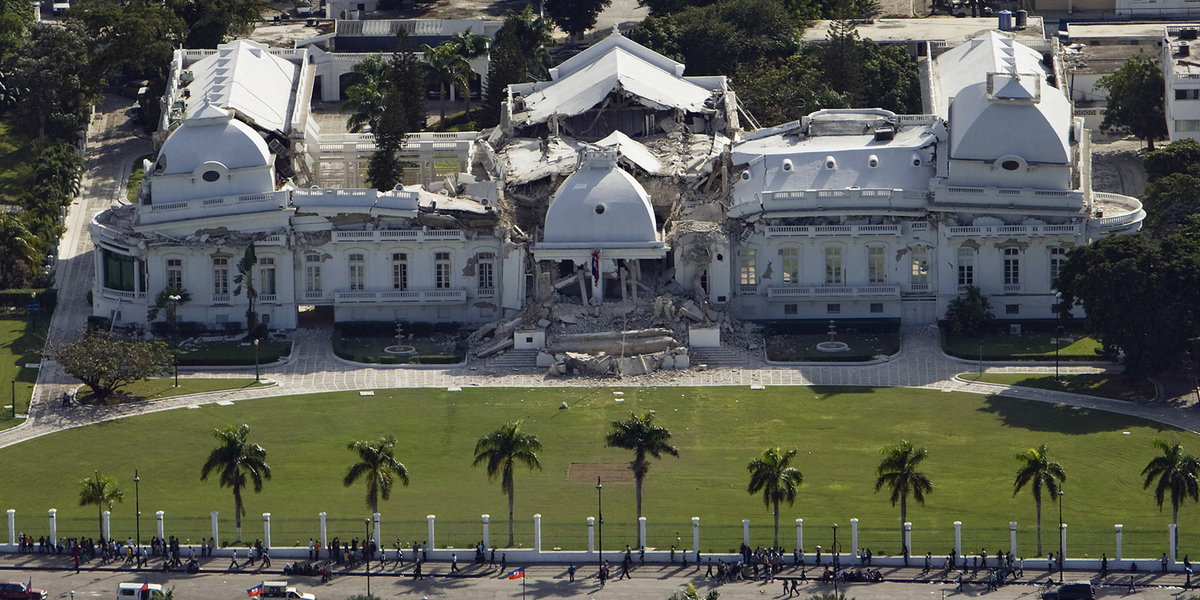
Zone1 Is the island of Haiti cursed?

Votto

Diamond Member
Joined
Oct 31, 2012
Messages
70,519
Reaction score
79,994
Points
3,605

The poverty of Haiti along with it's never ending natural disasters and political corruption are legendary. Today, the political battle is to try and send back many immigrants brought to the US because conditions in Haiti continue to be subhuman and miserable. Buy why? Why is the island of Haiti the poorest country in the Western hemisphere? It did not used to be so.

Haiti (formerly Saint Domingue) was a French colony that played a crucial role in trade between Europe, the Caribbean, and the Americas during the eighteenth century. Although Saint Domingue was relatively small (approximately the size of Maryland), it was the wealthiest colony in the Caribbean.

By 1789, the colony had attained a height of prosperity not surpassed in the history of European colonies. It contained 8,000 plantations and provided France with 40% of its profit from trade on an annual basis. More importantly, it produced a staggering amount of cash crops: more than one-half of the sugar and coffee consumed in Europe and the Americas, as well as significant amounts of cotton and indigo, were exported from Saint Domingue in the 18th century. But the enslaved population was the largest in the Caribbean, about 500,000, which was nearly twice that of Jamaica, the Caribbean colony with the second largest number of slaves.

In the midst of this political power struggle, a revolt erupted in August of 1791 under the leadership of a slave named Boukman, a reputedly influential man who used the religion of Vodun to inspire followers. Vodun is essentially a blending of African spiritual beliefs with Catholicism. Significantly, it was this use of African spirituality that prompted Pat Robertson to describe the Haitian Revolution as "a pact with the Devil," since the Haitian Revolution began immediately after one of Boukman's spiritual ceremonies.


Enslaved Africans, armed with machetes, began beating drums, chanting, and marching from plantation to plantation, killing, looting, and burning the cane fields. Beginning with 12,000 followers, Boukman's revolt quickly blossomed into the largest, bloodiest slave uprising in history. By the end of September, over a thousand plantations had been burned, and hundreds of Whites had been killed. The gens de couleur soon joined the rebels, and violence continued to spread.

After months of fighting and bloodshed, it became clear that the revolt had become impossible to control. In December of 1791, fresh troops sent from France clashed with insurgents, then led by François-Dominique Toussaint Louverture who had successfully created an organized army of over 20,000. In 1793, Louverture gained control of the government and declared an end to slavery.


In 1804, Haiti declared its independence and announced the formation of the first independent Black republic in the Western Hemisphere. After significant political turmoil in the wake of the revolution, Jean Pierre Boyer became the president of Haiti from 1818 to 1843 and Haiti settled into a brief period of political stability.

But it all soon fell apart. The article I cited later blames the US and the West for the decline of Haiti, due to the fact that the US cut off ties with the slave rebellion nation for some time. It is akin to how the Left blames the US for why Cuba is so backward and poverty stricken, because they too were cut off from trade with the US.

But trade has long since opened up with the US, but no improvement. In fact, things seem to only get worse there. And looking at all the island nations in the region, or even around the world, it does seem odd that Haiti is the odd man out in terms of taking advantage of their tropical island location in terms of tourism and such. I can see why a country trapped in a desert in Africa would be poor and destitute, but an island in the Caribbean? Really?

Today the US is fighting the notion that the US must take in pretty much all the Haitians, or if sent back, they will all suffer miserably and probably die an early death.

There is no nation like Haiti, in terms of its dysfunction and steady decline downward, which brings such questions of the possibility of it simply being cursed. It is the land of voodoo witch doctors after all.

I suppose people entertain the supernatural when the natural explanations really don't make much sense anymore.
 
Haiti is not an island to itself, it's shared with the Dominican Republic.

5rb92nykru6b1.jpg


There's a reason Haiti is a wasteland and the DR is lush and green.....Haitians.

Border road between Haiti and the DR.

haiti-dr.jpg
 
Haiti is not an island to itself, it's shared with the Dominican Republic.

5rb92nykru6b1.jpg


There's a reason Haiti is a wasteland and the DR is lush and green.

Border road between Haiti and the DR.

haiti-dr.jpg
But that just adds to the mystery.

Why the extreme change on one side of the island along the border line?
 

The poverty of Haiti along with it's never ending natural disasters and political corruption are legendary. Today, the political battle is to try and send back many immigrants brought to the US because conditions in Haiti continue to be subhuman and miserable. Buy why? Why is the island of Haiti the poorest country in the Western hemisphere? It did not used to be so.

Haiti (formerly Saint Domingue) was a French colony that played a crucial role in trade between Europe, the Caribbean, and the Americas during the eighteenth century. Although Saint Domingue was relatively small (approximately the size of Maryland), it was the wealthiest colony in the Caribbean.

By 1789, the colony had attained a height of prosperity not surpassed in the history of European colonies. It contained 8,000 plantations and provided France with 40% of its profit from trade on an annual basis. More importantly, it produced a staggering amount of cash crops: more than one-half of the sugar and coffee consumed in Europe and the Americas, as well as significant amounts of cotton and indigo, were exported from Saint Domingue in the 18th century. But the enslaved population was the largest in the Caribbean, about 500,000, which was nearly twice that of Jamaica, the Caribbean colony with the second largest number of slaves.

In the midst of this political power struggle, a revolt erupted in August of 1791 under the leadership of a slave named Boukman, a reputedly influential man who used the religion of Vodun to inspire followers. Vodun is essentially a blending of African spiritual beliefs with Catholicism. Significantly, it was this use of African spirituality that prompted Pat Robertson to describe the Haitian Revolution as "a pact with the Devil," since the Haitian Revolution began immediately after one of Boukman's spiritual ceremonies.


Enslaved Africans, armed with machetes, began beating drums, chanting, and marching from plantation to plantation, killing, looting, and burning the cane fields. Beginning with 12,000 followers, Boukman's revolt quickly blossomed into the largest, bloodiest slave uprising in history. By the end of September, over a thousand plantations had been burned, and hundreds of Whites had been killed. The gens de couleur soon joined the rebels, and violence continued to spread.

After months of fighting and bloodshed, it became clear that the revolt had become impossible to control. In December of 1791, fresh troops sent from France clashed with insurgents, then led by François-Dominique Toussaint Louverture who had successfully created an organized army of over 20,000. In 1793, Louverture gained control of the government and declared an end to slavery.


In 1804, Haiti declared its independence and announced the formation of the first independent Black republic in the Western Hemisphere. After significant political turmoil in the wake of the revolution, Jean Pierre Boyer became the president of Haiti from 1818 to 1843 and Haiti settled into a brief period of political stability.

But it all soon fell apart. The article I cited later blames the US and the West for the decline of Haiti, due to the fact that the US cut off ties with the slave rebellion nation for some time. It is akin to how the Left blames the US for why Cuba is so backward and poverty stricken, because they too were cut off from trade with the US.

But trade has long since opened up with the US, but no improvement. In fact, things seem to only get worse there. And looking at all the island nations in the region, or even around the world, it does seem odd that Haiti is the odd man out in terms of taking advantage of their tropical island location in terms of tourism and such. I can see why a country trapped in a desert in Africa would be poor and destitute, but an island in the Caribbean? Really?

Today the US is fighting the notion that the US must take in pretty much all the Haitians, or if sent back, they will all suffer miserably and probably die an early death.

There is no nation like Haiti, in terms of its dysfunction and steady decline downward, which brings such questions of the possibility of it simply being cursed. It is the land of voodoo witch doctors after all.

I suppose people entertain the supernatural when the natural explanations really don't make much sense anymore.
Your OP title has a misnomer. Haiti is not an island. The island is Hispaniola and there are two nations on it. Spanish-speaking Dominican Republic and French/Creole speaking Haiti. It is the most populous island in the Greater Antilles. Just sayin'
 
Your OP title has a misnomer. Haiti is not an island. The island is Hispaniola and there are two nations on it. Spanish-speaking Dominican Republic and French/Creole speaking Haiti. It is the most populous island in the Greater Antilles. Just sayin'
Yep, I was trying to remember the name if the island but it escaped me and I was too sorry to look it up. ;)
 
Back
Top Bottom