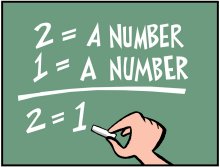
While we should have equality of opportunity (and we do), no one has a right to equality of outcome. The outcome of your opportunity is entirely up to you.
We get it. Unequal outcomes (more success = more money) incentivizes the very excellence which lifts all boats through innovation and job creation. This is how we cure cancer - by rewarding excellence. If a scientist and a janitor made the same money, we'd still be the dark ages - and everyone's standard of living would be lower. What sets capitalism apart from other economic models is that it gets incentives right (-unlike socialism, which fails to tap into human motivation)
.
Nobody is arguing against this stuff that we all learned in 3rd grade. Say something new or interesting.
I think the argument is that there is unequal access to opportunity, which results in unequal outcomes. Government policies protect owners by having trade policies that allow capitalists to shop the globe for cheaper labor, but, on the other hand, they enjoy tremendous protectionism from the nanny government. American workers have to compete with sweatshops in Taiwan, but the US government crushes foreign drug competition, thus giving Ely Lilly and its investors monopoly power - which means they can fleece the poor consumer. The government, because it is owned by the wealthiest market players who fund our elections, actively intervenes in the market to help the wealthy. This why Wall Street, which owns both parties, made trillions in profits off a securities-&-derivative scheme that sank the global economy in 2008 - because the government makes sure that money flows upward, even when it sinks all boats.
Contrary to the OPs very tired strawman, the argument isn't about equality or any of that silly lefty garbage. Our problem is that capitalism's desire for lower operating costs (which resulted in shifting production to freedom hating parts of the developing world) has left the US consumption economy with too few solvent consumers. During the postwar years we had the highest paid labor force in history. As a result of all the spending money in middle-class wallets, the capitalist had an incentive to innovate and add jobs, so he could go after all of that money. The result was massive demand-fueled job growth.
But Reagan, exploiting the 70s oil shock, convinced us that our high wage system was stifling growth - so we spent the last 30 years shifting jobs to freedom hating nations and driving down American wages. To make up for the loss in wages/benefits, we aggressively expanded credit to the middle class so they could consume and survive in the face of falling wages and slashed benefits.
[You get this right. Our largest employer, Walmart, doesn't pay its workers enough to survive, much less consume at the needed levels to sustain Main Street job growth. This is why we must feed the lower classes so many credit cards and other debt gimmick] Don't get me wrong: Reagan's great credit (debt) expansion worked great for a coupled decades. But eventually the middle class consumer became too indebted to consume sufficiently in the aggregate to fuel job growth. [it got so bad that we had to cannibalize the value in our own homes just to keep economic growth going. Indeed, in the absence of viable investment opportunities, the American economy has become over dependent on inflated asset bubbles; tech and housing being the most recent]
And now - after 30 years of expanding consumer debt - we're fucked, because our only policy tool, tax breaks for the wealthy, won't change the fact that no jobs will be added until consumers can buy what is produced. You can call this problem whatever you want, but the it isn't about equality. It's about a system which doesn't pay its workers enough to buy what they produce. It's counter to Henry Ford's logic of paying the worker more so he can buy the cars he makes - otherwise, we have to feed the worker credit in order to buy the car . . . and that always ends badly, as we are now learning.
In other words. We swallowed poison in 1980.