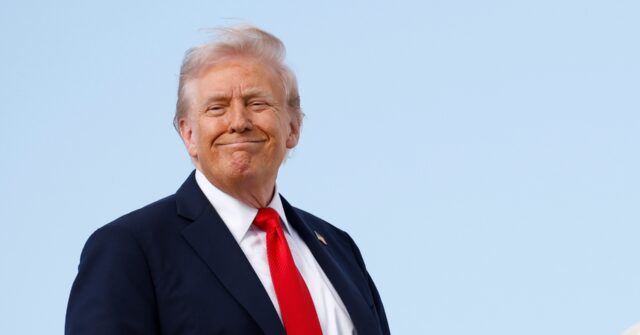
Ga Case Against Trump Dismissed

Trump avoided prosecution, nd certain conviction only because the Supreme Court gave him a get out of jail free card.

He is dead to right guilty. The entire nation heard him try and persuade Raffensburger to righ the count.
That’s quite the imagination you have there!
 
This was not bogus. But what was the case was dismissed. We all heard Trump on the phone, so you idiots can just stop trying to gaslight us. This was another miscarriage of justice. Donald Trump is going to face justice. He can do it while living and repent, or he can get judgment after death, and there will be no appeal.

So all you Trump worshippers are doing is enabling a man to spend eternity in hell. Hope you feel good about yourselves.
Trump had no power over the Ga Sec of State. There was no coercion. You and the rest of the lefty retards are imputing the “coercion”.

Honestly, I am worried that you take such irrational positions. Of course, I am not worried about you personally, per se. Rather, I worry about the safety of others with unglued weirdos like you walking free amongst us.
 
Trump avoided prosecution, nd certain conviction only because the Supreme Court gave him a get out of jail free card.

He is dead to right guilty. The entire nation heard him try and persuade Raffensburger to righ the count.
:itsok:
 
No one did. Idolatry is a MAGA thing.


1764197522943.webp
 
I predict that when we become as dependent on it as you are suggesting, we will cease to exist because we will no longer be able to think and reason. It is already happening---witness democrats.
If we get the golden age, the future will be like the movie Wally.

If we don't, the future will be like the movie, the road.
 
Any reasonable person recognizes there was no election interference. I hope Trump sues.
Interference or not, I don't believe for a second the guy hiding in his basement for four years received 80 million votes, especially miraculousy taking the lead at 3-4 am in highly contested states while most people were still sleeping.
 
15th post

Good-Time Fani’s bogus prosecution, in collusion with the Biden WH and God knows who else, has been dismissed now that a sane prosecutor took over the case. Believing this was a legit prosecution is a clear symptom of TDS and warrants further evaluation. But at least the second best result occurred (the best result would have been a public prosecutor NOT wasting millions in taxpayer money to prosecute a totally frivolous case in the first place, especially premised on corrupt political purposes).
You're full of shit as a Christmas turkey, and not only is this not over, but that prosecutors life is going to get very difficult.

Skandalakis’s statements do not simply reflect a cautious legal philosophy. They invert the logic of accountability in a way that distorts the facts, misstates prosecutorial duty, and erases the extraordinary volume of evidence that gave rise to multiple grand-jury indictments, plea agreements, and extensive investigative materials. The claim that “reasonable minds could differ” only works if one artificially narrows the frame of analysis to a single phone call — and even that interpretation is strained. Once the full context of Trump’s conduct is included, the claim becomes untenable.

1. Trump’s conduct was not a single ambiguous phone call — it was a coordinated, multi-front effort.

The Georgia case was never about one call. It encompassed:

  • False-elector schemes
  • Pressure on state officials
  • Data breaches in Coffee County
  • Statements and actions by multiple co-defendants
  • Guilty pleas already entered by key insiders
  • A sprawling, multi-person coordinated plan to overturn a certified election
No “reasonable mind” evaluating the totality of evidence could conclude that this was merely a sincere request for clarification from a confused candidate. The notion that the case hinged on a single, ambiguous interpretation is a misrepresentation of the evidence itself. Reducing a multi-defendant RICO case to a single moment of subjective interpretation is not caution — it’s obfuscation.

2. The claim ignores the overwhelming factual record showing Trump knew his claims were false.

Trump was repeatedly informed by:

  • His campaign officials
  • His DOJ officials
  • State election officials
  • Georgia’s Republican Secretary of State
  • His own White House lawyers
that there was no evidence of widespread fraud. He lost every meaningful lawsuit. Georgia recounted multiple times — all confirming the result.

The idea that Trump “sincerely believed” he won is the least plausible interpretation. Deliberate disregard of reality — especially when repeatedly corrected — is not “good faith.” In criminal law, willful ignorance can itself establish intent.

Skandalakis’s framing treats “subjective belief” like a magic wand that dissolves responsibility. But belief is irrelevant when behavior shows:

  • Conscious rejection of verified facts
  • Deliberate pressure on officials
  • Coordination with others to overturn results
  • Repeated statements contradicting private admissions
Calling this “ambiguous” is simply inaccurate.

3. The “benefit of the doubt” standard applies when evidence is uncertain — not when prosecutors refuse to review it.

Perhaps the most troubling part of Skandalakis’s reasoning is this: he publicly acknowledged he did not review the full evidence, which includes:

  • 101 boxes of documents
  • An 8-terabyte hard drive of investigative materials
  • Multiple plea agreements
  • Grand jury testimony
  • Thousands of digital communications
Claiming “reasonable minds could differ” while declining to examine the evidence is not a principled legal stance — it is a self-manufactured ambiguity. The lack of review creates the illusion of uncertainty, then uses that uncertainty as the rationale for dismissal.

This is the move that most resembles gaslighting: inducing the public to question the clarity of the facts while ignoring those facts entirely.

4. Prosecutors do not owe “benefit of the doubt” to a convicted felon with an established record of deception.

Trump is not a first-time defendant. He is not a citizen with a clean slate. He is:

  • A convicted felon
  • A litigant found liable for fraud, defamation, and sexual assault
  • A person with a long record of knowingly false statements
The “benefit of the doubt” does not extend infinitely — certainly not to those who repeatedly demonstrate bad faith. Prosecutors regularly use prior conduct to assess credibility, motive, and intent.

To claim that Trump’s criminal history and verified pattern of dishonesty are irrelevant is not neutrality — it is selective blindness.

5. Multiple grand juries already determined there was probable cause. Dismissing that is not skepticism — it is disrespect for the system.

A prosecutor may disagree with a grand jury’s conclusion, but the standard is high — and the evidence presented was so substantial that multiple grand juries approved indictments. These jurors were Georgia citizens. They saw evidence Skandalakis claims to have bypassed.

For a single official to override the findings of multiple grand-jury bodies while citing “ambiguity” that those juries did not find reflects an inversion of democratic accountability.

It weaponizes discretion to nullify public fact-finding.

6. Refusing to prosecute co-defendants — even though Trump’s immunity makes them the only viable targets — undermines every stated rationale.

Even if prosecuting a sitting president is impractical or legally constrained, the co-conspirators are not immune. Many already pleaded guilty to lesser offenses.

By dropping charges against everyone, Skandalakis effectively argued:

  • We cannot hold the main actor accountable
  • Therefore we should not hold anyone accountable
This contradicts the logic of conspiracy law entirely. It also deprives the public of the full story behind the plot — something Skandalakis previously claimed to value as “transparency.”

7. The statements follow a classic gaslighting pattern: asserting doubt in the face of overwhelming clarity.

Gaslighting occurs when an authority figure tells the public:

  • What you saw isn’t what you saw.
  • What you heard isn’t what you heard.
  • The evidence isn’t clear, even when it is.
  • You must doubt your own interpretation.
  • Only I can tell you what is “reasonable.”
That’s precisely what Skandalakis’s statements achieve:

They ask people to abandon their understanding of well-documented events — events confirmed by officials, investigations, indictments, and even co-defendants’ guilty pleas — and instead accept that ambiguity reigns.

This is not a neutral application of discretion. It is a rhetorical erasure of reality.


Conclusion: A Dismissal Built Not on Ambiguity, but on Avoidance

Skandalakis’s claim that “reasonable minds could differ” and that Trump deserved the “benefit of the doubt” is not a product of careful legal judgment. It is a product of strategic narrowing, factual omission, and selective framing. When viewed in full context, it is simply not credible.

A prosecutor cannot decline to examine evidence, ignore documented patterns of deceit, bypass the conclusions of multiple grand juries, erase the significance of multiple guilty pleas, dismiss the actions of numerous co-defendants, and then claim that ambiguity is the problem.

Ambiguity wasn’t discovered.
It was manufactured.

And asking the public to accept that manufactured ambiguity is gaslighting — institutional, consequential, and deeply corrosive.

If we can demand the Epstein files be released, perhaps we should also demand the full evidence in this case at least also be released publicly.
 
You're full of shit as a Christmas turkey, and not only is this not over, but that prosecutors life is going to get very difficult.

Skandalakis’s statements do not simply reflect a cautious legal philosophy. They invert the logic of accountability in a way that distorts the facts, misstates prosecutorial duty, and erases the extraordinary volume of evidence that gave rise to multiple grand-jury indictments, plea agreements, and extensive investigative materials. The claim that “reasonable minds could differ” only works if one artificially narrows the frame of analysis to a single phone call — and even that interpretation is strained. Once the full context of Trump’s conduct is included, the claim becomes untenable.

1. Trump’s conduct was not a single ambiguous phone call — it was a coordinated, multi-front effort.

The Georgia case was never about one call. It encompassed:

  • False-elector schemes
  • Pressure on state officials
  • Data breaches in Coffee County
  • Statements and actions by multiple co-defendants
  • Guilty pleas already entered by key insiders
  • A sprawling, multi-person coordinated plan to overturn a certified election
No “reasonable mind” evaluating the totality of evidence could conclude that this was merely a sincere request for clarification from a confused candidate. The notion that the case hinged on a single, ambiguous interpretation is a misrepresentation of the evidence itself. Reducing a multi-defendant RICO case to a single moment of subjective interpretation is not caution — it’s obfuscation.

2. The claim ignores the overwhelming factual record showing Trump knew his claims were false.

Trump was repeatedly informed by:

  • His campaign officials
  • His DOJ officials
  • State election officials
  • Georgia’s Republican Secretary of State
  • His own White House lawyers
that there was no evidence of widespread fraud. He lost every meaningful lawsuit. Georgia recounted multiple times — all confirming the result.

The idea that Trump “sincerely believed” he won is the least plausible interpretation. Deliberate disregard of reality — especially when repeatedly corrected — is not “good faith.” In criminal law, willful ignorance can itself establish intent.

Skandalakis’s framing treats “subjective belief” like a magic wand that dissolves responsibility. But belief is irrelevant when behavior shows:

  • Conscious rejection of verified facts
  • Deliberate pressure on officials
  • Coordination with others to overturn results
  • Repeated statements contradicting private admissions
Calling this “ambiguous” is simply inaccurate.

3. The “benefit of the doubt” standard applies when evidence is uncertain — not when prosecutors refuse to review it.

Perhaps the most troubling part of Skandalakis’s reasoning is this: he publicly acknowledged he did not review the full evidence, which includes:

  • 101 boxes of documents
  • An 8-terabyte hard drive of investigative materials
  • Multiple plea agreements
  • Grand jury testimony
  • Thousands of digital communications
Claiming “reasonable minds could differ” while declining to examine the evidence is not a principled legal stance — it is a self-manufactured ambiguity. The lack of review creates the illusion of uncertainty, then uses that uncertainty as the rationale for dismissal.

This is the move that most resembles gaslighting: inducing the public to question the clarity of the facts while ignoring those facts entirely.

4. Prosecutors do not owe “benefit of the doubt” to a convicted felon with an established record of deception.

Trump is not a first-time defendant. He is not a citizen with a clean slate. He is:

  • A convicted felon
  • A litigant found liable for fraud, defamation, and sexual assault
  • A person with a long record of knowingly false statements
The “benefit of the doubt” does not extend infinitely — certainly not to those who repeatedly demonstrate bad faith. Prosecutors regularly use prior conduct to assess credibility, motive, and intent.

To claim that Trump’s criminal history and verified pattern of dishonesty are irrelevant is not neutrality — it is selective blindness.

5. Multiple grand juries already determined there was probable cause. Dismissing that is not skepticism — it is disrespect for the system.

A prosecutor may disagree with a grand jury’s conclusion, but the standard is high — and the evidence presented was so substantial that multiple grand juries approved indictments. These jurors were Georgia citizens. They saw evidence Skandalakis claims to have bypassed.

For a single official to override the findings of multiple grand-jury bodies while citing “ambiguity” that those juries did not find reflects an inversion of democratic accountability.

It weaponizes discretion to nullify public fact-finding.

6. Refusing to prosecute co-defendants — even though Trump’s immunity makes them the only viable targets — undermines every stated rationale.

Even if prosecuting a sitting president is impractical or legally constrained, the co-conspirators are not immune. Many already pleaded guilty to lesser offenses.

By dropping charges against everyone, Skandalakis effectively argued:

  • We cannot hold the main actor accountable
  • Therefore we should not hold anyone accountable
This contradicts the logic of conspiracy law entirely. It also deprives the public of the full story behind the plot — something Skandalakis previously claimed to value as “transparency.”

7. The statements follow a classic gaslighting pattern: asserting doubt in the face of overwhelming clarity.

Gaslighting occurs when an authority figure tells the public:

  • What you saw isn’t what you saw.
  • What you heard isn’t what you heard.
  • The evidence isn’t clear, even when it is.
  • You must doubt your own interpretation.
  • Only I can tell you what is “reasonable.”
That’s precisely what Skandalakis’s statements achieve:

They ask people to abandon their understanding of well-documented events — events confirmed by officials, investigations, indictments, and even co-defendants’ guilty pleas — and instead accept that ambiguity reigns.

This is not a neutral application of discretion. It is a rhetorical erasure of reality.


Conclusion: A Dismissal Built Not on Ambiguity, but on Avoidance

Skandalakis’s claim that “reasonable minds could differ” and that Trump deserved the “benefit of the doubt” is not a product of careful legal judgment. It is a product of strategic narrowing, factual omission, and selective framing. When viewed in full context, it is simply not credible.

A prosecutor cannot decline to examine evidence, ignore documented patterns of deceit, bypass the conclusions of multiple grand juries, erase the significance of multiple guilty pleas, dismiss the actions of numerous co-defendants, and then claim that ambiguity is the problem.

Ambiguity wasn’t discovered.
It was manufactured.

And asking the public to accept that manufactured ambiguity is gaslighting — institutional, consequential, and deeply corrosive.

If we can demand the Epstein files be released, perhaps we should also demand the full evidence in this case at least also be released publicly.
Here's your binky. Now calm down. LMAO
 

Attachments

  • 1764262076617.webp
    1764262076617.webp
    18.4 KB · Views: 9
Trump avoided prosecution, nd certain conviction only because the Supreme Court gave him a get out of jail free card.

He is dead to right guilty. The entire nation heard him try and persuade Raffensburger to righ the count.
Or the prosecutor decided it was a waste of resources and would be tough getting a conviction.

Democrat lawfare stopped dead in its tracks by reality.
 
Back
Top Bottom