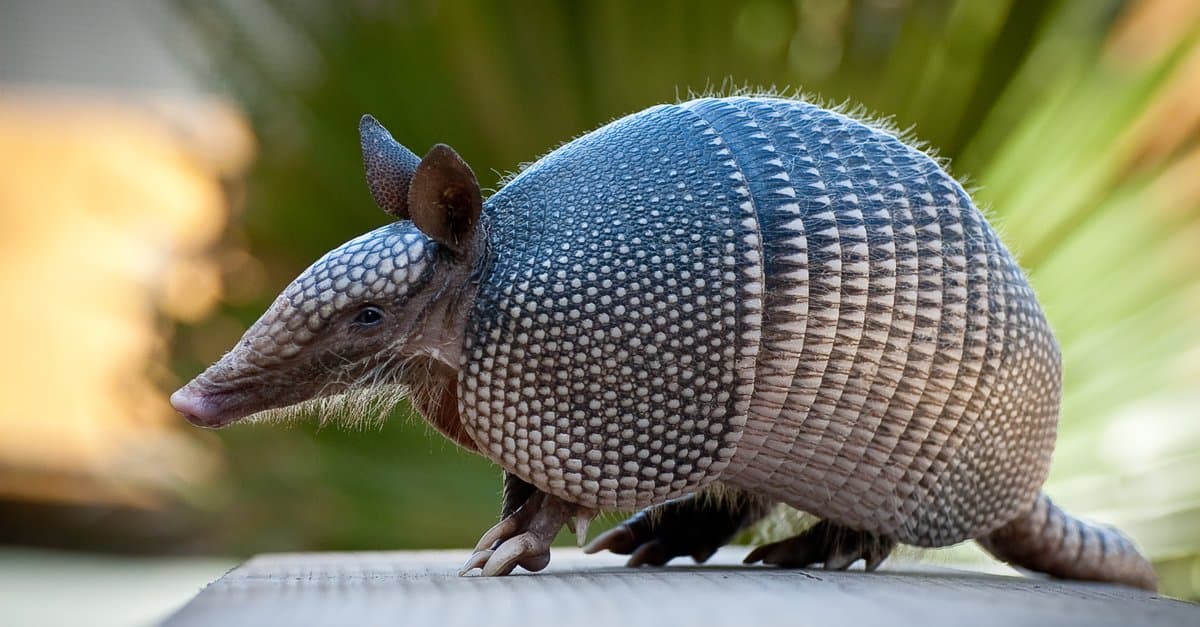
Effing armadillos

task0778

Diamond Member
Joined
Mar 10, 2017
Messages
14,742
Reaction score
13,811
Points
2,415
Location
Gainesville FL
I got big holes all over my lawn from armadillos looking for grubs and slugs. Which is sorta good cuz the Gs and Ss will eat my garden plants. But is there any way to kinda discourage them from digging up my lawn that doesn't cost a lotta money? Or maybe try to get rid of the grubs and slugs, no food means no armadillos, right? Or maybe a 2-pronged attack, get rid of both.
 
I got big holes all over my lawn from armadillos looking for grubs and slugs. Which is sorta good cuz the Gs and Ss will eat my garden plants. But is there any way to kinda discourage them from digging up my lawn that doesn't cost a lotta money? Or maybe try to get rid of the grubs and slugs, no food means no armadillos, right? Or maybe a 2-pronged attack, get rid of both.
Had a problem with Armies, called a specialist who came with containment units and soon no more Armies,
 
I got big holes all over my lawn from armadillos looking for grubs and slugs. Which is sorta good cuz the Gs and Ss will eat my garden plants. But is there any way to kinda discourage them from digging up my lawn that doesn't cost a lotta money? Or maybe try to get rid of the grubs and slugs, no food means no armadillos, right? Or maybe a 2-pronged attack, get rid of both.
I had a pretty nasty infestation of grubs last year. I hit it with a commercial grub killer last year and I put down another application this week. We'll see if it is effective. We don't have armadillos here, but gophers, moles and voles that I've had to deal with in the past. The only effective solution to those was trapping them.
 
I would try traps first; I don't like using a lot of chemicals on my land, but to each their own. Those things are just armored rats, so they carry nasty diseases, so be careful handling them. I would ger rid of them whether they did anything or not, especially with kids and pets around.


#1Hansen’s Disease
#2Leptospirosis
#3Salmonella
#4Histoplasmosis
#5Rabies
#6Tapeworms

#3 is leprosy. Shooting them leaves blood spreading around. Wouldn't go that route if you're growing food there.
 
Last edited:
I had a pretty nasty infestation of grubs last year. I hit it with a commercial grub killer last year and I put down another application this week. We'll see if it is effective. We don't have armadillos here, but gophers, moles and voles that I've had to deal with in the past. The only effective solution to those was trapping them.

Amazon has a product called Bug Clear lawn insect killer that kills grubs. So, I thought if I remove the food source maybe the armies will go elsewhere. That, and I read where they don't like cayenne and vinegar, so I can try that, plus fill in their holes with gravel mixed with castor oil.
 
Amazon has a product called Bug Clear lawn insect killer that kills grubs. So, I thought if I remove the food source maybe the armies will go elsewhere. That, and I read where they don't like cayenne and vinegar, so I can try that, plus fill in their holes with gravel mixed with castor oil.
I put down Scott's GrubEX. They tout it as a season long solution, so we'll see.
 
I got big holes all over my lawn from armadillos looking for grubs and slugs. Which is sorta good cuz the Gs and Ss will eat my garden plants. But is there any way to kinda discourage them from digging up my lawn that doesn't cost a lotta money? Or maybe try to get rid of the grubs and slugs, no food means no armadillos, right? Or maybe a 2-pronged attack, get rid of both.
Armadillos may be tearing up lawns on your screen right now, but they’re not all trouble. They actually bring several ecological benefits that often get overlooked. Here’s a clean, useful breakdown.

🌱 1. Natural Pest Control

Armadillos eat:
  • Beetles
  • Grubs
  • Termites
  • Ants
  • Spiders
  • Snails
A single armadillo can remove thousands of soil‑dwelling insects in a season. They’re one of the most effective natural grub‑control systems in North America.

🌾 2. Soil Aeration

Their digging:
  • Loosens compacted soil
  • Increases water penetration
  • Helps mix organic material into the topsoil
It’s the same principle as mechanical aeration — just less tidy.

🧬 3. Scientific and Medical Value

Armadillos are biologically unusual:
  • They almost always give birth to identical quadruplets, which is valuable for genetic research.
  • Their immune system is unique and has been used in studies of:
    • Leprosy (they are one of the few animals that can carry it)
    • Regenerative medicine
    • Evolutionary biology
They’ve contributed to several important medical insights.

🌿 4. Seed Dispersal

By eating fruits and then moving long distances, they help spread seeds and maintain plant diversity in their ecosystems.

🦔 5. Prey Species for Larger Animals

They are an important food source for:
  • Coyotes
  • Bobcats
  • Cougars
  • Large birds of prey
They help maintain predator populations in healthy balance.

🌍 6. Ecosystem Engineers

Their burrows:
  • Provide shelter for other species (snakes, rabbits, frogs, insects)
  • Create micro‑habitats that increase biodiversity
Think of them as small‑scale landscape architects.
How to protect against their anti-lawn behavior.

Use scent‑based deterrents (they work surprisingly well)

Armadillos have poor eyesight but a powerful sense of smell.

Effective repellents

  • Castor oil granules (safe for pets and plants)
  • Garlic‑based repellents
  • Predator urine (fox or coyote granules)
Spread around:
  • Garden beds
  • Lawn edges
  • Known digging spots
 
Chuz Life, do not interact with armadillos, for they can carry leprosy.

How effective are antibiotics against leprosy?

Antibiotics are highly effective. Modern multidrug therapy (MDT) cures leprosy in more than 99% of cases when taken as prescribed.

Leprosy bacteria (Mycobacterium leprae) grow extremely slowly, which is why treatment takes months rather than days.

How long does treatment take?

The World Health Organization’s standard durations:

Paucibacillary leprosy (milder form)

  • 6 months of multidrug therapy
  • Usually includes rifampin + dapsone

Multibacillary leprosy (more advanced form)

  • 12 months of multidrug therapy
  • Usually includes rifampin, clofazimine, and dapsone
Some clinicians extend treatment to 18–24 months if the disease is severe or slow to respond.

How quickly do symptoms improve?

Within days to weeks

  • The bacteria stop multiplying
  • The patient is no longer contagious

Within months

  • Skin lesions begin to fade
  • Nerve inflammation may stabilize

Long‑term

  • Nerve damage that already occurred may not fully reverse
  • Early treatment prevents most disability

Why does treatment take so long?

  • M. leprae divides only once every 12–14 days
  • Compare that to strep throat bacteria, which divide every 20–30 minutes
  • Slow growth = slow clearance = long antibiotic courses

Can armadillos transmit leprosy?

Yes — in the southern U.S., including parts of Texas and the Gulf states, armadillos can carry M. leprae.Transmission is rare, but possible through:
  • Handling armadillos
  • Contact with their bodily fluids
  • Eating undercooked armadillo meat
Simply having them in your yard does not pose a meaningful risk.
 
15th post
I would still swap for what these ******* muskrats are costing me.
The merits of protecting armys around your lawn and garden outweigh nuking them. Just use repellants.

The same with opossums. They are your friends. But... they are not pets, and their bites can be vicious.
 
Back
Top Bottom