Congratulations to the President. Trump's tariffs are winning...

The point is that America can't afford it. The world can make adjustments.
America is the largest market in the world. They need us more than we need them. Even more important we now have reliable energy policies while Europe is drowning in green energy driving manufacturing here
 
Americans are too uninformed about the rest of the world.
You certainly are.

AI Overview

Before the Trump administration (specifically before 2017), the average EU tariff on U.S. imports was quite low, often cited around 1.47 to 2.5%.


These low rates reflected long-standing trade agreements, which contrasted sharply with the significantly higher tariff rates implemented later.
 
IF/WHEN this fails, will you admit it, or ignore it and refuse to learn from it?
I'll answer.

I'll admit to it.

Now your turn.

If it succeeds and the US loses a significant part of trade in the global trade market. Will you admit Trump screwed you? Or will it be somebody elses fault?
 
Yeah, and that will happen in time. They'll have to deal with us in some areas for now, but the trust is broken.

Trade agreements require stability, respect, leadership and trust. That's all gone. They're done with us.
Trade agreements only require leverage

European manufacturers are increasingly moving production to the U.S. to capitalize on lower energy costs, massive incentives from the Inflation Reduction Act (IRA), and to avoid impending 15% tariffs on EU goods, with investments projected to grow by $600 billion by 2028. Key sectors shifting production include automotive, steel, chemicals, and pharmaceuticals, driven by companies like Volkswagen, ArcelorMittal, and OCI.
New York Post
New York Post +3

Key Drivers for Relocation
  • Energy Costs & Stability: High energy prices in Europe make production, particularly in energy-intensive industries like steel and chemicals, unsustainable compared to the U.S..
  • Policy Incentives: The Inflation Reduction Act offers significant tax credits and incentives for green manufacturing, particularly attracting EV and battery makers.
  • Tariff Avoidance: The 2025 U.S.-EU trade deal imposes a 15% tariff on most European goods, making local U.S. production more cost-effective than importing.
  • Supply Chain Resilience: Following pandemic-era disruptions, companies are diversifying to reduce logistics expenses and risks.
    OERTZENGroup
    OERTZENGroup +4

Major Industries & Companies
  • Automotive & Batteries: Volkswagen and Tesla have both expanded or planned U.S. manufacturing for vehicles and batteries.
  • Steel & Materials: ArcelorMittal has expanded in Texas due to better performance and lower costs.
  • Chemicals & Pharma: OCI is investing in Texas ammonia plants, while high-value pharmaceutical exports face pressure from potential 15% tariffs.
    Manufacturing Digital
    Manufacturing Digital +2

Impact and Outlook
  • Investment Surge: European firms are expected to increase investment by $600 billion by 2028, with 93% of German companies planning to increase U.S. investments.
  • Job Growth: This shift is bolstering the U.S. manufacturing base, with 7.9 million U.S. workers already employed by international companies.
  • Long-Term Strategy: For many European firms, setting up U.S. operations is becoming essential for maintaining market share in North America.
 

Attachments

  • 1771419267254.webp
    1771419267254.webp
    590 bytes · Views: 4
  • 1771419267248.webp
    1771419267248.webp
    2.5 KB · Views: 7
  • 1771419267261.webp
    1771419267261.webp
    514 bytes · Views: 4
  • 1771419267266.webp
    1771419267266.webp
    798 bytes · Views: 6
  • 1771419267281.webp
    1771419267281.webp
    1.3 KB · Views: 6
  • 1771419267276.webp
    1771419267276.webp
    4 KB · Views: 5
  • 1771419267271.webp
    1771419267271.webp
    2.7 KB · Views: 5
You certainly are.

AI Overview

Before the Trump administration (specifically before 2017), the average EU tariff on U.S. imports was quite low, often cited around 1.47 to 2.5%.


These low rates reflected long-standing trade agreements, which contrasted sharply with the significantly higher tariff rates implemented later.
This whole mess is about one thing: Trump's lifelong feelings of being victimized. That cancer has now spread all the way though MAGA, and they've become the biggest victims on the planet.

This could have been done COMPLETELY differently, behind closed doors, with respect, care and stability. But Trump just doesn't have that capacity.
 
Trade agreements only require leverage

European manufacturers are increasingly moving production to the U.S. to capitalize on lower energy costs, massive incentives from the Inflation Reduction Act (IRA), and to avoid impending 15% tariffs on EU goods, with investments projected to grow by $600 billion by 2028. Key sectors shifting production include automotive, steel, chemicals, and pharmaceuticals, driven by companies like Volkswagen, ArcelorMittal, and OCI.
View attachment 1220497New York Post +3

Key Drivers for Relocation
  • Energy Costs & Stability: High energy prices in Europe make production, particularly in energy-intensive industries like steel and chemicals, unsustainable compared to the U.S..
  • Policy Incentives: The Inflation Reduction Act offers significant tax credits and incentives for green manufacturing, particularly attracting EV and battery makers.
  • Tariff Avoidance: The 2025 U.S.-EU trade deal imposes a 15% tariff on most European goods, making local U.S. production more cost-effective than importing.
  • Supply Chain Resilience: Following pandemic-era disruptions, companies are diversifying to reduce logistics expenses and risks.
    View attachment 1220494OERTZENGroup +4

Major Industries & Companies
  • Automotive & Batteries: Volkswagen and Tesla have both expanded or planned U.S. manufacturing for vehicles and batteries.
  • Steel & Materials: ArcelorMittal has expanded in Texas due to better performance and lower costs.
  • Chemicals & Pharma: OCI is investing in Texas ammonia plants, while high-value pharmaceutical exports face pressure from potential 15% tariffs.
    View attachment 1220491Manufacturing Digital +2

Impact and Outlook
  • Investment Surge: European firms are expected to increase investment by $600 billion by 2028, with 93% of German companies planning to increase U.S. investments.
  • Job Growth: This shift is bolstering the U.S. manufacturing base, with 7.9 million U.S. workers already employed by international companies.
  • Long-Term Strategy: For many European firms, setting up U.S. operations is becoming essential for maintaining market share in North America.
Friends and partners don't use leverage as a weapon, while insulting, threatening, mocking, extorting and punishing each other.

Maybe in your world, but not among intelligent people and countries.
 
This whole mess is about one thing: Trump's lifelong feelings of being victimized. That cancer has now spread all the way though MAGA, and they've become the biggest victims on the planet.

This could have been done COMPLETELY differently, behind closed doors, with respect, care and stability. But Trump just doesn't have that capacity.
So why is everything better now that Biden is gone and Trump is in charge
 
Americas GDP 4.3% increasing every quarter. The world needs to export to us. We dont need them. Manufacturing is leaving Europe and coming here because green energy is destroying profits and cant meet demand. Tariffs work America is thriving
Sure. I guess bullshit talks and money walks.
The dollar's decline also coincides with a host of destabilizing forces, ranging from the latest tariff threats by President Trump to another potential government shutdown this weekend, according to economists. A longer-term trend is also weighing on the currency, as investors shift out of the dollar and into hard assets such as gold, JPMorgan Chase said in a 2025 report.
 
Sure. I guess bullshit talks and money walks.
The dollar's decline also coincides with a host of destabilizing forces, ranging from the latest tariff threats by President Trump to another potential government shutdown this weekend, according to economists. A longer-term trend is also weighing on the currency, as investors shift out of the dollar and into hard assets such as gold, JPMorgan Chase said in a 2025 report.
Our former friends and trading partners are selling American assets just to get out from under them. Even treausuries. At a loss.

They're done with us. The Trumpsters will never know that, because they'll never be told by the voices they trust.
 
This whole mess is about one thing: Trump's lifelong feelings of being victimized. That cancer has now spread all the way though MAGA, and they've become the biggest victims on the planet.

This could have been done COMPLETELY differently, behind closed doors, with respect, care and stability. But Trump just doesn't have that capacity.
He runs the regime as he did his business when he was abusing the contractors doing work on his properties. He used the economic advantage he had to screw them out of payments for services. Now he's using America's economic might to coerce and extort trading partners like Japan while US consumers are paying the price for his fundamental misunderstanding of how tariffs work. No one would believe he could be this stupid if he wasn't showing it to us every day.
 
He runs the regime as he did his business when he was abusing the contractors doing work on his properties. He used the economic advantage he had to screw them out of payments for services. Now he's using America's economic might to coerce and extort trading partners like Japan while US consumers are paying the price for his fundamental misunderstanding of how tariffs work. No one would believe he could be this stupid if he wasn't showing it to us every day.
Y'know, for all the vague feelings of dread I had coming into Season Two, I didn't consider how absolutely STUPID this would be.

I think that's also something our former friends around the world had trouble with, too. They kept asking, "WHAT is going ON over there?" I tried to explain it to overseas friends and family, but they had trouble understanding that a government could behave this way.

They don't ask any more. They're done.
 
You certainly are.

AI Overview

Before the Trump administration (specifically before 2017), the average EU tariff on U.S. imports was quite low, often cited around 1.47 to 2.5%.


These low rates reflected long-standing trade agreements, which contrasted sharply with the significantly higher tariff rates implemented later.
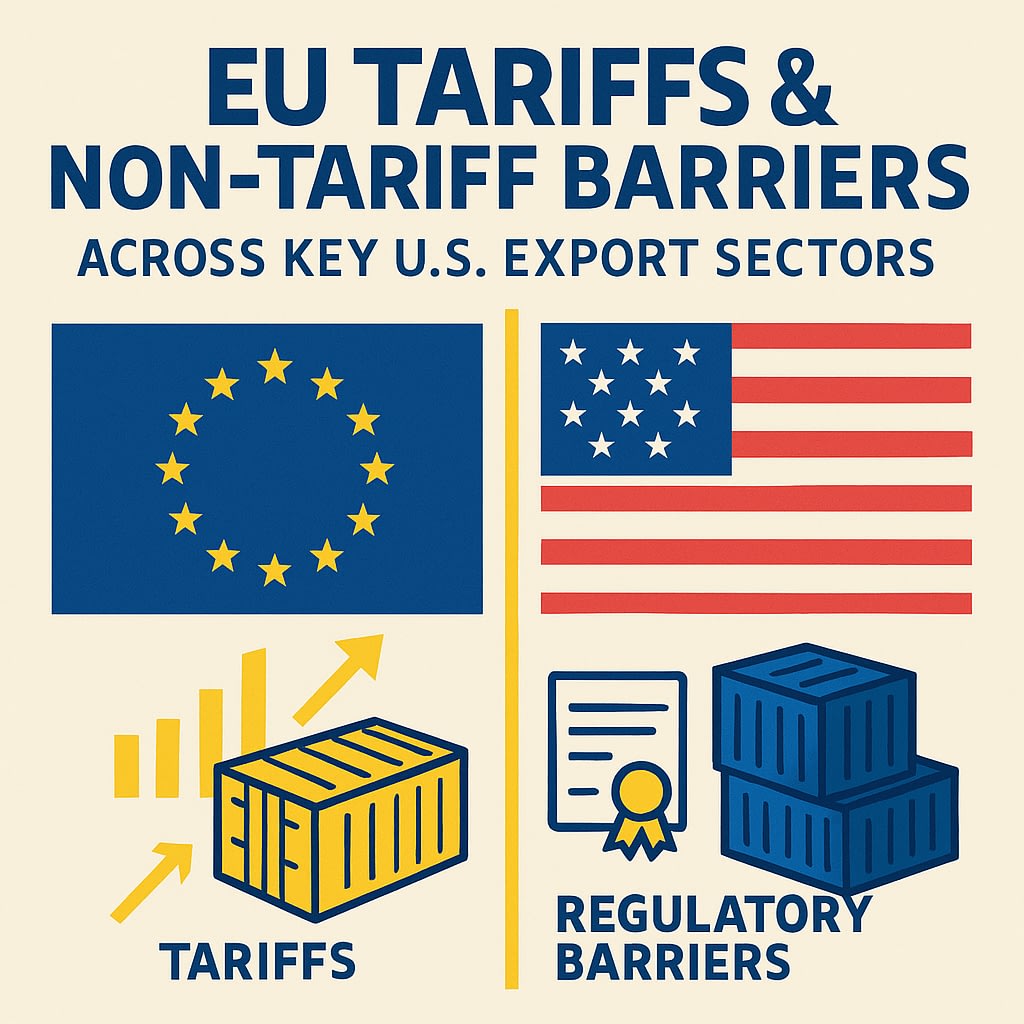
You confirm my notion. They use methods from arbitrary standards to bureaucracy and plain old quotas to deny U.S producers fair market access. They laugh at you for wanting access to their markets while they have free reign in America (and Canada too if I am being honest).


“Non-tariff barriers” (NTBs)—often called non-tariff measures (NTMs)—are any trade restrictions other than tariffs that make it harder or more costly to export/import. They can include:
  • Sanitary and Phytosanitary (SPS) measures — health, safety, animal and plant protection rules
  • Technical Barriers to Trade (TBT) — standards, testing, certification, environmental and safety regulations
  • Import licensing, quotas, and administrative procedures
  • Customs valuation or origin rules
  • Rules that differ across EU member states (regulatory divergence)
  • All of which can impose extra costs, delays, burdensome compliance steps, or limited market access.


  • Technical Regulations & Standards (TBT)

    Complex EU conformity requirements often differ from U.S. systems:
    • CE Marking / product safety certification on machinery, electronics, and industrial equipment can require extra testing and delay market entry.
    • Eco-design, energy labeling rules, recycling regulations (e.g., RoHS/WEEE) on appliances and electronics.
    • REACH chemical registration — requires companies to register chemicals used in products sold in the EU, usually at high cost.
    • Labelling, packaging and origin documentation standards — often more stringent than in the U.S.
  • Import Licensing & Administrative Procedures

    • Tariff-rate quotas (TRQs) limit volumes of products (e.g., beef, poultry, dairy) that enter at lower duty rates; exceeding quotas triggers much higher effective barriers.
    • Opaque licensing and customs procedures add unpredictability and delay at EU ports.

  • Effects:
    U.S. exporters—especially smaller producers—report long clearance times and added paperwork that make planning and cash flow difficult.

Regulatory Divergence Across EU Member States


The EU is a single market—but implementation of rules (especially for services) can vary in practice, requiring separate licensing or registration in different countries.


Effects:
Service firms (legal, engineering, financial services) face inconsistent licensing hurdles across EU states.


U.S. Industries That Complain Most or Are Most Affected


1. Agriculture & Food Products


U.S. farmers and exporters frequently raise issues with EU SPS and quota systems:

  • Beef, poultry, dairy products face strict EU health rules that effectively shut out some exports or sharply limit volumes.
  • Processed foods and specialty products encounter SPS and labelling complexities raising export costs.
    Industry complaint data suggests NTMs in food can equate to very high tariff equivalents.

2. Textiles & Apparel


Complex EU labelling, origin and chemical standards put small U.S. apparel exporters at a disadvantage, leading some brands to relocate parts of production to markets aligned with EU rules.


3. Machinery, Footwear, Leather & Electronics


4. Services (Business, Financial & Professional Services)


5. Chemicals & Pharmaceuticals


6. Forestry, Wood, and Related Products


  • Many non-tariff barriers reflect EU regulatory objectives (health, safety, environment), but they impose real costs and market access hurdles for U.S. exporters.
  • Sectors most affected include agriculture & food, textiles, machinery/electronics, services, chemicals/pharma, and forestry products.
  • U.S. industry groups regularly cite SPS, TBT, licensing, and traceability requirements as the main complaint points in trade dialogues and WTO notifications.
 
Yeah, and that will happen in time. They'll have to deal with us in some areas for now, but the trust is broken.

Trade agreements require stability, respect, leadership and trust. That's all gone. They're done with us.
Nah, just the extra risk will be factored in.
 
15th post
The Trumpsters keep arguing for tariffs. That's not the point. As I said, we always need to optimize tariff agreements. That's not what is animating our former friends.

Why is this stuff so goddamn difficult for you people to understand? I very much want to believe you're more intelligent than this, but I'm afraid I'm beginning to lose faith.
 
Last edited:
The Trumpsters keep arguing for tariffs. That's not the point. As I said, we always need to optimize tariff agreements. That's not what is animating our former friends.

Why is this stuff so goddamn difficult for you people to understand? I very much want to believe you're more intelligent than this, but I'm afraid I'm beginning to lose faith.
Tell us again how Kanada is now the global trade leader, Simp.
 
We know
The Trumpsters keep arguing for tariffs. That's not the point. As I said, we always need to optimize tariff agreements. That's not what is animating our former friends.

Why is this stuff so goddamn difficult for you people to understand? I very much want to believe you're more intelligent than this, but I'm afraid I'm beginning to lose faith.
We know you want to see America get fucked, but how is this harming us?
 
America is fucked as long as the current guy is at the helm OP.
 

New Topics

Back
Top Bottom