
DennisPTate
Gold Member
- Nov 6, 2025
- 4,229
- 1,632
- 188
Mr. Pierre Poilievre who leads Canada's Conservative Party is a fan of Economist Dr. Milton Friedman.
I believe that the full picture painted by Dr. Milton Friedman cannot be understood by us Canadians unless we also become aware of Economist Harold Chorney, Economist John Hotson and Economist Mario Seccarrecio.
Our young people face twenty, thirty or even forty percent UNEMPLOYMENT and UnderEmployment over the coming decades as Artificial Intelligence and robotics replace many good paying careers so it is critical at this time in history that American Taxpayers and Canadian taxpayers understand how the national debt of both of our nations are SIGNIFICANTLY a practical Joke being played on ninety nine point nine percent of us by a tiny number of powerful people who believe in "Neo Malthusian Economic Philosophy."
We Canadians SHOULD MAKE AN OFFER IN NORTHERN PESOS, [CANADIAN DOLLARS], OF FORTY TRILLION NORTHERN PESOS TO PAY OFF THE NATIONAL DEBT OF THE USA AND WE SHOULD APOLOGIZE FOR THE COLOSSAL ERROR MADE BY THEN CANADIAN PRIME MINISTER PIERRE E. TRUDEAU WHO COLLABORATED WITH THE JOKE THAT WAS BEING PLAYED ON USA AND CANADIAN TAXPAYERS!
You and I cannot fully understand the sheer brilliance of some of the ideas by Economist Dr. Milton Friedman if we do not know about some other important parts of USA and Canadian history.
When an obviously very intelligent elected official makes a COLOSSAL ERROR it is important that we ask ourselves WHY?
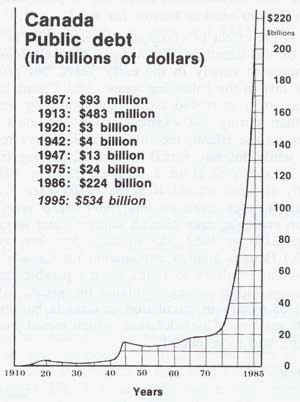
Ask yourself WHY would Canadian Prime Minister Pierre E. Trudeau want to see the national debt of Canada begin to spiral out of control? There are a number of valid reasons why he and some of his advisors, [especially ones from Switzerland], would want that to happen.
I believe that the full picture painted by Dr. Milton Friedman cannot be understood by us Canadians unless we also become aware of Economist Harold Chorney, Economist John Hotson and Economist Mario Seccarrecio.
Our young people face twenty, thirty or even forty percent UNEMPLOYMENT and UnderEmployment over the coming decades as Artificial Intelligence and robotics replace many good paying careers so it is critical at this time in history that American Taxpayers and Canadian taxpayers understand how the national debt of both of our nations are SIGNIFICANTLY a practical Joke being played on ninety nine point nine percent of us by a tiny number of powerful people who believe in "Neo Malthusian Economic Philosophy."
We Canadians SHOULD MAKE AN OFFER IN NORTHERN PESOS, [CANADIAN DOLLARS], OF FORTY TRILLION NORTHERN PESOS TO PAY OFF THE NATIONAL DEBT OF THE USA AND WE SHOULD APOLOGIZE FOR THE COLOSSAL ERROR MADE BY THEN CANADIAN PRIME MINISTER PIERRE E. TRUDEAU WHO COLLABORATED WITH THE JOKE THAT WAS BEING PLAYED ON USA AND CANADIAN TAXPAYERS!
The economics of fuller employment in the twenty first century. By Harold Chorney Concordia University, Montreal, Quebec, CEA annual meetings Banff, Alberta May 31 2019 (This version is missing various charts because of computer problems. For full paper with all charts included, click link above).
The economics of fuller employment in the twenty first century.
By Harold Chorney Concordia University, Montreal, Quebec, CEA annual meetings Banff, Alberta May 30 2019
Ever since David Ricardo in the early nineteenth century, trade and free trade, and the increasingly global nature of capital expansion in particular has been central to economic policy and thought. We see these sort of questions have become central to politics and policy in the current debate over BREXIT in the UK and the European union. President Trump has reawakened these sorts of questions by his insistence that the US had to be made greatagain at the cost of its trading partners. But, of course none of them are as weak as they might have been decades ago. This is particularly true of China whose GDP is close to that of the US.
These sorts of questions were a natural complement to the theory and practice of full employment that Maynard Keynes and William Beveridge introduced into the world of neo-classical dominated economics in the 1930s and 1940s. But just as the integration of these rather disparate models of economic reality was taking place there were already forces at work seeking to undermine the Keynesian policy of low unemployment and distorting Keynes’ breakthrough into what Joan Robinson famously called bastardized Keynesianism. It is also relevant that politics continues to drive policy.
The shadow chancellor of the Exchequer in Britain , a left of centre Labour MP, John McDonell has recently told British economists and civil servants that in the event of a new Labour government, if that should happen as a consequence of a new election or the failure of Prime Minister May‘s government,(May has just announced her resignation effective June 7, 2019) that the Labour party would expect the economic branch of the government to bone up on left of centre economics which stressed anti-poverty and full employment economics as top priorities. McDonnell in the past has stressed that as chancellor he would introduce a wealth tax, 250 billion pound infrastructure spending, an end to austerity, opposition to globalist trade agreements, reinstatement of trade union rights, a crack-down on corporate greed and corruption, and a major increase in the minimum wage. (see FTJohn McDonnell unveils Labour‘s left wing economic prospectus Sept 26, 2016 and GuardianMarch 25 2018) He has also discussed the idea of a universal basic income as explored by Guy Standing to help deal with the challenges of labour being displaced by technology. As well, he explores the notion of the state in co-operation with the private sector emerging as an essential partner in co-creating a value-creating capitalism. Standing according to Hutton argues that ‘‘…inequality, insecurity, debt, stress, precarity, advancing artificial intelligence (“A.I.”), extinction, and the rise of populism and neo-fascism” define the times. Hutton is skeptical of the UBI but he appreciates the emphasis that both Standing and McDonnel have put upon the shortcomings of Britain‘s social policy amidst rising inequality and poverty. (Will Hutton, The zeitgeist has shifted. Now theleft is fizzing with ideas for a smarter economy, Guardian, May 24, 2019)

The economics of Fuller Employment in the Twenty-first Century
************************************************************************************* CLICK LINK BELOW FOR PDF OF FULL PAPER WITH ALL CHARTS INCLUDED: HRc The economics of fuller employment in the …haroldchorneyeconomist.com
You and I cannot fully understand the sheer brilliance of some of the ideas by Economist Dr. Milton Friedman if we do not know about some other important parts of USA and Canadian history.
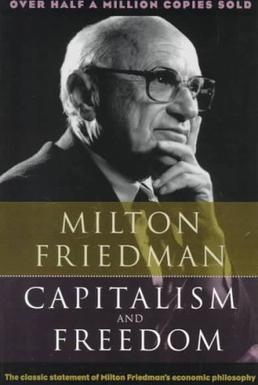
x. The Distribution of IncomeFriedman examines the progressive income tax, introduced in order to redistribute income to make things more fair, and finds that, in fact, the rich take advantage of numerous loopholes, nullifying the redistributive effects. It would be far more fair just to have a uniform flat tax with no deductions, which could meet the 1962 tax revenues with a rate only slightly greater than the lowest tax bracket at that time.
xi. Social Welfare Measures
Though well-intentioned, many social welfare measures don't help the poor as much as some think. Friedman focuses on Social Security as a particularly large and unfair system.
xii. Alleviation of PovertyFriedman regarded welfare programs as misguided and inefficient. To replace them, he advocates a negative income tax, giving everyone a guaranteed minimum income.
xiii. ConclusionThe conclusion to the book centers on how, time and time again, government intervention often has an effect opposite of that intended. Most good things in the United States and the world come from the free market, not the government, and they will continue to do so. The government, despite its good intentions, should stay out of areas where it does not need to be.
Capitalism and Freedom - Wikipedia
en.wikipedia.org
When an obviously very intelligent elected official makes a COLOSSAL ERROR it is important that we ask ourselves WHY?
HOW PIERRE TRUDEAU TURNED US INTO DEBT SLAVES
HOW PIERRE TRUDEAU TURNED US INTO DEBT SLAVES
Click on the link above to watch Part 3 of my video series on the Canadian Banking System. Please also read accompanying text below.
Trudeaumania was just gearing up when I immigrated to Canada in late 1966. I, too, was impressed with Trudeau. He was intelligent, articulate, with liberal ideas. And as Prime Minister, Trudeau repatriated the Canadian Constitution and told the morals’ police to stay out of people’s bedrooms. But then…but then. As Anthony’s famous speech in Shakespeare’s play Julius Caesar reminds us… “the evil that men do live after them while the good is often interred with their bones. So let it be with Caesar.”
But somehow this worked backward for Trudeau. Many Canadians still think highly of Pierre Trudeau, but in 1974 he did one terrible thing that changed the lives, for present and future, of all Canadians, for the worse. Trudeau gave the leading operations of the Bank of Canada over to the private banks operating in Canada.
The Bank of Canada was first established by Prime Minister Richard Bennet in 1935 as a private central bank, but was then nationalized by William Lyon Mackenzie King in 1938. By nationalizing the bank, Mackenzie King meant for it to belong to the people so the Canadian government could borrow funds with little or no interest for capital expenditures. The mandate of the newly nationalized Bank of Canada was to act as the banker to the government and to manage the public debt. As Mackenzie King famously said: “Once a nation parts with the control of their currency and credit, it matters not who makes that nation’s laws. Usury, once in control, will wreck any nation. Until the control of the issue of currency and credit is restored to government and recognized as its most sacred responsibility, all talk of sovereignty of parliament and of democracy is idle and futile.”
So the Bank of Canada was nationalized in 1938 and the government could now borrow money with little or no interest. And it worked. The Canadian government built freeways, public transportation systems, subway line, airports, the St. Lawrence Seaway and funded a national health care system and the Canada Pension Plan. But then Trudeau, under the influence of the international financial group called Basel’s
Committee’s Recommendations (The Basel Committee on Banking Supervision) made the decision to halt the borrowing of money from the Bank of Canada, and instead, chose to borrow from the private banks who instead of lending to the government at no interest, or low interest, introduced higher interest rates along with compound interest.
All banks know very well the magic of compound interest. And Pierre Trudeau must have known that the mounting compounded national debt would lead to Canadians eventually owing a dollar fifty for every dollar of their disposable incomes. After all, he studied economics at the London School of Economics. Surely the professors there knew about compound interest.
So Pierre Trudeau, instead of feeling blessed that Canada, unlike the US, had a nationalized central bank, signed our bank away to the private banks. Couldn’t Trudeau, such an educated man, surmise that citizens in a few years would be struggling to make car payments and meet rent and mortgages and student loans and to buy healthy food while last year’s profits for the big five (that’s Royal Bank, TD Bank, Scotiabank, Bank of Montreal and CIBC amounted to $31.7 billion?) If he did, he didn’t care. But it doesn’t have to be this way. It really doesn’t. Our Bank of
Canada is still there. Next time." (Ms. Betty Krawczyk)
Ask yourself WHY would Canadian Prime Minister Pierre E. Trudeau want to see the national debt of Canada begin to spiral out of control? There are a number of valid reasons why he and some of his advisors, [especially ones from Switzerland], would want that to happen.
Last edited:


