For the umpteenth time, Legcy admits are not determined according to race.
The legacy admit system was set up to exclude Blacks, Jews and Asians. You realize that right?
It still manages to be almost exclusively white.
But you are fine with that?
And the SCOTUS does NOT make it easier to discriminate r against black and Hisoanics folks. It specifically ruled that race cannot be a factor. What it DOES do is prevent universities from discriminating and white and Asian folks.
Now we need to move this to employment. We shouldn’t have well-qualified whites passed over for jobs and promotions due to skin color. You should have seen the last (liberal) company I worked for - incompetent blacks promoted to higher management with the whites who were passed over doing the job for them. Turnover was massive.
It’s an amazing how people like you just assume Blacks who are promoted are incompetent and there is a White somewhere unfairly treated. I’m guessing you were passed over for promotion to hold such resentment…although WOMEN got the same considerations under AA.
Reality check:
If the U.S. had closed the many racial gaps Black Americans face 20 years ago, $16 trillion could have been added to the economy, according to Citi.

www.cnbc.com
The higher you go, the fewer Black professionals you see. At the senior manager and VP level, Black workers make up just 5% of the workforce, and at the SVP level, just 4%. At the very top, only around 1% of Fortune 500 CEO spots are held by Black leaders.
“
Black workers, on average, are not being hired, promoted or paid according to what would signal their level of productivity based on their experience or their education,” Valerie Wilson, director of the Economic Policy Institute’s program on race, ethnicity and the economy, tells CNBC Make It. And “it absolutely impacts everything. It impacts your family’s economic security.”
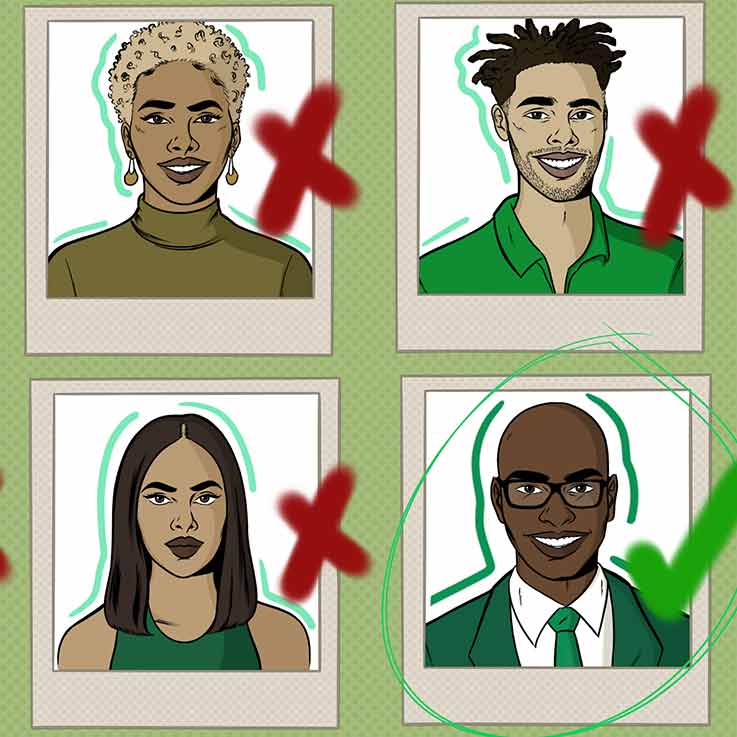
Challenging the stereotypes of race and “merit”
Stereotypes and racial bias in hiring and promotion are damaging at personal, career, and organizational levels.

ssir.org
Objectivity | The notion that there is a single, most-qualified candidate or employee is false. There is great variation in how two applicants with different experiences and skills would successfully perform the same role. Assigning a “most qualified” label is based on measures that are difficult to quantify and are nested in opinion. The rubrics used in hiring and promotion are
highly subjective. This subjectivity can lead to false narratives that repeat stereotypes about applicant potential, assumptions often steeped in bias.
Meritocracy | Subjective criteria associated with likability still figure strongly into the hiring process, usually couched in the organizational language of “
culture fit” and expressing a desire for candidates who are similar to the employer. Similarity plays a significant factor in this equation: more often than not, someone considered a “good culture fit” is someone “I’d want to grab a beer with,” someone “like me.”
Who is the “me” in this scenario? According to research on
Fortune 500 companies, the majority of organizational hiring managers and leadership
are white men. It is no surprise that a cycle of exclusion is perpetuated when
most Americans have largely homogenous friend and peer groups and a large percentage of hiring happens through these networks. Per a LinkedIn survey, nearly
85 percent of jobs are filled through networking, making social capital, rather than
so-called “meritocracy,” a critical element of hiring and promotions.


news.yahoo.com