After four failed predictions of the endtimes, I’ll wait a bit before ordering his book.I don’t concern myself with his end Times philosophy. My only interest is in the evidence that supports catastrophic geomagnetic pole shifts. Many experts going back 200 years have concluded they happen regularly and often in Earth’s history. Montaigne merely presented their evidence in his book. His predictions are of no interest to me.I think you will find that Einstein’s work was within an academic community that peer reviewed his theories.So to you, it’s about presentation and not the evidence backing the theory. It could be some considered Einstein a loon during his time, based on his presentation. One would have to conclude those people are the real loons, like Dr Indiana, for instance.Is Einstein a loon too?David Montaigne is a loon.Check this out. You are exactly like the closed minded fake geologists. It’d be nice if you could impart your vast knowledge on this subject.Whining wont get your crackpot fringe nonsense anywhere.We bow to your vast knowledge, but how could it be you know nothing about geology? Did you lie?Tjats an adorable little batch of whining. Lets check the scoreboard and see if it helped:That’s see what we have learned so far.Repeating a claim is not support if it.You really are amazing. Apparently even super intellects like you, don’t know everything."Flash frozen" = nonsense. Posting links of people relaying this silly claim is not support of it. You just embarrassed yourself, there.I know you think I’m a genius, but I really can’t take credit for inventing the phrase “flash frozen.”Nonsensical term, madeup for emotional effect. Nothing was "flash frozen", ya gullible goober.Once again you have proven you aren’t informed. I know you think I’m a genius, but I really can’t take credit for inventing the phrase “flash frozen.”Whats the mystery? The mammoth died, it froze, it was buried under precipitation that packed to ice.How does science explain mammoths flash frozen and their carcasses found as far north as 63 degrees north latitude?
"Flash frozen" is a meaningless term you made up.
The Claim of Flash-Frozen Mammoths Is Older Than I Thought
The Claim of Flash-Frozen Mammoths Is Older Than I Thought
10/13/2018
36 Comments
A publisher has asked me to assemble a proposal for a short book on the myths and legends associated with the Giza Pyramids, notably the medieval legends of the Muslim world, so I am going to be taking some time today to work on this. In the meantime, I wanted to share something interesting I ran across in reading about Graham Hancock’s new book, America Before. Do you remember the popular claim that there were wooly mammoths flash-frozen in the Arctic as a result of a catastrophic change in climate, perhaps due to a shifting of the poles? It turns out that this claim is much older than I had imagined.
Look where they have found perfectly intact mammoth remains. With perfectly preserved food still in their months and undigested food in their mouths. This means, my son, these animals where frozen almost instantaneously. Cool yes?
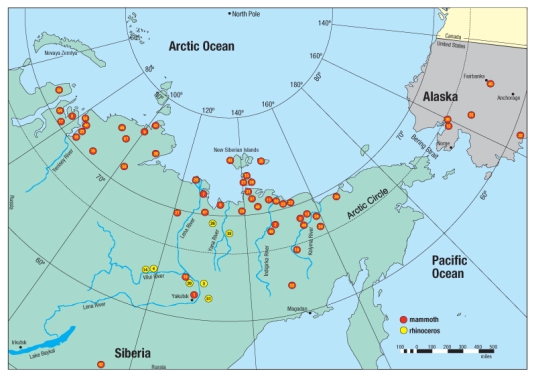
https://endtimesand2019.files.wordpress.com/2018/03/mammoths-map_siberia_and_alaska.jpg?w=536&h=377
The Claim of Flash-Frozen Mammoths Is Older Than I Thought
The Claim of Flash-Frozen Mammoths Is Older Than I Thought
10/13/2018
36 Comments
A publisher has asked me to assemble a proposal for a short book on the myths and legends associated with the Giza Pyramids, notably the medieval legends of the Muslim world, so I am going to be taking some time today to work on this. In the meantime, I wanted to share something interesting I ran across in reading about Graham Hancock’s new book, America Before. Do you remember the popular claim that there were wooly mammoths flash-frozen in the Arctic as a result of a catastrophic change in climate, perhaps due to a shifting of the poles? It turns out that this claim is much older than I had imagined.
Look where they have found perfectly intact mammoth remains. With perfectly preserved food still in their months and undigested food in their mouths. This means, my son, these animals where frozen almost instantaneously. Cool yes?
https://endtimesand2019.files.wordpress.com/2018/03/mammoths-map_siberia_and_alaska.jpg?w=536&h=377
Mr Geologist...let me know your opinion on the following events. I’m certain as an accredited geologist of amazing renown, you know all about them.
- Gothenburg Event
- Mono Lake/Lake Mungo
- Laschamp Event
- Vostok Event
This should be great fun!
CATASTROPHE, EXTINCTION, ICE AGE, MAMMOTHS, OTHER, POLE SHIFT, POLESHIFT
Flash-Frozen Mammoths are Evidence of POLE SHIFTS
POSTED BY DAVID MONTAIGNE ⋅ SEPTEMBER 22, 2018 ⋅ 5 COMMENTS
FILED UNDER ARCTIC, BEREZOVKA, CRUSTAL DISPLACEMENT, DIMA, EVIDENCE, FLASH FROZEN, GEOLOGY, ICE AGE, MAMMOTH, POLE SHIFT, POLESHIFT, SIBERIA, VEGETATION
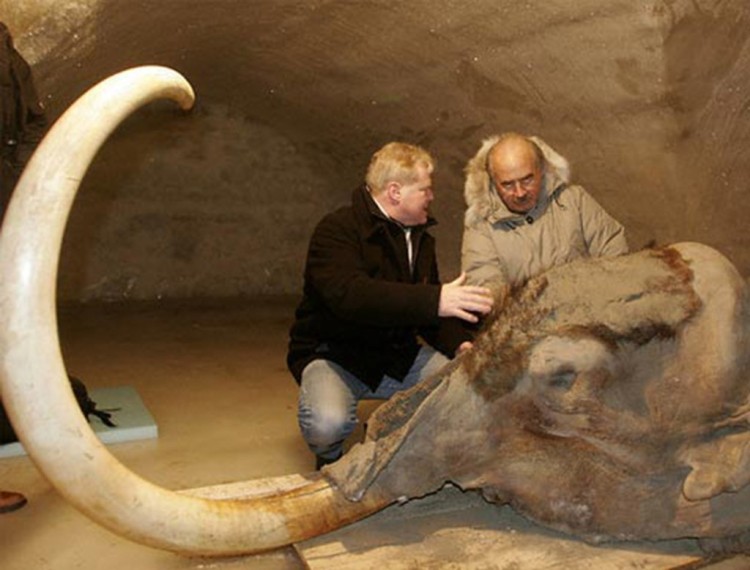
Flash-Frozen Mammoths provide some of the best evidence of previous pole shifts, as the carcasses are found very well preserved – which means they were frozen fast, with no time to decompose after death – yet the mammoths are generally fat and healthy, with newborn young, and often with unchewed and undigested warm-climate vegetation in their mouths and stomachs – indicating a very sudden interruption of warm climate conditions in which they were eating about 500 pounds of vegetation per day right up until the moment they were suddenly frozen to death.
Flash-Frozen Mammoths are Evidence of POLE SHIFTS
You believe all manner of goofy nonsense. This pole shift garbage is just the latest example.
"Flash frozen"....hahaha, what nonsense....
1. You think you’re smarter than Albert Einstein.
2. You weren’t aware of thousands of mammoths frozen completely intact.
3. You never heard the phrase Flash Frozen.
4. You don’t know anything about prior poles shifts.
5. You weren’t aware that evidence of past coral reefs and ancient forests have been founds at latitudes too cold for them to have existed there.
Somehow your amazing education failed to teach you anything. Do you mind if I continue to educate you?
"Flash frozen": still silly nonsense from the brains of pseudoscientists
"Cataclysmic pole shifts": still a fringe pseudo scientific theory with exactly zero empirical evidence to support it and which is contradicted by all the actual evidence
Nope , it appears the whining did not change anything.
Mammoths of the Last Polar Age
So how could horses and mammoths live on the New Siberian Islands during the very height of the North American Ice Age? This question is simply avoided by the geologists who have studied these islands. It doesn’t fit in with the dogmas of mainstream Science, so it is simply ignored. The main reason it is ignored is because this evidence utterly destroys the idea of a global ice age, involving a lowering of global temperatures; and it leaves all conventional theories on the cause of Ice Ages in tatters, such as the farcical idea that they are caused by Milankovitch Cycles. Put simply, it is physically impossiblethat mammoths could have lived near the North Pole during times when ice sheets formed in almost subtropical latitudes. It violates the laws of thermal physics, and can reasonably be dismissed as nonsense.
The only plausible explanation is that the rise and fall of Ice Ages is caused by successive pole shifts, and that the North Pole was in Canada when mammoths were living on the Arctic’s island archipelagos. But geologists prefer to live in a virtual reality, where they ignore the facts and mislead the public about the true history of Ice Ages.
Mammoths of the Last Polar Age - World Mysteries Blog

Man Who Predicted End Of The World Four Times Says 2019 Will Finally Be It For Humanity
<p>Right guys, I’m sorry to have to break the news to you so early on in the year when expectations are high and we’re still sticking to our resolutions, but 2019 will be our last year on Earth. Well, that’s according to some man who’s already predicted the end of the world four times before <a...www.unilad.co.uk
Did Einstein present himself as a loon?

David Montaigne
Historian, investigator, and author of prophecy books like End Times and 2019, and Antichrist 2016-2019endtimesand2019.wordpress.com
Montaigne’s book is thoroughly documented with research performed by experts, including Einstein. The evidence of the sun micro nova, geo-magnetic pole shifts, earth crust displacement all causing catastrophic death and destruction, is strong. But remember, it’s a theory that hasn’t been accepted by all. This might be because it leads to very dire consequences humans refuse to accept or the theory may be legitimately lacking. It’s a theory after all, a concept Dr Indiana is unfamiliar with.
However only idiots like Dr Indiana, consider theories dumb...based on the establishment’s refusal to accept them and lies he’s made up.
Oh...almost forgot. I’m betting the world that he’s never heard of Earth Crust Displacement Theory. Add this term to the long list of terms he’s completely unaware of. LOL.
Montaigne self-entitles himself a “historian” and “researcher”.
If, as you claim, his work is thoroughly documented with research performed by experts, including Einstein, please identify Montaigne’s thoroughly documented endtimes predictions, (4 of them which, oh, I don’t know, may not be accurate), and how those are thoroughly documented, even by Einstein.
You will have to purchase his book to find out.
Navigation
Install the app
How to install the app on iOS
Follow along with the video below to see how to install our site as a web app on your home screen.
Note: This feature may not be available in some browsers.
More options
Style variation
You are using an out of date browser. It may not display this or other websites correctly.
You should upgrade or use an alternative browser.
You should upgrade or use an alternative browser.
Breaking News from Genesis 1:9
- Thread starter Weatherman2020
- Start date
The schism over the date of the observance of the last supper may be important to your church but it certainly wasn't the first major schism. That appeared in the first decades after Jesus' death and hinged on whether converts to Christianity first had to become Jews. I believe James and his followers in Jerusalem insisted they did, others, like Paul, disagreed. The Romans made the decision by destroying Temple and enslaving the Jews there. Paul won by default and Christianity spread throughout the pagan Roman world. Had he lost, Christianity would be a minor Jewish cult and probably have disappeared.The schism over the date of the observance of the last supper was the first major schism (mid 2nd century CE) and it actually divided the eastern (quartodecimans/polycarp) and western churches (Roman/Victor). Note that some sources claim the disagreement was over the date of observance of Easter - but this is false information. Those who followed the apostolic/Biblical practice observed the last supper on passover (pascha(l)) night and had nothing to do with the later observance of the pagan holiday of Easter. The Bible clearly shows Jesus observed the last supper on passover night which only rarely falls on a Sunday on our calendar. [probability: 1 in 7]
It was the governing body in Jerusalem that settled the disagreement over the circumcision issue. And that was not what I meant by schism. Read Acts chapter 15.
Excerpt:
"Now some men came down from Ju·deʹa and began to teach the brothers: “Unless you get circumcised according to the custom of Moses,+ you cannot be saved.” 2 But after quite a bit of dissension and disputing by Paul and Barʹna·bas with them, it was arranged for Paul, Barʹna·bas, and some of the others to go up to the apostles and elders in Jerusalem+ regarding this issue.
3 So after being escorted partway by the congregation, these men continued on through both Phoe·niʹcia+ and Sa·marʹi·a, relating in detail the conversion of people of the nations and bringing great joy to all the brothers. 4 On arriving in Jerusalem, they were kindly received by the congregation and the apostles and the elders, and they related the many things God had done by means of them.+ 5 But some of those of the sect of the Pharisees who had become believers stood up from their seats and said: “It is necessary to circumcise them and command them to observe the Law of Moses.”+
6 So the apostles and the elders gathered together to look into this matter. 7 After much intense discussion had taken place, Peter rose and said to them: “Men, brothers, you well know that from early days God made the choice among you that through my mouth people of the nations should hear the word of the good news and believe.+ 8 And God, who knows the heart,+ bore witness by giving them the holy spirit,+ just as he did to us also. 9 And he made no distinction at all between us and them,+ but purified their hearts by faith.+.....
After they finished speaking, James+ replied: “Men, brothers, hear me.+ 14 Symʹe·on+ has related thoroughly how God for the first time turned his attention to the nations to take out of them a people for his name.+ 15 And with this the words of the Prophets agree, just as it is written: 16 ‘After these things I will return and raise up again the tent of David that is fallen down; I will rebuild its ruins and restore it, 17 so that the men who remain may earnestly seek Jehovah, together with people of all the nations, people who are called by my name, says Jehovah, who is doing these things,+ 18 known from of old.’+ 19 Therefore, my decision is not to trouble those from the nations who are turning to God,+ 20 but to write them to abstain from things polluted by idols,+ from sexual immorality,+ from what is strangled, and from blood."
Notice that the governing body in Jerusalem showed Amos 9:11,12 was fulfilled by people of the nations coming in. And it was the pharisees, not Christians as a whole, that were causing the dissension - that was a sect of the Jews.
However, the schism between Polycarp (and the quartodecimans) and Victor (& the Roman churches) was not settled by appeal to Scripture because Victor refused to follow Jesus example of observing on passover night. In fact Victor chose to excommunicate the quartodeciman churches.
The schism is not important to us except as a detail of history. However, the Memorial of Christ's death by observance of the last supper is the only day directed his followers to observe:
Luke 22:19
Also, he took a loaf,+ gave thanks, broke it, and gave it to them, saying: “This means my body,+ which is to be given in your behalf.+ Keep doing this in remembrance of me.”+
The Memorial is our only holy day and it falls on Nisan 14 (after sundown).

gipper
Diamond Member
- Jan 8, 2011
- 79,029
- 43,454
- 2,605
That’s certainly your prerogative. You might get Charles Hapgood’s book. Einstein did the forward.After four failed predictions of the endtimes, I’ll wait a bit before ordering his book.I don’t concern myself with his end Times philosophy. My only interest is in the evidence that supports catastrophic geomagnetic pole shifts. Many experts going back 200 years have concluded they happen regularly and often in Earth’s history. Montaigne merely presented their evidence in his book. His predictions are of no interest to me.I think you will find that Einstein’s work was within an academic community that peer reviewed his theories.So to you, it’s about presentation and not the evidence backing the theory. It could be some considered Einstein a loon during his time, based on his presentation. One would have to conclude those people are the real loons, like Dr Indiana, for instance.Is Einstein a loon too?David Montaigne is a loon.Check this out. You are exactly like the closed minded fake geologists. It’d be nice if you could impart your vast knowledge on this subject.Whining wont get your crackpot fringe nonsense anywhere.We bow to your vast knowledge, but how could it be you know nothing about geology? Did you lie?Tjats an adorable little batch of whining. Lets check the scoreboard and see if it helped:That’s see what we have learned so far.Repeating a claim is not support if it.You really are amazing. Apparently even super intellects like you, don’t know everything."Flash frozen" = nonsense. Posting links of people relaying this silly claim is not support of it. You just embarrassed yourself, there.I know you think I’m a genius, but I really can’t take credit for inventing the phrase “flash frozen.”Nonsensical term, madeup for emotional effect. Nothing was "flash frozen", ya gullible goober.Once again you have proven you aren’t informed. I know you think I’m a genius, but I really can’t take credit for inventing the phrase “flash frozen.”Whats the mystery? The mammoth died, it froze, it was buried under precipitation that packed to ice.How does science explain mammoths flash frozen and their carcasses found as far north as 63 degrees north latitude?
"Flash frozen" is a meaningless term you made up.
The Claim of Flash-Frozen Mammoths Is Older Than I Thought
The Claim of Flash-Frozen Mammoths Is Older Than I Thought
10/13/2018
36 Comments
A publisher has asked me to assemble a proposal for a short book on the myths and legends associated with the Giza Pyramids, notably the medieval legends of the Muslim world, so I am going to be taking some time today to work on this. In the meantime, I wanted to share something interesting I ran across in reading about Graham Hancock’s new book, America Before. Do you remember the popular claim that there were wooly mammoths flash-frozen in the Arctic as a result of a catastrophic change in climate, perhaps due to a shifting of the poles? It turns out that this claim is much older than I had imagined.
Look where they have found perfectly intact mammoth remains. With perfectly preserved food still in their months and undigested food in their mouths. This means, my son, these animals where frozen almost instantaneously. Cool yes?
https://endtimesand2019.files.wordpress.com/2018/03/mammoths-map_siberia_and_alaska.jpg?w=536&h=377
The Claim of Flash-Frozen Mammoths Is Older Than I Thought
The Claim of Flash-Frozen Mammoths Is Older Than I Thought
10/13/2018
36 Comments
A publisher has asked me to assemble a proposal for a short book on the myths and legends associated with the Giza Pyramids, notably the medieval legends of the Muslim world, so I am going to be taking some time today to work on this. In the meantime, I wanted to share something interesting I ran across in reading about Graham Hancock’s new book, America Before. Do you remember the popular claim that there were wooly mammoths flash-frozen in the Arctic as a result of a catastrophic change in climate, perhaps due to a shifting of the poles? It turns out that this claim is much older than I had imagined.
Look where they have found perfectly intact mammoth remains. With perfectly preserved food still in their months and undigested food in their mouths. This means, my son, these animals where frozen almost instantaneously. Cool yes?
https://endtimesand2019.files.wordpress.com/2018/03/mammoths-map_siberia_and_alaska.jpg?w=536&h=377
Mr Geologist...let me know your opinion on the following events. I’m certain as an accredited geologist of amazing renown, you know all about them.
- Gothenburg Event
- Mono Lake/Lake Mungo
- Laschamp Event
- Vostok Event
This should be great fun!
CATASTROPHE, EXTINCTION, ICE AGE, MAMMOTHS, OTHER, POLE SHIFT, POLESHIFT
Flash-Frozen Mammoths are Evidence of POLE SHIFTS
POSTED BY DAVID MONTAIGNE ⋅ SEPTEMBER 22, 2018 ⋅ 5 COMMENTS
FILED UNDER ARCTIC, BEREZOVKA, CRUSTAL DISPLACEMENT, DIMA, EVIDENCE, FLASH FROZEN, GEOLOGY, ICE AGE, MAMMOTH, POLE SHIFT, POLESHIFT, SIBERIA, VEGETATION
Flash-Frozen Mammoths provide some of the best evidence of previous pole shifts, as the carcasses are found very well preserved – which means they were frozen fast, with no time to decompose after death – yet the mammoths are generally fat and healthy, with newborn young, and often with unchewed and undigested warm-climate vegetation in their mouths and stomachs – indicating a very sudden interruption of warm climate conditions in which they were eating about 500 pounds of vegetation per day right up until the moment they were suddenly frozen to death.
Flash-Frozen Mammoths are Evidence of POLE SHIFTS
You believe all manner of goofy nonsense. This pole shift garbage is just the latest example.
"Flash frozen"....hahaha, what nonsense....
1. You think you’re smarter than Albert Einstein.
2. You weren’t aware of thousands of mammoths frozen completely intact.
3. You never heard the phrase Flash Frozen.
4. You don’t know anything about prior poles shifts.
5. You weren’t aware that evidence of past coral reefs and ancient forests have been founds at latitudes too cold for them to have existed there.
Somehow your amazing education failed to teach you anything. Do you mind if I continue to educate you?
"Flash frozen": still silly nonsense from the brains of pseudoscientists
"Cataclysmic pole shifts": still a fringe pseudo scientific theory with exactly zero empirical evidence to support it and which is contradicted by all the actual evidence
Nope , it appears the whining did not change anything.
Mammoths of the Last Polar Age
So how could horses and mammoths live on the New Siberian Islands during the very height of the North American Ice Age? This question is simply avoided by the geologists who have studied these islands. It doesn’t fit in with the dogmas of mainstream Science, so it is simply ignored. The main reason it is ignored is because this evidence utterly destroys the idea of a global ice age, involving a lowering of global temperatures; and it leaves all conventional theories on the cause of Ice Ages in tatters, such as the farcical idea that they are caused by Milankovitch Cycles. Put simply, it is physically impossiblethat mammoths could have lived near the North Pole during times when ice sheets formed in almost subtropical latitudes. It violates the laws of thermal physics, and can reasonably be dismissed as nonsense.
The only plausible explanation is that the rise and fall of Ice Ages is caused by successive pole shifts, and that the North Pole was in Canada when mammoths were living on the Arctic’s island archipelagos. But geologists prefer to live in a virtual reality, where they ignore the facts and mislead the public about the true history of Ice Ages.
Mammoths of the Last Polar Age - World Mysteries Blog
Man Who Predicted End Of The World Four Times Says 2019 Will Finally Be It For Humanity
<p>Right guys, I’m sorry to have to break the news to you so early on in the year when expectations are high and we’re still sticking to our resolutions, but 2019 will be our last year on Earth. Well, that’s according to some man who’s already predicted the end of the world four times before <a...
Did Einstein present himself as a loon?
David Montaigne
Historian, investigator, and author of prophecy books like End Times and 2019, and Antichrist 2016-2019
Montaigne’s book is thoroughly documented with research performed by experts, including Einstein. The evidence of the sun micro nova, geo-magnetic pole shifts, earth crust displacement all causing catastrophic death and destruction, is strong. But remember, it’s a theory that hasn’t been accepted by all. This might be because it leads to very dire consequences humans refuse to accept or the theory may be legitimately lacking. It’s a theory after all, a concept Dr Indiana is unfamiliar with.
However only idiots like Dr Indiana, consider theories dumb...based on the establishment’s refusal to accept them and lies he’s made up.
Oh...almost forgot. I’m betting the world that he’s never heard of Earth Crust Displacement Theory. Add this term to the long list of terms he’s completely unaware of. LOL.
Montaigne self-entitles himself a “historian” and “researcher”.
If, as you claim, his work is thoroughly documented with research performed by experts, including Einstein, please identify Montaigne’s thoroughly documented endtimes predictions, (4 of them which, oh, I don’t know, may not be accurate), and how those are thoroughly documented, even by Einstein.
You will have to purchase his book to find out.

There is no evidence of a global flood or Noah’s Ark.Why would the gods make the effort to design the Mammoth, have Noah here them onto the Ark and then kill them all just a short while later?The Ivory Islands, renamed the New Siberian Islands, are in the arctic ocean north of Siberia. Originally named Ivory Islands because of the abundance of ivory found in its permafrost - but other animals which would not live there in the current climate are also found in the permafrost:

New Siberian Islands - Wikipedia
en.wikipedia.org
"As noted by Baron Eduard V. Toll in his account of the New Siberian Islands,[16] sizeable and economically significant accumulations of fossil ivory occur within them. The ivory, along with mammoth and other bones, are found in recent beaches, drainage areas, river terraces and river beds. The New Siberian Islands are unique in the burial and preservation of fossil ivory "in such a wonderful state of preservation that the tusks so found cannot be distinguished from the very best and purest ivory".
The abundant bones, even skeletons, of mammoth, rhinoceros, musk-ox, and other megafauna along with the mammoth ivory found in these islands are preserved by permafrost, in which they are encased.[2][11][14][17]"
Note: theories that some of these animals were frozen before the last catastrophe are impossible because the climate which these animals lived in would have thawed any permafrost. Cyclic sedimentation during the Noachian flood is likely the cause.
Anyone have a more complete list of the fauna and flora found in the permafrost?
The above is notwithstanding the fact, (phact) of a 6,000 year old planet and Mammoth which died out as recently as 4,000 years ago.
The rainbow covenant assures us that will never happen again on earth. In fact, in the next destruction at Armageddon the animals are invited to the great evening meal of God.
You keep forgetting that I am not a creationist - we don't believe earth is just 6,000 years old.
The mammoths went extinct over 4,000 hyers ago in 2370 BCE. However, the elephant "kind" survived on Noah's ark - this is true of other animal kinds as well - some varieties of horses and bison also went extinct, but horses and bison survived the flood.
Aside from that little dalliance, why didn’t Mammoth survive Noah’s pleasure cruise? There are supported theories about the Mammoth being victims of climate change and humankind causing their demise and those theories don’t rely on supernaturalism. There is also solid evidence that they went extinct about 10,000 years ago which clashes with biblical timelines.
Typical debate tactic - saying the other side presented no evidence as an excuse to not examine the evidence the other side presents (e.g. evolutionists vs. creationists). As usual, you fail to examine the evidence - in this case of the quick freezing of many animals in the Arctic permafrost including mammoths.
Noah only brought 2 or 7 of each kind of animal onto the ark. The elephant kind survived - the mammoth variety went extinct; bison survived, but certain varieties of bison went extinct; horses survived but certain varieties of horses went extinct - etc. The evidence is consistent with the Biblical account - but certain theories (interpretation of the evidence) are faulty - usually on some but not all points btw.

james bond
Gold Member
- Oct 17, 2015
- 13,407
- 1,805
- 170
I think you are confusing me with someone else. I’m sure Ken is a nice guy, but his belief that the earth was created 6000 years ago is unfounded.
No.

I'm not sure what I was supposed to check:Obviously you did not check the references I posted for accuracy. For example, the Muratorian fragment c. 170 CE.
The fragment, consisting of 85 lines, is a 7th-century Latin manuscript bound in a 7th- or 8th-century codex from the library of Columbanus's monastery at Bobbio Abbey; it contains features suggesting it is a translation from a Greek original written about 170 or as late as the 4th century
If you're wondering about its accuracy, it has some obvious mistakes. Several forged Pauline letters are included in its cannon, Titus for instance.
james bond
Gold Member
- Oct 17, 2015
- 13,407
- 1,805
- 170
The schism over the date of the observance of the last supper was the first major schism (mid 2nd century CE) and it actually divided the eastern (quartodecimans/polycarp) and western churches (Roman/Victor). Note that some sources claim the disagreement was over the date of observance of Easter - but this is false information. Those who followed the apostolic/Biblical practice observed the last supper on passover (pascha(l)) night and had nothing to do with the later observance of the pagan holiday of Easter. The Bible clearly shows Jesus observed the last supper on passover night which only rarely falls on a Sunday on our calendar. [probability: 1 in 7]
>>Christianity would be a minor Jewish cult and probably have disappeared<<
Is that just your opinion, Bart Ehrman's, or do you have a
 ?
?Schism refers to something else. If you're going to rub our noses with history, then use the terms correctly. How about disagreement as to when it was? Instead of Last Supper, what is another event that has more significance?
Acts was written at a time the schism was already decided in favor of Paul's faction and attempts to put the debate in the past. It describes actions by Paul that are different from what Paul himself describes in his letters.The schism over the date of the observance of the last supper may be important to your church but it certainly wasn't the first major schism. That appeared in the first decades after Jesus' death and hinged on whether converts to Christianity first had to become Jews. I believe James and his followers in Jerusalem insisted they did, others, like Paul, disagreed. The Romans made the decision by destroying Temple and enslaving the Jews there. Paul won by default and Christianity spread throughout the pagan Roman world. Had he lost, Christianity would be a minor Jewish cult and probably have disappeared.The schism over the date of the observance of the last supper was the first major schism (mid 2nd century CE) and it actually divided the eastern (quartodecimans/polycarp) and western churches (Roman/Victor). Note that some sources claim the disagreement was over the date of observance of Easter - but this is false information. Those who followed the apostolic/Biblical practice observed the last supper on passover (pascha(l)) night and had nothing to do with the later observance of the pagan holiday of Easter. The Bible clearly shows Jesus observed the last supper on passover night which only rarely falls on a Sunday on our calendar. [probability: 1 in 7]
It was the governing body in Jerusalem that settled the disagreement over the circumcision issue. And that was not what I meant by schism. Read Acts chapter 15.
Excerpt:
"Now some men came down from Ju·deʹa and began to teach the brothers: “Unless you get circumcised according to the custom of Moses,+ you cannot be saved.” 2 But after quite a bit of dissension and disputing by Paul and Barʹna·bas with them, it was arranged for Paul, Barʹna·bas, and some of the others to go up to the apostles and elders in Jerusalem+ regarding this issue.
3 So after being escorted partway by the congregation, these men continued on through both Phoe·niʹcia+ and Sa·marʹi·a, relating in detail the conversion of people of the nations and bringing great joy to all the brothers. 4 On arriving in Jerusalem, they were kindly received by the congregation and the apostles and the elders, and they related the many things God had done by means of them.+ 5 But some of those of the sect of the Pharisees who had become believers stood up from their seats and said: “It is necessary to circumcise them and command them to observe the Law of Moses.”+
6 So the apostles and the elders gathered together to look into this matter. 7 After much intense discussion had taken place, Peter rose and said to them: “Men, brothers, you well know that from early days God made the choice among you that through my mouth people of the nations should hear the word of the good news and believe.+ 8 And God, who knows the heart,+ bore witness by giving them the holy spirit,+ just as he did to us also. 9 And he made no distinction at all between us and them,+ but purified their hearts by faith.+.....
After they finished speaking, James+ replied: “Men, brothers, hear me.+ 14 Symʹe·on+ has related thoroughly how God for the first time turned his attention to the nations to take out of them a people for his name.+ 15 And with this the words of the Prophets agree, just as it is written: 16 ‘After these things I will return and raise up again the tent of David that is fallen down; I will rebuild its ruins and restore it, 17 so that the men who remain may earnestly seek Jehovah, together with people of all the nations, people who are called by my name, says Jehovah, who is doing these things,+ 18 known from of old.’+ 19 Therefore, my decision is not to trouble those from the nations who are turning to God,+ 20 but to write them to abstain from things polluted by idols,+ from sexual immorality,+ from what is strangled, and from blood."
Notice that the governing body in Jerusalem showed Amos 9:11,12 was fulfilled by people of the nations coming in. And it was the pharisees, not Christians as a whole, that were causing the dissension - that was a sect of the Jews.
However, the schism between Polycarp (and the quartodecimans) and Victor (& the Roman churches) was not settled by appeal to Scripture because Victor refused to follow Jesus example of observing on passover night. In fact Victor chose to excommunicate the quartodeciman churches.
The schism is not important to us except as a detail of history. However, the Memorial of Christ's death by observance of the last supper is the only day directed his followers to observe:
Luke 22:19
Also, he took a loaf,+ gave thanks, broke it, and gave it to them, saying: “This means my body,+ which is to be given in your behalf.+ Keep doing this in remembrance of me.”+
The Memorial is our only holy day and it falls on Nisan 14 (after sundown).
That is my opinion based on Ehrman and many other historical sources.>>Christianity would be a minor Jewish cult and probably have disappeared<<
Is that just your opinion, Bart Ehrman's, or do you have a

No, he’s not a nice guy?I think you are confusing me with someone else. I’m sure Ken is a nice guy, but his belief that the earth was created 6000 years ago is unfounded.
No.
james bond
Gold Member
- Oct 17, 2015
- 13,407
- 1,805
- 170
No, he’s not a nice guy?I think you are confusing me with someone else. I’m sure Ken is a nice guy, but his belief that the earth was created 6000 years ago is unfounded.
No.
I think he's a nice guy, but he would rebuke you on your unfounded beliefs. The Earth was created around 6000 years ago. It's ridiculous to think your old ages. What evidence do you have?
Ken has besides radiocarbon dating of items claimed to be millions and billions of years old:
1. Not enough sediment on the sea floor. Sands of time, you know.
2. We have bent rock layers. Rocks can only bend like that through chemical reaction when forming.
3. Soft tissue still remains in the dinosaur fossils. That's very strong evidence and makes things pretty obvious.
4. Faint sun. If the universe was that old, then the sun wouldn't be as bright.
5. Rapidly decaying magnetic field. Same idea as the faint sun.
6. Helium in radioactive rocks. Ken would have to explain.
7. Lots of C-14 still remaining in fossils, coal, and diamonds. RATE was able to use radiocarbon dating.
8. Short lived comets. He would have to explain.
9. Very little salt in the seas. Ditto.
10. DNA in ancient bacteria. Ditto.
I can explain to you six of ten of his pieces of evidence. Would have to research his other four.
Again, what other evidence do you have?
My comment about evidence was in regard to the Noah fable. Of course this is your belief. You have no choice. That is a part of your fundamental dogma. There is no archeological or documentary evidence to support the events. Your agreement or disagreement with the archeologists matters not one bit. All that matters is that they have evidence for their version. You do not.There is no evidence of a global flood or Noah’s Ark.Why would the gods make the effort to design the Mammoth, have Noah here them onto the Ark and then kill them all just a short while later?The Ivory Islands, renamed the New Siberian Islands, are in the arctic ocean north of Siberia. Originally named Ivory Islands because of the abundance of ivory found in its permafrost - but other animals which would not live there in the current climate are also found in the permafrost:
New Siberian Islands - Wikipedia
"As noted by Baron Eduard V. Toll in his account of the New Siberian Islands,[16] sizeable and economically significant accumulations of fossil ivory occur within them. The ivory, along with mammoth and other bones, are found in recent beaches, drainage areas, river terraces and river beds. The New Siberian Islands are unique in the burial and preservation of fossil ivory "in such a wonderful state of preservation that the tusks so found cannot be distinguished from the very best and purest ivory".
The abundant bones, even skeletons, of mammoth, rhinoceros, musk-ox, and other megafauna along with the mammoth ivory found in these islands are preserved by permafrost, in which they are encased.[2][11][14][17]"
Note: theories that some of these animals were frozen before the last catastrophe are impossible because the climate which these animals lived in would have thawed any permafrost. Cyclic sedimentation during the Noachian flood is likely the cause.
Anyone have a more complete list of the fauna and flora found in the permafrost?
The above is notwithstanding the fact, (phact) of a 6,000 year old planet and Mammoth which died out as recently as 4,000 years ago.
The rainbow covenant assures us that will never happen again on earth. In fact, in the next destruction at Armageddon the animals are invited to the great evening meal of God.
You keep forgetting that I am not a creationist - we don't believe earth is just 6,000 years old.
The mammoths went extinct over 4,000 hyers ago in 2370 BCE. However, the elephant "kind" survived on Noah's ark - this is true of other animal kinds as well - some varieties of horses and bison also went extinct, but horses and bison survived the flood.
Aside from that little dalliance, why didn’t Mammoth survive Noah’s pleasure cruise? There are supported theories about the Mammoth being victims of climate change and humankind causing their demise and those theories don’t rely on supernaturalism. There is also solid evidence that they went extinct about 10,000 years ago which clashes with biblical timelines.
Typical debate tactic - saying the other side presented no evidence as an excuse to not examine the evidence the other side presents (e.g. evolutionists vs. creationists). As usual, you fail to examine the evidence - in this case of the quick freezing of many animals in the Arctic permafrost including mammoths.
Noah only brought 2 or 7 of each kind of animal onto the ark. The elephant kind survived - the mammoth variety went extinct; bison survived, but certain varieties of bison went extinct; horses survived but certain varieties of horses went extinct - etc. The evidence is consistent with the Biblical account - but certain theories (interpretation of the evidence) are faulty - usually on some but not all points btw.
Every other significant archeological event on the planet has left behind archeological evidence of its occurrence, measurable to within a few centuries or so of the event. Christianity is the only faith that has claims to gods which inundated the planet a few thousand years ago yet there is no evidence of such a flood or an Ark carrying humans and animals. There does not exist the tiniest scrap of evidence for some claimed Ark.
Further, the argument for "kinds" is not an argument at all. To claim that an event with no archeological history; the biblical flood, was preceded by a man who herded animals on a boat, again with no archeological history and that some of these animals later went extinct when we do have archeological evidence long before this claimed flood is, candidly, ridiculous. There is archeological evidence that Mammoth existed as long ago as 5 million years.
I'm not sure what I was supposed to check:Obviously you did not check the references I posted for accuracy. For example, the Muratorian fragment c. 170 CE.
The fragment, consisting of 85 lines, is a 7th-century Latin manuscript bound in a 7th- or 8th-century codex from the library of Columbanus's monastery at Bobbio Abbey; it contains features suggesting it is a translation from a Greek original written about 170 or as late as the 4th century
If you're wondering about its accuracy, it has some obvious mistakes. Several forged Pauline letters are included in its cannon, Titus for instance.
See our article on the Muratorian fragment - e.g. why the original is dated to c. 170 CE
Early Confirmation of the Bible Canon — Watchtower ONLINE LIBRARY
This is an authorized Web site of Jehovah’s Witnesses. It is a research tool for publications in various languages produced by Jehovah’s Witnesses.
 wol.jw.org
Excerpt:
"You might wonder, though, when the information in the Muratorian Fragment was originally written. It seems that the original was composed in Greek many centuries before the Fragment text, which is a Latin translation of the Greek. Here is a clue that helps in dating the original. The Fragment mentions a non-Biblical book, the Shepherd, and states that a man named Hermas wrote it “very recently, in our times, in the city of Rome.” Scholars date the final writing of Hermas’ Shepherd between 140 and 155 C.E. Thus, you can see why the Greek-language original of the Latin Muratorian Fragment is dated to between 170 and 200 C.E....
The text is not merely a list of the books of the Christian Greek Scriptures. It also comments on the books and their respective writers. If you read the text, you would see that the first lines of the manuscript are missing, and it also seems to end abruptly. It starts by mentioning the Gospel of Luke, and the document states that the writer of this Bible book was a physician. (Colossians 4:14) It states that Luke’s is the third Gospel, so you can see that the missing initial part likely made reference to the Gospels of Matthew and Mark. If that is your conclusion, you would find support in the Muratorian Fragment, which says that the fourth Gospel is that of John.
The Fragment confirms that the book of Acts of Apostles was written by Luke for the “most excellent Theophilus.” (Luke 1:3; Acts 1:1) Then it goes on to list the letters of the apostle Paul to the Corinthians (two), to the Ephesians, to the Philippians, to the Colossians, to the Galatians, to the Thessalonians (two), to the Romans, to Philemon, to Titus, and to Timothy (two). The letter of Jude and two letters of John are also mentioned as inspired books. The apostle John’s first letter was already alluded to, along with his Gospel. Apocalypse, or Revelation, concludes the list of the books considered inspired.
It is significant that the Fragment mentions an Apocalypse of Peter but states that some felt that it should not be read by Christians. The writer warns that counterfeit writings were already circulating in his day. The Muratorian Fragment explains that these should not be accepted, “for it is not fitting that gall be mixed with honey.” The document also mentions other texts that were not to be included among the holy writings. That was either because they were written after the apostolic period, as was the Shepherd of Hermas, or because they were written to support heresies.
You may have observed from the foregoing that the letter to the Hebrews, Peter’s two letters, and that of James are not mentioned in this catalog of authentic Bible books. However, noting the workmanship of the scribe who copied the manuscript, Dr. Geoffrey Mark Hahneman observed that it is “reasonable to suggest that the Fragment may have contained other references now lost, and that James and Hebrews (and 1 Peter) may have been among them.”—The Muratorian Fragment and the Development of the Canon."
That is false.Acts was written at a time the schism was already decided in favor of Paul's faction and attempts to put the debate in the past. It describes actions by Paul that are different from what Paul himself describes in his letters.The schism over the date of the observance of the last supper may be important to your church but it certainly wasn't the first major schism. That appeared in the first decades after Jesus' death and hinged on whether converts to Christianity first had to become Jews. I believe James and his followers in Jerusalem insisted they did, others, like Paul, disagreed. The Romans made the decision by destroying Temple and enslaving the Jews there. Paul won by default and Christianity spread throughout the pagan Roman world. Had he lost, Christianity would be a minor Jewish cult and probably have disappeared.The schism over the date of the observance of the last supper was the first major schism (mid 2nd century CE) and it actually divided the eastern (quartodecimans/polycarp) and western churches (Roman/Victor). Note that some sources claim the disagreement was over the date of observance of Easter - but this is false information. Those who followed the apostolic/Biblical practice observed the last supper on passover (pascha(l)) night and had nothing to do with the later observance of the pagan holiday of Easter. The Bible clearly shows Jesus observed the last supper on passover night which only rarely falls on a Sunday on our calendar. [probability: 1 in 7]
It was the governing body in Jerusalem that settled the disagreement over the circumcision issue. And that was not what I meant by schism. Read Acts chapter 15.
Excerpt:
"Now some men came down from Ju·deʹa and began to teach the brothers: “Unless you get circumcised according to the custom of Moses,+ you cannot be saved.” 2 But after quite a bit of dissension and disputing by Paul and Barʹna·bas with them, it was arranged for Paul, Barʹna·bas, and some of the others to go up to the apostles and elders in Jerusalem+ regarding this issue.
3 So after being escorted partway by the congregation, these men continued on through both Phoe·niʹcia+ and Sa·marʹi·a, relating in detail the conversion of people of the nations and bringing great joy to all the brothers. 4 On arriving in Jerusalem, they were kindly received by the congregation and the apostles and the elders, and they related the many things God had done by means of them.+ 5 But some of those of the sect of the Pharisees who had become believers stood up from their seats and said: “It is necessary to circumcise them and command them to observe the Law of Moses.”+
6 So the apostles and the elders gathered together to look into this matter. 7 After much intense discussion had taken place, Peter rose and said to them: “Men, brothers, you well know that from early days God made the choice among you that through my mouth people of the nations should hear the word of the good news and believe.+ 8 And God, who knows the heart,+ bore witness by giving them the holy spirit,+ just as he did to us also. 9 And he made no distinction at all between us and them,+ but purified their hearts by faith.+.....
After they finished speaking, James+ replied: “Men, brothers, hear me.+ 14 Symʹe·on+ has related thoroughly how God for the first time turned his attention to the nations to take out of them a people for his name.+ 15 And with this the words of the Prophets agree, just as it is written: 16 ‘After these things I will return and raise up again the tent of David that is fallen down; I will rebuild its ruins and restore it, 17 so that the men who remain may earnestly seek Jehovah, together with people of all the nations, people who are called by my name, says Jehovah, who is doing these things,+ 18 known from of old.’+ 19 Therefore, my decision is not to trouble those from the nations who are turning to God,+ 20 but to write them to abstain from things polluted by idols,+ from sexual immorality,+ from what is strangled, and from blood."
Notice that the governing body in Jerusalem showed Amos 9:11,12 was fulfilled by people of the nations coming in. And it was the pharisees, not Christians as a whole, that were causing the dissension - that was a sect of the Jews.
However, the schism between Polycarp (and the quartodecimans) and Victor (& the Roman churches) was not settled by appeal to Scripture because Victor refused to follow Jesus example of observing on passover night. In fact Victor chose to excommunicate the quartodeciman churches.
The schism is not important to us except as a detail of history. However, the Memorial of Christ's death by observance of the last supper is the only day directed his followers to observe:
Luke 22:19
Also, he took a loaf,+ gave thanks, broke it, and gave it to them, saying: “This means my body,+ which is to be given in your behalf.+ Keep doing this in remembrance of me.”+
The Memorial is our only holy day and it falls on Nisan 14 (after sundown).
And the issue was answered by quoting the prophecy in Amos 9:11, 12. All Bible writers aceepted all of the Hebrew Scriptures were inspired by God - see 2 Timothy 3:16 for example.
My comment about the presentation of evidence was in regard to the Noah fable.There is no evidence of a global flood or Noah’s Ark.Why would the gods make the effort to design the Mammoth, have Noah here them onto the Ark and then kill them all just a short while later?The Ivory Islands, renamed the New Siberian Islands, are in the arctic ocean north of Siberia. Originally named Ivory Islands because of the abundance of ivory found in its permafrost - but other animals which would not live there in the current climate are also found in the permafrost:
New Siberian Islands - Wikipedia
"As noted by Baron Eduard V. Toll in his account of the New Siberian Islands,[16] sizeable and economically significant accumulations of fossil ivory occur within them. The ivory, along with mammoth and other bones, are found in recent beaches, drainage areas, river terraces and river beds. The New Siberian Islands are unique in the burial and preservation of fossil ivory "in such a wonderful state of preservation that the tusks so found cannot be distinguished from the very best and purest ivory".
The abundant bones, even skeletons, of mammoth, rhinoceros, musk-ox, and other megafauna along with the mammoth ivory found in these islands are preserved by permafrost, in which they are encased.[2][11][14][17]"
Note: theories that some of these animals were frozen before the last catastrophe are impossible because the climate which these animals lived in would have thawed any permafrost. Cyclic sedimentation during the Noachian flood is likely the cause.
Anyone have a more complete list of the fauna and flora found in the permafrost?
The above is notwithstanding the fact, (phact) of a 6,000 year old planet and Mammoth which died out as recently as 4,000 years ago.
The rainbow covenant assures us that will never happen again on earth. In fact, in the next destruction at Armageddon the animals are invited to the great evening meal of God.
You keep forgetting that I am not a creationist - we don't believe earth is just 6,000 years old.
The mammoths went extinct over 4,000 hyers ago in 2370 BCE. However, the elephant "kind" survived on Noah's ark - this is true of other animal kinds as well - some varieties of horses and bison also went extinct, but horses and bison survived the flood.
Aside from that little dalliance, why didn’t Mammoth survive Noah’s pleasure cruise? There are supported theories about the Mammoth being victims of climate change and humankind causing their demise and those theories don’t rely on supernaturalism. There is also solid evidence that they went extinct about 10,000 years ago which clashes with biblical timelines.
Typical debate tactic - saying the other side presented no evidence as an excuse to not examine the evidence the other side presents (e.g. evolutionists vs. creationists). As usual, you fail to examine the evidence - in this case of the quick freezing of many animals in the Arctic permafrost including mammoths.
Noah only brought 2 or 7 of each kind of animal onto the ark. The elephant kind survived - the mammoth variety went extinct; bison survived, but certain varieties of bison went extinct; horses survived but certain varieties of horses went extinct - etc. The evidence is consistent with the Biblical account - but certain theories (interpretation of the evidence) are faulty - usually on some but not all points btw.
Yes. We have archeological evidence of Mammoth. I’m not sure if you’re contesting that evidence as false or a conspiracy.Hollie - I posted mammoth evidence which you have so far ignored (pun intended).
No. We have no archeological evidence that Mammoth ever sailed with Noah on an Ark which we similarly have no evidence for.
I'm not sure what I was supposed to check:Obviously you did not check the references I posted for accuracy. For example, the Muratorian fragment c. 170 CE.
The fragment, consisting of 85 lines, is a 7th-century Latin manuscript bound in a 7th- or 8th-century codex from the library of Columbanus's monastery at Bobbio Abbey; it contains features suggesting it is a translation from a Greek original written about 170 or as late as the 4th century
If you're wondering about its accuracy, it has some obvious mistakes. Several forged Pauline letters are included in its cannon, Titus for instance.
See our article on the Muratorian fragment - e.g. why the original is dated to c. 170 CE
Early Confirmation of the Bible Canon — Watchtower ONLINE LIBRARY
This is an authorized Web site of Jehovah’s Witnesses. It is a research tool for publications in various languages produced by Jehovah’s Witnesses.
Excerpt:
"You might wonder, though, when the information in the Muratorian Fragment was originally written. It seems that the original was composed in Greek many centuries before the Fragment text, which is a Latin translation of the Greek. Here is a clue that helps in dating the original. The Fragment mentions a non-Biblical book, the Shepherd, and states that a man named Hermas wrote it “very recently, in our times, in the city of Rome.” Scholars date the final writing of Hermas’ Shepherd between 140 and 155 C.E. Thus, you can see why the Greek-language original of the Latin Muratorian Fragment is dated to between 170 and 200 C.E....
The text is not merely a list of the books of the Christian Greek Scriptures. It also comments on the books and their respective writers. If you read the text, you would see that the first lines of the manuscript are missing, and it also seems to end abruptly. It starts by mentioning the Gospel of Luke, and the document states that the writer of this Bible book was a physician. (Colossians 4:14) It states that Luke’s is the third Gospel, so you can see that the missing initial part likely made reference to the Gospels of Matthew and Mark. If that is your conclusion, you would find support in the Muratorian Fragment, which says that the fourth Gospel is that of John.
The Fragment confirms that the book of Acts of Apostles was written by Luke for the “most excellent Theophilus.” (Luke 1:3; Acts 1:1) Then it goes on to list the letters of the apostle Paul to the Corinthians (two), to the Ephesians, to the Philippians, to the Colossians, to the Galatians, to the Thessalonians (two), to the Romans, to Philemon, to Titus, and to Timothy (two). The letter of Jude and two letters of John are also mentioned as inspired books. The apostle John’s first letter was already alluded to, along with his Gospel. Apocalypse, or Revelation, concludes the list of the books considered inspired.
It is significant that the Fragment mentions an Apocalypse of Peter but states that some felt that it should not be read by Christians. The writer warns that counterfeit writings were already circulating in his day. The Muratorian Fragment explains that these should not be accepted, “for it is not fitting that gall be mixed with honey.” The document also mentions other texts that were not to be included among the holy writings. That was either because they were written after the apostolic period, as was the Shepherd of Hermas, or because they were written to support heresies.
You may have observed from the foregoing that the letter to the Hebrews, Peter’s two letters, and that of James are not mentioned in this catalog of authentic Bible books. However, noting the workmanship of the scribe who copied the manuscript, Dr. Geoffrey Mark Hahneman observed that it is “reasonable to suggest that the Fragment may have contained other references now lost, and that James and Hebrews (and 1 Peter) may have been among them.”—The Muratorian Fragment and the Development of the Canon."
“Dr. Geoffrey Mark Hahneman observed that it is “reasonable to suggest that the Fragment may have contained other references now lost, and that James and Hebrews (and 1 Peter) may have been among them.”—The Muratorian Fragment and the Development of the Canon."
That’s quite a reach. The entire paragraph is wishful thinking, conjecture and “may have”, “reasonable to suggest”, speculation.
The same folks who deride archeological evidence will accept “may have”, when it comes to assumptions about the supernatural. Really astonishing.
So by 100 years after Jesus' death, long after anyone who knew Jesus or an apostle, the four Gospels had come to be associated with specific figures. I have no problem with that but it in no way changes what I wrote.I'm not sure what I was supposed to check:Obviously you did not check the references I posted for accuracy. For example, the Muratorian fragment c. 170 CE.
The fragment, consisting of 85 lines, is a 7th-century Latin manuscript bound in a 7th- or 8th-century codex from the library of Columbanus's monastery at Bobbio Abbey; it contains features suggesting it is a translation from a Greek original written about 170 or as late as the 4th century
If you're wondering about its accuracy, it has some obvious mistakes. Several forged Pauline letters are included in its cannon, Titus for instance.
See our article on the Muratorian fragment - e.g. why the original is dated to c. 170 CE
Early Confirmation of the Bible Canon — Watchtower ONLINE LIBRARY
This is an authorized Web site of Jehovah’s Witnesses. It is a research tool for publications in various languages produced by Jehovah’s Witnesses.
Excerpt:
"You might wonder, though, when the information in the Muratorian Fragment was originally written. It seems that the original was composed in Greek many centuries before the Fragment text, which is a Latin translation of the Greek. Here is a clue that helps in dating the original. The Fragment mentions a non-Biblical book, the Shepherd, and states that a man named Hermas wrote it “very recently, in our times, in the city of Rome.” Scholars date the final writing of Hermas’ Shepherd between 140 and 155 C.E. Thus, you can see why the Greek-language original of the Latin Muratorian Fragment is dated to between 170 and 200 C.E....
The text is not merely a list of the books of the Christian Greek Scriptures. It also comments on the books and their respective writers. If you read the text, you would see that the first lines of the manuscript are missing, and it also seems to end abruptly. It starts by mentioning the Gospel of Luke, and the document states that the writer of this Bible book was a physician. (Colossians 4:14) It states that Luke’s is the third Gospel, so you can see that the missing initial part likely made reference to the Gospels of Matthew and Mark. If that is your conclusion, you would find support in the Muratorian Fragment, which says that the fourth Gospel is that of John.
The Fragment confirms that the book of Acts of Apostles was written by Luke for the “most excellent Theophilus.” (Luke 1:3; Acts 1:1) Then it goes on to list the letters of the apostle Paul to the Corinthians (two), to the Ephesians, to the Philippians, to the Colossians, to the Galatians, to the Thessalonians (two), to the Romans, to Philemon, to Titus, and to Timothy (two). The letter of Jude and two letters of John are also mentioned as inspired books. The apostle John’s first letter was already alluded to, along with his Gospel. Apocalypse, or Revelation, concludes the list of the books considered inspired.
It is significant that the Fragment mentions an Apocalypse of Peter but states that some felt that it should not be read by Christians. The writer warns that counterfeit writings were already circulating in his day. The Muratorian Fragment explains that these should not be accepted, “for it is not fitting that gall be mixed with honey.” The document also mentions other texts that were not to be included among the holy writings. That was either because they were written after the apostolic period, as was the Shepherd of Hermas, or because they were written to support heresies.
You may have observed from the foregoing that the letter to the Hebrews, Peter’s two letters, and that of James are not mentioned in this catalog of authentic Bible books. However, noting the workmanship of the scribe who copied the manuscript, Dr. Geoffrey Mark Hahneman observed that it is “reasonable to suggest that the Fragment may have contained other references now lost, and that James and Hebrews (and 1 Peter) may have been among them.”—The Muratorian Fragment and the Development of the Canon."
I'm not sure what you are calling false but citing a letter that is generally accepted to be forged is very unconvincing.That is false.Acts was written at a time the schism was already decided in favor of Paul's faction and attempts to put the debate in the past. It describes actions by Paul that are different from what Paul himself describes in his letters.The schism over the date of the observance of the last supper may be important to your church but it certainly wasn't the first major schism. That appeared in the first decades after Jesus' death and hinged on whether converts to Christianity first had to become Jews. I believe James and his followers in Jerusalem insisted they did, others, like Paul, disagreed. The Romans made the decision by destroying Temple and enslaving the Jews there. Paul won by default and Christianity spread throughout the pagan Roman world. Had he lost, Christianity would be a minor Jewish cult and probably have disappeared.The schism over the date of the observance of the last supper was the first major schism (mid 2nd century CE) and it actually divided the eastern (quartodecimans/polycarp) and western churches (Roman/Victor). Note that some sources claim the disagreement was over the date of observance of Easter - but this is false information. Those who followed the apostolic/Biblical practice observed the last supper on passover (pascha(l)) night and had nothing to do with the later observance of the pagan holiday of Easter. The Bible clearly shows Jesus observed the last supper on passover night which only rarely falls on a Sunday on our calendar. [probability: 1 in 7]
It was the governing body in Jerusalem that settled the disagreement over the circumcision issue. And that was not what I meant by schism. Read Acts chapter 15.
Excerpt:
"Now some men came down from Ju·deʹa and began to teach the brothers: “Unless you get circumcised according to the custom of Moses,+ you cannot be saved.” 2 But after quite a bit of dissension and disputing by Paul and Barʹna·bas with them, it was arranged for Paul, Barʹna·bas, and some of the others to go up to the apostles and elders in Jerusalem+ regarding this issue.
3 So after being escorted partway by the congregation, these men continued on through both Phoe·niʹcia+ and Sa·marʹi·a, relating in detail the conversion of people of the nations and bringing great joy to all the brothers. 4 On arriving in Jerusalem, they were kindly received by the congregation and the apostles and the elders, and they related the many things God had done by means of them.+ 5 But some of those of the sect of the Pharisees who had become believers stood up from their seats and said: “It is necessary to circumcise them and command them to observe the Law of Moses.”+
6 So the apostles and the elders gathered together to look into this matter. 7 After much intense discussion had taken place, Peter rose and said to them: “Men, brothers, you well know that from early days God made the choice among you that through my mouth people of the nations should hear the word of the good news and believe.+ 8 And God, who knows the heart,+ bore witness by giving them the holy spirit,+ just as he did to us also. 9 And he made no distinction at all between us and them,+ but purified their hearts by faith.+.....
After they finished speaking, James+ replied: “Men, brothers, hear me.+ 14 Symʹe·on+ has related thoroughly how God for the first time turned his attention to the nations to take out of them a people for his name.+ 15 And with this the words of the Prophets agree, just as it is written: 16 ‘After these things I will return and raise up again the tent of David that is fallen down; I will rebuild its ruins and restore it, 17 so that the men who remain may earnestly seek Jehovah, together with people of all the nations, people who are called by my name, says Jehovah, who is doing these things,+ 18 known from of old.’+ 19 Therefore, my decision is not to trouble those from the nations who are turning to God,+ 20 but to write them to abstain from things polluted by idols,+ from sexual immorality,+ from what is strangled, and from blood."
Notice that the governing body in Jerusalem showed Amos 9:11,12 was fulfilled by people of the nations coming in. And it was the pharisees, not Christians as a whole, that were causing the dissension - that was a sect of the Jews.
However, the schism between Polycarp (and the quartodecimans) and Victor (& the Roman churches) was not settled by appeal to Scripture because Victor refused to follow Jesus example of observing on passover night. In fact Victor chose to excommunicate the quartodeciman churches.
The schism is not important to us except as a detail of history. However, the Memorial of Christ's death by observance of the last supper is the only day directed his followers to observe:
Luke 22:19
Also, he took a loaf,+ gave thanks, broke it, and gave it to them, saying: “This means my body,+ which is to be given in your behalf.+ Keep doing this in remembrance of me.”+
The Memorial is our only holy day and it falls on Nisan 14 (after sundown).
And the issue was answered by quoting the prophecy in Amos 9:11, 12. All Bible writers aceepted all of the Hebrew Scriptures were inspired by God - see 2 Timothy 3:16 for example.

Fort Fun Indiana
Diamond Member
- Mar 10, 2017
- 120,011
- 123,476
- 3,645
Haha, poor little guy is sitting in his Alamo, with no good evidence or argument, having a tourettes bout.Yes we know you’re smarter than Eienstein. Where was it you got your PhD again?uh, no it isnt. Where do you find these idiotic articles? You are really embarrassing yourself.This question is simply avoided by the geologists who have studied these islands.

A new study reveals how the last woolly mammoths died out 4,000 years ago. That's after the Egyptians had built the pyramids.
The last of the woolly mammoths died on an Arctic island 4,000 years ago, meaning these animals went extinct much later than scientists once thought.www.businessinsider.com

The last mammoths died on a remote island
Isolation, extreme weather, and the possible arrival of humans may have killed off the holocene herbivores just 4,000 years ago.www.sciencedaily.com
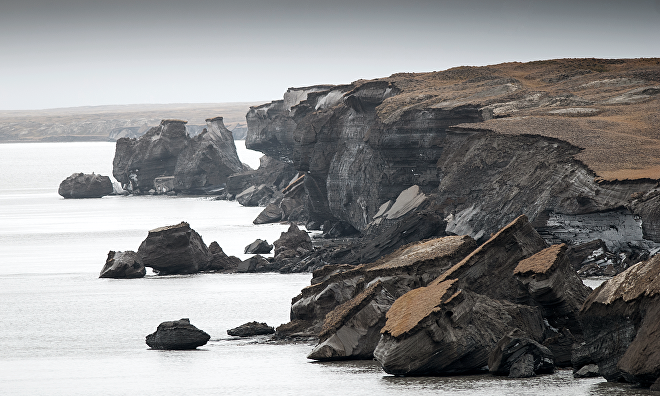
The New Siberian Islands: A disappearing archipelago
Most people have heard something about the mysterious Sannikov Land, which has fired up the imagination of explorers and travelers for two centuries. Few of us know, however, that legend places this mythical island north of the New Siberian Islands. Arctic.ru looks at the origin of the Sannikov...arctic.ru
Damn son, you will believe ANYTHING.
Similar threads

- Replies
- 106
- Views
- 803


- Replies
- 44
- Views
- 503


- Replies
- 65
- Views
- 919


- Replies
- 33
- Views
- 376

New Topics
-
 Zone1 For those who've ever wondered if they can or will be saved....
- Started by JustAnotherNut
- Replies: 0
-

-


