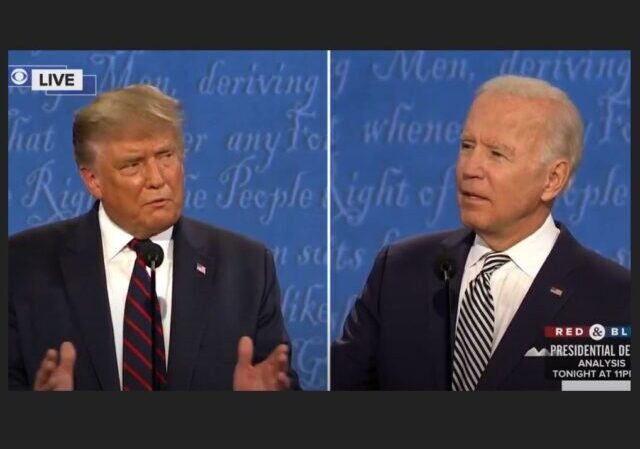
Name one that resonates with you, please.
That he won bigger in 2020 than he did in 2016.
That he was re-elected president in 2020
Thanks. That's debatable. Since all the evidence has not really been adjudicated, the world may never know what the truth is. Most lawsuits were dismissed on technicalities like "lack of standing" or not being "timely."
Actually the bulk of lawsuits were dismissed because of lack of evidence. Or lawyers refusing to allege "voter fraud" in front of the judge.
You're confused because they spewed fraud, fraud, fraud, on the courthouse steps. But once they got inside, they refused to allege voter fraud.
Rudy Giuliani famously comes to mind, since they released the audio of his appearance outside, and then inside the federal court he filed suit in.
I don't think you were following them very closely....
"
How have pro-Trump lawsuits been disposed of?
The lawsuits — some filed by Trump’s lawyers and some by separate pro-Trump entities — have fallen short for a couple of different reasons, legal experts said. In fact, “most of the suits suffered from a combination of these problems,” said Barry Richard, a recount attorney in Florida.
Lawsuits that were filed too late. One suit in Pennsylvania targeted a 2019 law that allowed no-excuse absentee ballots in the state. The court, in its ruling dismissing the suit,
said the plaintiffs should have been challenged well before the election, rather than after millions of such votes had been cast.
Cases that were dismissed for other procedural reasons. In a
Michigan Supreme Court case, petitioners were dissatisfied with the decision of the Board of State Canvassers to declare a winner, but the state supreme court ruled that it had no jurisdiction to review that decision. “It is irresponsible to continue holding out the possibility of a judicial solution to a political dispute that needs to be resolved with finality,” wrote Justice Elizabeth T. Clement.
And in Georgia, Judge Timothy Batten, who was appointed by President George W. Bush, ruled that a lawsuit filed by Sidney Powell, a former Trump lawyer, belonged in state court and was too far-reaching.
“Federal courts are of limited jurisdiction; they are not the legal equivalent to medical hospitals which have emergency rooms that are open 24/7 to all comers,”
he said. “In their complaint, the plaintiffs essentially asked the court for perhaps the most extraordinary relief ever sought in any federal court in connection with an election.”
Cases where courts said that alleged violations, even if true, shouldn’t be remedied by canceling votes. This issue came into play with some pro-Trump lawsuits that challenged how much access observers had to the ballot-counting process. Procedural issues, courts decided, “don’t automatically lead to the conclusion that ballots were cast illegally,” said Richard Pildes, a New York University law professor.
In Wisconsin, Supreme Court Justice Brian Hagedorn
wrote that a request from a voters’ group to invalidate the entire election would be “unprecedented in American history.”
“This petition falls far short of the kind of compelling evidence and legal support we would undoubtedly need to countenance the court-ordered disenfranchisement of every Wisconsin voter,” Hagedorn wrote.
And Judge Stephanos Bibas, a Trump appointee to the U.S. Court of Appeals for the Third Circuit, said in dismissing
one Pennsylvania challenge: “Free, fair elections are the lifeblood of our democracy. Charges of unfairness are serious. But calling an election unfair does not make it so. Charges require specific allegations and then proof. We have neither here.”
Cases where courts rejected lawsuits on the merits. Courts in several cases rejected the idea that what was being alleged amounted to a violation of state or federal law."
Cases have been rejected because plaintiffs have failed to prove widespread voter fraud, have made errors, or faced jurisdictional problems.

www.tampabay.com
This was before the Texas lawsuit, which I thought had the best merits. It was also dismissed for lack of standing...
'Texas has not demonstrated a judicially cognizable interest in the manner in which another State conducts its elections.'

legalinsurrection.com

And they just caught a dozen Iranians trying to sneak in with the hordes

news.yahoo.com