An Iran Fairy Tale

The colonies weren't entirely in the dark re self-rule; they had their 'Houses of Burgesses' and the local councils and the like, in some cases religious institutions, in others more secular, so they had local govts. in place before the Continental Congresses came along, and bicameral legislatures modeled after Parliament. It wasn't a big stretch for them like it would be for the ME's absolute monarchies, you're right.

But then you have to look at it as they did.

Interesting thing about the United States. Until the US Civil War, people did not really consider themselves to be "Americans". They saw themselves as citizens of their original states, not as citizens of a single nation. They were Vermonters, New Yorkers, Carolinians (North and South), Georgians, and of course Virginians.


They held more allegiance to their home state than they did to the Nation.

That only started to change after the Civil War, as not only did the Union Forces tend to operate Armies composed of people from multiple states, but they were also trying to finally form a "National Army". Where previously any such armies had been temporary ad hoc affairs.

This is why General Lee was so divided. He was against secession, but also could not bring himself in his eyes to fight his "home state".

It was only after that war that the perception of the people started to shift away from simply being citizens of a state, and towards being citizens of a nation.

And don't forget, the touchstone to most of the colonies was that England kept dissolving their local governments. Which among other things they believed was illegal as such were rights to Englishmen, along with other things like "no taxation without representation".

Specifically in this case, in 1769 when the Virginia House of Burgesses was dissolved. Then again in 1774, which was a touchstone to form the Continental Congress. They realized that all of their local assemblies were useless if they could be dissolved at a whim. That made them little different than England in the era of Charles I when he dissolved Parliament.

But it could have been very different if in the foundation they had decided to simply operate as 13 colonies without a "Perpetual Union", then when it was over each go their separate way. If that had happened, you would have ended up with 13 colonies later squabbling and fighting each other not unlike the German Principalities of the era. Or Former Yugoslavia before and after that nation existed.
 
4. Iran was led by a powerful dictator known as the Ayatollah. He ruled with harsh repression to keep these ethnicities together:
AI Overview


Ethnic and Religious demographics of Iran [1798x1336] : r ...


Iran is a multi-ethnic society, with Persians forming the largest group (~51–61%). Major minority groups include Azerbaijanis (16–24%), Kurds (7–10%), and Lurs (2–6%). Other significant populations include Gilakis, Mazandaranis, Arabs, Baloch, Turkmen, and Qashqai,


5. If the current regime of Ayatollahs is ended, and if the daydream of the Yugoslavian pattern resulted, we would never see the resergence of the Iran threat again.

So now you're just floundering and 'Posting Last!!!' Okay.
 
They were 'converted into Arabic' because the Arab rulers demanded it

How in the hell can that happen? "Arabic" is an ethnicity, not a nationality.

That is almost as silly and nonsensical of a statement as trying to say in the US the "White rulers demanded all blacks to become white".
 
But then you have to look at it as they did.

Interesting thing about the United States. Until the US Civil War, people did not really consider themselves to be "Americans". They saw themselves as citizens of their original states, not as citizens of a single nation. They were Vermonters, New Yorkers, Carolinians (North and South), Georgians, and of course Virginians.


They held more allegiance to their home state than they did to the Nation.

That only started to change after the Civil War, as not only did the Union Forces tend to operate Armies composed of people from multiple states, but they were also trying to finally form a "National Army". Where previously any such armies had been temporary ad hoc affairs.

This is why General Lee was so divided. He was against secession, but also could not bring himself in his eyes to fight his "home state".

It was only after that war that the perception of the people started to shift away from simply being citizens of a state, and towards being citizens of a nation.

And don't forget, the touchstone to most of the colonies was that England kept dissolving their local governments. Which among other things they believed was illegal as such were rights to Englishmen, along with other things like "no taxation without representation".

Specifically in this case, in 1769 when the Virginia House of Burgesses was dissolved. Then again in 1774, which was a touchstone to form the Continental Congress. They realized that all of their local assemblies were useless if they could be dissolved at a whim. That made them little different than England in the era of Charles I when he dissolved Parliament.

But it could have been very different if in the foundation they had decided to simply operate as 13 colonies without a "Perpetual Union", then when it was over each go their separate way. If that had happened, you would have ended up with 13 colonies later squabbling and fighting each other not unlike the German Principalities of the era. Or Former Yugoslavia before and after that nation existed.


Nothing to dispute there, except to add there were substantial Federalist tendencies around, mostly in the New England states and New Jersey. They were mostly concerned with opposing the out-sized power of Virginia in the new govt., though.
 
How in the hell can that happen? "Arabic" is an ethnicity, not a nationality.

That is almost as silly and nonsensical of a statement as trying to say in the US the "White rulers demanded all blacks to become white".

Arabs were the conquering hordes, the leaders. They were indeed racist and Arab centric. As they expanded they had to use locals to increase their armies, but leadership and control remained firmly in Arab hands. Nothing' silly' about it. Even today clans and their alliances and politics are important throughout the ME.
 
What is the topic?
Review post #1.
Is it not ultimately the best way to rebuild a stable government?
If that’s what you believe the topic amounts to, you’re free to address it.

But it’s not what we had been discussing, at least it wasn’t what I thought the discussion had become.
 

📚

🕌

  • Islam’s foundational texts explicitly reject racial superiority.
  • Yet, social attitudes among some Arab elites diverged from these ideals, especially as empires expanded and absorbed pre‑Islamic cultural norms.
    • Scholars note that racism in Arab societies often stems from misunderstandings or departures from Islamic ethics, not from Islam itself.

⚔️

  • The conquests involved territorial expansion and cultural imposition, not just religious mission.
  • Some historians argue that these expansions were accompanied by Arabization policies that privileged Arab identity over others.
    • This included pressure on Berbers, Persians, and other groups to assimilate culturally and linguistically.

From that 'copilot' thingy; I thought might test it to see what it would say. Not bad, pretty accurate synopsis.
 
Nothing to dispute there, except to add there were substantial Federalist tendencies around, mostly in the New England states and New Jersey. They were mostly concerned with opposing the out-sized power of Virginia in the new govt., though.

Once again, formed through their own recent history of the time.

The reign of King Charles I and the Lord Protector (and his wart) was about as removed from them over time as World War I is today. They saw the excesses of both what a Monarch could do, as well as the excesses of somebody who took power claiming to be taking charge as a result of said excesses, only to be just as bad himself.

Many of the founders saw the problems with the various colonies. Some were formed as religious havens, others as either manufacturing colonies or as agricultural colonies. And there was no "out-sized power" of Virginia, although it seemed that way with members like Thomas Jefferson, George Washington, James Madison, and others. But they in no way dominated, as you had the likes of the Adams cousins from Massachusetts along with John Hancock, and Ben Franklin from Pennsylvania.

In fact, the largest contingency at the First Continental Congress was Pennsylvania, not Virginia. And the only reason New England was pushing for a Federation was because they were suffering the most under the excesses of the English Government. Boston was under military occupation, and other cities and colonies in that region were also under increasing military rule. And they were pushing for that as a form of unity so they could fight together.

After all, Boston had been under military occupation since 1768. And the only way to end that was if they joined together.
 
In fact, the largest contingency at the First Continental Congress was Pennsylvania

Early on. As time went by Virginia was the dominant state politically. Washington, Jefferson, Madison, et al all opposed by Adams and other New England pols. Virginians were 4 of the first 5 presidents .
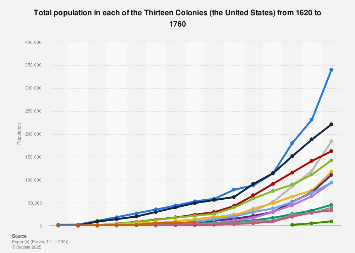
 
Early on. As time went by Virginia was the dominant state politically. Washington, Jefferson, Madison, et al all opposed by Adams and other New England pols. Virginians were 4 of the first 5 presidents .

You also have to look at the early party system at that time.

Washington of course ran unopposed and won unanimously. And a lot of that was based on his being the Commanding General in the war. A natural choice, as he was the highest ranked Colonial since the French-Indian War.

Then you had the parties. The Democratic-Republican Party, and the Federalist Party. And they may not have held the Presidency that much, but they pretty much dominated both houses of Congress. And as you should know, when that happens the President needs to compromise or not much gets accomplished.

But the party soon became unorganized, and by the time of the James Monroe had ceased to exist at a national party so he ran unopposed. That is why in 1824 you had both John Quincy Adams and Andrew Jackson running as Democratic-Republicans. It was only after that that the Democratic-Republicans became the Democratic Party, and the "National Republican" party took over for the now vanished Federalist Party.

But even the National Republican Party did not last, it was gone by 1836 and the Whig Party took it's place. And laughingly in that year ran 4 different candidates for President, which so split the vote that they might as well have given it to Martin Van Buren.

Then as now, the political parties were very influential. But the party that most represented New England was often fractured by infighting and just had problems agreeing on things. Something the "Jeffersonians" had less trouble doing.
 
Virginia also had the largest Congressional delegation, as the highest population state.


the southern colonies were also the richest.
 
Last edited:
Don't know about 'never', but I wouldn't mind seeing the world's largest exporter of terrorism taken down a notch or two, and for as long as possible. Hopefully the satellite terrorist groups they've been supporting kinda dry up a little bit too. But I hope the US doesn't get sucked into another Afghanistan or Iraq situation.
Both those situations had a number of faulty planning and policy in play;
No clear endgame, final results planned
Very little input and involvement of the locals in how to restructure
Ineffective blocking of interference and meddling by other nations
Lack of resolve and willingness to do what was necessary for success
Failure to assess situation and make realistic plans before starting out
Failure to learn proper lessons from mistakes and make correct adjustments
Etc.
 
I am hoping for warring factions, no reunification for Iran.
I'm hoping for a removal of fundamental Islam as a major political force in that nation and that the diverse ethnics can learn to work together in a form of representative democracy similar to the USA.

Continued warring factions within Iran/Persia is not an ideal condition for the Middle East or Earth.
 
15th post
Lack of resolve and willingness to do what was necessary for success

By far the most important reason.
 
I've read many. You haven't.
I'd be more than happy to compare educational CVs.


Let me educate you:

AI Overview


Arab innovations during the Golden Age (790–1258) revolutionized science, medicine, and engineering. Key advancements include
the invention of algebra and trigonometry, the development of the camera obscura and surgical tools, pioneering studies in pulmonary blood circulation, and the creation of water-powered machinery and the first hospitals.
National Institutes of Health (NIH) | (.gov)
National Institutes of Health (NIH) | (.gov) +4
Key Scientific and Technical Advancements
  • Mathematics: Development of algebra (Al-Khwarizmi), the decimal system, and advanced trigonometry.
  • Medicine: Pioneered by scholars like Ibn al-Nafis (pulmonary circulation) and Al-Zahrawi (surgical instruments). The first hospitals were built in Cairo (872).
  • Physics & Optics: Ibn al-Haytham’s 1021 Book of Optics described the magnifying glass and convex lens.
  • Engineering: Al-Jazari (1136-1206) invented the crank, water-raising machines, and weight-driven clocks.
  • Chemistry: Development of distillation, crystallization, and the use of alcohol as an antiseptic.
  • Astronomy: Improved astrolabes and calculated the solar year.
    National Institutes of Health (NIH) | (.gov)
    National Institutes of Health (NIH) | (.gov) +6
Cultural and Practical Contributions
  • Agriculture: Introduced new crops (sugar cane, cotton, citrus) to new regions.
  • Literature: Development of poetry and fables (e.g., One Thousand and One Nights).
  • Inventions: Coffee, early flight attempts (Abbas ibn Firnas), and soap.
    Students of History
    Students of History +4
 
I'm hoping for a removal of fundamental Islam as a major political force in that nation and that the diverse ethnics can learn to work together in a form of representative democracy similar to the USA.

Continued warring factions within Iran/Persia is not an ideal condition for the Middle East or Earth.
How about the former Yugoslavia today?
 
Back
Top Bottom