
He was way ahead of his time.Dr. Michael Crichton.
Navigation
Install the app
How to install the app on iOS
Follow along with the video below to see how to install our site as a web app on your home screen.
Note: This feature may not be available in some browsers.
More options
Style variation
You are using an out of date browser. It may not display this or other websites correctly.
You should upgrade or use an alternative browser.
You should upgrade or use an alternative browser.
What ever happened to that ridiculous climate change hoax.
- Thread starter Etymology gaslight
- Start date

Mushroom
Gold Member
I'm a degreed engineer who has studied paleo-climates for over 20 years.
I admit, I have no degree at all. But have been studying geology for over four decades.
And I have yet to find anybody that is able to refute the geological record. That we are indeed still in an ice age, and this interglacial is the coldest on record. And that in all previous interglacials, by this time in the cycle the Arctic Ice Cap should be almost completely gone (and seasonal at best), and most of Florida should be underwater.
Mushroom
Gold Member
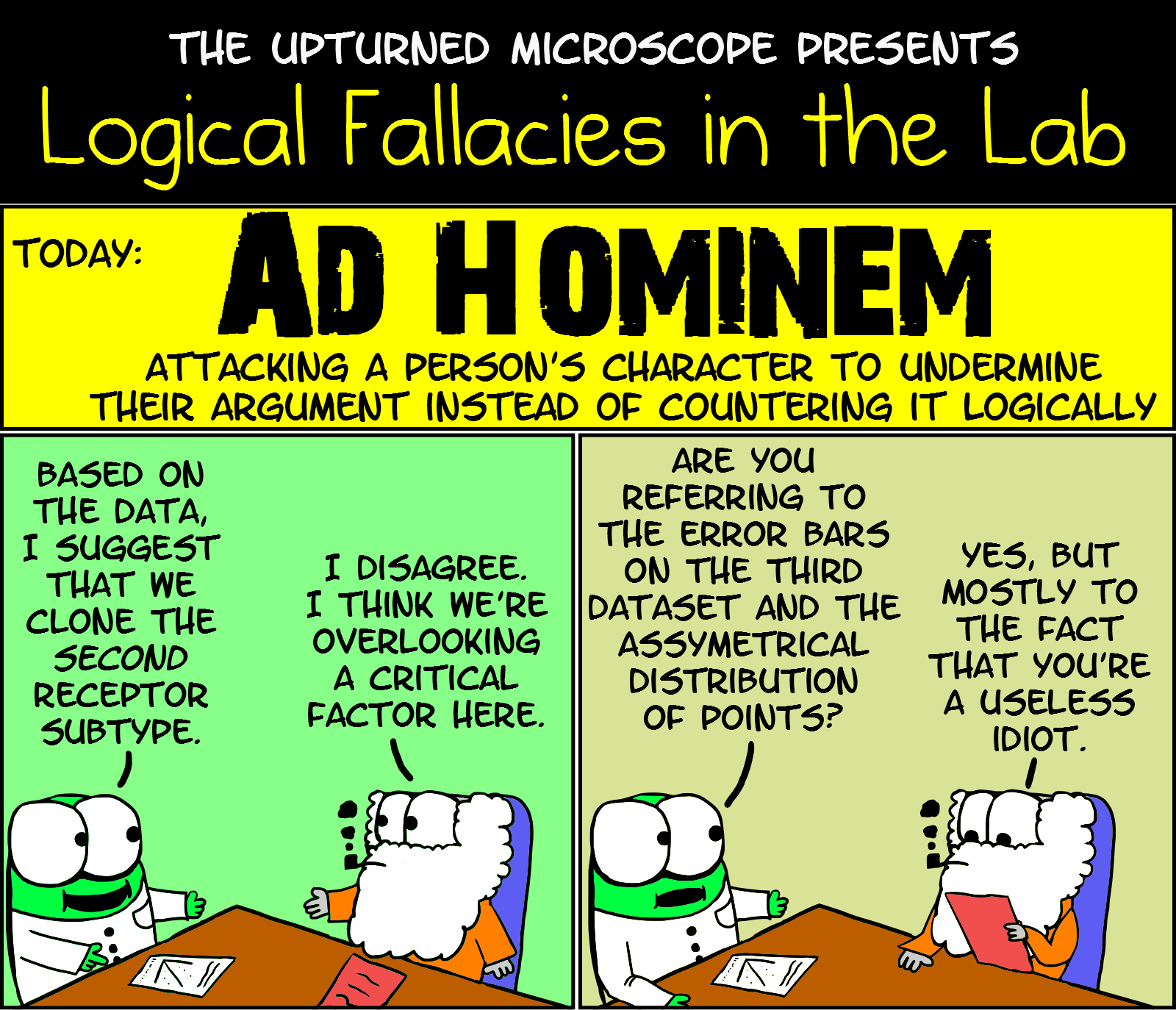
So yes, the fact that you are an uneducated slob with no relevant education or experience is relevant, to the dumb shit you're are spouting.
Ahhhh, yet another logical fallacy.
One does not need a degree to have knowledge. Fort Fun Indiana has neither and has the gall to criticize those that do.I admit, I have no degree at all. But have been studying geology for over four decades.
And I have yet to find anybody that is able to refute the geological record. That we are indeed still in an ice age, and this interglacial is the coldest on record. And that in all previous interglacials, by this time in the cycle the Arctic Ice Cap should be almost completely gone (and seasonal at best), and most of Florida should be underwater.
As for the glacial cycles of the past 3 million years, I believe they have the cause of those all wrong. It's not orbital cycles, it's ocean currents. I find it amazing that they believe slow acting orbital changes can be the cause of abrupt climate changes; colder and warmer. Especially when there are so many papers about the ocean causing abrupt climate changes. I can't figure out if it is herd mentality, incompetence, conspiracy or some combination of the above.
But when the AMOC collapses, I am fully confident that the truth will come out because they won't be able to cover that up. It's going to be abrupt and catastrophic. They won't be able to deny it.
Mushroom
Gold Member
Was it dumb to say that ~3 million years ago the planet became what is known as an icehouse planet.
This is like a Geology 101 topic. In reality, for roughly 3.5 my the planet has been locked in a fever-chill cycle. Alternating roughly every 100 ky between ice ages and interglacials. This is a fact beyond doubt.
We know what started it, we know roughly when this cycle will likely end (somewhere between 25-200 million years).
The only "exceptional" thing about this interglacial is that it is damned cold. So cold in fact that it is barely above temperatures during an actual ice age. Something in this interglacial "broke" around 12 kya, and has never recovered and we are still barely above ice age temperatures.
The climate was warmer 12,000 years ago than it is today. This is a fact, and no amount of gaslighting by claiming this is the "warmest ever" will change that fact. Just as it is a fact that the climate was warmer in the Medieval Warm Period. And even warmer than that in the Roman Warm Period.
In fact, I laugh whenever previous climate optimums are brought up, and people are actually trying to claim that they never happened. The same with the minimums, those also apparently never happened.
This is like a Geology 101 topic. In reality, for roughly 3.5 my the planet has been locked in a fever-chill cycle. Alternating roughly every 100 ky between ice ages and interglacials. This is a fact beyond doubt.
We know what started it, we know roughly when this cycle will likely end (somewhere between 25-200 million years).
The only "exceptional" thing about this interglacial is that it is damned cold. So cold in fact that it is barely above temperatures during an actual ice age. Something in this interglacial "broke" around 12 kya, and has never recovered and we are still barely above ice age temperatures.
The climate was warmer 12,000 years ago than it is today. This is a fact, and no amount of gaslighting by claiming this is the "warmest ever" will change that fact. Just as it is a fact that the climate was warmer in the Medieval Warm Period. And even warmer than that in the Roman Warm Period.
In fact, I laugh whenever previous climate optimums are brought up, and people are actually trying to claim that they never happened. The same with the minimums, those also apparently never happened.
Mushroom
Gold Member
As for the glacial cycles of the past 3 million years, I believe they have the cause of those all wrong. It's not orbital cycles, it's ocean currents.
It is many things, and cycles within cycles.
Now for the current Ice Age Cycles, that is exactly the actual cause. Roughly 3.6 mya, the Isthmus of Panama rose up and cut off the circulation near the Equator between the Atlantic and Pacific. And roughly 100,000 years later the first of the modern "Ice Ages" started. And this is a cycle that has been ongoing for over 3.5 million years, and will continue until North and South America break apart again and an equatorial current resumes between the Atlantic and Pacific.
Now within those roughly 100 ky cycles, there are other influences. Solar Activity, Planetary Tilt, and volcanic activity, and many other things that influence those smaller cycles. But the ice ages themselves started because of the ending of that current, and will continue until it resumes.
Because the fact is, our planet is a hot planet. And our planet wants to be hotter than it is now. I often equate what is happening with a sick person going through cycles of fever and chills. The planet keeps trying to get hotter, but each time it gets close to what temperatures were 3.6 mya, it slides right back into another ice age.
And I am actually old enough to recognize when alarmists are simply licking their finger and sticking it into the air. Then screaming at what they sense there and blaming it on people and it is going to end the world. Such as around 50 years ago when Buffalo and much of NE North America were hit by record cold and snow storms. And for the next few years there were screams of "New Ice Age".
And even then, my science teacher was saying that was all coprolite. And in the last half century I have not seen any evidence he was wrong.
Mushroom
Gold Member
The thing is, the reality is that we have damned little evidence of the glacial cycles. The best we can really do is proxy data from the Antarctic Ice Cores. And even then, it's only a proxy and not "true" temperatures. And as somebody that has been studying geology for decades, that is one of the first things I learned.
And another proxy can be found in the Great Plains of North America. On most of the planet, topsoil only makes up the top 1-2 feet of the ground. In many areas of the planet, this is actually closer to 6-10 inches. Then below that is subsoil. That averages from another 1-6 feet or so until you hit bedrock.
But in the Great Plains, that is not the case at all. There under the 1-2 feet of topsoil, you have a staggering 300-500 feet of subsoil before you hit the bedrock. That is all layer upon layer upon layer of deposits from glacial cycles. Because during an "ice age", that region is not what is seen today but closer to tundra and permafrost as is seen in Northern Canada and Alaska today.
Then another interglacial hits, and it warms, dries out, and resumes the grasslands like is there today. And because of glacial action and tectonic effects, that is actually the best record we have of such forces in North America. Because one thing that is known about the Glacial Maximums, they are damned good at erasing all evidence of the prior ice ages.
The Ice Cores are great, because they give us the only real record of those cycles. Like many who study geology, I tend to use the rather generic and absolutely incorrect claim that there have been "Five Glacial Cycles". Now is this correct? Absolutely not. We know for a fact there have been dozens of them. But because each glaciation erases almost all evidence of prior glaciations, there is damned little geological evidence that they ever happened.
But when it comes to geology, we can only find evidence of the last five glacial cycles. And for the four prior to our most recent, there is very little evidence at all. The video above talks about one of them, found around Spokane that predates our most recent glaciation.
And that alone is proof of what Creighton said. When J. Harlan Bretz proposed a lot of things at the turn of the century, he was dismissed as a lunatic. Among them that much of Eastern Washington was impacted by giant floods, and that there was more than one Ice Age, all of the geologists of the era insisted there had only been a single ice age.
And guess who was correct. The person who broke with the consensus, or those that were following the consensus?
Hell, it still blows my mind when people talk about "Ice Age" in the singular. As if there had been only one, even though for close to a century there have been known there were multiple ice ages. As well as multiple interglacials. I often wonder how many in discussions like this are even aware that there have been dozens of them?
It is many things, and cycles within cycles.
Now for the current Ice Age Cycles, that is exactly the actual cause. Roughly 3.6 mya, the Isthmus of Panama rose up and cut off the circulation near the Equator between the Atlantic and Pacific. And roughly 100,000 years later the first of the modern "Ice Ages" started. And this is a cycle that has been ongoing for over 3.5 million years, and will continue until North and South America break apart again and an equatorial current resumes between the Atlantic and Pacific.
Now within those roughly 100 ky cycles, there are other influences. Solar Activity, Planetary Tilt, and volcanic activity, and many other things that influence those smaller cycles. But the ice ages themselves started because of the ending of that current, and will continue until it resumes.
Because the fact is, our planet is a hot planet. And our planet wants to be hotter than it is now. I often equate what is happening with a sick person going through cycles of fever and chills. The planet keeps trying to get hotter, but each time it gets close to what temperatures were 3.6 mya, it slides right back into another ice age.
And I am actually old enough to recognize when alarmists are simply licking their finger and sticking it into the air. Then screaming at what they sense there and blaming it on people and it is going to end the world. Such as around 50 years ago when Buffalo and much of NE North America were hit by record cold and snow storms. And for the next few years there were screams of "New Ice Age".
And even then, my science teacher was saying that was all coprolite. And in the last half century I have not seen any evidence he was wrong.
Are you familiar with D-O events? Abrupt cooling and warming events in the last glacial period which swung 5 to 8 C warm and cold in as little time as a few decades.
The thing is, the reality is that we have damned little evidence of the glacial cycles. The best we can really do is proxy data from the Antarctic Ice Cores. And even then, it's only a proxy and not "true" temperatures. And as somebody that has been studying geology for decades, that is one of the first things I learned.
And another proxy can be found in the Great Plains of North America. On most of the planet, topsoil only makes up the top 1-2 feet of the ground. In many areas of the planet, this is actually closer to 6-10 inches. Then below that is subsoil. That averages from another 1-6 feet or so until you hit bedrock.
But in the Great Plains, that is not the case at all. There under the 1-2 feet of topsoil, you have a staggering 300-500 feet of subsoil before you hit the bedrock. That is all layer upon layer upon layer of deposits from glacial cycles. Because during an "ice age", that region is not what is seen today but closer to tundra and permafrost as is seen in Northern Canada and Alaska today.
Then another interglacial hits, and it warms, dries out, and resumes the grasslands like is there today. And because of glacial action and tectonic effects, that is actually the best record we have of such forces in North America. Because one thing that is known about the Glacial Maximums, they are damned good at erasing all evidence of the prior ice ages.
The Ice Cores are great, because they give us the only real record of those cycles. Like many who study geology, I tend to use the rather generic and absolutely incorrect claim that there have been "Five Glacial Cycles". Now is this correct? Absolutely not. We know for a fact there have been dozens of them. But because each glaciation erases almost all evidence of prior glaciations, there is damned little geological evidence that they ever happened.
But when it comes to geology, we can only find evidence of the last five glacial cycles. And for the four prior to our most recent, there is very little evidence at all. The video above talks about one of them, found around Spokane that predates our most recent glaciation.
And that alone is proof of what Creighton said. When J. Harlan Bretz proposed a lot of things at the turn of the century, he was dismissed as a lunatic. Among them that much of Eastern Washington was impacted by giant floods, and that there was more than one Ice Age, all of the geologists of the era insisted there had only been a single ice age.
And guess who was correct. The person who broke with the consensus, or those that were following the consensus?
Hell, it still blows my mind when people talk about "Ice Age" in the singular. As if there had been only one, even though for close to a century there have been known there were multiple ice ages. As well as multiple interglacials. I often wonder how many in discussions like this are even aware that there have been dozens of them?
There is abundant geological and paleontological evidence which exists for past glacial periods.
- Glacial Landforms:
- Moraines, Drumlins, and Erratics: Glaciers push and carry large amounts of debris, including boulders (erratics) to distant landscapes, which are then left behind when the ice melts. The resulting mounds of sediment form features like moraines and drumlins.
- Glacial Striations: As glaciers flow, embedded rocks scrape against the underlying bedrock, leaving giant scratch marks or grooves on the rock surface.
- U-shaped Valleys: Glacial erosion carves out characteristic U-shaped valleys, distinct from the V-shaped valleys formed by rivers.
- Sedimentary Deposits:
- Tillites/Diamictites: These are ancient, poorly sorted conglomerates of sediment and rock fragments deposited directly by glaciers.
- Dropstones: Large stones found within fine-grained marine or lake sediments are evidence of icebergs or sea ice that melted and dropped their cargo to the seafloor or lakebed.
- Ice-Rafted Debris (IRD): The presence of coarse-grained sediments (sand and larger) in deep-ocean sediment cores, far from continental sources, indicates transport by icebergs.
- Sea Level Changes: The growth of massive continental ice sheets locks up huge volumes of water, causing global sea levels to drop significantly during glacial periods. Evidence of former high/low sea levels, such as raised beaches and submerged river valleys, can be found in coastal geology.
- Species Assemblages: During a glacial period, cold-adapted organisms spread into lower latitudes, while organisms that prefer warmer conditions retreat or become extinct. The changing composition of species (e.g., in ocean or lake sediments) reflects temperature shifts.
- Pollen and Spores: Analysis of pollen and spores in lake and bog sediments reveals the types of vegetation that existed in an area, indicating whether the climate was cold and arid or warm and moist.
Mushroom
Gold Member
There is abundant geological and paleontological evidence which exists for past glacial periods.
But as I said, very little evidence of each glacial cycle.
Yes, we have tons of evidence of ice ages. Glacial moraines, drumlins, striations on rocks, and a lot of other things.
But 99.99% of those are only pointing to the Last Glacial Maximum. And that glacial event eliminated almost all of the evidence of previous glacial events.
Now in North America, this is known as the Wisconsin Glaciation. Before that it was the Illinoian. And before that was the Kansan, and before that the Nebraskan glacial event. And we only know of the geological existence of those because some lobes extended lower than the following glacial events.
There is so little evidence going back past two glacial maximums that most just lump anything before the Illinoian as "Pre-Illinoian".
And we know for a fact there were glacial events between those. The Ice Cores prove that, but what is missing is the actual evidence on the ground. The Nebraskan was from 2.2 to 2.4 mya. And the Kansan around 3 mya. But we know they occur in roughly 100 ky cycles, so where are the others?
The answer is simply that none of those likely extended past the LGM of the most recent Wisconsin Glaciation, so all hard geological evidence for them was erased. Just as the evidence of the Illinoian was erased other than a few lobes that extended would of its maximum extent.
That is why most geologists list the number at 5. As I said there have been lots of others, but the evidence of the individual glaciations has been erased by following glaciations. And there were a hell of a lot of them between the Kansan roughly .5 mya and the Nebraskan of 2.4 mya. But the actual hard geological evidence on the surface of the planet itself were erased by the Wisconsin glaciation.
But we know that there were many in between those named ones. The Antarctic Ice Sheet records that they did exist. And there are also some records of them found in ocean sediments. But the evidence in say Canada? Wiped clean, because the surface of that entire country was scoured clear down to the bedrock.

The above should show what I mean. The darkest color is the Wisconsin Glaciation roughly 30 kya. The next darkest is the Illinoian, some 500 kya. But any evidence on the surface between the Illinoian and the Kansan (lightest color on the map maybe) is simply no longer around. Those sheets likely never extended as far as the US-Canada border, so the evidence was erased by the Wisconsin Ice Sheets.
And I said that in the map above the oldest direct evidence is of the Kansan. But even that is only a guess, as real research into actually dating them has not been done. As I said, those are generally just all lumped together as "Pre-Illinoian".

Compare the list of "Named Ice Ages" and when they occurred, it is immediately obvious there are a hell of a lot of gaps there. Those are the un-named glacial events. They are not named because there is no evidence on the planet other than in ice cores that they ever happened in the first place.
Last edited:
How about sediment cores?But as I said, very little evidence of each glacial cycle.
Yes, we have tons of evidence of ice ages. Glacial moraines, drumlins, striations on rocks, and a lot of other things.
But 99.99% of those are only pointing to the Last Glacial Maximum. And that glacial event eliminated almost all of the evidence of previous glacial events.
Now in North America, this is known as the Wisconsin Glaciation. Before that it was the Illinoian. And before that was the Kansan, and before that the Nebraskan glacial event. And we only know of the geological existence of those because some lobes extended lower than the following glacial events.
There is so little evidence going back past two glacial maximums that most just lump anything before the Illinoian as "Pre-Illinoian".
And we know for a fact there were glacial events between those. The Ice Cores prove that, but what is missing is the actual evidence on the ground. The Nebraskan was from 2.2 to 2.4 mya. And the Kansan around 3 mya. But we know they occur in roughly 100 ky cycles, so where are the others?
The answer is simply that none of those likely extended past the LGM of the most recent Wisconsin Glaciation, so all hard geological evidence for them was erased. Just as the evidence of the Illinoian was erased other than a few lobes that extended would of its maximum extent.
That is why most geologists list the number at 5. As I said there have been lots of others, but the evidence of the individual glaciations has been erased by following glaciations. And there were a hell of a lot of them between the Kansan roughly .5 mya and the Nebraskan of 2.4 mya. But the actual hard geological evidence on the surface of the planet itself were erased by the Wisconsin glaciation.
But we know that there were many in between those named ones. The Antarctic Ice Sheet records that they did exist. And there are also some records of them found in ocean sediments. But the evidence in say Canada? Wiped clean, because the surface of that entire country was scoured clear down to the bedrock.

The above should show what I mean. The darkest color is the Wisconsin Glaciation roughly 30 kya. The next darkest is the Illinoian, some 500 kya. But any evidence on the surface between the Illinoian and the Kansan (lightest color on the map maybe) is simply no longer around. Those sheets likely never extended as far as the US-Canada border, so the evidence was erased by the Wisconsin Ice Sheets.
And I said that in the map above the oldest direct evidence is of the Kansan. But even that is only a guess, as real research into actually dating them has not been done. As I said, those are generally just all lumped together as "Pre-Illinoian".

Mushroom
Gold Member
How about sediment cores?
Far less accurate, and really only proof that they happened.
Both loss of data due to compression and lack of hard surface evidence means we can only guess at to how far those glaciations extended.
That is proxy data, not true data.
For true data of the glacial maximum of the Wisconsin, one only has to travel to Washington State. There is evidence all over the northern part of that state.
For evidence of the Illinoian, once again look to Washington. There is still evidence of the glacial maximum there around Spokane. There used to be a lot in Seattle, but they destroyed almost all of that a century ago. But the events before that? Unless those events had a glacial maximum that extended past the WIsconsin, the evidence is simply gone.
It's pretty much all proxy data so to speak. It all works together to paint a pretty convincing picture. The oxygen isotope curve is well established for the Cenozoic.Far less accurate, and really only proof that they happened.
Both loss of data due to compression and lack of hard surface evidence means we can only guess at to how far those glaciations extended.
That is proxy data, not true data.
What would you call true data?That is proxy data, not true data.
Mushroom
Gold Member
What would you call true data?
Rocks, and direct evidence on the surface on the rocks.
Glacial striations are true data. Drumlins are true data. Loess deposits are true data. Evidence like that leaves physical proof on the surface of the planet.
Proxy data is indirect. Yes, it shows "Something Happened", but it does not show the actual extent of the actual event because it is all second hand.
Think of it like the K-T Boundary. Palentologists knew for over a century that something happened some 65 mya, as at one point in the fossil record there were dinosaurs, and then there were no dinosaurs. Then in 1980 they discovered the "K-T Boundary", a layer of mostly iridium that was left globally that marks the line before one era and the other. Below the K-T, Dinosaurs. Above the K-T, no dinosaurs.
That was hard evidence, but said nothing more than it was a meteor. It was over a decade later that the Chicxulub Crater was discovered. And if that impact had happened in the deep ocean instead of a shallow sea, there would not have even been that much hard evidence left behind.
It all works together. No one single piece of evidence - direct or indirect - can tell the whole story.Rocks, and direct evidence on the surface on the rocks.
Glacial striations are true data. Drumlins are true data. Loess deposits are true data. Evidence like that leaves physical proof on the surface of the planet.
Proxy data is indirect. Yes, it shows "Something Happened", but it does not show the actual extent of the actual event because it is all second hand.
Think of it like the K-T Boundary. Palentologists knew for over a century that something happened some 65 mya, as at one point in the fossil record there were dinosaurs, and then there were no dinosaurs. Then in 1980 they discovered the "K-T Boundary", a layer of mostly iridium that was left globally that marks the line before one era and the other. Below the K-T, Dinosaurs. Above the K-T, no dinosaurs.
That was hard evidence, but said nothing more than it was a meteor. It was over a decade later that the Chicxulub Crater was discovered. And if that impact had happened in the deep ocean instead of a shallow sea, there would not have even been that much hard evidence left behind.
Mushroom
Gold Member
It all works together. No one single piece of evidence - direct or indirect - can tell the whole story.
In that I completely agree. But we can only rely on hard evidence to know the extent of glaciation or interglacials.
One of those I have pointed out multiple times is some of the best when it comes to interglacials, the coral reefs of Florida.
There are multiple coral reefs under and around Miami. And they were left there during interglacials. And it shows how high sea levels normally get during interglacials. And they have found "dead" reefs deep underwater off-shore, showing where there was shallow water during the eras of glaciation when sea levels were lower.
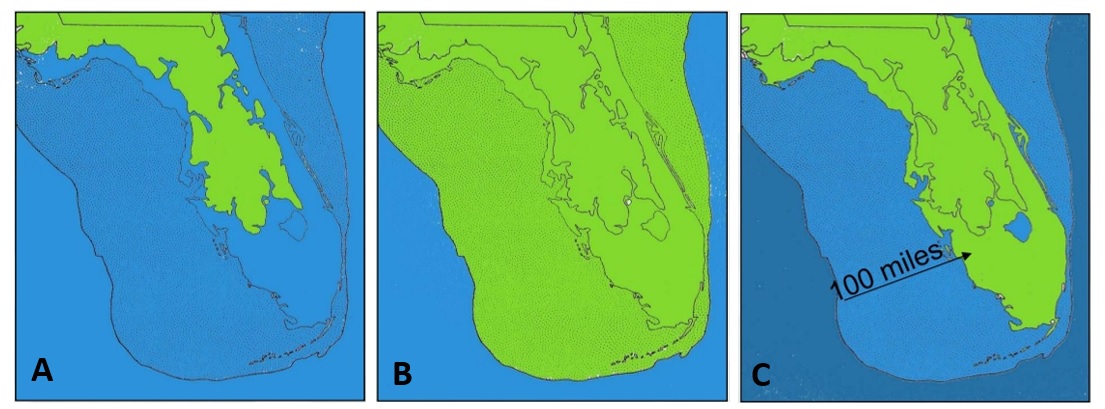
That is why I love the above image. And being one of the largest areas of low lying coastal land in a tectonically dead zone, Florida is excellent for showing the differences during ice ages and interglacials. C is what it looks like now, but in reality this far into an interglacial Florida should more closely resemble A.
And B is what we know during a glacial maximum, primarily from sea level analysis and dead coral reefs that have been located that are now too deep underwater to sustain life there. But of the evidence, A is far more accurate because it is based on limestone deposits from what were coral reefs during the last interglacial. B is primarily made from proxy data, so has nowhere near the detail or resolution of A.
Was the coastline of Florida that smooth at the LGM? Absolutely not, but with proxy data that is the closest we can approximate. Especially to the west because there are no coral reefs there.
Every winter the northern hemisphere gets a stark reminder of just how far it is possible for glaciers to extend when the next glacial period is triggered.we can only rely on hard evidence to know the extent of glaciation or interglacials.

EMH
Diamond Member
- Apr 5, 2021
- 32,870
- 19,261
- 2,788
Every winter the northern hemisphere gets a stark reminder of just how far it is possible for glaciers to extend when the next glacial period is triggered.
So why is there ice age glacier south of Arctic Circle on Greenland, but no such ice age glacier north of Arctic Circle on Alaska?
Similar threads

- Replies
- 0
- Views
- 194
- Poll
- Replies
- 0
- Views
- 223
- Replies
- 2
- Views
- 253

- Replies
- 740
- Views
- 10K

- Locked
- Replies
- 10
- Views
- 264

New Topics
-
 Violent, homophobic registered Democrat only gets 15 months for threatening Trump official
- Started by JGalt
- Replies: 0
-

-
-

-


