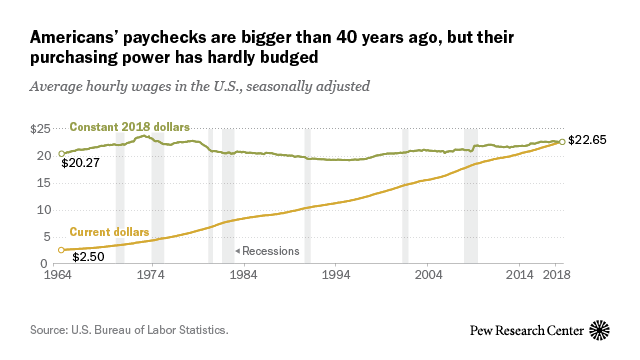
Wages are low.
Despite some ups and downs over the past several decades, today's real average wage in the U.S. has about the same purchasing power it did 40 years ago. And most of what wage gains there have been have flowed to the highest-paid tier of workers.

www.pewresearch.org
So what?
Why should a worker's real wages increase if they are not doing anything more or less than they were twenty years ago? Why should anyone's lifestyle improve simply because they have gotten older and are doing the same as what they did twenty years ago? Keep up with inflation yes, which has happened.
As you know too, President Donald Trump is the first president in decades to increase low and middle-income workers and that of minorities more than other presidents in modern history. He also narrowed the income gap between low and high-income workers. But liberals can not allow those workers to see how easy it was to do. So, Trump was under constant attack. Democrats certainly can't allow their base to learn that they really can make their lives better on their own than government support.
This is even more true today.
Right, manufacturing never offshored. Sheesh.
That is your response to my statement (Markle). " That's not true. When most women stayed home, our taxes were very low. As taxes increased, it became more and more difficult for a single wage earner to pay for all the necessities. More and more households needed additional income. With the additional income, the government saw even more money they could use for their pet projects."
Please show us all where I said manufacturing was never offshored?
A prime example is our automotive industry. Unions had the auto industry by the short and curlies. It wasn't the CEOs who would lose anything by conceding to the demands of the unions. That sharply increased the cost of American autos. In addition to that, American manufacturers were arrogant and believed the American consumer was a captive market.
Then, as you know, Volkswagons began showing up and nearly became a fad. Honda started with small motorcycles and then smaller cars. All were cheaper, more economical, and better built than the "Big Three" was producing.
As unions won battles, wages became higher and, as we know today, they reached a point where it was cheaper to build your widgets somewhere else and then pay to have them put on a ship, brought here after a couple of weeks journey, be trucked to the destination and still sell it for less than if it were built on our shores.
Why is that difficult for you to understand?