berg80
Diamond Member
- Oct 28, 2017
- 36,508
- 29,676
- 2,820
You think about that. Witkoff and Jarad offered Iran free nuclear fuel if they gave up the highly enriched uranium, they said "no"
View attachment 1233931
Just Get Out! Now!
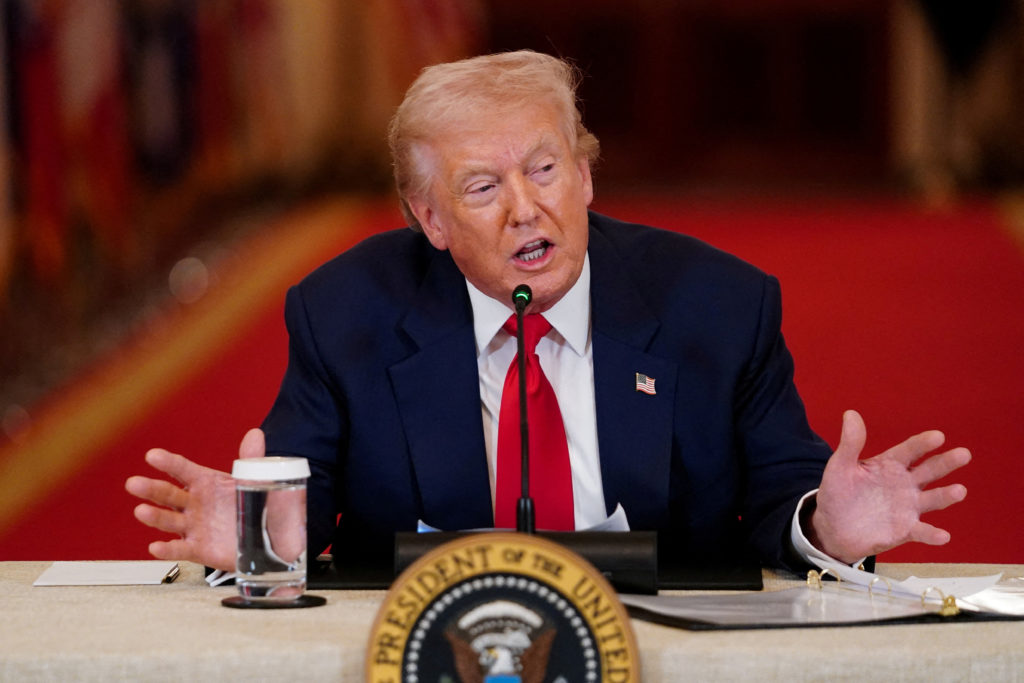
As is becoming clearer from President Trump’s own statements and those of his staff, along with press reporting, the US has launched a major war without the input of the experts we pay to advise the President on such matters. The State Department, Pentagon, National Security Council Staff, Defense Intelligence Agency, and NSA were simply bypassed because, as White House Spokesperson Karoline Leavitt said, President Trump “had a feeling” Iran would attack.The President’s real estate developer son-in-law and friend reinforced that “feeling” when they returned from the second round of talks with the Iranian foreign minister and his team. However, as the news outlet Responsible Statecraft (RS) reported over the weekend, both son-in-law Jared Kushner and friend Steve Witkoff appear to have mis-represented those talks in a way that helped push President Trump toward war. No State Department officials were on hand to ensure the reporting was accurate.
Also, arms control experts at home, according to the RS report, believe that “the duo appeared to have fatally misunderstood a series of basic technical and historical matters” regarding Iran’s nuclear program leading to inaccurate information conveyed to the President.
Just Get Out! Now! - The Ron Paul Institute for Peace & Prosperity
As is becoming clearer from President Trump’s own statements and those of his staff, along with press reporting, the US has launched a major war without the input of the experts we pay to advise the President on such matters. The State Department, Pentagon, National Security Council Staff...
Iran was nowhere close to a nuclear bomb, experts say
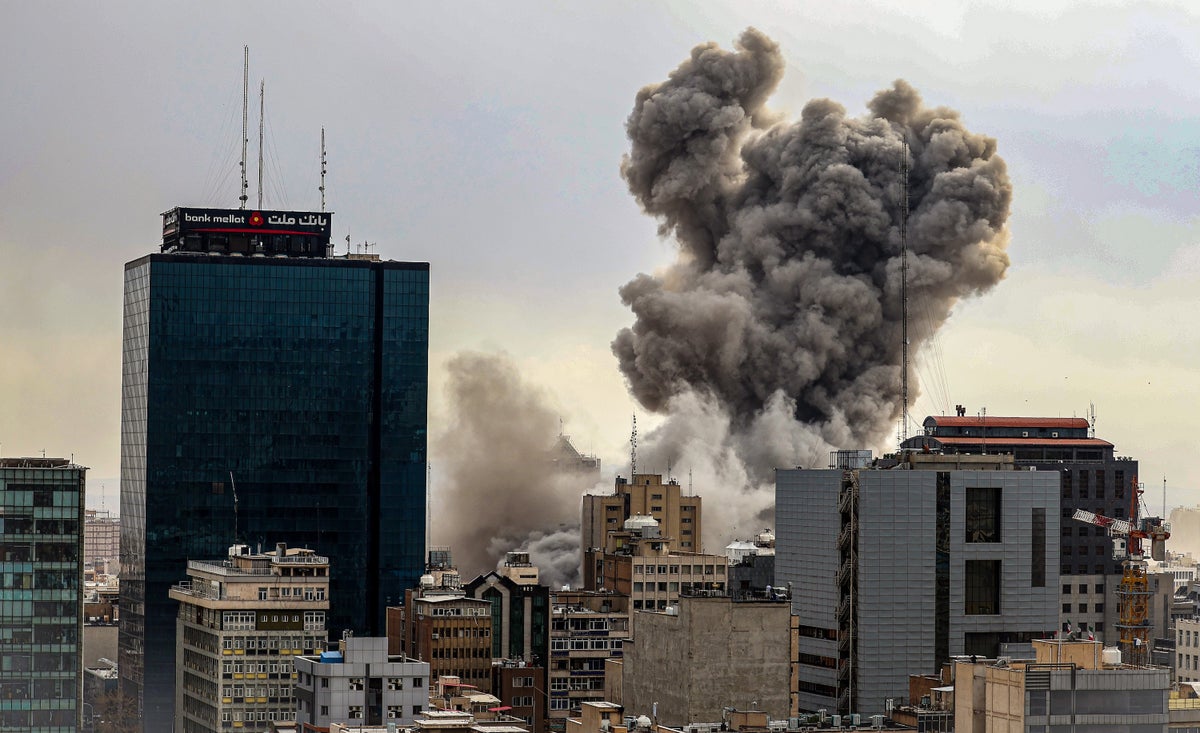
Confusion on whether Iran truly needed only “two weeks to four weeks” to make a nuclear weapon, as President Donald Trump suggested on Monday, hangs over the ongoing U.S. and Israeli war on the Persian Gulf nation. Nuclear experts call this claim unlikely—but the confusion may stem from some basics of atomic chemistry.
“There was no evidence that Iran was close to a nuclear weapon,” says Jeffrey Lewis of the James Martin Center for Nonproliferation Studies at the Middlebury Institute of International Studies. His comment echoed those of other experts after the war’s start, as well as statements from International Atomic Energy Agency (IAEA) chief Rafael Grossi at that time and in 2025 and last year’s “threat assessment” report by U.S. intelligence agencies.
According to an IAEA estimate, as of June 2025, Iran possessed 441 kilograms of 60 percent enriched uranium, where the percentage refers to the share of the isotope uranium 235 (U 235) found in the material. That would be enough for 10 nuclear weapons if the material could be enriched further to full 90 percent weapons-grade concentrations, according to the IAEA. That further enrichment would take a matter of weeks in a fully functioning Iranian nuclear complex, perhaps explaining the time line within Trump’s declaration.
That step alone doesn’t equal a bomb, however. And Iran’s main enrichment capabilities were “completely and totally obliterated,” according to Trump himself in June, after the U.S. bombed three underground Iranian facilities. The administration’s special envoy to the Middle East Steve Witkoff nonetheless claimed on March 3, after the start of the current war, that Iran had the capability to make 11 nuclear bombs. Trump administration officials reportedly failed to include nuclear technical experts in their negotiation teams with Iran prior to the war, adding to the uncertainty. If Iran really had rebuilt these facilities, that might have led—over months and not weeks—to the nation resuming its uranium enrichment, Lewis says. “But this is all ‘if,’ ‘maybe’ and ‘later,’” he adds.