Yeah, you're right, and he's not
From AI:
No federal law currently requires a sitting president to divest from or dissociate from their private business interests. While strict ethics laws apply to most executive branch employees, the president is explicitly exempt from the primary statute governing financial conflicts of interest
Emoluments Clause & Presidential Business
— by
Eleanor Stratton
Understanding the Emoluments Clause
The Emoluments Clause, articulated in the U.S. Constitution, serves as a safeguard designed to bar federal officeholders from receiving any gifts, offices, titles, or emoluments from foreign states without congressional consent. Embedded within this legal framework are two distinct provisions: the Foreign Emoluments Clause and the Domestic Emoluments Clause.
The Foreign Emoluments Clause, found in Article I, Section 9, explicitly prohibits individuals holding federal positions from accepting gifts, emoluments, offices, or titles from foreign governments unless they acquire congressional approval. This clause bolsters a crucial element of American constitutional architecture – the prevention of undue external influence on national decision-makers.
"The Domestic Emoluments Clause, outlined in Article II, specifically targets the Presidency. This clause stipulates that
the President shall not receive any emolument besides his fixed salary from either the federal government or any state. Such legal stringency ensures that the Nation's highest office
remains impervious to potentially corrupting domestic influences that may attempt to sway presidential actions.
These clauses maintain the integrity of federal offices. Legal frictions are notably highlighted in cases involving President Donald Trump, who,
due to vast business interests, faced accusations of violating these constitutional stipulations. Allegations centered around his retaining ownership in businesses that received payments and patronage from foreign officials as well as agents of domestic governments. This stirred debates and legal inquiries regarding the boundaries of acceptability under the Emoluments Clauses.
These clauses showcase their instrumental role as guardians of governmental allegiance purely to the republic and its citizens, absent foreign or domestic contaminations of pecuniary nature."
"President Donald Trump's business dealings have sparked scrutiny under the Emoluments Clauses, chiefly due to the international and domestic transactions tied to his hotel and real estate empire. Trump's luxury hotel in Washington, D.C. became a fashionable spot for diplomats and foreign officials visiting the capital. This raised questions about whether President Trump was
indirectly receiving funds from foreign governments, which if proven, is a potential violation of the Foreign Emoluments Clause.
The accusation was that by patronizing Trump's hotel, foreign governments were attempting to curry favor with the president through their business. Payments made by agents and entities related to various countries to Trump International Hotel could be viewed as emoluments if these agents act in their capacity of foreign beneficiaries.
This precipitated lawsuits from the attorneys general of Maryland and the District of Columbia. They argued that Trump's
failure to disengage from his businesses placed him in continuous violation of both the Domestic and Foreign Emoluments Clauses. They contended that the Trump International Hotel in D.C. served as a focal gathering locale for both foreign and domestic politicians aiming to gain favor, thus allegedly benefiting Trump's personal finances contrary to constitutional requirements.
Other properties under Trump's banner drew contributions from foreign entities, including leases held at Trump World Tower involving various foreign governments.1 These interactions posed further legal challenges about whether they represented standard tenant contracts or impermissible benefits."
"From a legal standpoint, such complex matters involve scrutiny from the judiciary, particularly when these
interests intersect with constitutional provisions like the Emoluments Clauses. Litigation concerning emoluments has exposed
an absence of established jurisprudential guidelines. The dismissal of cases against former President Trump,
particularly as his tenure drew to a close, underscored how judicial reticence to engage these matters leaves a void in constitutional jurisprudence relating to presidential conduct.
The discontinuation of these lawsuits
on grounds that they had become moot points to a challenging oversight in the constitutional mechanisms designated to ensure executive compliance with the law. Such an end result fails to set a precedent and suspends the judiciary's interpretative duty, withdrawing an opportunity to define the operational contours of the Emoluments Clauses."
"The Trump presidency has presented a lesson on the risks of perceived or real conflicts of interest, propelling legislative bodies to consider clearer standards around what presidents can do with their businesses when in office. This could result in new statutes aimed at standardizing blind trust requirements or establishing clearer parameters for permissible and non-permissible actions, particularly with respect to the operation of international and domestically influential businesses."
Emoluments Clause & Presidential Business
===========
"Since the 1960s, almost every U.S. president has acknowledged he should not personally profit off the job – or, at least, should avoid the appearance of doing so. Early in their terms, Democratic and Republican leaders alike have issued ethics guidelines for their administration. President Donald Trump did so shortly after taking office in 2017, using some of the same language as Bill Clinton’s and Barack Obama’s ethics pledges.
This year, President Trump
has not made such a promise.
He did not sign an ethics pledge for his presidential transition process, as is called for by law. And hours after being sworn into office, he rescinded former President Joe Biden’s ethics rules – without issuing a pledge covering his own administration."
"Even if Mr. Trump does eventually sign such an order, it’s unclear who will enforce it.
In his first week in office, he fired the director of the U.S. Office of Government Ethics, as well as 17 – or about 1 in 4 – of the inspectors general who serve in watchdog roles at various federal agencies (disregarding the 30-day notice to Congress required by law).
Of course, pledges themselves don’t guarantee ethical behavior by presidents or their administrations.
During his first term, Mr. Trump raised ethical red flags by refusing to divest or put his financial holdings in a blind trust as did other presidents, saying that he would maintain a “wall of separation” between himself and The Trump Organization, which would be run by his sons. Foreign dignitaries frequently booked stays at Mr. Trump’s golf clubs and hotels throughout his tenure, which critics called
a blatant form of currying favor. And Mr. Trump himself spent substantial amounts of time at his own properties during those four years, often with other high-level government officials –
at a cost of hundreds of thousands of dollars of taxpayer money."
"Now, less than three months into his second term, experts on ethics say Mr. Trump is pushing boundaries in new ways, reaping millions of dollars in the process. They also say that, given the prominence of business dealings in Mr. Trump’s own life and in his family, it becomes hard to know whether personal interests are operating alongside his political priorities for the nation, in actions ranging from tariff negotiations to a reshaping of government."
As guardrails fall, Trump blurs lines between presidency and personal profits
========
- bout
- About CREW
- Equity & Ethics
- Leadership
- Careers
- Ways to Give
- Contact
- Legal Actions
- Reports & Investigations
- News
- Store
- ContributeOpens in a new window
The intensifying threat of Donald Trump’s emoluments
August 28, 2024
Share:
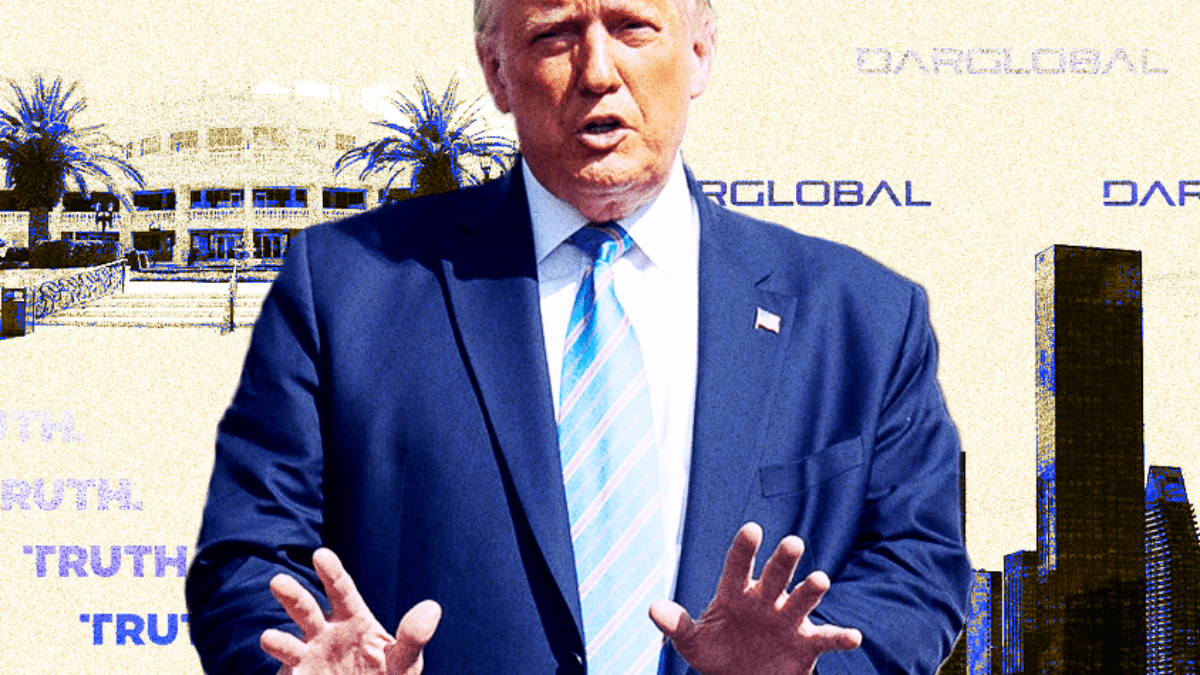
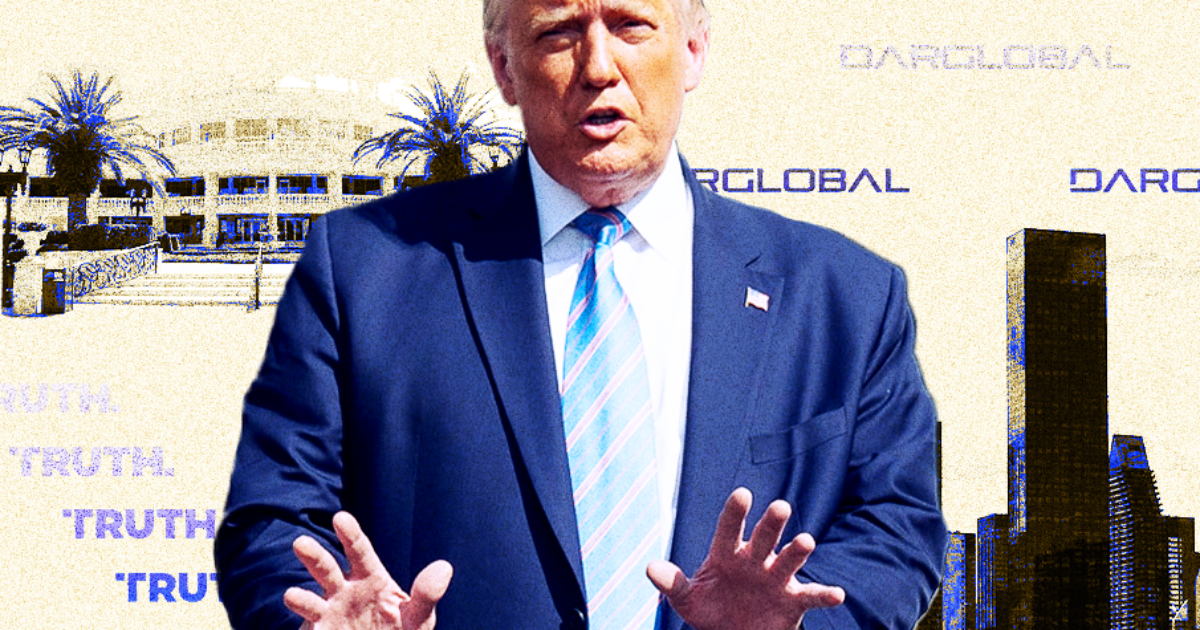
Illustration by Miru Osuga/CREW | Photos by Kai Brinker and slgckgc via Creative Commons licenses
Donald Trump will violate the Foreign and Domestic Emoluments Clauses if he serves as president and fails to divest from his businesses.
Likely sources of his illegal emoluments would include, but not be limited to:
- Truth Social parent company, Trump Media and Technology Group
- Trump World Tower
- Saudi-funded LIV Golf league and
- Real estate developments in Oman, Saudi Arabia and the United Arab Emirates.
Congress should pass legislation to make it simpler to enforce the Emoluments Clauses. Until then, executive branch employees must obey the law and may not use their authority to enable illegal emoluments to flow to a sitting president.
Inspectors General and the Committee on Foreign Investment in the United States must also investigate Trump’s potential emoluments as they occur.
Donald Trump will once again violate the Constitution’s Foreign and Domestic Emoluments Clauses if he serves a second term as president of the United States
and fails to divest from his businesses.
The Constitution requires that, before taking office, Trump fully divest himself from any businesses receiving profits, gains or advantages, beyond his official compensation, from the federal government or the individual states. Without consent from Congress, the Constitution further requires Trump fully divest himself from any businesses receiving profits, gains or advantages from foreign governments as well. To date, Trump has given no indication that he would divest from his businesses during a potential second term, nor seek congressional consent to retain any of the millions of dollars in payments and other benefits he is expected to receive from foreign governments.
The Constitution’s
Emoluments Clauses are designed to prohibit financial conflicts of interest by sitting presidents and other government officials. The Foreign Emoluments Clause prevents the president from receiving, among other things, profits, gains or advantages from foreign governments, without the consent of Congress.
The Domestic Emoluments Clause prevents the president from receiving under any circumstances profits, gains or advantages from the federal government itself, outside of his or her government salary and benefits, or from the individual states. The framers of our Constitution drafted both Emoluments Clauses broadly, because they were concerned about the many ways a president’s loyalty could be compromised by his or her personal financial interest.
“While serving as president, Donald Trump violated the law by failing to divest. Trump never received Congress’s consent to accept the millions of dollars of foreign emoluments he received through payments to his businesses, and did not divest from his business to prevent his receipt of domestic emoluments.”
While serving as president, Donald Trump violated the law by failing to divest. Trump never received Congress’s consent to accept the millions of dollars of foreign emoluments he received through payments to his businesses, and did not divest from his business to prevent his receipt of domestic emoluments.
Instead, Trump received millions from foreign governments, including a minimum of $5.5 million from the Chinese government alone.
After his election, Trump
acknowledged that his foreign business interests presented
“a little conflict of interest”—a remarkable understatement—but took
no meaningful steps to address them. Never in our history had a president come to office presenting the same threat of harming America’s national interest in favor of their personal financial interests.
And in spite of Trump’s efforts to avoid transparency, publicly available records reveal a mountain of violations of the Emoluments Clauses during his administration, resulting in a level of corruption that has no analogue in American history.
And yet, the scale of Trump’s violations of these anti-corruption laws would likely increase significantly in a second term. Earlier this year, Trump deflected when asked whether he would divest from his businesses during a second term. Instead, he responded that $8 million is “
a small amount of money”
and that he has earned some of his outside income by “doing services” through his hotels and clubs. Trump did not divest, and Congress did not consent to his acceptance of foreign emoluments during his term in office.
Trump has given no indication that he will divest from his business if he secures the presidency again or that he will request permission from Congress to accept foreign emoluments."
Trump will again violate the Emoluments Clauses if he serves another term as president and fails to divest from his businesses.

www.citizensforethics.org