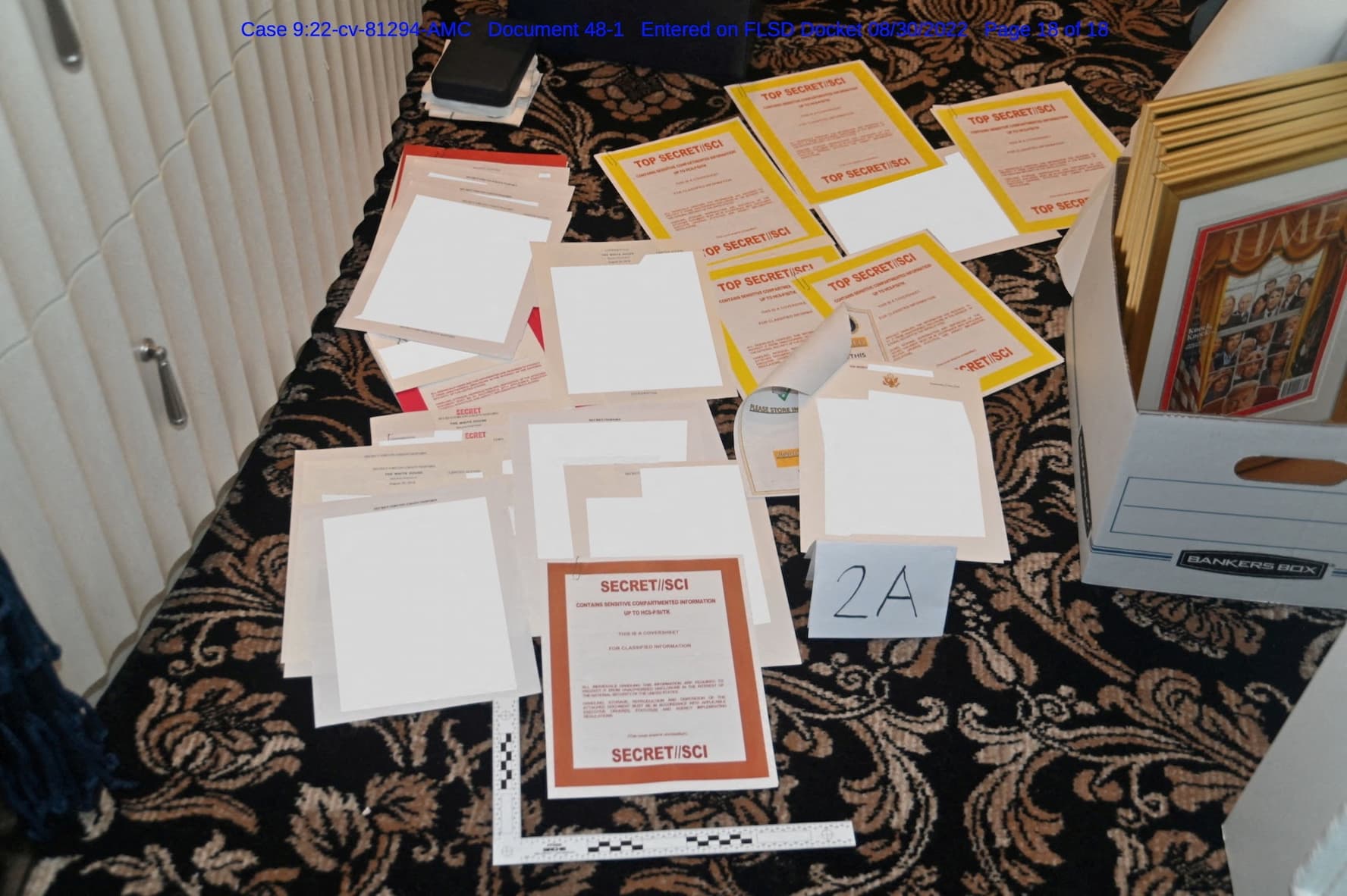
0311 and jc456, both of you are half right, but from opposite sides of the issue. Billeyerock has it mostly right.
The president, while serving in the office, has the authority and the power to classify or declassify anything they wish to. It's part of their authority as president.
But, once they leave office, that power no longer exists for them. They only have that power while they are currently serving.
As far as declassification of something? Yes, the president can declassify anything they want, for any reason they want. HOWEVER, there are procedures that must be followed for the document or information to be declassified, because that information doesn't exist in only one place, it exists in several others.
The president decides to declassify something. They then tell their aides and people involved with that information they are declassifying the information. The president can do that with just their say so, but their staff has to follow certain procedures after being told of the declassification. A document of some type is prepared, stating the information to be declassified, the date and time it was decided by the president that it was declassified as well as the reason, and that document is then sent to all the other places where that information is also held, telling them the change in status of the information from classified to declassified.
Can the president declassify anything they want to? To a certain degree yes, but in the declassification process, if it is determined that the information to be declassified would present a real and present danger to this country, the people who have intimate knowledge of the information would notify the president why it shouldn't be declassified. The ultimate authority to declassify something does rest with the president, but they will be notified and told why it's not in the countries interest to declassify something. The president usually goes along with the findings of the people declassifying something if they find a problem.
Can the president declassify something after they've left office? No. That power is only allowed while they are serving as a sitting president.
If something is declassified, will there be a record of the declassification? Definitely yes. That information is held in places other than with just the president, and those places need to know the status of the information.
To expand on this for those that don't understand classification.
What people that don't understand what "classified" shows. Documents are not "declassified" it is the information in the document that is declassified. The document is a piece of paper, it is the information that is important.
For example let’s say that there are 6 copies of a specific document containing specific classified information. One located in the White House, 5 located amongst various agencies which also need the document. In addition there are subordinate documents that contain (either in part of in whole some of the same classified information).
Under a normal process when the information contained in a highly classified documents is declassified (or downgraded) that impacts all copies of the document (its information, and subordinate documents containing the same information in whole or
portions of a subordinate document).
So If the FPOTUS "declassified" a document, he is really declassifying the information in that document. If the FPOTUS, while acting as POTUS, "declassified" the information without telling anyone (either directly or in writing) for that specific document, you end up with:
For example let’s say that there are 6 copies of a specific document containing specific classified information. One located in the White House, 5 located amongst various agencies which also need the document. In addition there are subordinate documents that contain (either in part of in whole some of the same classified information).
Under a normal process when the information contained in a highly classified documents is declassified (or downgraded) that impacts all copies of the document (its information, and subordinate documents containing the same information in whole or
portions of a subordinate document).
So If the FPOTUS "declassified" a document, he is really declassifying the information in that document. If the FPOTUS, while acting as POTUS, "declassified" the information without telling anyone (either directly or in writing) for that specific document, you end up with:
- One copy of the information located at the White House (or one of his Country Clubs) being "declassified", and
- Five copies of the information located at the responsible agencies still being classified as the responsible agencies will not know the information was declassified because the FPOTUS (while POTUS) just mentally declassified the information in his head.
The result is someone could be prosecuted for improper handling of classified material for actions related to the 5 responsible agency documents, but not for improper handling of the exact same document if the source of the document was the White House. But they contain the same information! By this we are talking about the information in the document and subordinate information which sourced the document which can have even wider reaching impacts.
The national security infrastructure cannot function in a reasonable way if the same information is both classified and declassified at the same time simply because the POTUS chooses not to tell anyone.
Kind of a Schrodinger's Classified document where the same information is both classified and declassified at the same time until someone asks the FPOTUS to find out if he mentally and secretly declassified it without telling anyone while still POTUS. Normal people wouldn't know just by looking at the document.
WW