Westwall -
The reason I ask is because I can accept that computer modeling is not a silver bullet, especially when it comes to what happens in future. I do think the models improve all the time, but I totally agree that they can not be the only method of understanding our climate.
The slightly puzzling thing for me is that most of what I read about climate isn't based on models -
1) Glacial melt - new research from the Andes shows massive loss from glaciers, matching similar research conducted in Alaska. Some glaciers have lost more than 50% of their ice since 1970, and are shedding ice faster than at any time in 300 years. 97% of the world's glaciers are in decline.
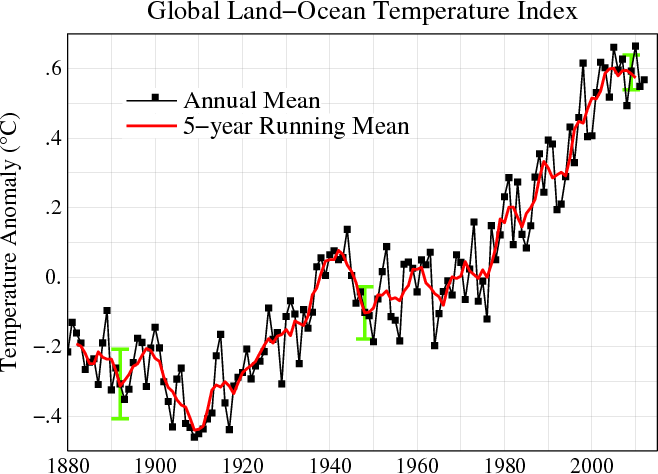
2) Temperature increases. Our records from 1650 might not be the most accurate, but at least since 1900 we have had reasonable ways of ascertaining the temperature. The 10 hottest years in the past 112 years all occur during the past 15 years.
3) Drought & floods. The patterns of drought & floods in Australia & Spain show a rapidly increasing pattern of severity and frequency. Both Sydney and Australia recorded their hottest temperatures ever last month, and droughts & floods devastate the country now at a frequency unknown in recorded history.
4) Rising sea levels. Between 1870 and 2004, global average sea levels rose 195 mm (7.7 in). From 1950 to 2009, measurements show an average annual rise in sea level of 1.7 ± 0.3 mm per year, with satellite data showing a rise of 3.3 ± 0.4 mm per year from 1993 to 2009, a faster rate of increase than previously estimated.
5) Between 1751 and 1994 surface ocean pH is estimated to have decreased from approximately 8.25 to 8.14, representing an increase of almost 30% in H+ ion concentration in the world's oceans. I agree that the 1751 figure might not be 100% reliable, but modern measurements do show changing pH.
I could go on, but I think you get the point.
The reason people believe in climate change is not because of computer models - it's because of what they can see outside their living room window. Combine this with historical records and the kind of scientific measuring systems we now have, and the reality of what is happening to our glaciers, oceans and weather is hardly debatable.