Reading without reflecting is like eating without digesting.
Edmund Burke
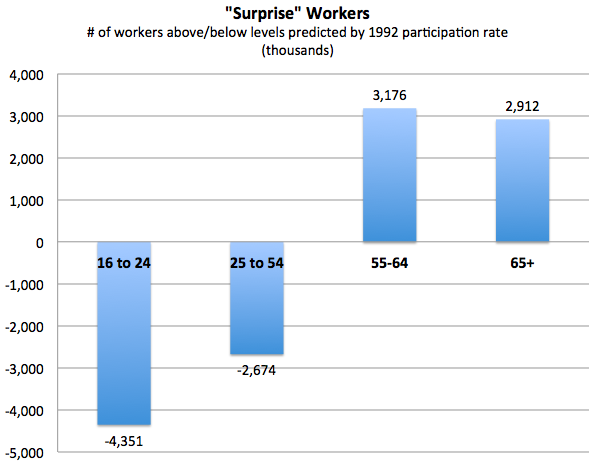
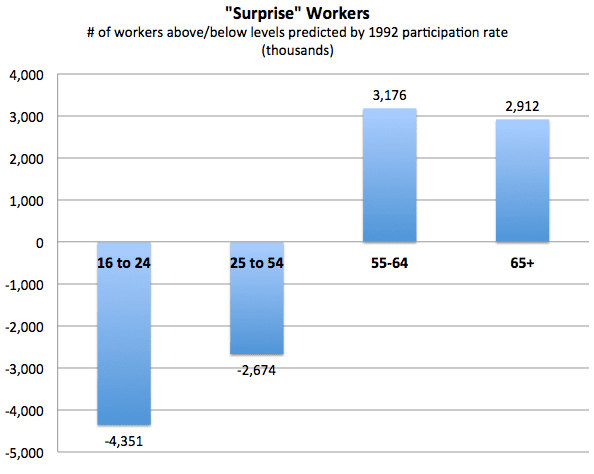
The place where we're really missing workers is in the 16-24 cohort, where there's a 4.3-million-person hole.
What accounts for it? School, mostly.
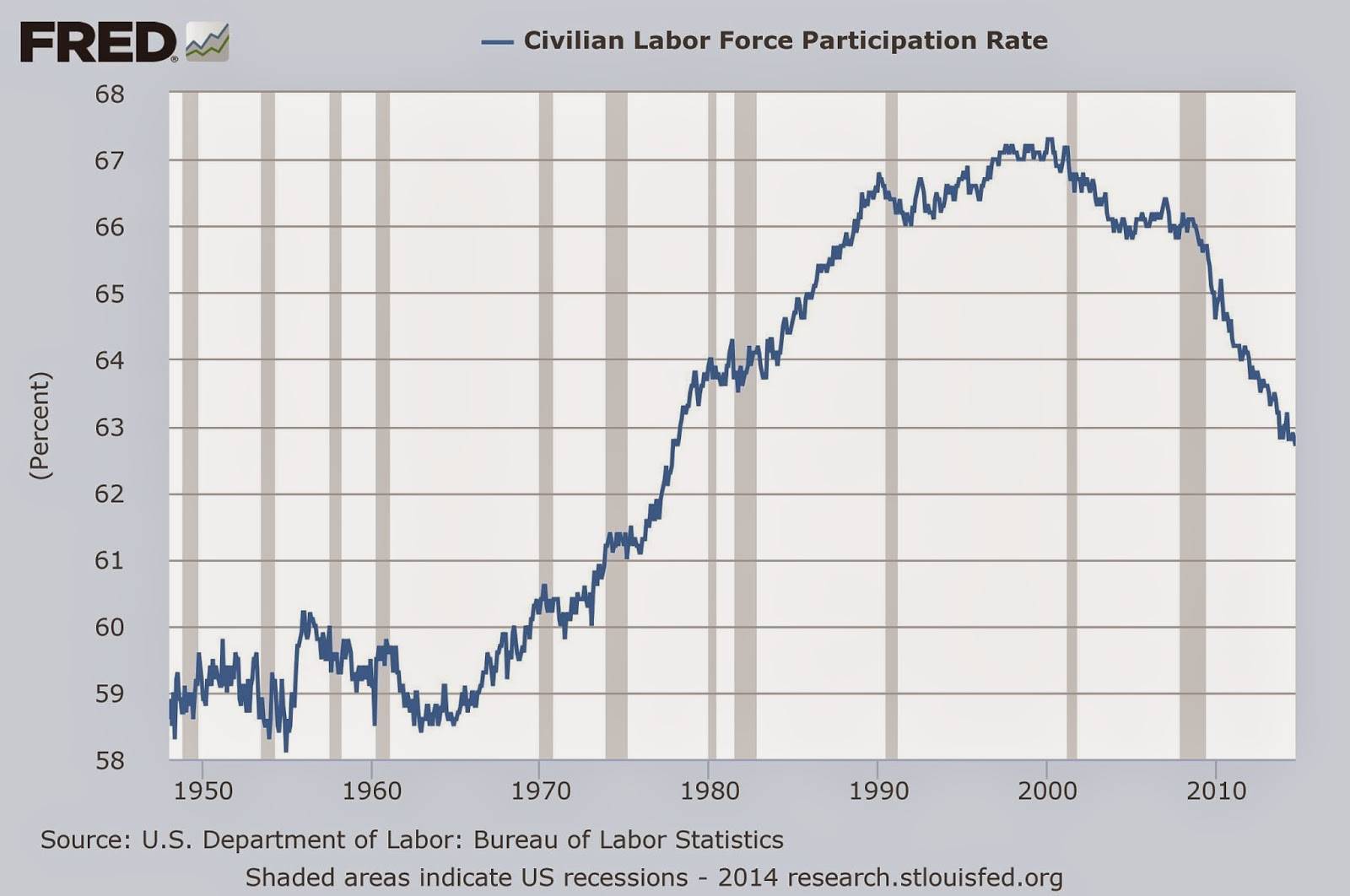
After demographics, the decline in participation among young people is, by far, the leading factor in the overall decline in participation. If we raised our participation rate to 1992 levels today, the labor force would grow immediately by 6.7 million people—and, as you see, 4.3 million of those workers would be under 24. The "missing workers" in the economy are mostly young.
And they're mostly in high school or college. Education enrollment jumped four percentage points in the four years after the recession started, "essentially accounting for nearly all of the decline in the youth [participation]," according to a
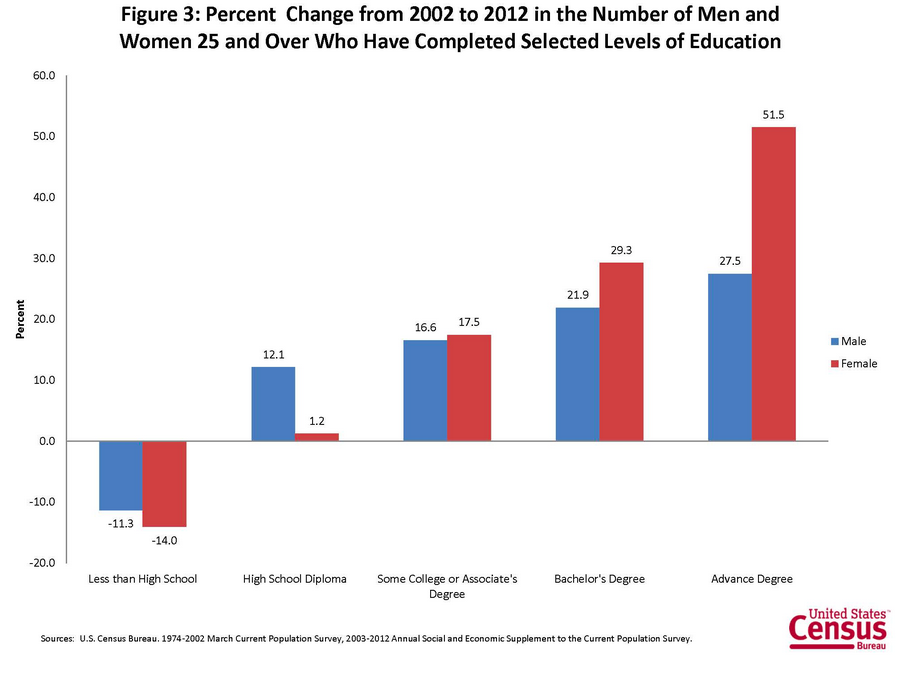
2013 paper by Christopher J. Erceg and Andrew T. Levin. Higher college enrollment also accounted for about one-third of the decline among prime-age workers (25-54), too. As you can see, high-school and college completion are soaring, and people in school are considerably less likely work.

The recession, too, has affected the participation rate through various channels. There are about a million discouraged workers who have dropped out of the labor force; Social Security Disability payments are up for the 55+ cohort, which typically takes those workers out of the job hunt; and a weak labor market can nudge young people back to school. But the decline in participation is mostly a combination of demographics and scholastics. We're entering the workforce later, staying longer, and getting older. The president can beg Congress to spend/cut/deregulate or whatever your particular policy-verb-of-choice may be, but it's fairly clear that we're up against mighty forces—age and education trends—that will resist quick fixes.