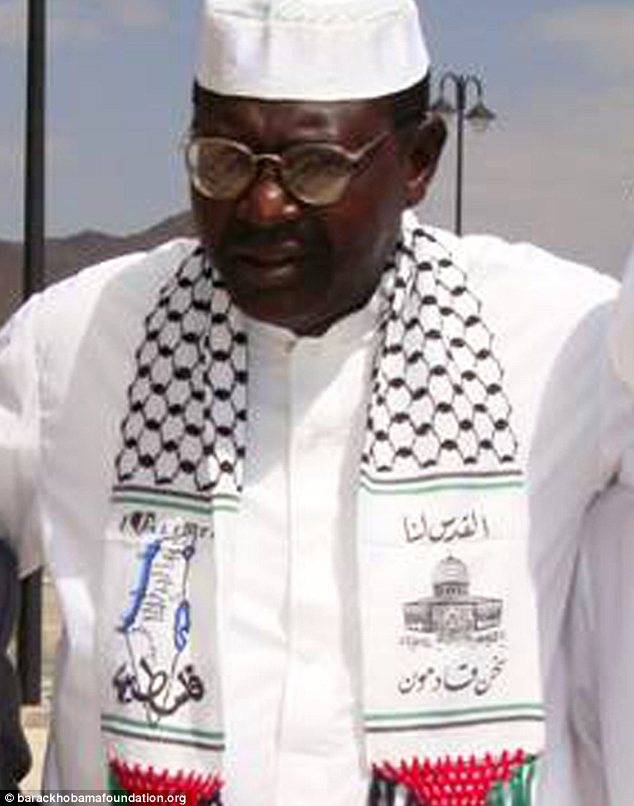
With Trump's help end of palestine is possible...
The End of Palestine
Israel has the opportunity to reclaim its nation.
February 16, 2017
Daniel Greenfield
Palestine is many things. A Roman name and a Cold War lie. Mostly it’s a justification for killing Jews.
Palestine was an old Saudi-Soviet scam which invented a fake nationality for the Arab clans who had invaded and colonized Israel. This big lie transformed the leftist and Islamist terrorists run by them into the liberators of an imaginary nation. Suddenly the efforts of the Muslim bloc and the Soviet bloc to destroy the Jewish State became an undertaking of sympathetically murderous underdogs.
But the Palestine lie is past its sell by date.
What we think of as “Palestinian” terrorism was a low-level conflict pursued by the Arab Socialist states in between their invasions of Israel. After several lost wars, the terrorism was all that remained. Egypt, Syria and the USSR threw in the towel on actually destroying Israel with tanks and jets, but funding terrorism was cheap and low-risk. And the rewards were disproportionate to the cost.
For less than the price of a single jet fighter, Islamic terrorists could strike deep inside Israel while isolating the Jewish State internationally with demands for “negotiations” and “statehood.”
After the Cold War ended, Russia was low on cash and the PLO’s Muslim sugar daddies were tired of paying for Arafat’s wife’s shoe collection and his keffiyah dry cleaning bills.
The terror group was on its last legs. “Palestine” was a dying delusion that didn’t have much of a future.
That’s when Bill Clinton and the flailing left-wing Israeli Labor Party which, unlike its British counterpart, had failed to adapt to the new economic boom, decided to rescue Arafat and create ”Palestine”.
The resulting terrorist disaster killed thousands, scarred two generations of Israelis, isolated the country and allowed Jerusalem, Tel Aviv and other major cities to come under fire for the first time since the major wars. No matter how often Israeli concessions were met with Islamic terrorism, nothing seemed able to shake loose the two-state solution monkey on Israel’s back. Destroying Israel, instantaneously or incrementally, had always been a small price to pay for maintaining the international order.
The same economic forces that were transforming the world after the Cold War had salvaged “Palestine”. Arafat had lost his sponsors in Moscow, but his new sugar daddy’s name was “Globalism”.
...
The “Palestinian Authority”, a shell company of the PLO which is a shell company of the Fatah terrorists, has no economy worth speaking of. It has foreign aid. Its diplomatic achievements are achieved for it by the transnational network of foreign diplomats, the UN, the media and assorted international NGOs. During the last round of “negotiations”, Secretary of State John Kerry even attempted to do the negotiating on behalf of the Palestinian Authority in the talks with Israel.
Take away the transnational order and the Palestinian Authority will need a new sugar daddy. The Saudis are better at promising money than actually delivering it. Russia may decide to take on the job. But it isn’t about to put in the money and resources that the PA has grown used to receiving from us.
Without significant American support, the Palestinian Authority will perish. And the farce will end.
...
The PLO has inflicted a great deal of diplomatic damage on Israel and Hamas has terrorized its major cities. Together they form an existential threat that Israel has allowed to grow under the guise of managing it. The next few years may leave Israel with a deadlier and less predictable struggle.
“Palestine” is dying. Israel didn’t kill it. The fall of the transnational order did. The question is what will take its place. As the nationalist wave sweeps the West, Israel has the opportunity to reclaim its nation.
The End of Palestine

 “The End of Palestine”
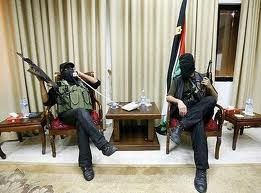
"Hamas has named a shadowy militant commander

as its new leader in the Gaza Strip,
an official media outlet confirmed on Monday, placing one of the Islamic militant group's most hard-line figures in charge of its core power base.
The appointment of
Yehiya Sinwar,

who was freed by Israel in a 2011 prisoner swap

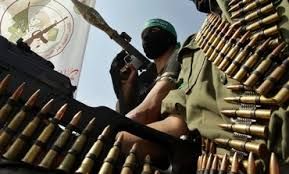
after two decades behind bars, solidifies the takeover of Gaza operations by the armed wing of the group from civilian leaders. The military wing, which controls thousands of fighters and a vast arsenal of rockets, has battled Israel in three wars since Hamas seized Gaza a decade ago.
The militant wing tends to take more hard-line positions toward Israel, while the politicians, who are tasked with improving the difficult living conditions in Gaza, tend to be more pragmatic.
Sinwar's selection was reported by Hamas' Al-Resala news site. A Hamas official, speaking on condition of anonymity because he was discussing the group's

secretive election process, also confirmed the appointment.
….Sinwar

replaces Ismail Haniyeh,

who served as the prime minister (“prime minister”)

of Hamas' government following the 2007 takeover of Gaza and remains a top figure in the movement. Haniyeh is now expected to take over as Hamas' supreme leader, replacing Khaled Mashaal, who lives in exile.
Khalil al-Haya, another political hard-liner, was elected as Sinwar's deputy.

Hamas started its elections late last year, and the entire process is expected to be completed within the next two months with the naming of a new political bureau, consisting of representatives from Gaza, the West Bank, exiled Palestinian communities across the Middle East and prisoners held by Israel.
Sinwar, who is in his mid-50s,

comes from the southern Gaza town of Khan Younis and was a founder of Hamas' military wing in the 1980s.
Hamas is sworn to Israel's destruction and has killed hundreds of Israelis in suicide bombings, shootings and other attacks. It is considered a terrorist group by Israel, the United States and the European Union.
Sinwar was sentenced

to four life terms by Israel in 1988 for a series of offenses, including his role as mastermind of the abduction and killing of two Israeli soldiers. During his final years in prison, he was the leader of the hundreds of Hamas prisoners held by Israel.
In 2011, Prime Minister Benjamin Netanyahu agreed to release Sinwar, along with about 1,000 other prisoners, in exchange for Gilad Schalit, an Israeli soldier who had been captured by Hamas five years earlier in a cross-border raid.
At the time, Netanyahu was harshly criticized

for releasing dozens of prisoners held for involvement in deadly attacks. Israel says Sinwar's brother,

Mohammed, was among the masterminds of the soldier's capture and

negotiated the prisoner swap.
Sinwar, who rejects

any reconciliation with Israel, has quickly restored his power in the movement [right in the “movement”]since his return to Gaza.
He is widely believed to be behind last year's unprecedented killing

of another top Hamas commander
in an internal power struggle.
Israel captured the Gaza Strip, along with the West Bank and east Jerusalem, in the 1967 Mideast war.
In 2005, Israel decided that its occupation of Gaza, an impoverished, densely populated territory that also borders Egypt, was unsustainable, and it withdrew all of its troops and settlers.
( )
)

Two years later, Hamas seized control of the territory after a series of battles with the rival Fatah movement, leaving the Palestinians divided between two governments. Israel and Egypt have maintained a blockade on Gaza since then, and Israel has waged three wars against Hamas, campaigns it says were meant to halt incessant rocket fire on its southern towns.
After a decade of blockade and conflict, Gaza is mired in poverty and widespread destruction. International organizations estimate the unemployment rate is over 40 percent, and the movement of people and goods in and out of the war-battered territory remains restricted.
Israel says the restrictions are needed to keep Hamas from smuggling arms into Gaza. Egypt also has poor ties with Hamas, which shares the ideology of the Muslim Brotherhood espoused by former Egyptian President Mohammed Morsi, who was ousted by the military in 2013.
Sinwar has rarely appeared in public since a 2014 war with Israel. Ibrahim al-Madhoun, a pro-Hamas analyst who runs a Gaza think tank, said he met Sinwar two months ago and got the impression that he is more interested in improving difficult conditions in Gaza than renewed conflict with Israel.
"He is interested in stability, the rebuilding of Gaza and easing the blockade," al-Madhoun said. "I felt he is more with the truce rather than conflict."
Sinwar has close ties to Qatar and Turkey, two of the few countries that have good relations with Hamas. Al-Madhoun said he also has good ties with Iran, a longtime backer of Hamas.
In a sign of moderation, Sinwar supported a failed 2014 reconciliation agreement with President Mahmoud Abbas' Fatah movement.
Under the deal, Hamas agreed to step aside to create a unity government that would reunite the West Bank and Gaza. But it was never implemented, and Hamas remains the de facto authority in Gaza. Haniyeh is no longer prime minister, but remains involved in Hamas' affairs as ministry officials administer the territory.
Kobi Michael, a former head of the Palestinian Desk at Israel's Ministry for Strategic Affairs, said Sinwar represents "one of the most radical and extreme lines of Hamas" and is focused on building up the group's military capabilities."
"The idea that he was elected is a very dangerous

and concerning indication of the destabilization of the region," Michael said.