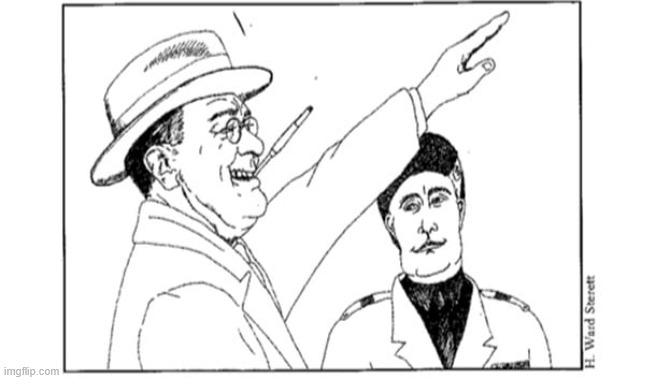
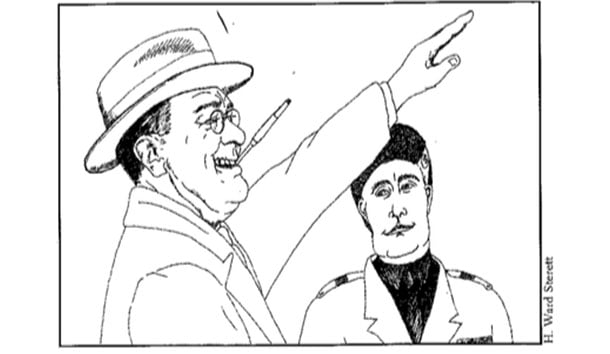
FDR like Trump and W was born into enormous wealth, and don’t care about the rights of the people. They have no strong convictions about anything other than attaining more power for themselves. Clinton, O, and Demented Joe while not being born into enormous wealth desperately wanted wealth, so they happily sold their souls to the billionaire class.
FDR had to bend to the people’s will to stay in office, thanks to nationwide movements. So he granted them a few crumbs, but likely that was too much for the billionaires to accept. So, the Business Plot might have been an effort to limit further benefits granted the lower classes. FDR probably told the billionaires not to worry, I’m one of you.
Excellent column by Unz on FDR, and as usual well documented and researched. As commonly occurs on so many historical leaders and events, nearly everything we were told about FDR in our school textbooks and media is utter bs.
American Pravda: President Franklin Roosevelt, the Great Depression, and the New Deal
This actually relates to an important aspect of the NRA and several other major elements of the First New Deal enacted during FDR’s “Hundred Days,” considerations that were never mentioned in my introductory textbooks.
For most of my life, I’d never paid much attention to FDR or his New Deal policies, so I’d 0nly had a vague and quite orthodox understanding of those issues.
I remember that decades ago, a friend of mine in graduate school had once told me that the New Deal was based upon fascism, and over the years I’d sometimes seen that same accusation made in various libertarian venues, but I’d always regarded it as nonsense of an utterly ridiculous type. After all, throughout all of Roosevelt’s terms in office, we continued to have free elections while none of FDR’s harshest critics were ever seized in raids by masked members of a secret police force and tortured at hidden prisons. So calling the Roosevelt Administration and its New Deal “fascistic” seemed like total lunacy.
But what I’d failed to appreciate was that the term “fascism” had undergone considerable evolution over time.
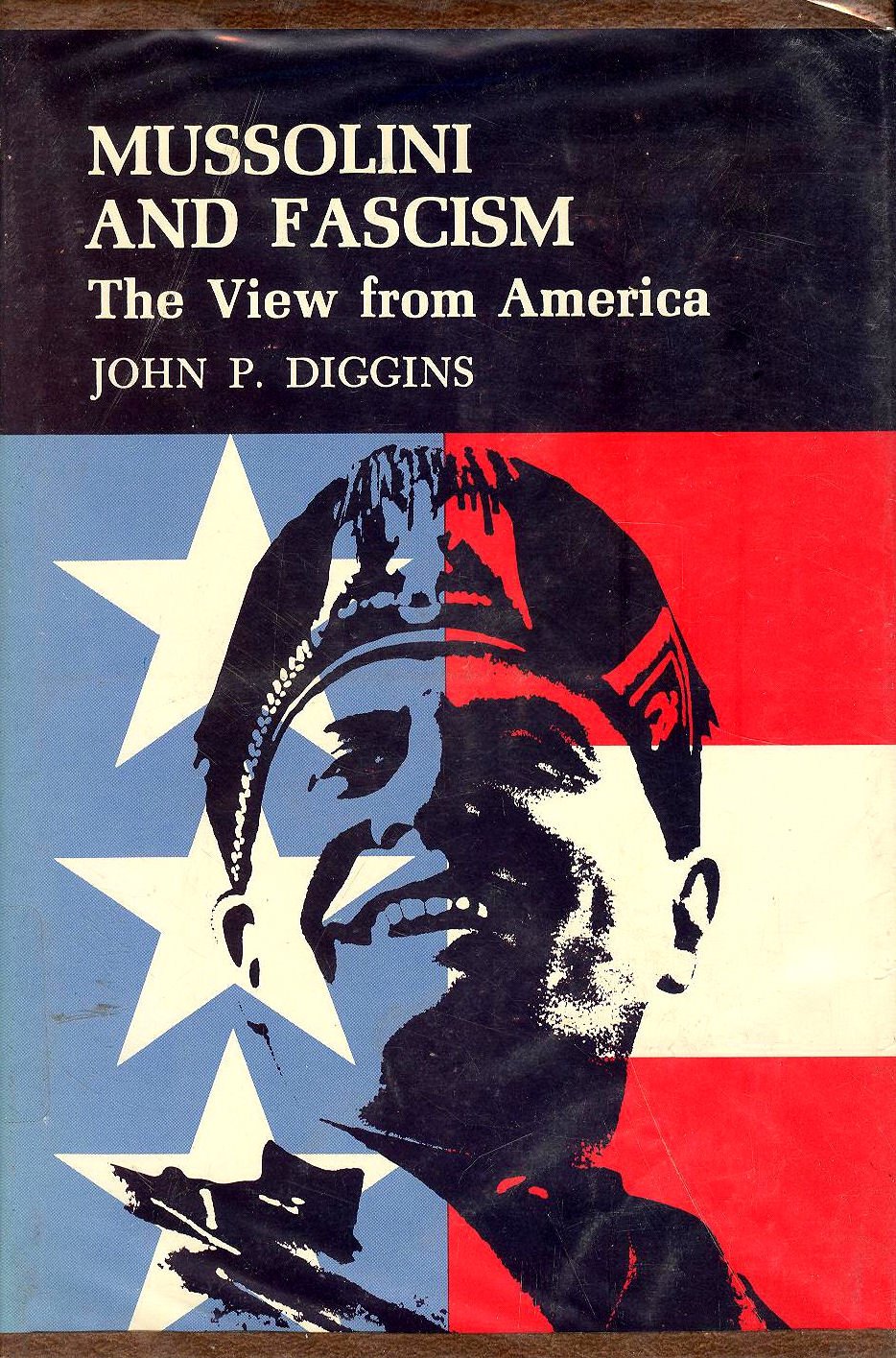
As one of our main enemies in World War II, Benito Mussolini and his fascist system had naturally been massively demonized as might be expected during a major war. But he had originally come to power through semi-legal means in 1922, and for most of the years after that, the Italian leader and his political system had often been viewed quite favorably by many or most Americans. During those years, “fascism” lacked any of its extremely pejorative later connotations, and instead was merely the name that Mussolini gave to the political and economic system that he had created. Fascism represented a new synthesis of capitalism and socialism, under which private businesses still existed but were required to operate under certain government guidelines and often as members of particular national cartels.
Mussolini himself had been one of the leaders of Italian socialism prior to the outbreak of the First World War, at which point he and so many other European socialists abandoned internationalism for fierce support of their own native countries. Indeed, Mussolini’s own family roots were strongly on the Left, and he had actually been named for the famous nineteenth century Mexican liberal leader Benito Juarez.
 Communists naturally detested fascism, while many…