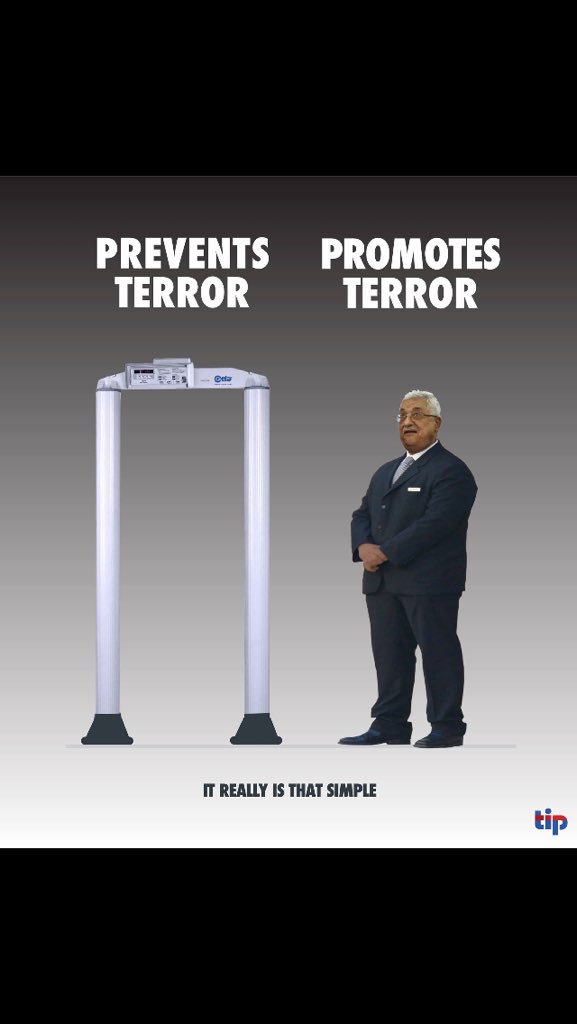
More Trouble expected at Noble Sanctuary (Temple Mount) tomorrow
"The Palestinian group Fatah, which controls the West Bank, has called for a ‘Day of Rage’ on 28 July in East Jerusalem and the West Bank. The purpose of the action is to protest ongoing security measures implemented by Israeli authorities at the entrance to the Al-Aqsa Mosque, located on the Temple Mount/Noble Sanctuary complex in East Jerusalem’s Old City."
Situation report: Day of Rage protests expected in Palestine - opinion.red24.com
The Israelis' attitude toward the Palestinians has be founded on taking their land to establish a sectarian Jewish state.
Half a century ago this was compounded by the blockading of Gaza followed by periodic massacres of children and civilians.
The West Bank has also been occupied, renamed Judea and Samaria and East Jerusalem has been annexed.
Settlements will also be annexed to Israel and the indigenous Palestinians are being kept in reservations.
To unilaterally move into the grounds of the Noble Sanctuary, Islam's third holiest site under the authority of Jordan, with gates and cameras as if Israel owned it, was rubbing salt in an open wound.
The Palestinians are outraged at long last.
Jewish police clash with Muslim worshipers at the Noble Sanctuary on Thursday
This is how much Eloy knows about the issue:
"The Palestinian group Fatah, which controls the West Bank"
Fatah controls the "West Bank"?
All of it?
How about only areas A and B, as per the Oslo Accords of 1993 between Israel and the Arabs?
Here is a quick lesson:
Knowing your ABC
The differences between areas A, B and C, all pertaining to Judea and Samaria, are relatively simple.
Area A is the space in which the PA has political and military jurisdiction over its residents – all of whom are Arab.
This includes all of the major towns and their immediate environs – with the partial exception of Jewish Hebron, which came under exclusive Israeli control in the 1997 Hebron protocol between Israel and the PLO. This area comprises approximately 18 percent of Judea and Samaria’s land mass.
According to the Oslo Accords, the PA was never given jurisdiction over Israeli citizens and foreign nationals.
Israeli citizens have the right to enter and pass through Area A unmolested, provided that they are not involved in illicit activity, in which case the PA can only temporarily apprehend them until they are transferred to the Israeli authorities. Joint Israeli-PA patrols were intended to handle these cases.
THE NEXT letter in the alphabet signified less built-up areas, many of which shared their space with settlements created in the massive settlement drive in the 1980s launched by the Likud government. Area B comprises approximately 22% of Judea and Samaria.
In Area B, Israel and the PA share jurisdiction.
Israel enjoys exclusive jurisdiction over the Jewish inhabitants and exclusive authority over security for both its Arab and Jewish inhabitants. The PA has political, administrative and police jurisdiction over the Arab inhabitants. They are subject to its laws, pay the necessary taxes and benefit from the same public services the PA provides in Area A.
Strictly speaking, only the IDF and the Israel Police can make arrests in these areas.
MOST OF geographic Judea and Samaria (60% of the area) is designated Area C, over which Israel has exclusive jurisdiction both administratively and in security matters.
Area C’s distinguishing characteristic is that it is sparsely populated – by Arab or Jewish inhabitants.
Most of this area lies east of the populated mountain spine from Jenin in the north to Hebron in the south. The eastern slopes descending and including the Jordan Valley are characterized by harsh climate and low to no rainfall. The Jordan Valley, the South Hebron Hills and the area in the vicinity of Ma’aleh Adumim – from east of Mount Scopus to Jericho – are by far the most politically contested spaces in Area C, due to both Jewish settlement and Israeli security concerns.
IT IS clear that the alphabetic division of the area reflected Israeli geostrategic logic more than Palestinian interests and that Israel had the upper hand in the negotiation process.
The division was supposed to facilitate Israeli security control, while relieving Israel of the burden of caring for the area’s Arab inhabitants.
Before signing off on the formal division into areas A, B and C, it is important to note what was left out of the alphabet – the letter “J” for Jerusalem. The issue of Jerusalem in the relevant legal documents was mentioned only as one of five crucial issues that were to be resolved in the final talks.
This meant that Jerusalem remained formally under exclusive Israeli jurisdiction.