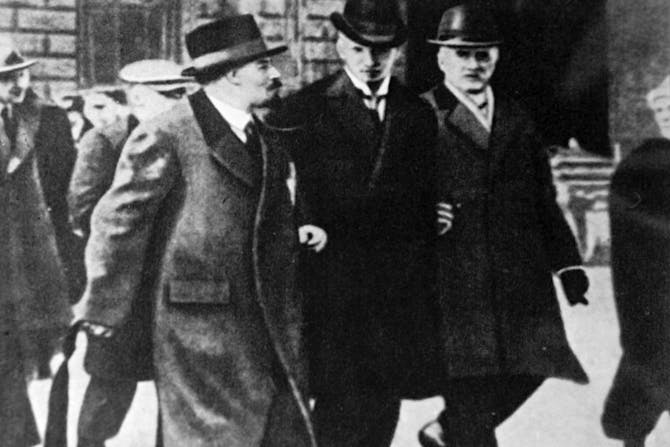
Face facts , jews and crypto jews , the list of early marxists reads like a gaza phone book. With joos , Whites lose.
Everybody admits the Soviets were disproportionately Jewish, even Jewish sources.
Let’s do math! The Jews were never more than 1% of then Russia population and they were the most persecuted minority in the USSR, so take your bullshit and shovel it up you ass!
Sent from my iPhone using
USMessageBoard.com
Hahaha, Jews were the most persecuted in the USSR?
How?
The Ukrainians perished in the Holodomor, and Gulag by up to 10 million in the early - mid 1930's, the NKVD was run by Jew Genrikh Yagoda, the Holodomor was engineered by Jew Lazar Kaganovich, and the Gulag system was run by Jew Matvei Berman.
Then there's the Polish Operation of the NKVD 1938 - 1939 / Katyn Massacre against Poles, the Crimean Tatar deportations, the Volga German deportations etc.
Let's not forget Russians themselves died a lot in the Bolshevik Revolution, up to 15 million of them between the Russian Civil War, and the Volga Famine.
How are your Jews the ultimate victims of the USSR?
in 50th Jews have had very tuff times in USSR,
"
Antisemitism in the Soviet Union reached new heights after 1948 during the campaign against the "
rootless cosmopolitan", in which numerous
Yiddish-writing poets, writers, painters and sculptors were killed or arrested.
[2][3] This culminated in the so-called
Doctors' plot, in which a group of doctors (some of whom were Jewish) had allegedly conspired to murder Stalin.
[4]"
...
Antisemitism in the Soviet Union commenced openly as a campaign against the "rootless cosmopolitan"
[3] (a supposed euphemism for "Jew"). In his speech titled "On Several Reasons for the Lag in Soviet Dramaturgy" at a plenary session of the board of the
Soviet Writers' Union in December 1948,
Alexander Fadeyev equated the cosmopolitans with the Jews.
[24][note 2] In this campaign against the "rootless cosmopolitan", many leading Jewish writers and artists were killed.
[3] Terms like "rootless cosmopolitans", "
bourgeois cosmopolitans", and "individuals devoid of nation or tribe" (all of which were codewords for Jews) appeared in
newspapers.
[24][note 3] The
Soviet press accused the Jews of "groveling before the
West," helping "
American imperialism," "slavish imitation of bourgeois culture" and "bourgeois
aestheticism."
[24][note 4] Victimization of Jews in the USSR at the hands of the Nazis was denied, Jewish scholars were removed from the
sciences and emigration rights were denied to Jews.
[26] The Stalinist antisemitic campaign ultimately culminated in the
Doctors' plot in 1953. According to Patai and Patai, the Doctors' plot was "clearly aimed at the total liquidation of Jewish cultural life."
[3] Communist antisemitism under Stalin shared a common characteristic with Nazi and fascist antisemitism in its belief in "Jewish world conspiracy".
[27]
Following the Soviet invasion of Poland, Stalin began a policy of relocating Jews to the [URL='https://en.wikipedia.org/wiki/Jewish_Autonomous_Oblast']Jewish Autonomous Oblast and other parts of Siberia. Throughout the war, similar movements were executed in regions considered vulnerable to Nazi invasion with the various target ethnic groups of the Nazi genocide. When these populations reached their destinations, work was oftentimes arduous and they were subjected to poor conditions due to lack of resources caused by the war effort.
[24][25] According to first hand testimony, Stalin was sympathetic to Hitler and saw that "Gas chambers are sometimes necessary"[
citation needed][/URL]
Stalin began a new purge with repressing his wartime allies, the [URL='https://en.wikipedia.org/wiki/Jewish_Anti-Fascist_Committee']Jewish Anti-Fascist Committee. In January 1948,
Solomon Mikhoels was assassinated on Stalin's personal orders in
Minsk. His murder was disguised as a hit-and-run car accident. Mikhoels was taken to MGB
dacha and killed, along with his non-Jewish colleague Golubov-Potapov, under supervision of Stalin's Deputy Minister of State Security
Sergei Ogoltsov. Their bodies were then dumped on a road-side in Minsk
[31][32]
Despite Stalin's willingness to support Israel early on, various historians suppose that antisemitism in the late 1940s and early 1950s was motivated by Stalin's possible perception of Jews as a potential "
fifth column" in light of a pro-Western Israel in the Middle East.
Orlando Figes suggests that
After the foundation of Israel in May 1948, and its alignment with the USA in the Cold War, the 2 million Soviet Jews, who had always remained loyal to the Soviet system, were portrayed by the Stalinist regime as a potential fifth column. Despite his personal dislike of Jews, Stalin had been an early supporter of a Jewish state in Palestine, which he had hoped to turn into a Soviet satellite in the Middle East. But as the leadership of the emerging state proved hostile to approaches from the Soviet Union, Stalin became increasingly afraid of pro-Israeli feeling among Soviet Jews. His fears intensified as a result of Golda Meir's arrival in Moscow in the autumn of 1948 as the first Israeli ambassador to the USSR. On her visit to a Moscow synagogue on Yom Kippur (13 October), thousands of people lined the streets, many of them shouting
Am Yisroel chai ('The people of Israel live!')—a traditional affirmation of national renewal to Jews throughout the world but to Stalin a dangerous sign of 'bourgeois Jewish nationalism' that subverted the authority of the Soviet state.
[33]
Historians Albert S. Lindemann and Richard S. Levy observe that "When, in October 1948, during the high holy days, thousands of Jews rallied around Moscow's central synagogue to honor Golda Meir, the first Israeli ambassador, the authorities became especially alarmed at the signs of Jewish disaffection.
[34]". Jeffrey Veidlinger writes that "By October 1948, it was obvious that Mikhoels was by no means the sole advocate of Zionism among Soviet Jews. The revival of Jewish cultural expression during the war had fostered a general sense of boldness among the Jewish masses. Many Jews remained oblivious to the growing
Zhdanovshchina and the threat to Soviet Jews that the brewing campaign against '
rootless cosmopolitans' signaled. Indeed, official attitudes toward Jewish culture were ambivalent during this period. On the surface, Jewish culture seemed to be supported by the state: public efforts had been made to sustain the Yiddish theater after Mikhoels's death,
Eynikayt was still publishing on schedule, and, most important, the Soviet Union recognized the establishment of a Jewish state in Palestine. To most Moscow Jews, the state of Soviet Jewry had never been better.
[35]
In November 1948, Soviet authorities launched a campaign to liquidate what was left of Jewish culture. The leading members of the
Jewish Anti-Fascist Committee were arrested. They were charged with treason,
bourgeois nationalism and planning to set up a Jewish republic in
Crimea to serve American interests. The Museum of Environmental Knowledge of the Jewish Autonomous Oblast (established in November 1944) and The Jewish Museum in Vilnius (established at the end of the war) were closed down in 1948.
[36] The Historical-Ethnographic Museum of Georgian Jewry, established in 1933, was shut down at the end of 1951.
[36]
In Birobidzhan, the various Jewish cultural institutions that had been established under Stalin's earlier policy of support for "proletarian Jewish culture" in the 1930s were closed down between late 1948 and early 1949. These included the
Kaganovich Yiddish Theater, the Yiddish publishing house, the Yiddish newspaper
Birobidzhan, the library of Yiddish and Hebrew books, and the local Jewish schools.
[37] The same happened to Yiddish theaters all over the Soviet Union, beginning with the Odessa Yiddish Theater and including the Moscow State Jewish Theater.
In early February 1949, the
Stalin Prize-winning
microbiologist Nikolay Gamaleya, a pioneer of
bacteriology and member of the
Academy of Sciences, wrote a personal letter to Stalin, protesting the growing antisemitism: "Judging by absolutely indisputable and obvious indications, the reappearance of antisemitism is not coming from below, not from the masses. . . but is directed from above, by someone's invisible hand. Antisemitism is coming from some high-placed persons who have taken up posts in the leading party organs. . .
[38] The ninety-year-old scientist wrote Stalin a second letter in mid-February, again mentioning the growing antisemitism. In March, Gamaleya died, still having received no answer.
[39]
During the night of 12–13 August 1952, remembered as the "
Night of the Murdered Poets" (Ночь казнённых поэтов), thirteen of the most prominent
Yiddish writers of the
Soviet Union were executed on the orders of Stalin. Among the victims were
Peretz Markish,
David Bergelson and
Itzik Fefer.
In a 1 December 1952 Politburo session, Stalin announced: "Every Jewish nationalist is the agent of the American intelligence service. Jewish nationalists think that their nation was saved by the USA. . . They think they are indebted to the Americans. Among doctors, there are many Jewish nationalists."
[40]
A notable campaign to quietly remove Jews from positions of authority within the state security services was carried out in 1952–1953. The Russian historians
Zhores and
Roy Medvedev wrote that according to
MVD General Sudoplatov, "simultaneously all Jews were removed from the leadership of the security services, even those in very senior positions. In February the anti-Jewish expulsions were extended to regional branches of the MGB. A secret directive was distributed to all regional directorates of the MGB on 22 February, ordering that all Jewish employees of the MGB be dismissed immediately, regardless of rank, age or service record. . . .
[41]".
The outside world was not ignorant of these developments, and even the leading members of the
Communist Party USA complained about the situation. In the memoir
Being Red, the American writer and prominent Communist
Howard Fast recalls a meeting with Soviet writer and
World Peace Congress delegate
Alexander Fadeyev during this time. Fadeyev insisted that "There is no anti-Semitism in the Soviet Union", despite the evidence "that at least eight leading Jewish figures in the Red Army and in government had been arrested on what appeared to be trumped-up charges. Yiddish-language newspapers had been suppressed. Schools that taught Hebrew had been closed. . . ."
[42]
The Doctors' Plot
Main article:
Doctors' plot
On 13 January 1953, the Soviet Union's
TASS information agency announced the unmasking of a conspiracy of so-called "doctors-poisoners" who had covertly attempted to decapitate the Soviet leadership. The accused doctors were all senior physicians—most of them Jewish—who had allegedly confessed to planning and successfully carrying out heinous assassinations, including the covert murders of such high-profile Soviet citizens as writer
Alexander Shcherbakov (died 1945) and politician
Andrey Zhdanov (died 1948). The alleged conspirators were accused of acting on behalf of both the American and British intelligence services and an anti-Soviet international Jewish bourgeois-nationalist organization.
[43]
As Western press accused the Soviet Union of antisemitism, the Central Committee of Communist Party decided to organise a propagandistic trick, a collective letter by Jewish public figures, condemning with fervour "the murderers in white overalls" and the agents of
imperialism and Zionism, and to assure there was no antisemitism in the USSR. The letter was signed by well-known scientists and culture figures, who had been forced to do so by the
NKVD.
[16] However, the letter, initially planned to be published in February 1953, remained unpublished. Instead of the letter, a vehement feuilleton "The Simple-minded and the Swindlers" was published in
Pravda, featuring numerous characters with Jewish names, all of them swindlers, villains, saboteurs, whom the naïve Russian people trust, having lost vigilance. What followed was a new wave of antisemitic hysteria, and a plan by Stalin to send all of the Jews to Siberia,
[44][45] similar to other ethnic groups. Only Stalin's death the same year relieved the fear.
[16]
Similar purges against Jews were organised in Eastern Bloc countries (see
Prague Trials).
During this time Soviet Jews were dubbed as
persons of Jewish ethnicity. A dean of
Marxism-Leninism department at one of Soviet Universities explained the policy to his students:
[46]
One of you asked if our current political campaign can be regarded as
antisemitic. Comrade
Stalin said: "We hate Nazi not because they are Germans, but because they brought enormous suffering to our land". Same can be said about the Jews.
It has been claimed that: "At the time of [Stalin's] death, no Jew in Russia could feel safe."
[47] However, throughout this time, the Soviet media avoided overt antisemitism and continued to report the punishment of officials for antisemitic behavior.
[48]
https://en.wikipedia.org/wiki/Stalin_and_antisemitism[/URL]