It is still local proxy data, not direct instrument measurements across the globe.
LOL..
You really do not have a damn clue..
Speak for yourself!
Taking the Earth's Temperature
Statistical studies suggest that a system of 50 to 100 reasonably distributed temperature stations around the globe would be sufficient to reproduce an accurate representation of most localized temperature anomalies and to account for isolated effects such as urban heat islands. Various statistical techniques can then be applied to produce a single figure representing a fairly reliable globally-averaged temperature. Much as opinion polls rely on sampling and margins of error,
climate scientists make statistical claims about the validity of their global temperature figure, saying that they know with 95 percent certainty that we have enough sensors and that they are widely-enough distributed around the planet so as not to allow for thermal anomalies that would result in a global average differing by more than 0.04 degrees Celsius.
This is the level of accuracy claimed with today’s distribution of sensors and analysis techniques. Such a system of sensors with similar capabilities has been reliably and consistently in place for roughly 150 years, allowing scientists to obtain a value for global temperature based on direct measurements back to the mid-nineteenth century, though with a slightly larger uncertainty of about 0.1 degrees Celsius.
Discussions about global climate change, however, involve claims about the Earth’s temperature going back much further than 150 years.
To know anything about global temperature prior to the spread of thermometers, we have to rely on proxy indicators — sources of data that are not direct measurements of temperature but that correlate with temperature changes. There are several proxy techniques used by climate researchers,
varying widely in usefulness.
snip/
In the end, it is clear that each of these proxies provides useful data — data that suggest that the warming observed in the twentieth century is unusual. But there are important caveats to keep in mind.
First, inherent in each proxy technique are sources of uncertainty that limit its usefulness — and this uncertainty becomes more pronounced the further back in time we attempt to peer. Keeping that uncertainty in mind, responsible scientists must be guarded in making claims about the Earth’s past temperature, especially knowing that claims about our planet’s temperature history are connected to policy proposals under discussion.
Moreover, even if proxy techniques provided temperature information with no uncertainty, we would still have an insufficient number of geographically dispersed sources to make claims about past globally-averaged temperatures with anything approaching the confidence we have in today’s sensors.

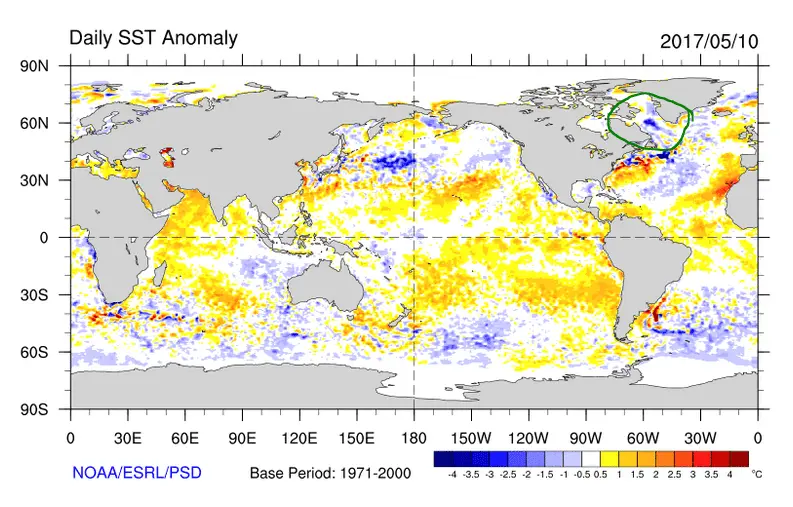
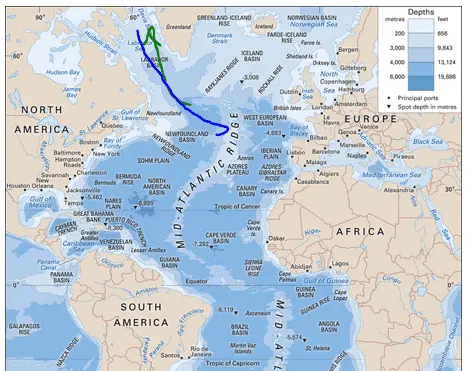
 . Guess you missed that little point!


 Now the folks are going to have to budget for snow removal equipment and nut sack warmers every winter! That's should really improve the effectiveness of the AWG established narrative. More evidence that the members of the religion possess the political IQ of a small soap dish.
 In the old- days, people on Long Island have already been to the beach once or twice. Only members of the religion don't think the people are saying, "What the ****?"


