From the original Times article....
Today, and despite the president’s own resistance, masks are widely accepted. Various polls show that the number of Americans who wear them, at least when entering stores, went from near zero in March to
about 65 percent in early summer to
85 percent or even
90 percent in October. Seeing the president and many White House staffers stricken by the virus may convince yet more Americans to wear masks.
The slow but relentless acceptance of what epidemiologists call “non-pharmaceutical interventions” has made a huge difference in lives saved.
Don't like good news?
Don't you? Masks made a huge difference - and they are cheap. Why don't you like that?
Actually, in every peer reviewed study they don't. In fact, if you are wearing a mask in direct Sunlight you are preserving the virus because Sunlight destroys the virus in minutes so wearing a mask outdoors, in the Sunlight is counter productive, which means anti scientific. If you are going to claim to follow the science, THEN FOLLOW THE SCIENCE!
The problem is there are very few peer reviewed studies on wearing masks, but the science is evolving and it does not conclude masks are ineffective.
According to:
The science of masks is evolving, and all indications are that it’s evolving toward the theory that masks are an effective way to slow the pandemic.

www.uchealth.org
The science that supports wearing masks
One reason is that the science of masks is evolving, and all indications are that it’s evolving toward the theory that masks are an effective way to slow the pandemic’s spread. There are indeed few peer-reviewed studies on the effectiveness of masks on slowing the spread of the coronavirus. That’s because the human disease the SARS-CoV-2 virus causes is still just months old. COVID-19 studies take time; so does peer review. More research, rest assured, is coming.
Until then, we must largely rely on work that predates COVID-19 and mathematical models of the disease based on best estimates of how well masks and other coronavirus countermeasures work.
A
2015 study done in Vietnam compared cloth masks to surgical masks among 1,607 hospital health care workers and found that those wearing cloth masks ended up catching influenza more often (there was no mask-free control group). The same research group recently
revisited the topic amid the COVID-19 epidemic. They concluded that, while health care workers need N95-class protection, “The general public can use cloth masks to protect against infection spread in the community,” particularly in light of the many mild and asymptomatic coronaviruses cases.
A 2013 British
study concluded that “a homemade mask should only be considered as a last resort to prevent droplet transmission from infected individuals,
but it would be better than no protection.” A
2008 Dutch study considered N95-style respirators, surgical masks, and cloth masks and found that
they all would reduce exposure to airborne influenza virus in that order.
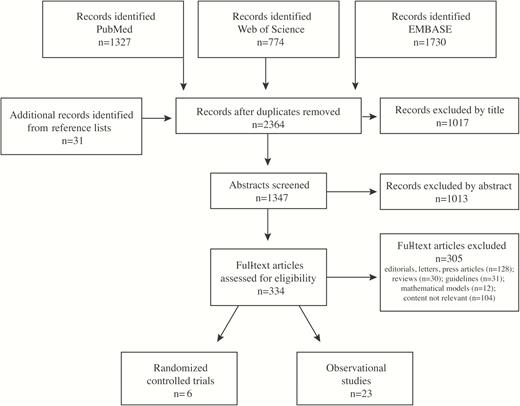
An April 2020 review considering N95-class respirators, surgical masks, and homemade cloth masks came to much the same conclusion, as did a June 2020 review in The Lancet. That study reviewed 172 observational studies and concluded that wearing masks reduce the risk of coronavirus infection – albeit with “low certainty.”
So, I'll follow the science and wear a mask and social distance until we have a vaccine