maybe because it would be about as useful and believable as tits on a bullthing is, on the right, what i have heard is "words mean things" not that they had "consequences"
Words do mean things.
But when Obama says "When they bring a knife, we'll bring a gun"...I don't think he means that anyone has really brought a knife or for anyone to bring an actual gun...he's speaking figuatively.
When Palin says "Don't retreat, reload." she saying the same thing Obama is saying. Don't give up, comeback with a stronger argument.I've never seen Obama POSING with a weapon.

Navigation
Install the app
How to install the app on iOS
Follow along with the video below to see how to install our site as a web app on your home screen.
Note: This feature may not be available in some browsers.
More options
Style variation
You are using an out of date browser. It may not display this or other websites correctly.
You should upgrade or use an alternative browser.
You should upgrade or use an alternative browser.
Need to point fingers? Use the facts.
- Thread starter Missourian
- Start date
thats a photoshop you ******* idiotSome are positively gleeful they have graves to stand on to point fingers.Liberal media framing a debate without a shred of evidence...which turns out to be total hogwash.
Neither right nor left wing rhetoric had a thing to do with Loughner, Tuscon or Rep Giffords.
The facts bear it out.
So what is the left calling attention to?
Scoring political points against those they disagree with.Yeah.....that'd be ONE way to say it......


Mr. Shaman
Senior Member
- May 4, 2010
- 23,892
- 822
- 48
Excellent point.
Then you blow it by proving yourself an idiot.
What about the many on the left that not only speak in incendiary terms, but use actual incendiary devices to make their points? They not only point out that government is the enemy, they attack it with bombs. Putting targets on political maps, and airing ads that show people targeted in sniper scopes. Why aren't you referring not only to the imagery, but the actual violence perpetrated by the left?
Is it because you are actually part of the problem, and that we should treat you that way?
You have transcended into a world of total projection. The right embraces and revels in the idea of '2nd amendment' solutions. The Tea Parties are based around the rhetoric of the American Revolution, which was a violent insurrection. Since Obama was elected, there is a right wing paranoia similar to what we witnessed when Clinton was President, screeches of impending tyranny and collapse of our republic. The attempted assassination of a member of Congress seems depressingly like the inevitable conclusion of two years of hysterical revolutionary language from the right that saturates every single domestic political debate.
The right loves to project a underlying threat of violence and a macho image. It is not a trait of the left. Yes, there are always examples that occur, but it is not the left's MO.
You can't call people on the left limp wrists, wimps, pacifists, peaceniks and bleeding hearts when it suits your argument, and turn that around 180 degrees when you right wingers are caught in your deep beliefs in punishment, intimidation and the threat of violence and hurting people.


And your messiah says that the very rhetoric you are pointing to had nothing to do with the shooting in Tuscon, yet you keep pointing to it, and ignoring the same stuff you are doing.
Did you have a problem with a with the actions of Irene Morgan, Sarah Keys, Claudette Colvin, or Lizzie Jennings exercising their civil rights? Why do you have a problem with white men doing the same things?
Whew!!!
You're comparing women....who (actually) risked a serious ass-whuppin'....to a bunch o' White-dudes playin' cowboy????

You're comparing women....who (actually) risked a serious ass-whuppin'....to a bunch o' White-dudes playin' cowboy????
Mr. Shaman
Senior Member
- May 4, 2010
- 23,892
- 822
- 48
You have transcended into a world of total projection. The right embraces and revels in the idea of '2nd amendment' solutions. The Tea Parties are based around the rhetoric of the American Revolution, which was a violent insurrection. Since Obama was elected, there is a right wing paranoia similar to what we witnessed when Clinton was President, screeches of impending tyranny and collapse of our republic. The attempted assassination of a member of Congress seems depressingly like the inevitable conclusion of two years of hysterical revolutionary language from the right that saturates every single domestic political debate.
The right loves to project a underlying threat of violence and a macho image. It is not a trait of the left. Yes, there are always examples that occur, but it is not the left's MO.
You can't call people on the left limp wrists, wimps, pacifists, peaceniks and bleeding hearts when it suits your argument, and turn that around 180 degrees when you right wingers are caught in your deep beliefs in punishment, intimidation and the threat of violence and hurting people.
And your messiah says that the very rhetoric you are pointing to had nothing to do with the shooting in Tuscon, yet you keep pointing to it, and ignoring the same stuff you are doing.
Did you have a problem with a with the actions of Irene Morgan, Sarah Keys, Claudette Colvin, or Lizzie Jennings exercising their civil rights? Why do you have a problem with white men doing the same things? Is it because you, at heart, are a bigot and believe white men are inferior?
I don't call anyone on either side limp wrists. I do, however, call hypocrites like you idiots. Thanks for making it easy for me to prove just how stupid you are.
Are you really equating the Rosa Parks of the world with these gun toting goons? The people who bravely faced intimidation with people trying to intimidate? Are you really that scurrilous of an individual?
Amusing, huh??
Mr. Shaman
Senior Member
- May 4, 2010
- 23,892
- 822
- 48
Are you really equating the Rosa Parks of the world with these gun toting goons? The people who bravely faced intimidation with people trying to intimidate? Are you really that scurrilous of an individual?
I have to ask...why did you lie about being a classic liberal? You are nothing but a right wing fanatic.
Are they intimidating you? If no, don't worry about it, if yes, grow up.
Oh, the irony.....telling people (without guns) to grow-up.


so, you admit guns intimidate youAre you really equating the Rosa Parks of the world with these gun toting goons? The people who bravely faced intimidation with people trying to intimidate? Are you really that scurrilous of an individual?
I have to ask...why did you lie about being a classic liberal? You are nothing but a right wing fanatic.
Are they intimidating you? If no, don't worry about it, if yes, grow up.Oh, the irony.....telling people (without guns) to grow-up.
*****

Flopper
Diamond Member
You don't have to listen to hate radio, participate in message boards such this, or read the blogs to be encouraged to commit acts of hate and violence. The message spreads to every nook and cranny of society because there is never a shortage of messengers.I repeat: Are any of you idiots ever going to prove he was exposed to violent right-wing rhetoric, or are you just going to rely on the Big Lie strategy?Yep. So what do they do? Insist the right wing made him do it. Damn the reality, full meme ahead!
Mr. Shaman
Senior Member
- May 4, 2010
- 23,892
- 822
- 48
Anyone see 60 Minutes last night? His friends described him as a "nihilist" who believed in nothing.
What I found interesting (and a bit troubling) was the Secret Service profiler who suggested that the COLLEGE should bear some responsibility for expelling him. He was suggesting that this might have set him off. He honestly believes that schools, businesses, and whatnot that expel or fire crazy people have a responsibility to follow up on their treatment. Major implications if you ask me.
You question(?) experts, who.....
"....understand the madness behind a massacre. The United States Secret Service has studied 83 assassins and would-be assassins, and it has found remarkable similarities among them.
As you see what we've learned about the accused Tucson gunman, notice how he fits what the Secret Service discovered. The horrific loss of innocent life seemed to come from nowhere. But it appears Jared Loughner followed a well-worn path on his final descent into madness.
Fein and Bryan Vossekuil wrote a comprehensive study of assassins for the Secret Service in 1999.
In prisons and hospitals they talked to 20 subjects, including Arthur Bremer, who shot presidential candidate George Wallace, Mark Chapman, who murdered John Lennon, and Sirhan Sirhan, who killed Robert Kennedy.
They found that assassins come from all walks of life but travel a common path leaving distinctive clues.
"Rarely were there direct threats communicated to the target or to law enforcement authorities. But very often there was some kind of communication. Be it a communication to a family member or to a friend, that suggested that the attacker or potential attacker was moving out on the path that might lead to an attack," Fein explained.
A man named J.D. stalked two presidents. And in a prison interview with him, Fein and Vossekuil found it wasn't politics - it was madness.
"He believed that aliens were giving him a choice either to kill a bunch of school kids or to assassinate the president," Fein said.
"I decided I was going to dress up like a law enforcement person so I bought a suit, the shoes and bought a trench coat and had a haircut," J.D. explained in a videotaped interview.
J.D. showed them that the mentally ill can be organized enough to plan an attack.
"Just because you've expelled somebody doesn't mean you've gotten them off the path to violence. Indeed, you may have pushed them further down that path to violence," psychotherapist Barry Spodak told Pelley.
Spodak uses training sessions to teach Secret Service agents how to use the assassin research. He says that the Secret Service sometimes spends years managing people who may pose the most dangerous threats to the president.
Agents keep tabs on them, visit often, even make sure they're getting their medications and treatment.
"Is it the school's responsibility to see to it that Loughner has mental health care?" Pelley asked.
"A school could certainly see it that way if they believe that the person may come back with more resentment and more anger and shoot up their campus," Spodak said.
Since Virginia Tech, Spodak has been training college administrators, but, of course, no university and few police forces have the ability to manage a troubled mind the way the Secret Service does.
"I've worked with enough people in college communities to realize they are between a rock and hard place. They don't have the tools or the resources that would be necessary and a lot of them are very fearful about that," Spodak said.
The research on assassins shows that many killers started their final preparations after a life changing event.
Like the assassins studied by the Secret Service, it's likely Loughner wanted a high profile target to make some point that only he understands.
There was one other thing that the Secret Service discovered was common: the assassins found their attacks didn't solve their problems. Nearly everyone had profound regret. They cooperated with the study in the hopes that the violence would never happen again."
Last edited:
Mr. Shaman
Senior Member
- May 4, 2010
- 23,892
- 822
- 48
I've never seen Palin pose with a cigarette either.
Probably, not.
They don't kill as efficiently....and, totally lack any immediate-amusement-factor.
They don't kill as efficiently....and, totally lack any immediate-amusement-factor.
Last edited:
Mr. Shaman
Senior Member
- May 4, 2010
- 23,892
- 822
- 48
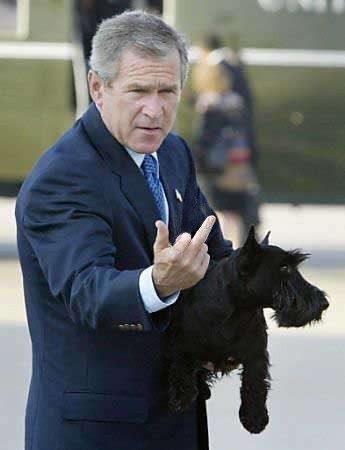
.....Either-of-which would be the typical frat-boy's "contribution" to Civil Discourse.
Mr. Shaman
Senior Member
- May 4, 2010
- 23,892
- 822
- 48
I repeat: Are any of you idiots ever going to prove he was exposed to violent right-wing rhetoric, or are you just going to rely on the Big Lie strategy?Yep. So what do they do? Insist the right wing made him do it. Damn the reality, full meme ahead!
Noooooooooo......I'm pretty-certain FAUX Noise still maintains the copyright on that. 
Last edited:
R
rdean
Guest
This fruitcake acted alone. He apparently was not influenced by anyone on either side of the political spectrum. Those are the facts.
Here are the perceptions. There are a great many on the right that have spoken in terms that are incendiary. First in suggesting that our government in this democracy is our enemy. Second, by stating that 2nd amendment solutions should be sought because a majority voted in someone they do not like. And third, by images and referances to crosshairs and guns. None of the people making these statements meant to actually carry them out. However, as we recoil in horror at the events in Tucson, we cannot but remember the rhetoric and images. This is the kind of horror that they were refering to, and it will be reflected in peoples attitudes towards those created the rhetoric and images.
You don't know that for a "fact".
Mr. Shaman
Senior Member
- May 4, 2010
- 23,892
- 822
- 48
The "3 strikes" law doesn't have anything to do with that he was on the way to murder people at the Tides Foundation and the ACLU when the police, fortunately, intercepted him-- and doesn't reflect at all on the statement he made that he was going to murder those people because of Glenn Beck.
Of course it does, the guy opened fire on the police, not the ACLU or Tides Foundation !
Where did Glenn Beck say "shoot police"?
In fact Beck is extremely pro-law enforcement.
....But, that'd be typical of most cowards; most-of-whom have spent their entire-life hiding-behind one "skirt", or another.
Mr. Shaman
Senior Member
- May 4, 2010
- 23,892
- 822
- 48
You don't have to listen to hate radio, participate in message boards such this, or read the blogs to be encouraged to commit acts of hate and violence. The message spreads to every nook and cranny of society because there is never a shortage of messengers.I repeat: Are any of you idiots ever going to prove he was exposed to violent right-wing rhetoric, or are you just going to rely on the Big Lie strategy?
Correction: me$$enger$.


daveman
Diamond Member
You call that proof?You don't have to listen to hate radio, participate in message boards such this, or read the blogs to be encouraged to commit acts of hate and violence. The message spreads to every nook and cranny of society because there is never a shortage of messengers.I repeat: Are any of you idiots ever going to prove he was exposed to violent right-wing rhetoric, or are you just going to rely on the Big Lie strategy?

daveman
Diamond Member
You don't want civil discourse. You want immedate and unquestioning acceptance of everything you say. And if someone disagrees with you, it's dangerous hate speech......Either-of-which would be the typical frat-boy's "contribution" to Civil Discourse.
I suggest you hang out at DU. Thoughtcrime is rigorously enforced. You won't be exposed to any hateful dangerous rightwing opinions.
daveman
Diamond Member
So...you're not even going to attempt to prove it, but instead just keep repeating the lie.I repeat: Are any of you idiots ever going to prove he was exposed to violent right-wing rhetoric, or are you just going to rely on the Big Lie strategy?Noooooooooo......I'm pretty-certain FAUX Noise still maintains the copyright on that.
Did you know that only 15% of Americans are buying your bullshit?

Ravi
Diamond Member
I asked you twice to link to this evidence. Your failure to do so leads me to conclude that you are full of shit and your facts are nothing but bullshit.His deputies had gone to the cluck's home on several occasions in the months prior to the shootings, concerning death threats.


BlindBoo
Diamond Member
- Sep 28, 2010
- 58,843
- 17,729
- 2,250
What we should be discussing is how to fix the reporting of mental illness.
The college didn't report what was an obvious deranged person, they kicked him out and figured he was now someone else's problem.
The parents knew something was terribly wrong, yet did nothing.
The campus police deferred to the authority of the college administrators instead of following their intuition.
These are the problem that led to this tragedy.
The question is...does the left want to solve the problem, or score political points?
Thus far it's been the latter.
Uh-huh. Score one for the right then?

Missourian
Diamond Member
- Thread starter
- #140
What we should be discussing is how to fix the reporting of mental illness.
The college didn't report what was an obvious deranged person, they kicked him out and figured he was now someone else's problem.
The parents knew something was terribly wrong, yet did nothing.
The campus police deferred to the authority of the college administrators instead of following their intuition.
These are the problem that led to this tragedy.
The question is...does the left want to solve the problem, or score political points?
Thus far it's been the latter.
Uh-huh. Score one for the right then?
Some of us aren't keeping score...or trying to score points in the wake of a tragedy.
Some of us would like to identify the real problem and come up with a practical solution that protects the rights of the mentally ill and at the same time protects the public, while not unconstitutionally curtailing the rights of the people.
Chalk that up however you want, Scorekeepers.
Last edited:
Similar threads

- Replies
- 25
- Views
- 467

- Replies
- 23
- Views
- 322


- Replies
- 390
- Views
- 3K

- Replies
- 34
- Views
- 467

New Topics
-

-
Tucker Carlson Is Now Advising Military Members To Disobey Trump's Unlawful Orders In Iran
- Started by Alicia J
- Replies: 1
-
 It looks like TRUMP'S cease fire is not holding. (3.7.26)
- Started by Invisibleflash
- Replies: 10
-
 Why is the West pretending Iran is winning the war against Israel, the US?
- Started by Doc7505
- Replies: 21


