No, it is not normal because we are exceptionally cold. Just consider the facts.
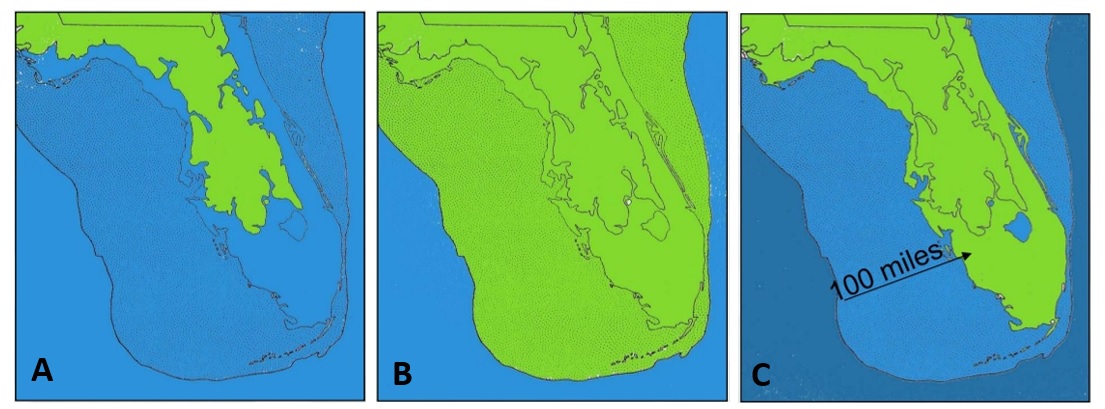
Long ago in other interglacials almost all of Florida would have been underwater. We know what the coastlines are like in a glacial, we know what they are like in an interglacial. Cities like Miami are literally built upon over 20 meters of limestone, laid down in previous interglacials. And it's well stratified, so they can tell when each layer was laid down during which interglacial.
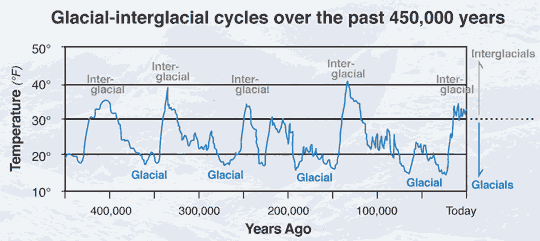
This interglacial appeared to be warming like the previous ones from around 14,500 years ago through the Bølling–Allerød Interstadial. However, something then "broke" roughly 13,000 years ago when the Younger Dryas kicked in. Before that, it was warming like all the previous cycles. And ever since then the planet has been fighting to return to warmer temperatures, but something keeps interfering with that and sending us right back into temperatures just barely above glacial.
This can be seen in every single interglacial in the previous 4 cycles. A fast sharp increase until temperatures are from 5-10c higher than today, a sharp decline of 3-6c, then holding there on a slow decline for 5-10,000 years before a sharp decrease into the next glacial cycle.
And the closest to compare is the mess between MIS 9 and MIS 6 between around 140 kya and 340 kya. As can be seen there, we had an unusually warm interglacial that dipped once again below glacial temperatures, then once again into a long glacial cycle.
This is not the first time this has happened, and will likely not be the last. We have been in an Ice Age for over 2.5 million years, and will likely continue to be in one for another 2-5 more million years. With alternating glacial and interglacial cycles long after Homo Sapiens have gone extinct.
There is a reason why the scientists that are most likely to "push back" against the "Climate Change" fanatics are the geologists. They know these cycles, and understand this one is unusual for being so cold. But that have had to force themselves to avoid ever pointing that out, less they face the wrath of the zealots screaming to have them censored.
Part of the problem they have in really understanding past that is compression of the data once you hit around 500,000 years ago. The compression in older layers of soil, marine sediments and ice cores simply erases much more than the bare minimum of data recorded. We know that this stretches back some 2.5 million years, kicked off by a geographical event around 3 million years ago. Repeated likely well over a dozen times, but as the only clear geological evidence only clearly proves the existence of 5 glaciations, most will simply say there were five.
And this is frustrating, because there is quite literally almost no evidence on the surface to indicate if there was a glaciation, or how far it extended. Because following ice ages then came along and erased almost all of the evidence on the surface. Meaning things like ocean sediment and ice cores are all they have to try and piece together the record.