I can't even fathom where, or why, you are arriving at these conclusions.
Oh, that's rather simple. Geology and Evolution to start with.
The fires in California and Australia should be worse, based on your beliefs?
In both of those regions along with only one other on the planet, the plants have developed a rather strange and bizarre evolutionary trait. They are pyrophytic. In other words, they have to have fires in order to reproduce.
Now why in the hell would any plant evolve such a trait, unless fires were extremely common in the area. And not just for a short amount of time but over millions of years for it to evolve? It is almost a perverted evolutionary trait when you think about it, yet there it is. And globally, it is an evolutionary trait only found along the Northern Mediterranean, Australia, and the US West Coast. And yes, it is convergent evolution, not simply a species that spread to all three regions.
And also as all three share almost identical climates, plants can grow exceedingly well from one to the other.
That is why eucalyptus grew extremely well in California, and by the 1960s it was almost everywhere. But in the early 1990s they realized that they also caught fire extremely easily, and would "explode" when burning. Something they learned the hard way in the Oakland Hills.
Look at the iconic trees of California. Sequoia, Redwoods, Lodgepole Pines, all of them and more require fire in order to reproduce. No fire, no new trees. That's why my oldest son's main job is actually going around setting fires. Doing controlled burns up and down California to both remove undergrowth and allow new generations of those plants to grow.
The very fact that so damned many plants actually evolved to only create new generations of trees after a fire screams that is the conditions they evolved in. And it is not a trait found in England, New England, China, Panama, or anywhere else.
This is not "my beliefs", this is freaking science. Or do you reject Evolution?
What about rainfall in these locations, should there also be long periods of drought, interspersed with atmospheric rivers of rainfall that cause landslides and flooding?
Yes, because of the El Niño - La Niña cycle. Once again, nothing new. This has been going on for at least 10,000 years.
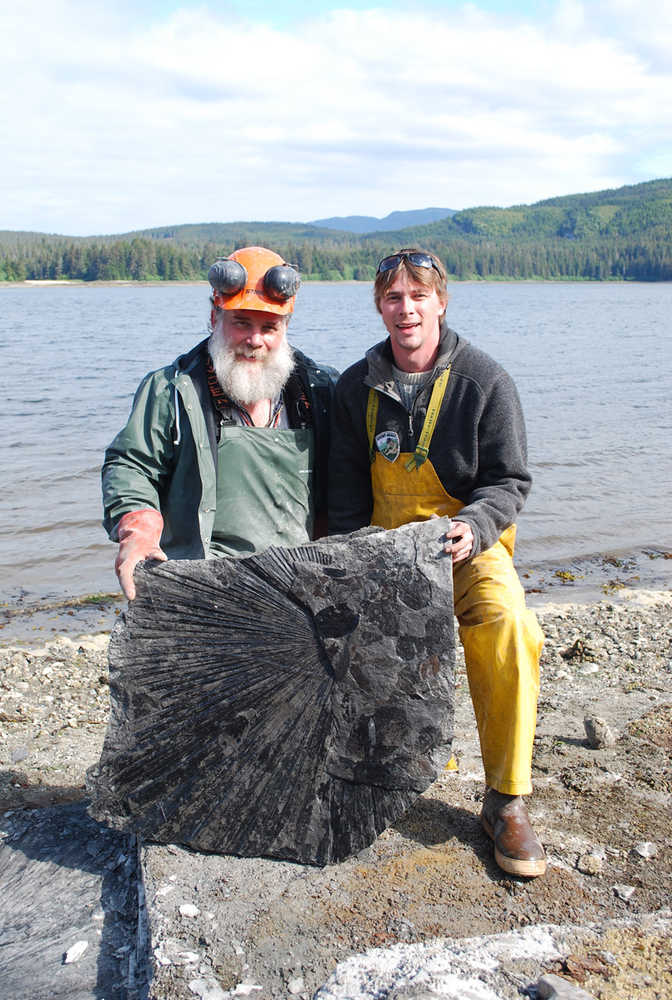
The planet's largest and most powerful driver of climate changes from one year to the next, the El Niño Southern Oscillation in the tropical Pacific Ocean, was widely thought to have been weaker in ancient times because of a different configuration of the Earth’s orbit. But scientists analyzing 25-foot piles of ancient shells have found that the El Niños 10,000 years ago were as strong and frequent as the ones we experience today.
Ancient Shellfish remains rewrite 10,000 year history of El Nino cycles

www.ocean.washington.edu
Proof that this is nothing new, it has been going on for a hell of a long time.
And we also know what the rainfall in California has been like for over 250 years. And it has not gone down, it has actually increased fractionally.
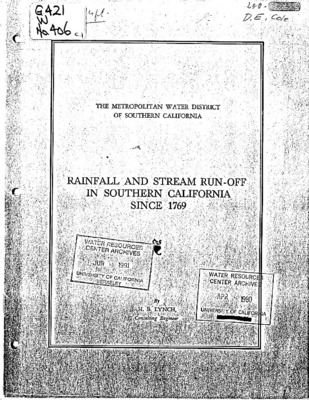
You see, the first European settlers out there were Missionaries. And among other things, they were meticulous record keepers. And we have their records going back to at least 1769, which included things like storms, temperature, and rainfall. And the rainfall during that period was only fractionally less than it is today. Average rainfall over a 10 year period is actually up from what it was over 250 years ago.
It's also fractionally up from what it was 60 years ago. There is no "drought", there never has been a drought. That area for over 10,000 years has a roughly 7 year cycle of reduced rainfall followed by torrential rainfall. The geological record proves it, the Spanish Mission records prove it.
This report consists of a compilation and study of the varied information available for the purpose of determining and reconstructing the record of rainfall and runoff fluctuations in Southern California since the arrival of the Spanish Mission Fathers in 1769. By 1931, data regarding rainfall...

digitalcommons.csumb.edu
The "drought" is simply the effect of overpopulation. Rainfall has not reduced, there are simply too many people living there and not enough water to go around. I lived in LA in the 1970s, there was no worry at all about drought. None at all, and the rainfall amounts then are pretty much the same as there is now. But at that time, only 2.4 million lived in the city and 19 million in the entire state.
Today, the same amount of rain falls. But in LA that has to supply 3.8 million people. And statewide it has to supply 40 million people. It has not a damned thing to do with weather, or climate, or the amount of rain. It is entirely a problem with overpopulation. That is why even when there are record rainfalls with all of the reservoirs at maximum capacity the state is still in a permanent "drought" status. It's not the rain, it's the population.
So how am I arriving at those conclusions?
So, care to explain how records going back over 250 years show the same weather patterns if they were caused by modern industrial humans? And that fossil beds over 10,000 years old show the same pattern?
Oh, and why and how in the hell plants would evolve specific traits that requires them to have fire in order to reproduce if they did not evolve in an area that had been plagued by constant fires likely at a time when hominids were first learning how to walk upright?