Monday, Catalan separatist leader Carles Puigdemont bowed to defeat, saying in an interview in Belgium that he’s ready to give up on secession and explore a future relationship with Madrid short of full independence. He said, “I’m ready, and have always been ready, to accept the reality of another relationship with Spain. It is possible.” His comments are a far cry from the heady aspirations he and hardcore Catalan separatists were expressing in October. He is not the only leader reflecting on the dashing of independence dreams.
Kurdish aspirations
Last week, Masoud Barzani, the former president of the Kurdish Regional Government (KRG) in northern Iraq, defended his decision to hold an independence referendum on September 25, arguing the timing of the vote was right as Baghdad was planning to move against the Kurds with or without a vote and curtail their autonomy. “We believe the timing was good...because those Iraqi forces who are currently implementing their policies to change the demography and situation in areas that they are in right now, they had this program and this plan in mind even before the referendum.” Barzani told Newsweek magazine in an interview on November 8. “They are using the referendum as a pretext to cover their plan and plot against the Kurdish people...Our mistake is we should have held the referendum earlier and not later,” he added.
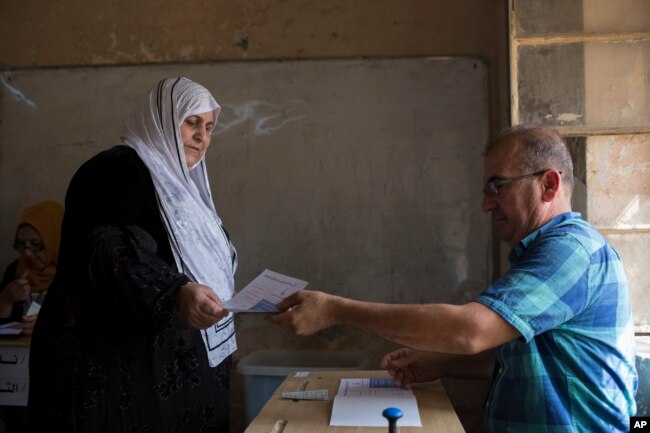
A woman receive a voting bill at a polling station as Kurds vote for independence in the disputed city of Kirkuk, Sept. 25, 2017. Iraq's Kurdish region vote in a referendum on whether to secede from Iraq.
Not all Kurdish leaders agreed with Barzani about the timing. Behind the scenes, the Patriotic Union of Kurdistan (PUK), the minority partner in the KRG government, had urged Barzani to delay the vote. After the referendum, PUK leaders counseled Barzani and his Kurdistan Democratic Party to reach an accommodation with Baghdad short of total separation. Separatists elsewhere, including Basques, Bretons, Flemings, Scots and Bavarians, who had high hopes that the Catalans and Kurds would be successful, are examining the failures to see what lessons there may be for them.
Catalonia aspirations
A key lesson, they say, is that neither Catalonia nor the KRG gained the support of outside powers and rushed into holding votes when the international community had made clear its opposition. In the weeks leading up to the Kurd plebiscite, Barzani came under enormous pressure from allies and foes alike not to hold a vote. U.S. diplomats were caught between two key partners in the fight against the Islamic State terror group, Baghdad and Irbil, and warned Barzani his bid to shift from autonomous rule to independence risked upending the anti-IS coalition. Likewise, the Catalans had no formal outside support, or promise of any, from bigger or neighboring powers. Catalan separatists acknowledge they had pinned their hopes on the European Union supporting them.
MORE