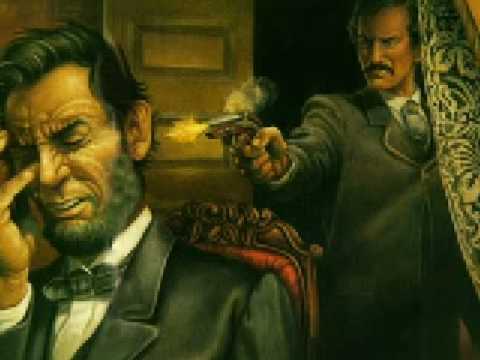
In toto and forever, bub.
Right from the words of Madison himself when asked if a State could secede:
==================
To Alexander Hamilton
[July 20, 1788]
N. York Sunday Evening
Yours of yesterday is this instant come to hand & I have but a few minutes to answer it. I am sorry that your situation obliges you to listen to propositions of the nature you describe.
My opinion is that
a reservation of a right to withdraw if amendments be not decided on under the form of the Constitution within a certain time, is a conditional ratification, that it
does not make N. York a member of the New Union, and consequently that she could not be received on that plan.
Compacts must be reciprocal, this
principle would not in such a case be preserved.
The Constitution requires an adoption in toto, and forever. It has been so adopted by the other
States. An adoption for a limited time would be as defective as an adoption
of some of the articles only. In short any condition whatever must viciate the ratification. What the New Congress by virtue of the power to admit new
States, may be able & disposed to do in such case, I do not enquire as I suppose that is not the material point at present. I have not a moment to add more than my fervent wishes for your success & happiness.
This idea of reserving right to withdraw was started at Richmd. & considered as a conditional ratification which was itself considered as worse than a rejection.
http://www.constitution.org/jm/17880720_hamilton.txt
But if you think unilateral secession is allowed -
Go ahead. Try it. See what happens
... if you secede, you'd better succeed.
It's in their ratification documents, bub. They was voted on and approved. These states were then accepted into the union. All you have is the opinion of a bunch of bootlicking statist blowhards.
James Madison, Alexander Hamilton, and John Jay -- and most at the ratifying Convention -- "statist blowhards."

What do you think will happen if you secede?
OOOps. Bripat go *boom*
Three men were "most of the ratifying convention?" As I recall, there were 13 states at the time. Each of them sent a delegate to the convention. Plus there were others there who weren't official delegates like Benjamin Franklin. Notice how many signatures there are on the document. There are a lot more than three.
The NY Ratifying Convention, idiot.
The one who vetoed the idea that a state could secede.
Elliot s Debates Volume 2 Teaching American History
It's in the document they voted on and approved, idiot. It doesn't matter what kind of hearsay evidence you have from some partisan lookers-on, the final document New York approved contains language reserving the right of the state to secede.
"Hearsay evidence. "
Holy christ are you a ball of idiocy.
Convention of New York
Wednesday,
July 23, 1783.
Mr. JONES moved, that the words on condition, in the form of the ratification, should be obliterated, and that the words in full confidence should be substituted which was carried.
For the Affirmative.
Mr. Jay, Mr. J. Smith, Mr. P. Livingston,
Mr. R. Morris, Mr. Jones, Mr. Hatfield
Mr. Hobart, Mr. Schenck, Mr. Van Cortland
Mr. Hamilton, Mr. Lawrence, Mr. Crane,
Mr. Robt. R. Livingston, Mr. Carman, Mr. Sarls,
Mr. Roosevelt, Mr. Lefferts, Mr. Platt,
Mr. Duane, Mr. Vandervoort Mr. M. Smith
Mr. Harrison, Mr. Bancker, Mr. Gilbert Livingston,
Mr. Low, Mr. Ryerss, Mr. DeWitt,
Mr. Scudder, Mr. L. Morris Mr. Williams.
Mr. Havens,
For the Negative.
Mr. R. Yates, Mr. Wynkoop, Mr. Winn,
Mr. Lansing, Mr. Haring, Mr. Veeder
Mr. I. Thompson, Mr. Woodhull, Mr. Staring
Mr. Ten Eyck, Mr. Wisner, Mr. Parker
Mr. Tredwell, Mr. Wood, Mr. Baker
Mr. President, Mr. Swartwout, Mr. Hopkins,
Mr. Cantine, Mr. Akins, Mr. Van Ness,
Mr. Schoonmaker, Mr. Harper Mr. Bay
Mr. Clark, Mr. C. Yates, Mr. Adgate
Mr. J. Clinton, Mr. Frey,
The committee continued the consideration of the amendments till Thursday; when
Mr. LANSING moved to adopt a resolution, that there should be reserved to the state of New York a right to withdraw herself from the Union after a certain number of years, unless the amendments proposed should previously be submitted to a general convention.
This motion was negatived.
The committee proceeded in the consideration of the amendments till
Ratification of the Constitution