It would be helpful if you would actually state what you are disputing and even more helpful if you would offer data of your own pointing to a significant different conclusion.This was published in 2019 Avoidable mortality (preventable and treatable) | Health at a Glance 2019 : OECD Indicators | OECD iLibraryFirst I can not speak to Canada's healthcare system from personal experience, nor can I speak of that of Japan's or that of England's. I know that all these countries score better overall when it comes to health indices https://www.who.int/healthinfo/paper30.pdf
What is the date of this "research"? I can help you, 2000. Two decades ago.
Why is there not any more recent? Because even the United Nations had to admit that the data used was unreliable.
Each country provided their own information using their own definitions of the terms.
Further, the criteria used leaned far more heavily on the availability of care rather than the quality of care.
July 5, 2000
We’re Number 37 in Health Care!
By Julie Chan
Feeling ill? If so, you might consider catching the next plane out of here, because the World Health Organization (WHO) says your health is best served by countries like Andorra, Cyprus or even Colombia. Each outperforms the U.S. health care system on the WHO’s recently issued World Health Report 2000.
[ ]
The WHO rankings of 191 health systems worldwide placed the United States 37th, trailing countries like Malta and Oman and barely edging out dilapidated Cuba. Predictably, “ClintonCare” champions are using the report in their battle cry for reviving the movement toward government‐controlled medicine. But the WHO study is much like the annual magazine rankings of colleges: It grabs plenty of headlines but rests on questionable analysis. A closer look at the WHO health care study reveals startling assumptions, critical lapses in statistical judgment, and a clearly predetermined political agenda.
Breaking “new methodological ground,” the WHO report rates national health care performance according to five trendy flavors of the month: life expectancies, inequalities in health, the responsiveness of the system in providing diagnosis and treatment, inequalities in responsiveness, and how fairly systems are financed.
First, consider the study’s data. Health statistics for each country were collected from individual agencies and ministries, assuring wide disparities in definition, reporting technique and collection methodology. Indeed, the report concedes that “in all cases, there are multiple and often conflicting sources of information,” if sources at all. For the many nations that simply do not maintain health statistics, the WHO “developed [data] through a variety of techniques.” Without consistent and accurate data from within a single country, how can meaningful comparison be made among 191 different countries?

We're Number 37 in Health Care!
www.cato.org
This in 2020 Health Care Index by Country 2020 Mid-Year
2020 Healthiest Countries 2020
Etc. etc.
If you have any problem with them feel absolutely free to dispute them by citing different sources.
This was published in 2019 Avoidable mortality (preventable and treatable) | Health at a Glance 2019 : OECD Indicators | OECD iLibrary
This in 2020 Health Care Index by Country 2020 Mid-Year
2020 Healthiest Countries 2020
Etc. etc.
If you have any problem with them feel absolutely free to dispute them by citing different sources.
Yes, as a matter of fact, I do.
Here is the source of the data used in the OECD source. No sense on looking any further.
About Health Care Indices At This Website
This section is based on surveys from visitors of this website. Questions for these surveys are similar to many similar scientific and government surveys.
Each entry in the survey is saved as the number in the range [-2, +2], with -2 having meaning of strongly negative and +2 meaning of strongly positive.
Understanding Health Care Indexes
www.numbeo.com
Navigation
Install the app
How to install the app on iOS
Follow along with the video below to see how to install our site as a web app on your home screen.
Note: This feature may not be available in some browsers.
More options
Style variation
You are using an out of date browser. It may not display this or other websites correctly.
You should upgrade or use an alternative browser.
You should upgrade or use an alternative browser.
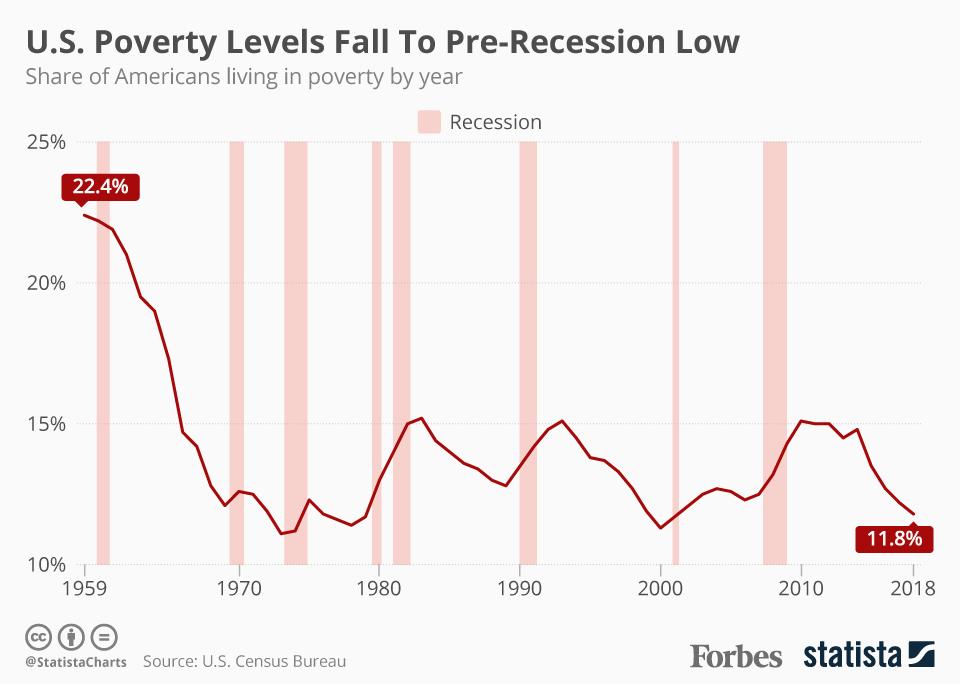
Incomes up and Poverty Down in 2019
- Thread starter SweetTea
- Start date

Faun
Diamond Member
- Nov 14, 2011
- 126,711
- 127,342
- 3,635
Impeached Trump did that by ..... continuing the trend of poverty dropping which started 3 years before he became president?Trump halted the Obama poverty train with wise economic policies. It's just too bad that Democrats are still rooting and working against all economic success because they hate Trump more than they love their country. MAGA, the only way out of this mess.

Markle
Diamond Member
So you are able to conclude that affordable healthcare leads to diminished services on the bases of 1 article stating that Canada has long wait times? It seems to me that you don't actually have a problem with anecdotal evidence when you feel it supports you?What makes you conclude that affordable healthcare means services have to lag? Because you found one article in the Telegraph? My health insurance for instance doesn't just cover most of my medical expenses. It has staff on hand that provides anything from daycare to cleaning services and daily nurses visit, medical beds, or speech therapy for your kid if your medical condition makes it necessary. Our GP's and physical therapists make house calls. As I said I get my medicines right away if I turn in a script. You can correct me if I'm wrong but I'm very doubtful you have enough money to have access to all those services. Or for that matter that all those services are available.
My wife had a gastric bypass. From the first visit to the specialist to having her surgery, it took 4 months and about 2500 euros. My wife's friend had a lap band surgery in the US it took her a year and a half and well over 10000 dollars, the extra time mostly spend on getting extra examinations so her insurance would cover some of it. This is of course anecdotal and it might well be that under a different insurance plan or a different state it would have been different. But I doubt it would have been all that much different.
Yes, every country and healthcare system has its problems. But I dare say that few if any of the industrialized nations have the same amount of problems as the US.
This is what leads me to conclude that government healthcare means services have to lag.
Canada’s health-care wait times eclipsed 20 weeks in 2019; second-longest wait ever recorded
December 10, 2019 05:00 ET | Source: Fraser Institute
VANCOUVER, British Columbia, Dec. 10, 2019 (GLOBE NEWSWIRE) -- The median wait time for medically necessary treatment in Canada this year was 20.9 weeks, finds a new study released today by the Fraser Institute, an independent, non-partisan Canadian public policy think-tank.
This is the second-longest wait ever recorded by the Fraser Institute, which has been measuring wait times across Canada since 1993 when patients waited just 9.3 weeks.
“Across Canada, patients continue to wait for more than four months for medically necessary treatment—a fact that should concern not just patients and their families but also policymakers in Ottawa and across the country,” said Bacchus Barua, associate director of health policy studies at the Fraser Institute and co-author of Waiting Your Turn: Wait Times for Health Care in Canada, 2019.
WHO | Health System Metrics
www.who.int
Wait times in one country does not prove that all countries with universal healthcare suffer from the same problem ( in fact I know it doesn't) nor are wait times the only consideration when judging services in healthcare, the amount and cost of them being obvious others.
https://www.commonwealthfund.org/si...ort_2017_jul_schneider_mirror_mirror_2017.pdf The Truth on Wait Times in Universal Coverage Systems - Center for American Progress
These are sourced and give a better understanding of wait times across different countries.


JoeB131
Diamond Member
First you blame Trump for the deficit and debt. Now that I proved to you it's the Democrats and not Trump, you're complaining that they aren't spending enough.
Trump fucked up the economy. Trump refuses to make the rich pay their fair share. Yup. All on him
It has nothing to do with tax cuts, it has to do with wasting money on pork the Democrats want.
We've never gotten out of a recession without a massive influx of "pork" spending. This is basic Keynesian economics.
Even though Dr. Fauci said that Trump relayed everything they talked about correctly to the people. Because in a deluded liberal mind, if Trump would have jumped up and down telling everybody to run for their lives, this would have never happened.
Again, Dr. Fauci is doing his best not to anger the Man Baby and get replaced by Dr. Demon Sperm. We need to send in a hostage rescue team.
Now do you understand why we want to keep people who think like you out of power?
again, we have the most Covid Deaths of any country in the world, not to mention the recesssion, the riots, the wildfires... we see what happens when you guys get into power... you **** everything up.
What you have to understand about the United States is we politicize everything, and I mean everything. Surrendering our healthcare to government is empowering them, and they have too much power over us as it is, Constitution be damned. The only two vestiges they have not yet totally controlled are healthcare and energy. We on the right realize once they have control over those two things, they will be able to have total control of our people. So naturally we resist. We don't want to end up like other countries.
Actually, other countries are healthier, they live longer, they have less of their babies die, people aren't economically wiped out by an illness.
Markle
Diamond Member
Actually, other countries are healthier, they live longer, they have less of their babies die, people aren't economically wiped out by an illness.
Your intentional ignorance of the subject is not at all surprising. You managed to fit all four of the most popular myths into one sentence. You must be proud, or DESPERATE!


Ray From Cleveland
Diamond Member
- Aug 16, 2015
- 97,215
- 37,461
- 2,290
We've never gotten out of a recession without a massive influx of "pork" spending. This is basic Keynesian economics.
It has nothing to do with pork spending. Democrats spend money like a teen with an unlimited credit card. Can't blame Trump or the Republicans for that. And if they don't get their pork, millions who actually need this money because of the virus suffer. Democrats don't care. It's their way or the highway.
Again, Dr. Fauci is doing his best not to anger the Man Baby and get replaced by Dr. Demon Sperm. We need to send in a hostage rescue team.
Dr Fauci is near retirement age as it is. I think the last thing he's worried about is his job. That's besides the fact even if he talked against Trump, there is no way for Trump to get rid of him without negative reifications, especially since he's running for reelection.
again, we have the most Covid Deaths of any country in the world, not to mention the recesssion, the riots, the wildfires... we see what happens when you guys get into power... you **** everything up.
The riots took place in Democrat cities with Democrat Mayors with Democrat rioters. Every half-intelligent person understands this. We do not have the most deaths per capita. We have the most deaths because of our population size. Per capita, several European countries lead us in deaths. Bad economies are what we see in every country that was hit by the virus. We lead every other G7 country in the least economic damage done. Thank you President Trump.
Actually, other countries are healthier, they live longer, they have less of their babies die, people aren't economically wiped out by an illness.
Bull. This is worldwide, not domestic. A lot of people are wiped out everywhere. Infant mortality rate is by individual choice, not by who's leading the country. We have an obesity problem, a drug problem, professional women waiting until the last minute to have babies which puts them more at risk, and they skip prenatal care to continue working.
JoeB131
Diamond Member
Your intentional ignorance of the subject is not at all surprising. You managed to fit all four of the most popular myths into one sentence. You must be proud, or DESPERATE!
Naw, I just check facts.
But since you guys can't deal with those... "Murica, **** yeah!!!"
JoeB131
Diamond Member
It has nothing to do with pork spending. Democrats spend money like a teen with an unlimited credit card. Can't blame Trump or the Republicans for that. And if they don't get their pork, millions who actually need this money because of the virus suffer. Democrats don't care. It's their way or the highway.
There's no point in giving more money to the unemployed if we aren't creating new jobs... Again, we've done this every recession in our history, a bunch of spending on projects to create jobs.
Dr Fauci is near retirement age as it is. I think the last thing he's worried about is his job. That's besides the fact even if he talked against Trump, there is no way for Trump to get rid of him without negative reifications, especially since he's running for reelection.
I think Fauci is terrified of Trump appointing his replacement... as he should be.
The riots took place in Democrat cities with Democrat Mayors with Democrat rioters. Every half-intelligent person understands this. We do not have the most deaths per capita. We have the most deaths because of our population size. Per capita, several European countries lead us in deaths. Bad economies are what we see in every country that was hit by the virus. We lead every other G7 country in the least economic damage done. Thank you President Trump.
Trump can't be president of just half the country, guy. He's the presidents, they are his riots. We have 4% of the world's population and 22% of the Covid Deaths. We are actually the worst off in the G7 in economic damage done. Japan and Germany and Canada are doing FAR better than we are.
Bull. This is worldwide, not domestic. A lot of people are wiped out everywhere. Infant mortality rate is by individual choice, not by who's leading the country. We have an obesity problem, a drug problem, professional women waiting until the last minute to have babies which puts them more at risk, and they skip prenatal care to continue working.
Again, that's the problem. We have a drug problem because we treat addiction like a criminal problem instead of a medical one. Women are putting off having babies and continuing to work because we don't have paid leave or national day care or other things that other countries have to support working moms. All of our problems stem from our racial and economic inequalities, that WE REFUSE TO FIX.
Ray From Cleveland
Diamond Member
- Aug 16, 2015
- 97,215
- 37,461
- 2,290
There's no point in giving more money to the unemployed if we aren't creating new jobs... Again, we've done this every recession in our history, a bunch of spending on projects to create jobs.
Government doesn't create jobs--the private sector does. All government can do is make it easier or harder for the private sector to do so. That's why we had the slowest recovery during the DumBama years.
Additional federal unemployment only encourages more people to stay home. Even if they'd rather work, making more money sitting at home is the smartest economical decision one can make, so I'm against additional unemployment. However depending on how long it takes to recover, I'm for a federal unemployment extension if state benefits run out.
The original counter-proposal to the Democrat spending bill didn't include more federal unemployment or stimulus checks. When Democrats refused, Trump and the Republicans gave into an additional $300.00 a week for unemployment. They refused again. So the Republicans countered with the $600.00 a week AND the stimulus checks. The Democrats still voted it down.
Trump can't be president of just half the country, guy. He's the presidents, they are his riots. We have 4% of the world's population and 22% of the Covid Deaths. We are actually the worst off in the G7 in economic damage done. Japan and Germany and Canada are doing FAR better than we are.
It doesn't negate the percentage of Covid deaths per 100,000 people. We are in eight place for that category. Yes, we are doing better than others. Trump is not responsible for riots that Democrats fostered. If he offers help and they refuse it, how is that Trump's fault? Unless he enacts the Insurrection Act, there is nothing he can do about the riots.
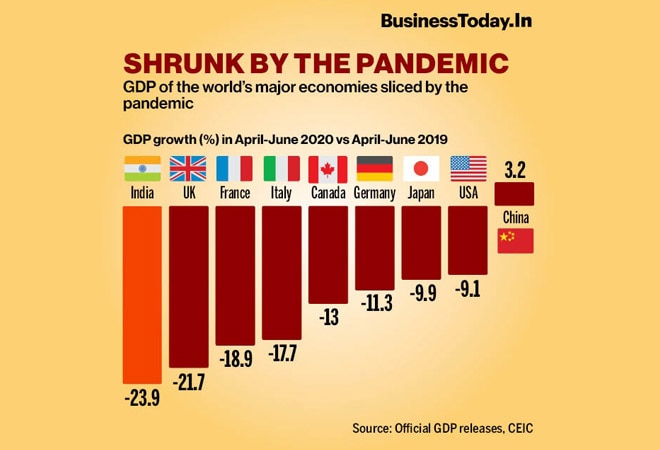
Which top economies have suffered worst GDP fall due to COVID 19? - BusinessToday
Barring China, the world's second-largest economy, all other major economies have felt the negative impact of coronavirus pandemic
Again, that's the problem. We have a drug problem because we treat addiction like a criminal problem instead of a medical one. Women are putting off having babies and continuing to work because we don't have paid leave or national day care or other things that other countries have to support working moms. All of our problems stem from our racial and economic inequalities, that WE REFUSE TO FIX.
What are you talking about? Black women get subsidized daycare that higher income white mothers don't get. Furthermore you should not be having any kids you cannot fully support in the first place. Many other countries women don't work at all, or work very little. In our country, women go to college for several years, get out and try to get a career started. When they do, they have to repay their school loans which precludes them from starting a family earlier like women do in other countries. When everything is finally settled, they are in their later 20's or early to mid 30's. That's the problem.
I've known people who were hooked on drugs. I read about famous people with the same problem. Treatment works on very few people. Plus the fact that not many are imprisoned for just using drugs. Most of the drug offenses have to do with selling them.
The best way to stop drug usage is to never take them in the first place. Because of the availability, they are easy and inexpensive enough for people to get started on the stuff. Dangerous narcotics is as available today for younger people like pot was when we were younger. It's everywhere.
Markle
Diamond Member
It has nothing to do with pork spending. Democrats spend money like a teen with an unlimited credit card. Can't blame Trump or the Republicans for that. And if they don't get their pork, millions who actually need this money because of the virus suffer. Democrats don't care. It's their way or the highway.
There's no point in giving more money to the unemployed if we aren't creating new jobs... Again, we've done this every recession in our history, a bunch of spending on projects to create jobs.
Dr Fauci is near retirement age as it is. I think the last thing he's worried about is his job. That's besides the fact even if he talked against Trump, there is no way for Trump to get rid of him without negative reifications, especially since he's running for reelection.
I think Fauci is terrified of Trump appointing his replacement... as he should be.
The riots took place in Democrat cities with Democrat Mayors with Democrat rioters. Every half-intelligent person understands this. We do not have the most deaths per capita. We have the most deaths because of our population size. Per capita, several European countries lead us in deaths. Bad economies are what we see in every country that was hit by the virus. We lead every other G7 country in the least economic damage done. Thank you President Trump.
Trump can't be president of just half the country, guy. He's the presidents, they are his riots. We have 4% of the world's population and 22% of the Covid Deaths. We are actually the worst off in the G7 in economic damage done. Japan and Germany and Canada are doing FAR better than we are.
Bull. This is worldwide, not domestic. A lot of people are wiped out everywhere. Infant mortality rate is by individual choice, not by who's leading the country. We have an obesity problem, a drug problem, professional women waiting until the last minute to have babies which puts them more at risk, and they skip prenatal care to continue working.
Again, that's the problem. We have a drug problem because we treat addiction like a criminal problem instead of a medical one. Women are putting off having babies and continuing to work because we don't have paid leave or national day care or other things that other countries have to support working moms. All of our problems stem from our racial and economic inequalities, that WE REFUSE TO FIX.


Dragonlady
Designing Woman
Just a does of reality for all you Trump haters. The proof is again in the pudding. interestingly, look who benefited the most. But alas, these are the folks that are lock-step with the Democrats. Ignorance at best. We know it has taken a hit due to COVID, but it can be fixed under Trump. It will plummet with Biden.
Real median incomes of white, Black, Asian, and Hispanic households all increased from the prior year. Lower-income households did particularly well after missing out on income gains earlier in the expansion. The mean income of the lowest fifth of households rose 9% last year, a larger gain than for any other quintile of households.
U.S. Incomes Up, Poverty Rate Down in 2019
What a lovely cherry picking of statistics. Yes, incomes were up and poverty was down. That's because of the massive amount of government spending, not a healthy economy.
One statistics you DIDN'T quote was income and wealth inequality. Both increased significantly under Donald Trump. The rich got a LOT richer, and the poor got a LOT poorer. Those are the two largest issues facing American workers today.
Another statistic you didn't quote. 40% of WORKING Americans, have seen their financial situation either remain the same or deterioriate under the lack of wage increases and higher prices of imported goods due to tariffs.
JoeB131
Diamond Member
Government doesn't create jobs--the private sector does. All government can do is make it easier or harder for the private sector to do so. That's why we had the slowest recovery during the DumBama years.
I know you really believe that, it's just not true.
What creates jobs is consumer demand. If the government employs people building infrastructure, then that creates more consumer demand.
It doesn't negate the percentage of Covid deaths per 100,000 people. We are in eight place for that category. Yes, we are doing better than others. Trump is not responsible for riots that Democrats fostered. If he offers help and they refuse it, how is that Trump's fault? Unless he enacts the Insurrection Act, there is nothing he can do about the riots.
Actually, we are m uch worse than 8th place. We are not doing good at all. Our unemployment peaked at 14% while the European Union never got above 8 and Japan barely noticed at all.
Trump could do a lot about the riots by addressing the underlying complaint. Police Reform Bills are stuck in Congress... he could unstick them... but he'd rather forment race fears, because, frankly, that's all he's got after killing 200K people and ******* up the economy.
Additional federal unemployment only encourages more people to stay home. Even if they'd rather work, making more money sitting at home is the smartest economical decision one can make, so I'm against additional unemployment. However depending on how long it takes to recover, I'm for a federal unemployment extension if state benefits run out.
Absolutely nobody is staying home because they are getting extra money. They are staying home because they are terrified of dying of Trump Plague, and don't want to get killed for a shitty Minimum Wage job...
What are you talking about? Black women get subsidized daycare that higher income white mothers don't get.
Ray, living in mortal terror a black person might get more welfare than he gets.
Many other countries women don't work at all, or work very little. In our country, women go to college for several years, get out and try to get a career started. When they do, they have to repay their school loans which precludes them from starting a family earlier like women do in other countries. When everything is finally settled, they are in their later 20's or early to mid 30's. That's the problem.
You miss the point entirely. We have so many women working because you can't make it on just a husband's salary in this country now that the One Percenters have trashed the unions. Yes, other countries, women CAN stay home because they husbands make good money and government benefits are generous.
It's better to be a ******* Dressage Horse than working person in this country.
I've known people who were hooked on drugs. I read about famous people with the same problem. Treatment works on very few people. Plus the fact that not many are imprisoned for just using drugs. Most of the drug offenses have to do with selling them.
When Rush LImbaugh goes to the same prison Jamal from the Hood goes to, then you can come back and talk to me.
The best way to stop drug usage is to never take them in the first place. Because of the availability, they are easy and inexpensive enough for people to get started on the stuff. Dangerous narcotics is as available today for younger people like pot was when we were younger. It's everywhere.

JustAGuy1
Diamond Member
- Aug 18, 2019
- 18,510
- 16,226
- 2,290
It would be helpful if you would actually state what you are disputing and even more helpful if you would offer data of your own pointing to a significant different conclusion.This was published in 2019 Avoidable mortality (preventable and treatable) | Health at a Glance 2019 : OECD Indicators | OECD iLibraryFirst I can not speak to Canada's healthcare system from personal experience, nor can I speak of that of Japan's or that of England's. I know that all these countries score better overall when it comes to health indices https://www.who.int/healthinfo/paper30.pdf
What is the date of this "research"? I can help you, 2000. Two decades ago.
Why is there not any more recent? Because even the United Nations had to admit that the data used was unreliable.
Each country provided their own information using their own definitions of the terms.
Further, the criteria used leaned far more heavily on the availability of care rather than the quality of care.
July 5, 2000
We’re Number 37 in Health Care!
By Julie Chan
Feeling ill? If so, you might consider catching the next plane out of here, because the World Health Organization (WHO) says your health is best served by countries like Andorra, Cyprus or even Colombia. Each outperforms the U.S. health care system on the WHO’s recently issued World Health Report 2000.
[ ]
The WHO rankings of 191 health systems worldwide placed the United States 37th, trailing countries like Malta and Oman and barely edging out dilapidated Cuba. Predictably, “ClintonCare” champions are using the report in their battle cry for reviving the movement toward government‐controlled medicine. But the WHO study is much like the annual magazine rankings of colleges: It grabs plenty of headlines but rests on questionable analysis. A closer look at the WHO health care study reveals startling assumptions, critical lapses in statistical judgment, and a clearly predetermined political agenda.
Breaking “new methodological ground,” the WHO report rates national health care performance according to five trendy flavors of the month: life expectancies, inequalities in health, the responsiveness of the system in providing diagnosis and treatment, inequalities in responsiveness, and how fairly systems are financed.
First, consider the study’s data. Health statistics for each country were collected from individual agencies and ministries, assuring wide disparities in definition, reporting technique and collection methodology. Indeed, the report concedes that “in all cases, there are multiple and often conflicting sources of information,” if sources at all. For the many nations that simply do not maintain health statistics, the WHO “developed [data] through a variety of techniques.” Without consistent and accurate data from within a single country, how can meaningful comparison be made among 191 different countries?
We're Number 37 in Health Care!
This in 2020 Health Care Index by Country 2020 Mid-Year
2020 Healthiest Countries 2020
Etc. etc.
If you have any problem with them feel absolutely free to dispute them by citing different sources.
This was published in 2019 Avoidable mortality (preventable and treatable) | Health at a Glance 2019 : OECD Indicators | OECD iLibrary
This in 2020 Health Care Index by Country 2020 Mid-Year
2020 Healthiest Countries 2020
Etc. etc.
If you have any problem with them feel absolutely free to dispute them by citing different sources.
Yes, as a matter of fact, I do.
Here is the source of the data used in the OECD source. No sense on looking any further.
About Health Care Indices At This Website
This section is based on surveys from visitors of this website. Questions for these surveys are similar to many similar scientific and government surveys.
Each entry in the survey is saved as the number in the range [-2, +2], with -2 having meaning of strongly negative and +2 meaning of strongly positive.
Understanding Health Care Indexes
Never happen all he has is "Nuh-Uh"
Ray From Cleveland
Diamond Member
- Aug 16, 2015
- 97,215
- 37,461
- 2,290
I know you really believe that, it's just not true.
What creates jobs is consumer demand. If the government employs people building infrastructure, then that creates more consumer demand.
No, that won't work. You can't focus on one entity of our entire economy and expect it to have any impact on the rest of the country. In July, new housing starts were up 22.6%. Do we have a booming economy yet because all those construction jobs?
Actually, we are m uch worse than 8th place. We are not doing good at all. Our unemployment peaked at 14% while the European Union never got above 8 and Japan barely noticed at all.
Trump could do a lot about the riots by addressing the underlying complaint. Police Reform Bills are stuck in Congress... he could unstick them... but he'd rather forment race fears, because, frankly, that's all he's got after killing 200K people and ******* up the economy.
The police don't fall under federal authority outside of civil rights violations. There is no police reform bill.
Absolutely nobody is staying home because they are getting extra money. They are staying home because they are terrified of dying of Trump Plague, and don't want to get killed for a shitty Minimum Wage job...
If they had a shitty minimum wage job, they more than doubled their income by being on unemployment. When you combine state and federal benefits, in many cases it's comparable to a person making 60K which a lot of Americans don't do. If you make 35K a year, then it would be stupid to look for a job when you're getting paid 60K to stay at home. That's a 25K a year increase in household income. Of course they will stay home. Who wouldn't?

Restaurant Owner Struggling to get staff on Unemployment back to Work
BALTIMORE, Md. (WBFF) - Melony Wagner is hoping she'll be given the green light to reopen her restaurant Charles Village Pub in Towson soon. However, she says her employees who are collecting unemployment aren't itching to come back just yet. "They don't want to because it's less money. I'm not...
 foxbaltimore.com


Ray, living in mortal terror a black person might get more welfare than he gets.
Dr OCD, you brought up race as always, not me.
You miss the point entirely. We have so many women working because you can't make it on just a husband's salary in this country now that the One Percenters have trashed the unions. Yes, other countries, women CAN stay home because they husbands make good money and government benefits are generous.
It's better to be a ******* Dressage Horse than working person in this country.
Not all women want to stay home, so that's one part. Two is that we are a money hungry country unlike other nations where just getting by is good enough. We want larger homes, fancier vacations, more household amenities, nicer cars, bigger televisions.
My father laughs at the concept that he pays more for his cell phone every month than the mortgage he paid on the house we grew up in. But we love our cell phones, our internet access, our cable or satellite systems that provide us with 400 channels plus extra costs for sports, movies, Netflix, we love to eat out all the time. To have all this stuff we really don't need, you have to be a two income household.
Ray From Cleveland
Diamond Member
- Aug 16, 2015
- 97,215
- 37,461
- 2,290
One statistics you DIDN'T quote was income and wealth inequality. Both increased significantly under Donald Trump. The rich got a LOT richer, and the poor got a LOT poorer. Those are the two largest issues facing American workers today.
You mean that didn't happen under DumBama too? You have to be kidding me. It's been going on for decades in this country.
JustAGuy1
Diamond Member
- Aug 18, 2019
- 18,510
- 16,226
- 2,290
If I'm stating facts based on my own personal knowledge why should I give sources and links? I'm not entirely sure how to go about that. Do you want to see invoices from medical procedures I've had here? Some of my in-laws? I am a reliable source but I have no actual way of demonstrating that without divulging personal information.When I make claims about costs and efficiencies in my country and draw comparisons, I'm not stating opinions, I'm stating facts based on my own personal knowledge.
Then post your reliable sources and working links to support your "knowledge".
I can give you examples of things that happened to my mother-in-law and the severely lacking post-op care she received, and contrast that to my grandmother's care after having the same medical condition. But you have no way of knowing if it's true. I could state that when I receive a script from my GP I can simply go to the pharmacy and get my pills. Not an hour later after some pharmacy tech calls my insurance company to verify that that particular medicine is covered as happens in the US. But again how do you verify that?
I can and have posted an entire slew of reports from the OECD, or other NGO's tracking health indices but my experience tells me that's rejected too. So I tell you what. What do you consider a reliable source, especially when this source tells you something you long believed to be true is wrong?
Because your "personal knowledge" is anecdotal at best, nobody cares what you think because what you think is immaterial. What you can prove is all that matters.
JustAGuy1
Diamond Member
- Aug 18, 2019
- 18,510
- 16,226
- 2,290
Not everybody benefits equally on roads. Nobody benefits from having an army if there's no war. Not everybody benefits equally from having a fire department. Some people never experience a fire or are in need of a paramedic. An interstate between Oregon and California does nothing for someone living in the Boondocks in Alabama. You accept that having those things are necessary for the benefit of society as a whole or an insurance policy if necessary. But for some reason giving everybody a chance to get a higher education is unacceptable because you might not personally benefit.Having an army or a fire department or roads for that matter could be considered an investment by your logic. Are you against paying taxes for that?If I work to earn a wage, a wage that allows you tooHow do you make that connection. Wages rose under Obama despite more regulation. We have way more regulations and way higher taxes and people here are capable of taking better care of themselves and their family. I'm not trying to do some gotcha thing but I'd like to know what objective fact you're aware of that leads you to conclude that lower taxes and regulations lead to being better able to take care of yourself?Because we're being terribly fiscally irresponsible. This comes at a cost.Is that supposed to be some kind of answer?Great! Please explain what I mean by "the most active and aggressive Fed in the history of the country". And please break it down to the actions of the central Fed and the NY Fed over the last three years, AND the long term implications of those actions.
Go ahead. Feel free to get as specific as you'd like.
Oh, and then tell us how long we can engage in massive deficit spending increases.
Thanks in advance.
Meaning, you've got NOTHING!
If you can't dazzle them with brilliance, baffle them with bull s***!
'
I already asked you to provide details as to why you think the Biden/Harris plan will be successul and how the fed will change their monetary policy under Biden/Harris. Instead of answering, you filabuster.
So his big reason why people doing better financially doesn't matter is the fed, and the fed will do the exact same thing with Harris. Plus, everyone's gains will be removed, and spending will balloon even higher. Mac, why are you not rooting for people to win in any fashion?
It's sad that I even have to say this.
You can see that lower taxes and regulations give people a better chance to take care of themselves? Despite what the fed is doing, I would have to think common sense practices would still allow wages to rise. Are you saying nothing Trump does is good for the country economically because of what the fed is doing? If nothing matters because of the fed, people have pointed out that the fed behavior will likey be the same under a democrat administration.
Note he said taking care of yourself, not being taken care of by the government. Europe has a larger welfare state than the US. Ironically, the US citizens give MUCH more to charity than those in Europe, who rely on government redistribution of wealth. We are much more in control of our personal welfare than those in Europe and I personally like that because I am willing to take on the personal responsibility and the risk that allows me to move up( and down) the economic ladder much more freely than in Europe.
If I work and make a wage. A wage that allows me to pay taxes and buy goods how am I letting the government take care of me? It's a disconnect I feel often occurs when talking to conservatives. For some reason services payed for by taxes are considered "given". They are not I paid for them.How do you make that connection. Wages rose under Obama despite more regulation. We have way more regulations and way higher taxes and people here are capable of taking better care of themselves and their family. I'm not trying to do some gotcha thing but I'd like to know what objective fact you're aware of that leads you to conclude that lower taxes and regulations lead to being better able to take care of yourself?Because we're being terribly fiscally irresponsible. This comes at a cost.Is that supposed to be some kind of answer?Great! Please explain what I mean by "the most active and aggressive Fed in the history of the country". And please break it down to the actions of the central Fed and the NY Fed over the last three years, AND the long term implications of those actions.
Go ahead. Feel free to get as specific as you'd like.
Oh, and then tell us how long we can engage in massive deficit spending increases.
Thanks in advance.
Meaning, you've got NOTHING!
If you can't dazzle them with brilliance, baffle them with bull s***!
'
I already asked you to provide details as to why you think the Biden/Harris plan will be successul and how the fed will change their monetary policy under Biden/Harris. Instead of answering, you filabuster.
So his big reason why people doing better financially doesn't matter is the fed, and the fed will do the exact same thing with Harris. Plus, everyone's gains will be removed, and spending will balloon even higher. Mac, why are you not rooting for people to win in any fashion?
It's sad that I even have to say this.
You can see that lower taxes and regulations give people a better chance to take care of themselves? Despite what the fed is doing, I would have to think common sense practices would still allow wages to rise. Are you saying nothing Trump does is good for the country economically because of what the fed is doing? If nothing matters because of the fed, people have pointed out that the fed behavior will likey be the same under a democrat administration.
Note he said taking care of yourself, not being taken care of by the government. Europe has a larger welfare state than the US. Ironically, the US citizens give MUCH more to charity than those in Europe, who rely on government redistribution of wealth. We are much more in control of our personal welfare than those in Europe and I personally like that because I am willing to take on the personal responsibility and the risk that allows me to move up( and down) the economic ladder much more freely than in Europe.
As to social mobility. The whole concept of student debt is alien to people living here. Who do you think is more mobile in society. A person living in a country that allows everyone to have a higher education without accruing debt regardless of who you parents are? Or a person for whom the best universities are unaffordable unless they themselves are exceptional enough to qualify for a sholarship. And other higher education carries considerable financial burdens?
Higher education is an investment just like the stock market or real estate. People who get a higher education on average will earn more money and be out of work less often than others who are not college educated.
Investments should not be funded by the taxpayers. I can't see spending my working life paying taxes so that somebody can go to school to be a lawyer, and then after they become a lawyer and I need their help, charge me 200 bucks an hour for that help.
Not really because everybody benefits equally from those things. A strong military is needed for a world power. It protects our freedoms as well as yours. A fire department usually includes paramedics in case of a medical emergency, and of course a major fire we individuals would not be capable of battling. If one doesn't drive or use the roads we have, their supplies, mail and buses or cabs use those roads to transport them where they need to go.
Advanced education only benefits individuals, not everybody. I don't care if you get a job emptying garbage or become an accountant. It's not an advantage or disadvantage either way for me. However you will make a better living, have a less physical job by becoming an accountant, so only you benefit.
"Not everybody benefits equally on roads."
Equally? An immaterial concept as applied.
"Nobody benefits from having an army if there's no war"
They absolutely do, Militaries are not simply for fighting. They are just as valuable when serving as a deterrent to the fighting, in fact I would say more.
"Not everybody benefits equally from having a fire department"
This obsession with equality as you define it renders your arguments useless as well as biased. Again in this case it is immaterial. In fact since the discussion later on evolves to Insurance every one of these services/entities/objects are just that, forms of insurance (as you said) provided by not the Gov, but by the people who pay the taxes. Governments do not make money, they take it.
"An interstate between Oregon and California does nothing for someone living in the Boondocks in Alabama"
Again, immaterial. People in their respective states pay for those interstates and when the Feds get involved they do so in every state.
"But for some reason giving everybody a chance to get a higher education is unacceptable because you might not personally benefit."
Everybody does have that chance most simply choose not to.
forkup DustyInfinity
Well done, both of you. Best' most civil discussion here I've seen.
JoeB131
Diamond Member
No, that won't work. You can't focus on one entity of our entire economy and expect it to have any impact on the rest of the country. In July, new housing starts were up 22.6%. Do we have a booming economy yet because all those construction jobs?
That's kind of an idiotic comparision, because that was a "Dead Cat Bounce" after the housing market Crashed during Trump Plague.
Yes, you really can increase the economy through spending, it's how we've gotten out of every recession since 1929. If we get out of this one, it will be because of the pork you are whining about.
The police don't fall under federal authority outside of civil rights violations. There is no police reform bill.
Actually, there is, it's stuck in the House, because McConnel won't bring it to a vote in the Senate.
If they had a shitty minimum wage job, they more than doubled their income by being on unemployment. When you combine state and federal benefits, in many cases it's comparable to a person making 60K which a lot of Americans don't do. If you make 35K a year, then it would be stupid to look for a job when you're getting paid 60K to stay at home. That's a 25K a year increase in household income. Of course they will stay home. Who wouldn't?
Well, you wouldn't, Welfare Ray, but most people have pride and dignity.
Here's the problem with that whole scenario. You only get it if your employer certifies he laid you off. if he says, "I asked Ray to come back to work, and he refused because he didn't want to catch the covid.", then no benefits.
The problem is, there are no jobs to go back to for most people. If those employers are hiring back at all, they are hiring new people they can pay less.
My father laughs at the concept that he pays more for his cell phone every month than the mortgage he paid on the house we grew up in.
Wow, so inflation is one of those concepts you don't get, either, right?

/—-/ That’s why Blue state Governors and Mayors continue the lockdown even though it hurts the voters who put them in office. They need misery to stay in power.Just a does of reality for all you Trump haters. The proof is again in the pudding. interestingly, look who benefited the most. But alas, these are the folks that are lock-step with the Democrats. Ignorance at best. We know it has taken a hit due to COVID, but it can be fixed under Trump. It will plummet with Biden.
Real median incomes of white, Black, Asian, and Hispanic households all increased from the prior year. Lower-income households did particularly well after missing out on income gains earlier in the expansion. The mean income of the lowest fifth of households rose 9% last year, a larger gain than for any other quintile of households.
U.S. Incomes Up, Poverty Rate Down in 2019
/—-/ And when I was a teen, a new Chevy Impala was about $2,700 fully equipped. Today it’s north of $27,000. So what drove the inflation?No, that won't work. You can't focus on one entity of our entire economy and expect it to have any impact on the rest of the country. In July, new housing starts were up 22.6%. Do we have a booming economy yet because all those construction jobs?
That's kind of an idiotic comparision, because that was a "Dead Cat Bounce" after the housing market Crashed during Trump Plague.
Yes, you really can increase the economy through spending, it's how we've gotten out of every recession since 1929. If we get out of this one, it will be because of the pork you are whining about.
The police don't fall under federal authority outside of civil rights violations. There is no police reform bill.
Actually, there is, it's stuck in the House, because McConnel won't bring it to a vote in the Senate.
If they had a shitty minimum wage job, they more than doubled their income by being on unemployment. When you combine state and federal benefits, in many cases it's comparable to a person making 60K which a lot of Americans don't do. If you make 35K a year, then it would be stupid to look for a job when you're getting paid 60K to stay at home. That's a 25K a year increase in household income. Of course they will stay home. Who wouldn't?
Well, you wouldn't, Welfare Ray, but most people have pride and dignity.
Here's the problem with that whole scenario. You only get it if your employer certifies he laid you off. if he says, "I asked Ray to come back to work, and he refused because he didn't want to catch the covid.", then no benefits.
The problem is, there are no jobs to go back to for most people. If those employers are hiring back at all, they are hiring new people they can pay less.
My father laughs at the concept that he pays more for his cell phone every month than the mortgage he paid on the house we grew up in.
Wow, so inflation is one of those concepts you don't get, either, right?
Similar threads


- Replies
- 49
- Views
- 661


- Replies
- 54
- Views
- 838


New Topics
-
 Zone1 Former Nasa scientist died 3 times. She recounts each experience, her first as a 2 year old.
- Started by MarathonMike
- Replies: 0
-
 Moscow ultraimperialist Gubarev published testimonies about Akhmat Muslim Chechens crimes in Ukraine
- Started by Litwin
- Replies: 0
-

-
 The Phenomenon of Red-Haired Characters Becoming Black in Comic Adaptations
- Started by DonGlock26
- Replies: 4
-


