Zone1 If God were real, you wouldn’t need a book

But the Bible is stories, not observations. Harry Potter has many real world observations in it. It has people, it has houses, cars, schools, all sorts of things. But you don't say it's real.

How do you know the premise of the authors of the Bible? You don't even know who they are.
The Bible is divided roughly into thirds
1/3 History
1/3 Instruction
1/3 Prophecy
 
There is not one person on earth who can say with absolute certainty what the next world will bring if at all. It is why I could never be a radicalized person or someone who kills specifically over religious differences. I figure this "noone knows for certain so we can only be guided by what our ansectors say they experienced as the passing down of stories was how communication occurred". To murder another over religion is not only contrary to G-ds teachings but it is arrogant as no one knows for certain". I consider the progress of humanity from the bible and consider that even just from an evolutionary/survival perspective, the bible serves a purpose. G-d would serve a purpose of keeping us alive to sustain our species and survive by following his Command What happens when it all comes to an end? That'e the great mystery. However war, stealing from and murdering one another, not being generous to others, that HAS to be destructive to our chances of survival.
 
But the Bible is stories, not observations. Harry Potter has many real world observations in it. It has people, it has houses, cars, schools, all sorts of things. But you don't say it's real.
We say people are real, as are houses, cars, schools. We know that the characters in the story are from the imagination of JK Rowling. We can trace them straight back to her. Remember my advice that people should seek and find God first, then study the Bible. Since I have already found people, houses, cars, schools, etc., I know those are real. Since I have already found God, I know he is real. Since you have not yet found God, you come from a different perspective.
How do you know the premise of the authors of the Bible? You don't even know who they are.
That takes studying the culture and the language. Let's take the story of the Great Flood. Are you imagining the real purpose of the author was to present God in a bad light? Or was it to present people in a bad light?
 
Not just the christian god, any god.

If they were real it would be self evident.

From a guy who spend decades as a preacher:

“Christians go in with their god as an assumption rather than a conclusion. When in fact, after close examination, the virgin birth falls apart, the resurrection falls apart, the basis of morality falls apart, the promise of afterlife fizzles into fear based marketing.”

“The gods of Islam, of Judaism, of Christianity only exist in scripture. If they actually existed, we wouldn’t need the books to claim they did. Once the book fails, the god goes with it.”


Feel free to explain why he is wrong or right.

This is a valid question but if Messiah Yeshua - Jesus was NOT resurrected from the dead after even being in hell itself for three days in order to play out the role of "Messiah the Passover Lamb", then how could He command Mr. Robert Marshall to answer any questions that anybody asks him? Then how could Jesus heal Robert Marshall's brain, heart, kidneys, liver and all internal organs and restore his memories and give him joy as he sets out to obey the commands that he testifies that Jesus gave to him?


Dead 44 Hours! Jesus Revealed Heaven’s Greatest Mysteries…​


189,711 views Nov 7, 2025 #Afterlife #NearDeathExperience #Jesus

A powerful Near Death Experience (NDE) testimony: Robert Marshall was clinically dead for 44 hours, met Jesus in Heaven, saw family, pets, mansions, the River of Life, and returned with answers to the greatest mysteries of the afterlife. If you’ve ever searched “what happens when you die?” — watch this.


Question:

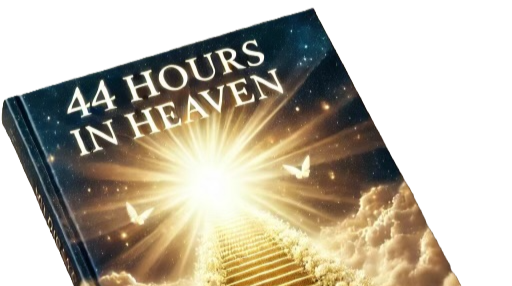
What is the book 44 Hours In Heaven About?


This is a true story and testimony from a man named Robert, who died three times on May 19th, 2024. He explains how he died by suffocating, drowning in his blood in his lungs, acute hypoxic respiratory failure, and cardiac arrest. The result was his suffering oxygen deprivation to his brain for a total of approximately 90 minutes and about his visits to Heaven each time he died.


Each time he died, he went to Heaven. The 1st time he went to Heaven was for 15 minutes; the 2nd time was for 17 minutes; and the 3rd time was for 43 hours and 28 minutes. In the book 44 Hours in Heaven, he shares what Heaven is like, the conversations he had with Jesus, and what he learned.


The following excerpt from chapter 10 in the book "44 Hours In Heaven" contains what Jesus commanded Robert to do.


Jesus said, "You will worship Me in truth and spirit, and you will do as I command you."


Jesus then told him what He would require him to do, “You will worship Me in Truth and Spirit, and you will do as I command you.”


“In doing so, you will share how and why you were given life again."


“You will share with anybody that I put in your path and will entertain any questions about what I shared and taught you from anybody who asks.”


Last edited:
We say people are real, as are houses, cars, schools. We know that the characters in the story are from the imagination of JK Rowling. We can trace them straight back to her. Remember my advice that people should seek and find God first, then study the Bible. Since I have already found people, houses, cars, schools, etc., I know those are real. Since I have already found God, I know he is real. Since you have not yet found God, you come from a different perspective.

That takes studying the culture and the language. Let's take the story of the Great Flood. Are you imagining the real purpose of the author was to present God in a bad light? Or was it to present people in a bad light?

And has anyone ever seen God? Nope. God is as imaginary as Harry Potter is. You claim to have found God, but can provide no evidence. I can claim to have found Harry Potter, can I provide any evidence?

How can we know the purpose of any of the stories? We can't even be sure that the author's story was passed down properly. Changes could have been made. Almost certainly though, we know it's a story and not an account of reality.

Why? Because there have been many great flood stories.

Flood Myths in World History - World History Edu

"Flood myths are a recurring motif across many cultures and historical periods, often presenting a story in which a divine or supernatural flood devastates civilization."
 
And has anyone ever seen God? Nope. God is as imaginary as Harry Potter is. You claim to have found God, but can provide no evidence. I can claim to have found Harry Potter, can I provide any evidence?
You can claim to have found Harry Potter, but I can produce the person who created Harry Potter from her own imagination.
 
You can claim to have found Harry Potter, but I can produce the person who created Harry Potter from her own imagination.

So? I can claim that this person is in touch with Harry Potter, that this person is able to move between the wizard world and the human world.

The only difference between yours and mine, is that the people who wrote your stories are dead.

But the historical evidence points to them being stories. We have evidence of a lineage from Egyptian religion to Christianity. That many things remain the same.

You have Jesus being born around the time of the winter solstice, a time celebrated. Jesus dies at spring, where we have the spring festival.

These aren't coincidences. These happened because it was easier for them to take old ways and implant them onto the new religion
 
How can we know the purpose of any of the stories? We can't even be sure that the author's story was passed down properly. Changes could have been made. Almost certainly though, we know it's a story and not an account of reality.

Why? Because there have been many great flood stories.
There are many war stories as well that are not historical chronicles of a war, but the setting for the story. The great flood was/is also the setting of many stories. We have the characters, we have the setting...what is another element we teach students to identify? Theme. What is the message, the purpose, the truth the story presents. The theme of the biblical Great Flood story is not that God is a big meanie.

I get that some people want to discuss--argue over--what parts are literally true and which are not. Personally, I could not care less about that because there is no proof of either opinion and either belief makes not one whit to the story. I want to know the theme of the story, what truth it is presenting. That truth is worth mulling over.
 
So? I can claim that this person is in touch with Harry Potter, that this person is able to move between the wizard world and the human world.

The only difference between yours and mine, is that the people who wrote your stories are dead.
But I am not dead, and my experience(s) of God is/are truth. I can testify to that, but, as you say, I have no physical proof. As you cannot prove a negative, you are in the same "no proof" boat.


But the historical evidence points to them being stories. We have evidence of a lineage from Egyptian religion to Christianity. That many things remain the same.

You have Jesus being born around the time of the winter solstice, a time celebrated. Jesus dies at spring, where we have the spring festival.

These aren't coincidences. These happened because it was easier for them to take old ways and implant them onto the new religion
Almost all stories contain facts. We have already agreed to that. Where we differ is that you have decided God is not fact while I know he is.

Early on there was a tradition that was conceived on the same day as his death. Nine months later...Christmas. His death was during a spring festival, and we have four Gospel writers testifying to that.
 
There are many war stories as well that are not historical chronicles of a war, but the setting for the story. The great flood was/is also the setting of many stories. We have the characters, we have the setting...what is another element we teach students to identify? Theme. What is the message, the purpose, the truth the story presents. The theme of the biblical Great Flood story is not that God is a big meanie.

I get that some people want to discuss--argue over--what parts are literally true and which are not. Personally, I could not care less about that because there is no proof of either opinion and either belief makes not one whit to the story. I want to know the theme of the story, what truth it is presenting. That truth is worth mulling over.

So, again, it's a story and not real.

Is there a God? No. He's just a fictional character in a work of fiction.
 
So, again, it's a story and not real.

Is there a God? No. He's just a fictional character in a work of fiction.
Truth is not fiction. Yet truth is found in good fiction. Is your position there is no truth as truth can be found in fiction? Is it your position there are no people because people can be found in fiction? Yet your position does seem to be there is no God because God is found in fiction. Once again: Seek and find God, then study the Bible. Beginning with a wrong premise leads to a wrong conclusion.

If your starting premise is that there is no God, then the Bible is not the book for you as it will only lead you to wrong conclusions.
 
But I am not dead, and my experience(s) of God is/are truth. I can testify to that, but, as you say, I have no physical proof. As you cannot prove a negative, you are in the same "no proof" boat.


Almost all stories contain facts. We have already agreed to that. Where we differ is that you have decided God is not fact while I know he is.

Early on there was a tradition that was conceived on the same day as his death. Nine months later...Christmas. His death was during a spring festival, and we have four Gospel writers testifying to that.

So, what experiences with God do you have?

Yes, I have no proof. Nor do you. Why would I accept something as true that A) has no evidence and B) there is evidence that it's all just stories and written by humans for humans?

Okay, so Harry Potter contains truth. It has cars, it has people, it has clothes... some truths.

Four people from a book of fiction testify that something is true? Wow, so, then, we have loads of people testifying in the Harry Potter books that Harry Potter is real.
 
Yes, I have no proof. Nor do you. Why would I accept something as true that A) has no evidence and B) there is evidence that it's all just stories and written by humans for humans?
This goes back to Step 1: Seek and find God. Have you enough faith for that? If not, ask and you shall receive.

All I have is what the Bible has: Testimony. The Bible also notes that even if someone should return from the dead and testify it would not lead people to belief. It appears that belief/experiences of God are personal and extend no further. The best others can expect from them is that what is possible for another may also be possible for them. I have another heads up: An experience of God comes with a heavy weight, a feeling of one should be better, should be doing more...not to mention the weight of missing. For me, one of the truest verses in the Bible is what Jesus said to Thomas, "Blessed are those who believe without seeing." I don't have that blessing, as I have seen. And I consider not seeing, but believing, a very great blessing. Listen to it.
 
This goes back to Step 1: Seek and find God. Have you enough faith for that? If not, ask and you shall receive.

All I have is what the Bible has: Testimony. The Bible also notes that even if someone should return from the dead and testify it would not lead people to belief. It appears that belief/experiences of God are personal and extend no further. The best others can expect from them is that what is possible for another may also be possible for them. I have another heads up: An experience of God comes with a heavy weight, a feeling of one should be better, should be doing more...not to mention the weight of missing. For me, one of the truest verses in the Bible is what Jesus said to Thomas, "Blessed are those who believe without seeing." I don't have that blessing, as I have seen. And I consider not seeing, but believing, a very great blessing. Listen to it.

So you have the BELIEVE (accept without knowing) in order to be able to find something that doesn't exist.

So, if I start with the premise that Harry Potter is real, I can then go out there and find Harry Potter.
 
So you have the BELIEVE (accept without knowing) in order to be able to find something that doesn't exist.
Faith, not belief, may be the first step. I suppose it depends on on how one looks at it. "Seek and you shall find." Did I believe this? As I recall, It wasn't an "I believe moment." It was more a realization that I could seek, so why not give it a try. Yes, that's all it took, faith the size of a mustard seed, that realization/faith I was capable of seeking. Note it was more myself and what I could do/I was capable of doing that started me on the quest.
 
Faith, not belief, may be the first step. I suppose it depends on on how one looks at it. "Seek and you shall find." Did I believe this? As I recall, It wasn't an "I believe moment." It was more a realization that I could seek, so why not give it a try. Yes, that's all it took, faith the size of a mustard seed, that realization/faith I was capable of seeking. Note it was more myself and what I could do/I was capable of doing that started me on the quest.

What's the difference between "faith" and "belief"? Sounds like two words to mean the same thing to me.

So, you accept something that you don't know?
 
15th post
What's the difference between "faith" and "belief"? Sounds like two words to mean the same thing to me.

So, you accept something that you don't know?
'Faith' and 'belief' do seem similar, don't they? I remember applying for a job where I had faith I qualified for the position. Then I sensed something that formed the belief, despite an outstanding interview, I would not be offered the position.

Subsequent to that I recognized that religious faith and belief followed a similar if not the same pattern. Faith that I could seek and find (provided that there was something to be found); faith in the philosophy that one must seek if one wishes to find. I had that much faith. That led to belief/knowing.
 
'Faith' and 'belief' do seem similar, don't they? I remember applying for a job where I had faith I qualified for the position. Then I sensed something that formed the belief, despite an outstanding interview, I would not be offered the position.

Subsequent to that I recognized that religious faith and belief followed a similar if not the same pattern. Faith that I could seek and find (provided that there was something to be found); faith in the philosophy that one must seek if one wishes to find. I had that much faith. That led to belief/knowing.

Well, both that "faith" and "belief" in the interview are the same thing. You don't know, you just have a feeling.

People have feelings. It's not religion, it's just human biology.
 
Not just the christian god, any god.

If they were real it would be self evident.

From a guy who spend decades as a preacher:

“Christians go in with their god as an assumption rather than a conclusion. When in fact, after close examination, the virgin birth falls apart, the resurrection falls apart, the basis of morality falls apart, the promise of afterlife fizzles into fear based marketing.”

“The gods of Islam, of Judaism, of Christianity only exist in scripture. If they actually existed, we wouldn’t need the books to claim they did. Once the book fails, the god goes with it.”


Feel free to explain why he is wrong or right.
 
Well, both that "faith" and "belief" in the interview are the same thing. You don't know, you just have a feeling.

People have feelings. It's not religion, it's just human biology.
I see you have never read the Bible.
 

New Topics

Back
Top Bottom