Thethingsz
Gold Member
- Dec 26, 2025
- 305
- 207
- 158
Question.
If it is true that Trump asked Tulsi way earlier to fire Kent, why didn't she?
Another comment I will add is that the definition of 'imminent danger' is not so simple to dismiss. See what Rasmussen says at the bottom.
*
Summary resignation of failed leaker Joe Kent and reaction
The resignation of Joe Kent as head of the National Counterterrorism Center triggered widespread political reaction centered on U.S. policy toward Iran.
(From this)
###
Nicholas Rasmussen:
Well, the question of imminence when you're talking about threats, national security threats, is not a black-and-white matter, as you can imagine. And even in what Director Kent put on the record with his letter today, he didn't speak specifically to the nuclear threat or the threat to U.S. interests from terrorism or the threat from, for example, Iran's ballistic missile program.
So in a sense, we don't know exactly what he was alluding to with his comments. As I was saying a bit ago, the concept of imminence is not black and white. It can have a very temporal component to it. If the intelligence community, for example, were in possession of information that said or suggested that an attack on U.S. interests was going to happen at this place on that day in this manner, that would certainly constitute an imminent threat.
But you can have imminence without having all of those elements as well. If you feel like -- and I say feel -- if you feel like you don't have the ability to forecast and project when an attack might happen, that might create a sense of imminence, even if you don't have that specific intelligence giving you time and place.
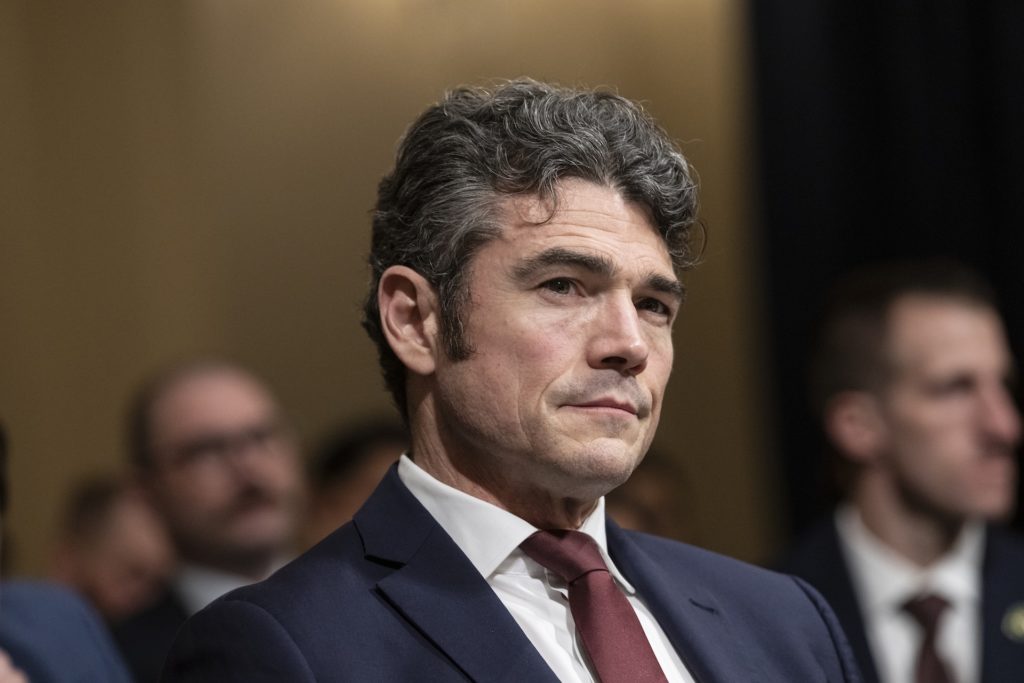
 www.pbs.org
If it is true that Trump asked Tulsi way earlier to fire Kent, why didn't she?
Another comment I will add is that the definition of 'imminent danger' is not so simple to dismiss. See what Rasmussen says at the bottom.
*
Summary resignation of failed leaker Joe Kent and reaction
The resignation of Joe Kent as head of the National Counterterrorism Center triggered widespread political reaction centered on U.S. policy toward Iran.
Administration response
Donald Trump welcomed Kent’s departure, criticizing his view that Iran was not a threat and asserting the opposite. Tulsi Gabbard emphasized that the president determines national security threats and stated that Trump concluded Iran posed an imminent danger requiring action.Kent’s position and resignation
Kent resigned amid disagreements with the administration’s approach to Iran, including military action. In his statements, he argued Iran was not a direct threat and suggested U.S. decisions were influenced (supposedly) by Israel.Criticism and allegations
- The Anti-Defamation League and (even anti-Israel) J Street said his remarks echoed antisemitic conspiracy theories.
- Rep. Don Bacon supported his resignation and criticized both Iran and antisemitism.
- Reports also pointed to Kent’s past associations with extremist racist figures and earlier controversies, including election denialism.
Reactions within conservative circles
- Laura Loomer and others accused Kent of inconsistency, citing his prior statements that Iran had threatened Trump following the killing of Qasem Soleimani.
- Some allies labeled him disloyal or a leaker, with reports claiming he had been excluded from intelligence briefings before resigning.
Political reactions
Although Democrats had previously opposed Kent’s nomination due to his ties and views, some of them, suddenly promoted his "theories" in their overall anti Trump war.References
- Eric Mack, Fox News (March 17, 2026): Trump bids goodbye to intel official who resigned over Iran [link]
- Bill Barrow, Associated Press (via KOAT): What to know about Joe Kent’s resignation [*]
- Andrew Bernard, JNS (March 17, 2026): US counterterror center head resigns over Iran war [*]
- Marc Rod, Jewish Insider (March 17, 2026): Democrats elevate Kent’s resignation letter [link
- Times of India (March 18, 2026): Tulsi Gabbard and Joe Kent controversy [link]
- X (Twitter) posts:
(From this)
###
Nicholas Rasmussen:
Well, the question of imminence when you're talking about threats, national security threats, is not a black-and-white matter, as you can imagine. And even in what Director Kent put on the record with his letter today, he didn't speak specifically to the nuclear threat or the threat to U.S. interests from terrorism or the threat from, for example, Iran's ballistic missile program.
So in a sense, we don't know exactly what he was alluding to with his comments. As I was saying a bit ago, the concept of imminence is not black and white. It can have a very temporal component to it. If the intelligence community, for example, were in possession of information that said or suggested that an attack on U.S. interests was going to happen at this place on that day in this manner, that would certainly constitute an imminent threat.
But you can have imminence without having all of those elements as well. If you feel like -- and I say feel -- if you feel like you don't have the ability to forecast and project when an attack might happen, that might create a sense of imminence, even if you don't have that specific intelligence giving you time and place.
What Joe Kent’s resignation says about U.S. intelligence and counterterrorism efforts
To discuss Joe Kent’s comments about the Iran war and what his resignation says about the intelligence community, Nick Schifrin spoke with Nick Rasmussen. He directed the National Counterterrorism Center under the Obama administration.
www.pbs.org
Last edited: