
Well, Bush was kind of a liberal when it came to spending, you know. He didn't like to use that veto pen. Still, he was infinitely better than his successor.Maxine bitches over "What Dey Did To Us'?,,really? wasnt it a democrat congress that passed new banking laws that crashed the economy in 2007? I dont recall Bush telling all poor people that they are all approved for very expensive mortgages,,so long as u can breatheHouse passes a law. Senate can kill it, go along with it, or change it. If they change it, it goes back to the House. If they agree on a bill, it goes to the President's desk to be either signed into law or vetoed. If he vetoes it, Congress can try to override it but that rarely happens. Senate would most likely kill anything proposed by Maxine Waters.
Navigation
Install the app
How to install the app on iOS
Follow along with the video below to see how to install our site as a web app on your home screen.
Note: This feature may not be available in some browsers.
More options
Style variation
You are using an out of date browser. It may not display this or other websites correctly.
You should upgrade or use an alternative browser.
You should upgrade or use an alternative browser.
Good Question.Whatever Maxine Has In Mind. Doesn't She Need To Go Thru Senate & Trump?
- Thread starter LeeOnLido
- Start date

g5000
Diamond Member
- Nov 26, 2011
- 138,917
- 93,396
- 2,605
When people say stupid things like, "I dont recall Bush telling all poor people that they are all approved for very expensive mortgages", what they really mean is, "My propagandists keep me completely in the dark, like a mushroom, and fertilize me with bullshit."

LeeOnLido
Gold Member
- Jul 1, 2018
- 5,703
- 1,732
- 190
- Thread starter
- #23
we all remember how the economy was jamming right into 2007,,,,and then,,,it started to slow down,,,gee,,i wonder whyWell, Bush was kind of a liberal when it came to spending, you know. He didn't like to use that veto pen. Still, he was infinitely better than his successor.Maxine bitches over "What Dey Did To Us'?,,really? wasnt it a democrat congress that passed new banking laws that crashed the economy in 2007? I dont recall Bush telling all poor people that they are all approved for very expensive mortgages,,so long as u can breatheHouse passes a law. Senate can kill it, go along with it, or change it. If they change it, it goes back to the House. If they agree on a bill, it goes to the President's desk to be either signed into law or vetoed. If he vetoes it, Congress can try to override it but that rarely happens. Senate would most likely kill anything proposed by Maxine Waters.
Yep, the economy was torpedoed, which gave the Marxists a perfect opportunity to play the white knights and save us with socialism. We all see how that turned out.we all remember how the economy was jamming right into 2007,,,,and then,,,it started to slow down,,,gee,,i wonder whyWell, Bush was kind of a liberal when it came to spending, you know. He didn't like to use that veto pen. Still, he was infinitely better than his successor.Maxine bitches over "What Dey Did To Us'?,,really? wasnt it a democrat congress that passed new banking laws that crashed the economy in 2007? I dont recall Bush telling all poor people that they are all approved for very expensive mortgages,,so long as u can breatheHouse passes a law. Senate can kill it, go along with it, or change it. If they change it, it goes back to the House. If they agree on a bill, it goes to the President's desk to be either signed into law or vetoed. If he vetoes it, Congress can try to override it but that rarely happens. Senate would most likely kill anything proposed by Maxine Waters.

Rustic
Diamond Member
- Oct 3, 2015
- 58,769
- 5,906
- 1,940
- Banned
- #25
Do any of you guys out there know of the actual/legal process of how legislature coming from the house to senate works? But, we know the obvious ones, but what about what Maxine Waters wants to do? She wants to mess with banks/wall street, just like the Dems did in 2007 and purposely caused the Pelosi/Ried Recession of 2007/08.
I did hear on Fox/maybe one legal expert that whatever Maxine cooks up, it would still need to pass the Senate.
So tell me/us. Does anything Maxine wants to do, gone down the toilet already?


LeeOnLido
Gold Member
- Jul 1, 2018
- 5,703
- 1,732
- 190
- Thread starter
- #26
i have gone thru this twice!,,well we all have,,,when the GOP is in power,,economy is booming,,,when the rats take over,,,it crashes! just like in 2008 !!!Yep, the economy was torpedoed, which gave the Marxists a perfect opportunity to play the white knights and save us with socialism. We all see how that turned out.we all remember how the economy was jamming right into 2007,,,,and then,,,it started to slow down,,,gee,,i wonder whyWell, Bush was kind of a liberal when it came to spending, you know. He didn't like to use that veto pen. Still, he was infinitely better than his successor.Maxine bitches over "What Dey Did To Us'?,,really? wasnt it a democrat congress that passed new banking laws that crashed the economy in 2007? I dont recall Bush telling all poor people that they are all approved for very expensive mortgages,,so long as u can breatheHouse passes a law. Senate can kill it, go along with it, or change it. If they change it, it goes back to the House. If they agree on a bill, it goes to the President's desk to be either signed into law or vetoed. If he vetoes it, Congress can try to override it but that rarely happens. Senate would most likely kill anything proposed by Maxine Waters.
Rustic
Diamond Member
- Oct 3, 2015
- 58,769
- 5,906
- 1,940
- Banned
- #27
Healthcare is a privilege not a right...Oh, you mean like passing an Obamacare repeal more than 60 times, knowing it will never survive the Senate or a Presidential veto?
I did hear on Fox/maybe one legal expert that whatever Maxine cooks up, it would still need to pass the Senate.
So tell me/us. Does anything Maxine wants to do, gone down the toilet already?
Liberal Game Plan.
Everything done in the House will be torpedoed by the Senate.
However, the MSM will play up the House as heroes and the Senate
as being bad for the country.
Same game plan for 60 years
Like that? That "Liberal Game Plan"?
And then, strangely, not coming up with an Obamacare replacement once they have all the power.
Obamacare was made exclusively for progressives... certainly not for conservatives
LeeOnLido
Gold Member
- Jul 1, 2018
- 5,703
- 1,732
- 190
- Thread starter
- #28
thanks,,,now we all know what maxine looks like without her K-Mart make up job
I did hear on Fox/maybe one legal expert that whatever Maxine cooks up, it would still need to pass the Senate.
So tell me/us. Does anything Maxine wants to do, gone down the toilet already?
g5000
Diamond Member
- Nov 26, 2011
- 138,917
- 93,396
- 2,605
The GOP pretended to repeal it at least 60 times, knowing it would not pass the Senate or a Presidential veto.Healthcare is a privilege not a right...Oh, you mean like passing an Obamacare repeal more than 60 times, knowing it will never survive the Senate or a Presidential veto?
I did hear on Fox/maybe one legal expert that whatever Maxine cooks up, it would still need to pass the Senate.
So tell me/us. Does anything Maxine wants to do, gone down the toilet already?
Liberal Game Plan.
Everything done in the House will be torpedoed by the Senate.
However, the MSM will play up the House as heroes and the Senate
as being bad for the country.
Same game plan for 60 years
Like that? That "Liberal Game Plan"?
And then, strangely, not coming up with an Obamacare replacement once they have all the power.
Obamacare was made exclusively for progressives... certainly not for conservatives
This is known as a "Liberal Game Plan™".
All caught up now?
Rustic
Diamond Member
- Oct 3, 2015
- 58,769
- 5,906
- 1,940
- Banned
- #30
That’s why socialized entitlement programs never work for the good of conservatives… And progressives wonder why conservatives want nothing to do with them… LOLThe GOP pretended to repeal it at least 60 times, knowing it would not pass the Senate or a Presidential veto.Healthcare is a privilege not a right...Oh, you mean like passing an Obamacare repeal more than 60 times, knowing it will never survive the Senate or a Presidential veto?
I did hear on Fox/maybe one legal expert that whatever Maxine cooks up, it would still need to pass the Senate.
So tell me/us. Does anything Maxine wants to do, gone down the toilet already?
Liberal Game Plan.
Everything done in the House will be torpedoed by the Senate.
However, the MSM will play up the House as heroes and the Senate
as being bad for the country.
Same game plan for 60 years
Like that? That "Liberal Game Plan"?
And then, strangely, not coming up with an Obamacare replacement once they have all the power.
Obamacare was made exclusively for progressives... certainly not for conservatives
This is known as a "Liberal Game Plan™".
All caught up now?
g5000
Diamond Member
- Nov 26, 2011
- 138,917
- 93,396
- 2,605
The GOP pretended to repeal it at least 60 times, knowing it would not pass the Senate or a Presidential veto.That’s why socialized entitlement programs never work for the good of conservatives… And progressives wonder why conservatives want nothing to do with them… LOLThe GOP pretended to repeal it at least 60 times, knowing it would not pass the Senate or a Presidential veto.Healthcare is a privilege not a right...Oh, you mean like passing an Obamacare repeal more than 60 times, knowing it will never survive the Senate or a Presidential veto?
I did hear on Fox/maybe one legal expert that whatever Maxine cooks up, it would still need to pass the Senate.
So tell me/us. Does anything Maxine wants to do, gone down the toilet already?
Liberal Game Plan.
Everything done in the House will be torpedoed by the Senate.
However, the MSM will play up the House as heroes and the Senate
as being bad for the country.
Same game plan for 60 years
Like that? That "Liberal Game Plan"?
And then, strangely, not coming up with an Obamacare replacement once they have all the power.
Obamacare was made exclusively for progressives... certainly not for conservatives
This is known as a "Liberal Game Plan™".
All caught up now?
This is known as a "Liberal Game Plan™".
All caught up now?

She's just appealing to idiots.Maxine bitches over "What Dey Did To Us'?,,really? wasnt it a democrat congress that passed new banking laws that crashed the economy in 2007? I dont recall Bush telling all poor people that they are all approved for very expensive mortgages,,so long as u can breatheHouse passes a law. Senate can kill it, go along with it, or change it. If they change it, it goes back to the House. If they agree on a bill, it goes to the President's desk to be either signed into law or vetoed. If he vetoes it, Congress can try to override it but that rarely happens. Senate would most likely kill anything proposed by Maxine Waters.
Many blacks think they should be allowed to live rent-free.
LeeOnLido
Gold Member
- Jul 1, 2018
- 5,703
- 1,732
- 190
- Thread starter
- #33
Maxine should be sentenced to work for McDonalds for two years no days offShe's just appealing to idiots.Maxine bitches over "What Dey Did To Us'?,,really? wasnt it a democrat congress that passed new banking laws that crashed the economy in 2007? I dont recall Bush telling all poor people that they are all approved for very expensive mortgages,,so long as u can breatheHouse passes a law. Senate can kill it, go along with it, or change it. If they change it, it goes back to the House. If they agree on a bill, it goes to the President's desk to be either signed into law or vetoed. If he vetoes it, Congress can try to override it but that rarely happens. Senate would most likely kill anything proposed by Maxine Waters.
Many blacks think they should be allowed to live rent-free.

Biff_Poindexter
Diamond Member
I remember when they taught us Civics/Government at an early age.."I did hear on Fox..." A sure sign of a parroting rube.
I did hear on Fox/maybe one legal expert that whatever Maxine cooks up, it would still need to pass the Senate.
So tell me/us. Does anything Maxine wants to do, gone down the toilet already?
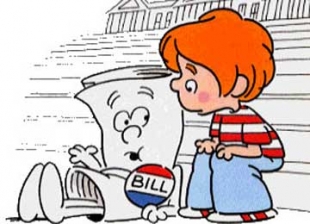
The way legislation works is that a sponsor in the House draws up a bill, and a sponsor in the Senate draws up a similar bill. The bills are then assigned to committee.
The committee can then just kill it right there on the spot. If the sponsor was a Democrat, say, and the Republicans hold the majority, that means the chair of the committee will be a Republican and he can kill it.
Or the committee can hold hearings and have debates and then vote on the bill. If the bill passes the committee, it then goes to the floor for a full House/Senate vote. Unless the Speaker/Majority Leader is of the opposition party, then he can just kill it right then and there and never pass it to the floor for a vote.
If the House passes a bill, but the Senate does not, the bill dies. And vice versa.
If the bill passes in both houses, then it has to go through conference. If there are differences between the bill passed in the House and the bill passed in the Senate, a conference committee made up of members of both houses is formed to hammer out the differences.
Then the final version is sent back to both houses for an up or down vote.
Should the bill make it all the way through this sausage making process, it then goes to the President. The President either signs it or vetoes it. If it is vetoed, it can go back to the Congress which can then vote to override the President's veto by two-thirds, which is an extreme rarity. If the President signs the bill, it becomes law.
In most cases, a bill is just a framework which directs the creation of a department or agency or regulations. If it becomes law, then it is up to the Executive branch to write the actual regulations which will carry out the law.
Apparently the author of the OP had a horrible childhood....
Rustic
Diamond Member
- Oct 3, 2015
- 58,769
- 5,906
- 1,940
- Banned
- #35
There are no conservatives in the GOP, It’s impossible to be a career politician and a conservative...The GOP pretended to repeal it at least 60 times, knowing it would not pass the Senate or a Presidential veto.That’s why socialized entitlement programs never work for the good of conservatives… And progressives wonder why conservatives want nothing to do with them… LOLThe GOP pretended to repeal it at least 60 times, knowing it would not pass the Senate or a Presidential veto.Healthcare is a privilege not a right...Oh, you mean like passing an Obamacare repeal more than 60 times, knowing it will never survive the Senate or a Presidential veto?Liberal Game Plan.
Everything done in the House will be torpedoed by the Senate.
However, the MSM will play up the House as heroes and the Senate
as being bad for the country.
Same game plan for 60 years
Like that? That "Liberal Game Plan"?
And then, strangely, not coming up with an Obamacare replacement once they have all the power.
Obamacare was made exclusively for progressives... certainly not for conservatives
This is known as a "Liberal Game Plan™".
All caught up now?
This is known as a "Liberal Game Plan™".
All caught up now?
Biff_Poindexter
Diamond Member
bawhahahahahahahahahahahaha...that is the most defeatist pathetic comment I have read from a Trump lover all day....There are no conservatives in the GOP, It’s impossible to be a career politician and a conservative...The GOP pretended to repeal it at least 60 times, knowing it would not pass the Senate or a Presidential veto.That’s why socialized entitlement programs never work for the good of conservatives… And progressives wonder why conservatives want nothing to do with them… LOLThe GOP pretended to repeal it at least 60 times, knowing it would not pass the Senate or a Presidential veto.Healthcare is a privilege not a right...Oh, you mean like passing an Obamacare repeal more than 60 times, knowing it will never survive the Senate or a Presidential veto?
Like that? That "Liberal Game Plan"?
And then, strangely, not coming up with an Obamacare replacement once they have all the power.
Obamacare was made exclusively for progressives... certainly not for conservatives
This is known as a "Liberal Game Plan™".
All caught up now?
This is known as a "Liberal Game Plan™".
All caught up now?
but I expect it will be surpassed by your next comment.
g5000
Diamond Member
- Nov 26, 2011
- 138,917
- 93,396
- 2,605
These pseudocons like Rustic remind me of the Jacobins in so many ways.bawhahahahahahahahahahahaha...that is the most defeatist pathetic comment I have read from a Trump lover all day....There are no conservatives in the GOP, It’s impossible to be a career politician and a conservative...The GOP pretended to repeal it at least 60 times, knowing it would not pass the Senate or a Presidential veto.That’s why socialized entitlement programs never work for the good of conservatives… And progressives wonder why conservatives want nothing to do with them… LOLThe GOP pretended to repeal it at least 60 times, knowing it would not pass the Senate or a Presidential veto.Healthcare is a privilege not a right...
Obamacare was made exclusively for progressives... certainly not for conservatives
This is known as a "Liberal Game Plan™".
All caught up now?
This is known as a "Liberal Game Plan™".
All caught up now?
but I expect it will be surpassed by your next comment.
g5000
Diamond Member
- Nov 26, 2011
- 138,917
- 93,396
- 2,605
No true ScotsmanThere are no conservatives in the GOP, It’s impossible to be a career politician and a conservative...The GOP pretended to repeal it at least 60 times, knowing it would not pass the Senate or a Presidential veto.That’s why socialized entitlement programs never work for the good of conservatives… And progressives wonder why conservatives want nothing to do with them… LOLThe GOP pretended to repeal it at least 60 times, knowing it would not pass the Senate or a Presidential veto.Healthcare is a privilege not a right...Oh, you mean like passing an Obamacare repeal more than 60 times, knowing it will never survive the Senate or a Presidential veto?
Like that? That "Liberal Game Plan"?
And then, strangely, not coming up with an Obamacare replacement once they have all the power.
Obamacare was made exclusively for progressives... certainly not for conservatives
This is known as a "Liberal Game Plan™".
All caught up now?
This is known as a "Liberal Game Plan™".
All caught up now?
Rustic
Diamond Member
- Oct 3, 2015
- 58,769
- 5,906
- 1,940
- Banned
- #39
Lolbawhahahahahahahahahahahaha...that is the most defeatist pathetic comment I have read from a Trump lover all day....There are no conservatives in the GOP, It’s impossible to be a career politician and a conservative...The GOP pretended to repeal it at least 60 times, knowing it would not pass the Senate or a Presidential veto.That’s why socialized entitlement programs never work for the good of conservatives… And progressives wonder why conservatives want nothing to do with them… LOLThe GOP pretended to repeal it at least 60 times, knowing it would not pass the Senate or a Presidential veto.Healthcare is a privilege not a right...
Obamacare was made exclusively for progressives... certainly not for conservatives
This is known as a "Liberal Game Plan™".
All caught up now?
This is known as a "Liberal Game Plan™".
All caught up now?
but I expect it will be surpassed by your next comment.
Actually I did not vote for Trump, I wrote in a candidate Elmer Fudd he gets no respect...
Anyway, Trump is infinitely a better choice than the Hildabeast, It did not matter in my state Trump one overwhelmingly.

Similar threads
- Locked
- Replies
- 6
- Views
- 138


- Replies
- 143
- Views
- 1K

- Replies
- 144
- Views
- 1K

New Topics
-
 Google and Meta lose landmark case regarding use of algorithms to drive content
- Started by ColonelAngus
- Replies: 2
-

-
 Veteran prosecutor (whose husband is a cop) accused of telling Toronto cop he should have given ‘false evidence’ under oath — ‘We protect our own’
- Started by shockedcanadian
- Replies: 0
-

-


