
How does money produce "the desired model results"? And what are "the desired model results"? And who is providing the money and who is receiving the money? Let's flesh out this assertion just a little bit, eh.Correct. It produces the desired model results. The problem is they need it to be sensational and time works against them.
Navigation
Install the app
How to install the app on iOS
Follow along with the video below to see how to install our site as a web app on your home screen.
Note: This feature may not be available in some browsers.
More options
Style variation
You are using an out of date browser. It may not display this or other websites correctly.
You should upgrade or use an alternative browser.
You should upgrade or use an alternative browser.
Global Warming Liars
- Thread starter ChemEngineer
- Start date

Toddsterpatriot
Diamond Member
How does money produce "the desired model results"? And what are "the desired model results"? And who is providing the money and who is receiving the money? Let's flesh out this assertion just a little bit, eh.
Nobel Prize winner Michael Mann doesn't work for free.
Not many people do. So what? The question here was how does money give the IPCC epistemic authority and Ding claimed that it was by producing sensational model results. I wanted some elucidation on this claim. That Dr Mann gets paid does not provide such elucidation.Nobel Prize winner Michael Mann doesn't work for free.
An enormous percentage of the studies done on climate have concluded that global warming is taking place and that human GHG emissions are the primary cause.
The term "scientist's opinions" was from a sentence referencing studies done ON SCIENTIST'S OPINIONS regarding anthropogenic global warming. The definition of "consensus" is "a general accordance in opinion".
To claim that an absence of anyone committing a crime is evidence that a crime has been committed is laughably paranoid nonsense.
Your comment about propping up "sagging left wing economies" is irrelevant and, again, nonsense. The charge that in order to get rich, all the world's climate scientists have been lying to us for the last few decades has been the absolute cornerstone of the denier position. If that rambling, shambolic blather is the best you can come up with supporting such a core contention, then you really need... help.
everything in that post defines pseudo intellectualism, especially [but not limited to] the non sequitur about crime...
...I would have said it was especially 'the sagging economies needing money is irrelevant to wanting money'[paraphrased] but I think just pointing it out will do a better job...
and then of course after the pseudo intellectual beard was shaved off the name calling and demands that I seek help appear as if on cue...
the only ones being fooled by any of this climate scam are those who want to be fooled by it.
My comment about crime was not a non-sequitur. It was in response to your comments in Post #385 stating: "where as the truth is if you can't put a name or face on it then it surely is a scam"
My response to your comments about scientific opinions were clear and justified. Your comment about sagging left wing economies WAS irrelevant. You have not justified or supported any of your nonsense. What sort of help you seek is your choice to make. I just note that your comments clearly indicate a lacking that really ought to be addressed.

There's been an entire niche built upon the catastrophe narrative. No prediction of catastrophe, no need for the niche to exist.How does money produce "the desired model results"? And what are "the desired model results"? And who is providing the money and who is receiving the money? Let's flesh out this assertion just a little bit, eh.
Toddsterpatriot
Diamond Member
Not many people do. So what? The question here was how does money give the IPCC epistemic authority and Ding claimed that it was by producing sensational model results. I wanted some elucidation on this claim. That Dr Mann gets paid does not provide such elucidation.
Michael Mann has shown that AGW fiction can be profitable.
Even considering the legal fees he still owes.

Frankeneinstein
Gold Member
Which is an obvious truth"where as the truth is if you can't put a name or face on it then it surely is a scam"
Frankeneinstein
Gold Member
Making the claim of irrelevance only means we shouldn't concern ourselves with where the money is going [more proof its a scam] not that it isn't going there, so we just need to cough it up.Your comment about sagging left wing economies WAS irrelevant.

ChemEngineer
Diamond Member
- Feb 5, 2019
- 7,772
- 8,028
- 2,140
- Thread starter
- #409
The charge that in order to get rich, all the world's climate scientists have been lying to us for the last few decades has been the absolute cornerstone of the denier position. - CRICK
MASSIVE LIE
___________________________________________
“The warmest temperatures in the U.S. have not risen in the past fifty years,” Koonin writes, according to the U.S. government’s Climate Science Special Report.
“The rate of global sea-level rise 70 years ago was as large as what we observe today,” according to the U.N. Intergovernmental Panel on Climate Change (IPCC).
“The net economic impact of human-induced climate change will be minimal through at least the end of this century.” - IPCC
The country with the largest human population has recently experienced “the coldest records since the monitoring service first operated,” the “lowest [air temperature] in 44 years,” and “the coldest temperature in the past 59 years” during prolonged cold waves that directly led to excess mortality (Ho et al., 2020).
HOW MANY MORE OF THESE WILL IT TAKE FOR YOU TO STOP LYING?
MASSIVE LIE
___________________________________________
“The fact is that we can’t account for the lack of warming at the moment and it is a travesty that we can’t.” – Kevin Trenbarth, IPCC lead author on physical science, regarding the pause in measured warming from 1999 t0 2009
“One has to free oneself from the illusion that international climate policy is environmental policy. We redistribute de facto the world’s wealth by climate policy.” – Ottmar Edenhofer, who co-chaired the U.N.’s Intergovernmental Panel on Climate Change working group on Mitigation of Climate Change from 2008 to 2015
“The warmest temperatures in the U.S. have not risen in the past fifty years,” Koonin writes, according to the U.S. government’s Climate Science Special Report.
“The rate of global sea-level rise 70 years ago was as large as what we observe today,” according to the U.N. Intergovernmental Panel on Climate Change (IPCC).
“The net economic impact of human-induced climate change will be minimal through at least the end of this century.” - IPCC
Whistleblowers at the U.S. government’s official keeper of the global warming stats, the National Oceanic and Atmospheric Administration (NOAA), claim their agency doctored temperature data to hide the fact that global temperatures plateaued almost 20 years ago.
Lawrence Solomon: Finally it's safe for the whistleblowers of corrupted climate science to speak outThe country with the largest human population has recently experienced “the coldest records since the monitoring service first operated,” the “lowest [air temperature] in 44 years,” and “the coldest temperature in the past 59 years” during prolonged cold waves that directly led to excess mortality (Ho et al., 2020).
“The inconvenient truth is that it’s not about carbon – it’s about capitalism. … we can seize this existential crisis to transform our failed economic system and build something radically better [socialism, of course].” – Naomi Klein, This Changes Everything: Capitalism vs. the Climate
The long-term prediction of future climate states is not possible.” – United Nations International Panel on Climate Control, 2007
HOW MANY MORE OF THESE WILL IT TAKE FOR YOU TO STOP LYING?
The charge that in order to get rich, all the world's climate scientists have been lying to us for the last few decades has been the absolute cornerstone of the denier position. - CRICK
MASSIVE LIE
___________________________________________
“The fact is that we can’t account for the lack of warming at the moment and it is a travesty that we can’t.” – Kevin Trenbarth, IPCC lead author on physical science, regarding the pause in measured warming from 1999 t0 2009
You apparently missed a decade or so. PS: His name is spelled Trenberth
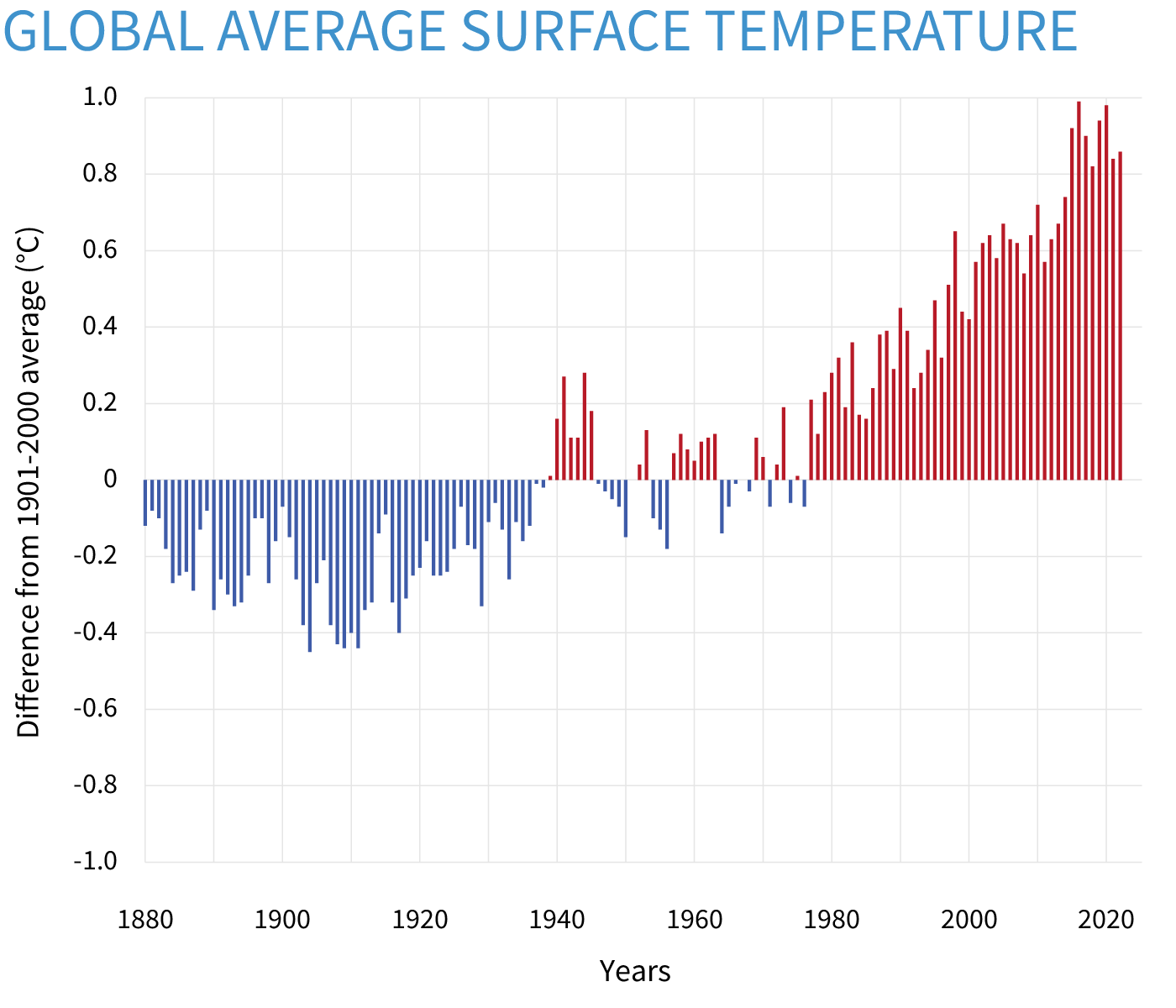
Climate change: global temperature
Earth's surface temperature has risen about 2 degrees Fahrenheit since the start of the NOAA record in 1850. It may seem like a small change, but it's a tremendous increase in stored heat.
“One has to free oneself from the illusion that international climate policy is environmental policy. We redistribute de facto the world’s wealth by climate policy.” – Ottmar Edenhofer, who co-chaired the U.N.’s Intergovernmental Panel on Climate Change working group on Mitigation of Climate Change from 2008 to 2015
This comment is the opinion of an individual about UN policy which rather ignores the fact that the IPCC has no policy-setting authority whatsoever. It has NOTHING to do with the validity of AGW.
“The warmest temperatures in the U.S. have not risen in the past fifty years,” Koonin writes, according to the U.S. government’s Climate Science Special Report.
Did You Know? | National Centers for Environmental Information (NCEI)
A suite of notes that attempt to explain or clarify complex climate phenomena, Climate Monitoring products and methodologies, and climate system insights
“The rate of global sea-level rise 70 years ago was as large as what we observe today,” according to the U.N. Intergovernmental Panel on Climate Change (IPCC).

Climate Change: Global Sea Level
Global average sea level has risen 8-9 inches since 1880, and the rate is accelerating thanks to glacier and ice sheet melt.
“The net economic impact of human-induced climate change will be minimal through at least the end of this century.” - IPCC
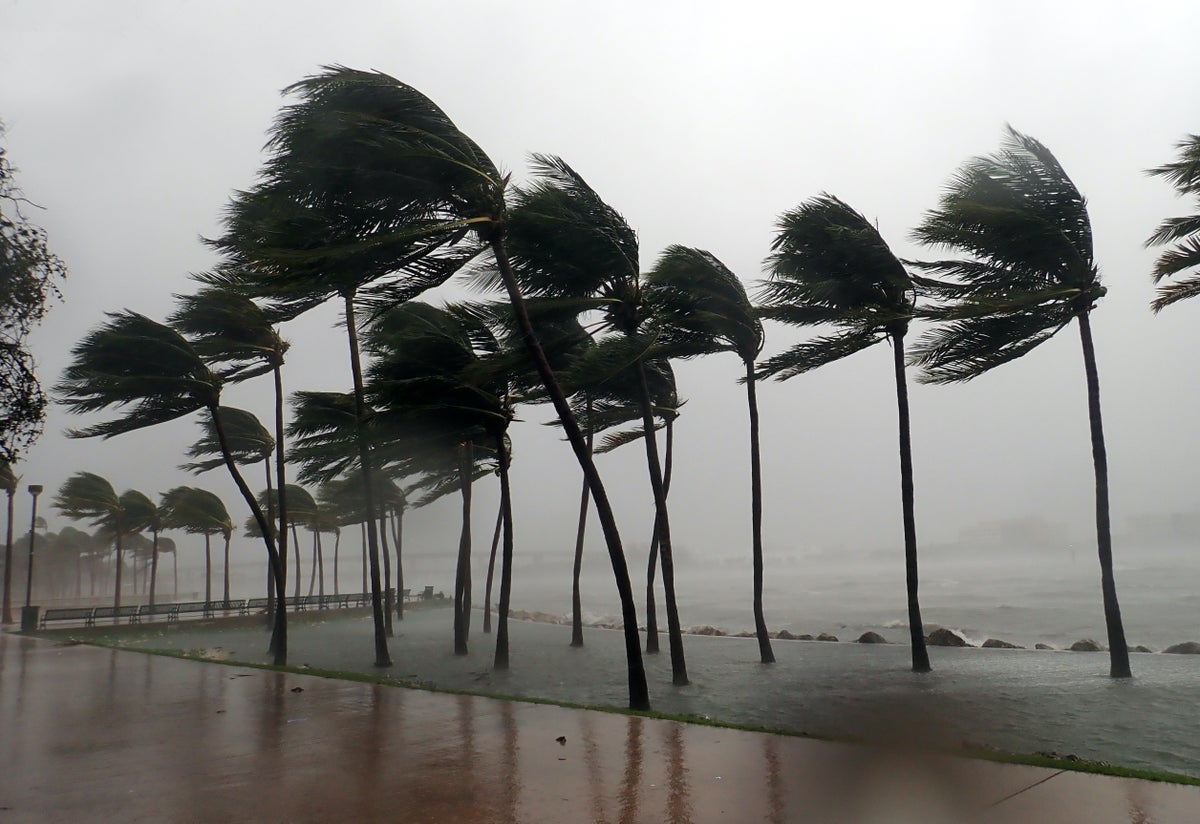
A New Book Manages to Get Climate Science Badly Wrong
In Unsettled, Steven Koonin deploys that highly misleading label to falsely suggest that we don’t understand the risks well enough to take action
So, did you buy Koonin's book or get these from the reviews? Do you happen to have Koonin's definition of the word "minimal"? The IPCC devotes over a thousand pages to what Koonin gives one sentence. From AR6 Summary for Policymakers:
SPM.B.1.1 Widespread, pervasive impacts to ecosystems, people, settlements, and infrastructure have resulted from observed increases in the frequency and intensity of climate and weather extremes, including hot extremes on land and in the ocean, heavy precipitation events, drought and fire weather (high confidence). Increasingly since AR5, these observed impacts have been attributed 28 to human-induced climate change particularly through increased frequency and severity of extreme events. These include increased heatrelated human mortality (medium confidence), warm-water coral bleaching and mortality (high confidence), and increased drought related tree mortality (high confidence). Observed increases in areas burned by wildfires have been attributed to human-induced climate change in some regions (medium to high confidence). Adverse impacts from tropical cyclones, with related losses and damages19, have increased due to sea level rise and the 29 increase in heavy precipitation (medium confidence). Impacts in natural and human systems from slow-onset processes such as ocean acidification, sea level rise or regional decreases in precipitation have also been attributed to human induced climate change (high confidence).
SPM.B.1.2 Climate change has caused substantial damages, and increasingly irreversible losses, in terrestrial, freshwater and coastal and open ocean marine ecosystems (high confidence). The extent and magnitude of climate change impacts are larger than estimated in previous assessments (high confidence). Widespread deterioration of ecosystem structure and function, resilience and natural adaptive capacity, as well as shifts in seasonal timing have occurred due to climate change (high confidence), with adverse socioeconomic consequences (high confidence). Approximately half of the species assessed globally have shifted polewards or, on land, also to higher elevations (very high confidence). Hundreds of local losses of species have been driven by increases in the magnitude of heat extremes (high confidence), as well as mass mortality events on land and in the ocean (very high confidence) and loss of kelp forests (high confidence). Some losses are already irreversible, such as the first species extinctions driven by climate change (medium confidence). Other impacts are approaching irreversibility such as the impacts of hydrological changes resulting from the retreat of glaciers, or the changes in some mountain (medium confidence) and Arctic ecosystems driven by permafrost thaw (high confidence).
Whistleblowers at the U.S. government’s official keeper of the global warming stats, the National Oceanic and Atmospheric Administration (NOAA), claim their agency doctored temperature data to hide the fact that global temperatures plateaued almost 20 years ago.
Lawrence Solomon: Finally it's safe for the whistleblowers of corrupted climate science to speak out
The country with the largest human population has recently experienced “the coldest records since the monitoring service first operated,” the “lowest [air temperature] in 44 years,” and “the coldest temperature in the past 59 years” during prolonged cold waves that directly led to excess mortality (Ho et al., 2020).
First, explain the following without resorting to conspiratorial fantasies:
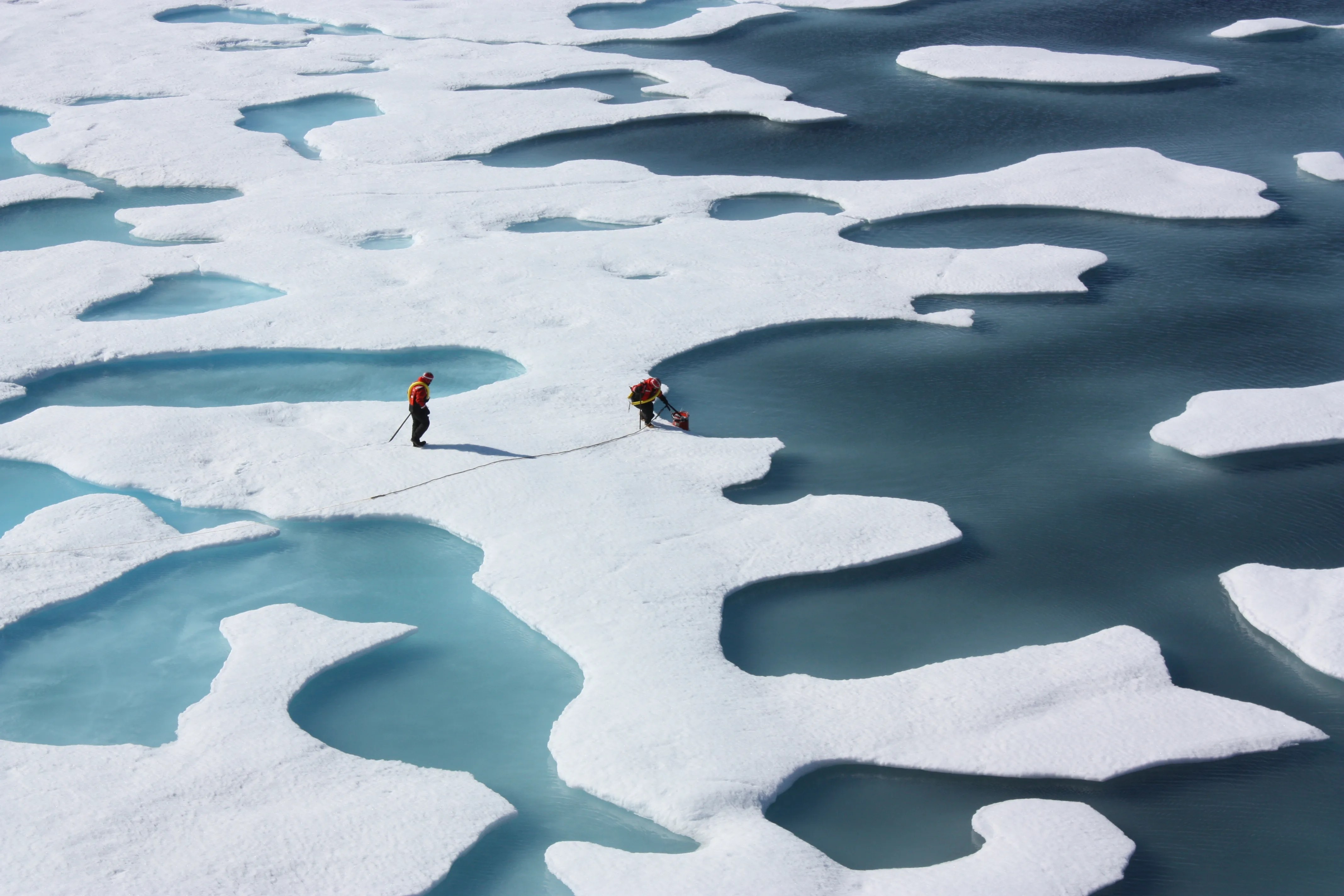
Climate Change - NASA Science
NASA is a global leader in studying Earth’s changing climate.
 climate.nasa.gov
Then, there is this, illustrating the actual magnitude of the change to which your whistleblower is alerting us:
Then, explain this from the same arsTechnica article which indicates that your whistleblower didn't know what he was talking about and had been recently demoted by Tom Karl, the senior scientist his "revelations" attacked:
The whistleblower
Bates recently retired from NOAA after a career working primarily on satellite measurements used for weather forecasting. Recently, he was also in charge of data-archiving efforts for satellite and surface temperature records. Bates alleges that NOAA's Tom Karl and the rest of the team behind the paper failed to adequately follow NOAA’s internal processes for archiving their data and stress-testing the updated databases they used.Bates also questions the way in which some sea surface temperature measurements were adjusted to sync them up with the rest of the measurements, falsely claiming that the technique alters the warming trend.
In a blog post, Maynooth University research Peter Thorne—who worked on both the land and sea databases underlying the Karl paper but not the Karl paper itself—disputed many of Bates’ claims. First off, Thorne notes that Bates was not personally involved in the research at any stage. And while Bates claims that Karl made a series of choices to exaggerate the apparent warming trend, Thorne points out that this would be difficult for Karl to do since he didn’t contribute to the underlying databases. Karl’s paper simply ran those updated databases through the same algorithm NOAA was already using.
Ars talked with Thomas Peterson, a co-author on the Karl paper who has since retired. Peterson provided some useful context for understanding Bates’ allegations. The satellites that Bates worked with were expensive hardware that couldn't be fixed if anything went wrong after they were launched. The engineering of the software running those satellites sensibly involved testing and re-testing and re-testing again to ensure no surprises would pop up once it was too late.
Bates expected the same approach from his surface temperature counterparts, but Peterson explained that their work with weather station data was not nearly so high-stakes—problems could easily be fixed on the fly. The engineering-style process NOAA was using for endlessly double-checking the software for all dataset updates could drag on for quite a long time—years, in fact—and Bates opposed any attempt to speed this up. Peterson and other scientists were naturally anxious to incorporate changes they knew were scientifically important.
Bates alleges that the Karl paper was “rushed” for political reasons, but Peterson said the reality was that NOAA was well behind the times, waiting to include known improvements like additional recording stations in the rapidly warming Arctic. “I had been arguing for years that we were putting out data that did not reflect our understanding of how the temperature was actually warming—[for] literally years we slowed down to try to account for some of these processing things that we had to do,” Peterson said. (At the time of the Karl paper, NOAA’s dataset showed less warming in recent years than other datasets, like NASA’s.)
Bates also claims that there were bugs in the land station database software that were ignored in the Karl paper. But according to Peterson, the slight day-to-day variability seen in the software’s output was simply the result of the fact that new data was added every day. Stations that straddled statistical cut-offs might fall on one side of the dividing line today, and on the other side tomorrow. There was nothing wrong with the software, they realized. It was just silly to re-run it every single day.
There may also be something beyond simple “engineers vs. scientists” tension behind Bates’ decision to go public with his allegations. Two former NOAA staffers confirmed to Ars that Tom Karl essentially demoted John Bates in 2012, when Karl was Director of NOAA’s National Centers for Environmental Information. Bates had held the title of Supervisory Meteorologist and Chief of the Remote Sensing Applications Division, but Karl removed him from that position partly due to a failure to maintain professionalism with colleagues, assigning him to a position in which he would no longer supervise other staff. It was apparently no secret that the demotion did not sit well with Bates.
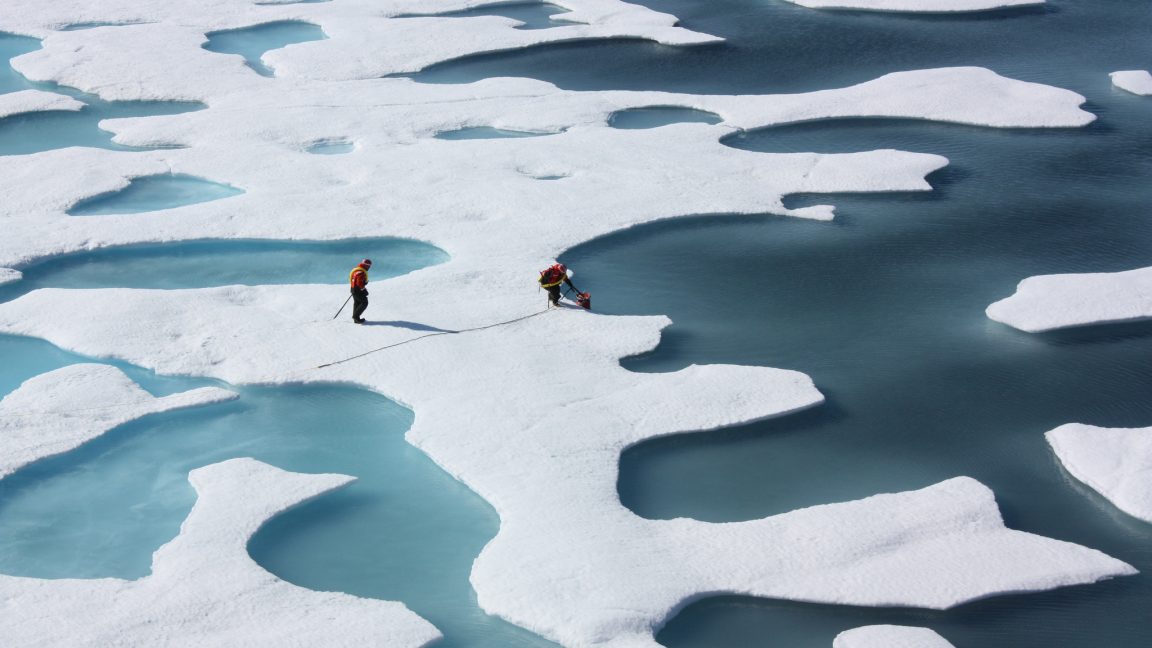
Article names “whistleblower” who claims that NOAA manipulated data [Updated]
Allegations in a Daily Mail article seem more office politics than science.
 arstechnica.com
“The inconvenient truth is that it’s not about carbon – it’s about capitalism. … we can seize this existential crisis to transform our failed economic system and build something radically better [socialism, of course].” – Naomi Klein, This Changes Everything: Capitalism vs. the Climate
An irrelevant opinion of an individual. Ms Klein is not disputing AGW in the slightest. Is English your native tongue?
The long-term prediction of future climate states is not possible.” – United Nations International Panel on Climate Control, 2007
IPCC stands for Intergovernmental Panel on Climate Change. We have no idea here who made this statement or where it appeared since you have not provided links for ANYTHING you've brought up here.
HOW MANY MORE OF THESE WILL IT TAKE FOR YOU TO STOP LYING?
I am not lying. If you contend that these comments refute AGW, then it is you who are lying, though I am willing to consider the possibility that you simply speak from pure ignorance.

ReinyDays
Platinum Member
You apparently missed a decade or so. PS: His name is spelled Trenberth
View attachment 687225
Climate change: global temperature
Earth's surface temperature has risen about 2 degrees Fahrenheit since the start of the NOAA record in 1850. It may seem like a small change, but it's a tremendous increase in stored heat.www.climate.gov
This comment is the opinion of an individual about UN policy which rather ignores the fact that the IPCC has no policy-setting authority whatsoever. It has NOTHING to do with the validity of AGW.
View attachment 687229
Did You Know? | National Centers for Environmental Information (NCEI)
A suite of notes that attempt to explain or clarify complex climate phenomena, Climate Monitoring products and methodologies, and climate system insightswww.ncei.noaa.gov
View attachment 687231
The trouble is that while seas have risen eight to nine inches since 1880, more than 30 percent of that increase has occurred during the last two decades: 30 percent of the historical record over the past 14 percent of the time series. This is why rising sea levels are expected with very high confidence to exaggerate coastal exposure and economic consequences [Section 19.6.2.1].Climate Change: Global Sea Level
Global average sea level has risen 8-9 inches since 1880, and the rate is accelerating thanks to glacier and ice sheet melt.
A New Book Manages to Get Climate Science Badly Wrong
In Unsettled, Steven Koonin deploys that highly misleading label to falsely suggest that we don’t understand the risks well enough to take actionwww.scientificamerican.com
So, did you buy Koonin's book or get these from the reviews? Do you happen to have Koonin's definition of the word "minimal"? The IPCC devotes over a thousand pages to what Koonin gives one sentence. From AR6 Summary for Policymakers:
SPM.B.1.1 Widespread, pervasive impacts to ecosystems, people, settlements, and infrastructure have resulted from observed increases in the frequency and intensity of climate and weather extremes, including hot extremes on land and in the ocean, heavy precipitation events, drought and fire weather (high confidence). Increasingly since AR5, these observed impacts have been attributed 28 to human-induced climate change particularly through increased frequency and severity of extreme events. These include increased heatrelated human mortality (medium confidence), warm-water coral bleaching and mortality (high confidence), and increased drought related tree mortality (high confidence). Observed increases in areas burned by wildfires have been attributed to human-induced climate change in some regions (medium to high confidence). Adverse impacts from tropical cyclones, with related losses and damages19, have increased due to sea level rise and the 29 increase in heavy precipitation (medium confidence). Impacts in natural and human systems from slow-onset processes such as ocean acidification, sea level rise or regional decreases in precipitation have also been attributed to human induced climate change (high confidence).
SPM.B.1.2 Climate change has caused substantial damages, and increasingly irreversible losses, in terrestrial, freshwater and coastal and open ocean marine ecosystems (high confidence). The extent and magnitude of climate change impacts are larger than estimated in previous assessments (high confidence). Widespread deterioration of ecosystem structure and function, resilience and natural adaptive capacity, as well as shifts in seasonal timing have occurred due to climate change (high confidence), with adverse socioeconomic consequences (high confidence). Approximately half of the species assessed globally have shifted polewards or, on land, also to higher elevations (very high confidence). Hundreds of local losses of species have been driven by increases in the magnitude of heat extremes (high confidence), as well as mass mortality events on land and in the ocean (very high confidence) and loss of kelp forests (high confidence). Some losses are already irreversible, such as the first species extinctions driven by climate change (medium confidence). Other impacts are approaching irreversibility such as the impacts of hydrological changes resulting from the retreat of glaciers, or the changes in some mountain (medium confidence) and Arctic ecosystems driven by permafrost thaw (high confidence).
First, explain the following without resorting to conspiratorial fantasies:
View attachment 687246
Climate Change - NASA Science
NASA is a global leader in studying Earth’s changing climate.
Then, there is this, illustrating the actual magnitude of the change to which your whistleblower is alerting us:
View attachment 687254
Then, explain this from the same arsTechnica article which indicates that your whistleblower didn't know what he was talking about and had been recently demoted by Tom Karl, the senior scientist his "revelations" attacked:
The whistleblower
Bates recently retired from NOAA after a career working primarily on satellite measurements used for weather forecasting. Recently, he was also in charge of data-archiving efforts for satellite and surface temperature records. Bates alleges that NOAA's Tom Karl and the rest of the team behind the paper failed to adequately follow NOAA’s internal processes for archiving their data and stress-testing the updated databases they used.
Bates also questions the way in which some sea surface temperature measurements were adjusted to sync them up with the rest of the measurements, falsely claiming that the technique alters the warming trend.
In a blog post, Maynooth University research Peter Thorne—who worked on both the land and sea databases underlying the Karl paper but not the Karl paper itself—disputed many of Bates’ claims. First off, Thorne notes that Bates was not personally involved in the research at any stage. And while Bates claims that Karl made a series of choices to exaggerate the apparent warming trend, Thorne points out that this would be difficult for Karl to do since he didn’t contribute to the underlying databases. Karl’s paper simply ran those updated databases through the same algorithm NOAA was already using.
Ars talked with Thomas Peterson, a co-author on the Karl paper who has since retired. Peterson provided some useful context for understanding Bates’ allegations. The satellites that Bates worked with were expensive hardware that couldn't be fixed if anything went wrong after they were launched. The engineering of the software running those satellites sensibly involved testing and re-testing and re-testing again to ensure no surprises would pop up once it was too late.
Bates expected the same approach from his surface temperature counterparts, but Peterson explained that their work with weather station data was not nearly so high-stakes—problems could easily be fixed on the fly. The engineering-style process NOAA was using for endlessly double-checking the software for all dataset updates could drag on for quite a long time—years, in fact—and Bates opposed any attempt to speed this up. Peterson and other scientists were naturally anxious to incorporate changes they knew were scientifically important.
Bates alleges that the Karl paper was “rushed” for political reasons, but Peterson said the reality was that NOAA was well behind the times, waiting to include known improvements like additional recording stations in the rapidly warming Arctic. “I had been arguing for years that we were putting out data that did not reflect our understanding of how the temperature was actually warming—[for] literally years we slowed down to try to account for some of these processing things that we had to do,” Peterson said. (At the time of the Karl paper, NOAA’s dataset showed less warming in recent years than other datasets, like NASA’s.)
Bates also claims that there were bugs in the land station database software that were ignored in the Karl paper. But according to Peterson, the slight day-to-day variability seen in the software’s output was simply the result of the fact that new data was added every day. Stations that straddled statistical cut-offs might fall on one side of the dividing line today, and on the other side tomorrow. There was nothing wrong with the software, they realized. It was just silly to re-run it every single day.
There may also be something beyond simple “engineers vs. scientists” tension behind Bates’ decision to go public with his allegations. Two former NOAA staffers confirmed to Ars that Tom Karl essentially demoted John Bates in 2012, when Karl was Director of NOAA’s National Centers for Environmental Information. Bates had held the title of Supervisory Meteorologist and Chief of the Remote Sensing Applications Division, but Karl removed him from that position partly due to a failure to maintain professionalism with colleagues, assigning him to a position in which he would no longer supervise other staff. It was apparently no secret that the demotion did not sit well with Bates.
Article names “whistleblower” who claims that NOAA manipulated data [Updated]
Allegations in a Daily Mail article seem more office politics than science.
An irrelevant opinion of an individual. Ms Klein is not disputing AGW in the slightest. Is English your native tongue?
IPCC stands for Intergovernmental Panel on Climate Change. We have no idea here who made this statement or where it appeared since you have not provided links for ANYTHING you've brought up here.
I am not lying. If you contend that these comments refute AGW, then it is you who are lying, though I am willing to consider the possibility that you simply speak from pure ignorance.
The shear length of this post speaks to your lying tongue ...
What is the numerical relationship between carbon dioxide concentrations and temperature? ...

mamooth
Diamond Member
So tell us you're a brainwashed cultist without saying it out loud. Do that by getting triggered hard by any facts and data which debunk TheParty's wildly dishonest propaganda. Like you just did there.The shear length of this post speaks to your lying tongue ...
EMERGENCY! DEFLECT! DEFLECT! DEFLECT!What is the numerical relationship between carbon dioxide concentrations and temperature? ...
Just what did that have to do with the topic of your propaganda getting debunked? I mean, we can give you an answer to your question. Anyone minimally informed on the topic knows it. Why are you so uninformed, and why did you choose that particular deflection?
How can the feedback from the GHG effect from CO2 be 2 to 3 times greater than the GHG effect of CO2 itself?So tell us you're a brainwashed cultist without saying it out loud. Do that by getting triggered hard by any facts and data which debunk TheParty's wildly dishonest propaganda. Like you just did there.
EMERGENCY! DEFLECT! DEFLECT! DEFLECT!
Just what did that have to do with the topic of your propaganda getting debunked? I mean, we can give you an answer to your question. Anyone minimally informed on the topic knows it. Why are you so uninformed, and why did you choose that particular deflection?
Toddsterpatriot
Diamond Member
How can the feedback from the GHG effect from CO2 be 2 to 3 times greater than the GHG effect of CO2 itself?
It's magic.
mamooth
Diamond Member
Water vapor.How can the feedback from the GHG effect from CO2 be 2 to 3 times greater than the GHG effect of CO2 itself?
This is basic stuff. Why are all deniers so bad at it?
http://GlobalWarmingLiars.blogspot.com
THE LIE: An overwhelming consensus of scientists support global warming.
This lie is based on a 2009 article by Maggie Kendall Zimmerman, then a student at the University of Illinois.
As stated in the Wall Street Journal, "The '97 percent' figure in the Zimmerman/Doran survey represents the views of only 79 respondents who listed climate science as an area of expertise and said they published more than half of their recent peer-reviewed papers on climate change. Seventy-nine scientists—of the 3,146 who responded to the survey—does not a consensus make."
The WSJ went on to elaborate further: "The survey's questions don't reveal much of interest. Most scientists who are skeptical of catastrophic global warming nevertheless would answer "yes" to both questions. The survey was silent on whether the human impact is large enough to constitute a problem. Nor did it include solar scientists, space scientists, cosmologists, physicists, meteorologists or astronomers, who are the scientists most likely to be aware of natural causes of climate change."
So much for that lie one hears so often and so loudly.
THE LIE: Humans are causing catastrophic changes in earth's climate by burning fossil fuel and increasing carbon dioxide.
This lie is based on the extremely disingenuous and anti-scientific Keeling Curve, below.
This terribly misleading graph is intended to scare you into immediate action.
Just adding water vapor, which constitutes 1.5% of the atmosphere, or 15,000 parts per million, that graph above becomes this below, far more realistic, more honest, less misleading:
Other greenhouse gases, such as methane and nitrous oxide, are omitted from graphs and discussion.
If in fact humans were the primary, or even major contributor to carbon dioxide production, then the highest concentrations of CO2 would be industrial and population centers around the globe, instead of the rain forests of Africa and South America:
THE LIE: Global catastrophe, "tipping point"! We must do something now!
This incredible lie is preached by Al Gore, the United Nations, bureaucracies beholden to research billions, and by Barack Obama. Obama recently flew on Air Force One from Washington, D.C. to California, to play a round of golf with his friends, the same way he uses Air Force One to fly to Democrat fund-raisers all over the U.S.
Preaching doom and gloom to you little people is what they do, but not what they practice themselves. At the most recent Global Warming Scare-Fest, in Davos, Switzerland, the Scare-Mongers flew 1,700 private jets, rather than videoconference. Don't do as they do, do as they say.
Net global emission of CO2 looks nothing like human production of CO2. Rather, CO2 is the product of temperature and soil moisture.
THE LIE: Big oil billions are driving "deniers"
Budget requests from a few of the U.S. government agencies for global warming "research" money, just in 2011:
NOAA $437 million
NSF $480 million
NASA $438 million
DOE $627 million
DOI $171 million
EPA $169 million
USDA $159 million
ON OCTOBER 6, 2010, UC SANTA BARBARA PHYSICS PROFESSOR EMERITUS, HAROLD LEWIS, RESIGNED FROM THE AMERICAN PHYSICAL SOCIETY IN PROTEST OF THE GLOBAL WARMING FRAUD. HIS LETTER READS IN PART:“FOR REASONS THAT WILL SOON BECOME CLEAR MY FORMER PRIDE AT BEING AN APS FELLOW ALL THESE YEARS HAS BEEN TURNED INTO SHAME, AND I AM FORCED, WITH NO PLEASURE AT ALL, TO OFFER YOU MY RESIGNATION FROM THE SOCIETY. “IT IS OF COURSE, THE GLOBAL WARMING SCAM, WITH THE (LITERALLY) TRILLIONS OF DOLLARS DRIVING IT, THAT HAS CORRUPTED SO MANY SCIENTISTS, AND HAS CARRIED APS BEFORE IT LIKE A ROGUE WAVE. IT IS THE GREATEST AND MOST SUCCESSFUL PSEUDOSCIENTIFIC FRAUD I HAVE SEEN IN MY LONG LIFE AS A PHYSICIST. ANYONE WHO HAS THE FAINTEST DOUBT THAT THIS IS SO SHOULD FORCE HIMSELF TO READ THE CLIMATEGATE DOCUMENTS, WHICH LAY IT BARE. (MONTFORD’S BOOK ORGANIZES THE FACTS VERY WELL.) I DON’T BELIEVE THAT ANY REAL PHYSICIST, NAY SCIENTIST, CAN READ THAT STUFF WITHOUT REVULSION. I WOULD ALMOST MAKE THAT REVULSION A DEFINITION OF THE WORD SCIENTIST. “SO WHAT HAS THE APS, AS AN ORGANIZATION, DONE IN THE FACE OF THIS CHALLENGE? IT HAS ACCEPTED THE CORRUPTION AS THE NORM, AND GONE ALONG WITH IT." - END OF QUOTE BY PROFESSOR LEWIS
NOBEL LAUREATE IN PHYSICS, IVER GIAIVER LIKEWISE RESIGNED IN DISGUST FROM THE AMERICAN PHYSICAL SOCIETY ON SEPTEMBER 13, 2011 OVER THIS ONGOING SCANDAL PARADING AS "SCIENCE". IT IS ANYTHING BUT.
THE LIE: Why would scientists lie! For money, and for cowardice. They don't want to be blackballed by other cowards.
Are you aware of recycling refrigerant gases and the ozone?
Anthropogenic global warming has not been a concern for over 100 years and, of course, is not a scam. The people most often "buying in" are those with even a basic foundation in physical science and that you should characterize the world's PhDs as "low info types" simply identifies the depth of your own personal DK-ism. AGW denialism is the home of the ignorant. When you choose to use a cartoon to make your point, rather than attempting to refute the science assessment of, say, AR5 or 6, it is obvious that you lack both the ability and the resources to mount an effective argument supporting your claims.
PS: Ayn Rand's character John Galt has the intellectual standing of the Cat in the Hat.
Lol. True. Nobody reads Ayn Rand after high school.
Toddsterpatriot
Diamond Member
Water vapor.
This is basic stuff. Why are all deniers so bad at it?
Higher CO2 causes more water vapor which makes it warmer and causes more water vapor?
We're doomed!!!
Toddsterpatriot
Diamond Member
Lol. True. Nobody reads Ayn Rand after high school.
Or Marx, after they can't get a real job after college.
Or do they read more Marx?
Or Marx, after they can't get a real job after college.
Or do they read more Marx?
Nobody reads Marx.
Similar threads

- Replies
- 226
- Views
- 2K


- Replies
- 126
- Views
- 1K

- Replies
- 2
- Views
- 148


New Topics
-
 They quit the West for Moscow empire's "traditional values", but it wasn't what they expected
- Started by Litwin
- Replies: 0
-
 Zohran Mamdani will not enforce the immigration law
- Started by TroglocratsRdumb
- Replies: 25
-

-
 trump's state fair was attended by tens if not dozens of people
- Started by Crepitus
- Replies: 2
-
 'Citizen Vigilante' movie is online for free until tomorrow. (6.27.2026)
- Started by Invisibleflash
- Replies: 1


