Global Heat Wave Underway

And I am sure that when idiots like you are very negatively affected by extreme weather, you will be the first to say "why didn't those scientists warn us?". That is typical of MAGAts and their idiot leader, always blame someone else for your idiocy.

No extreme weather before fossil fuels?

Silly twaat.
 
Typical idiotic reply. We and the rest of the world are going to have to spend trillions for the electricity we will need in the near future. And renewables are the least costly and quickest to install.

Germany and the UK have the highest electric rates in Europe, because of their less costly renewables.

DURR
 
Were you so stupid that you really believed you wouldn't see this?


For $300 I'll take

what are undersea Arctic volcanoes...


Same things that caused the "dramatic" Arctic Sea Ice losses (just over Gakkel Ridge) in 2005 and 2007

Same things that caused one measurement of 87F in Arctic Ocean (likely right over one)
 
Polar ice sheets are a good indication of global warming and cooling. Someday I may become more familiar with the Milankovitch cycles, but it won't be today.


Milankovich is BS McBullshit already refuted on both poles...


  • Thanks
Reactions: EMH
Mar 25, 2026


The agenda behind CO2 Fraud is


1. evil if you are religious
2. malevolent if you aren't


These are truly sick people who hate truth, freedom, democracy, and America. They murder, or attempt to murder, those who notice too much truth...
 
I am totally to blame for supporting the cheap, reliable fossil fuel energy we need for our high tech economy.
You should move to India and cook your food with dung. It's renewable and carbon neutral!

I'm also to blame for supporting reliable, carbon-free nuclear, but greentwats hate that more than they hate CO2.

Phucking morons. You should live the life you support for others. Stop posting on USMB, you're releasing CO2.

Planet killer.

DURR
Either you are a liar, or an idiot. Renewables are the least costly form of generation to build, maintain, and run. Fossil fuel plants cost more per kWh to build, maintain, and run, and nuclear cost far, far more. So you choose the most expensive option because a lying child rapist tells you to. Very intelligent of you.
 
Either you are a liar, or an idiot. Renewables are the least costly form of generation to build, maintain, and run. Fossil fuel plants cost more per kWh to build, maintain, and run, and nuclear cost far, far more. So you choose the most expensive option because a lying child rapist tells you to. Very intelligent of you.


Renewables are the least costly form of generation to build, maintain, and run.

They really aren't.
 
Renewables are the least costly form of generation to build, maintain, and run.

They really aren't.
Show me. Because I have repeatedly shown that is a lie;

Lazard's 2025 LCOE+ report highlights that, despite headwinds and macroeconomic challenges, renewables remain the most cost-competitive form of new-build generation on an unsubsidized basis (i.e., without tax subsidies). As such, renewable energy will continue to play a key role in the buildout of new power generation in the U.S. This is particularly true in the current high power demand environment, where renewables stand out as both the lowest-cost and quickest-to-deploy generation resource. The report also emphasizes the need for diverse generation fleets to meet rising power demands, as well as the vital role system-wide planning and innovation will play in shaping a reliable and sustainable energy future.


Access the Lazard LCOE+ 2025 Report
 
Show me. Because I have repeatedly shown that is a lie;

Lazard's 2025 LCOE+ report highlights that, despite headwinds and macroeconomic challenges, renewables remain the most cost-competitive form of new-build generation on an unsubsidized basis (i.e., without tax subsidies). As such, renewable energy will continue to play a key role in the buildout of new power generation in the U.S. This is particularly true in the current high power demand environment, where renewables stand out as both the lowest-cost and quickest-to-deploy generation resource. The report also emphasizes the need for diverse generation fleets to meet rising power demands, as well as the vital role system-wide planning and innovation will play in shaping a reliable and sustainable energy future.


Access the Lazard LCOE+ 2025 Report


Rethinking the “Levelized Cost of Energy”: A critical review and evaluation of the concept​


3.2. LCOE and comparability

A key issues is that the intermittency, non-dispatchable feature, and variable output of VREs makes their integration currently unsatisfactory [31]. For VREs where the output varies by the minute, this averaging of the costs as suggested by the traditional usage of the LCOE formula, becomes fundamentally wrong because it ignores the opportunity costs that can be significant [32].

Note that in economics, opportunity cost has two related interpretations [33]: It can be “the alternative that must be foregone when something is produced” or “the amount that an input could earn in its best alternative use”. It is therefore different from accounting costs that are explicit whereas opportunity costs include explicit as well as implicit costs that are foregone. Hence, value is a key aspect of opportunity cost [34], but value is more than the narrowly defined value discussed in Section 4.3.

Also note that the proper measurement of integration costs is a hotly debated subject in academic as well as policymaking circles, and a generally accepted definition of “integration costs” does not exist and calculations are subject to large uncertainties and controversies, including predictions about future development of power systems [35]. There is a range of terms used today including “hidden cost” [36], “balancing cost” [37], “system level cost” [38], “variability cost” [39], and also the term “integration cost” is widely adopted but the definitions vary [40]. Irrespectively of terms, these costs are commonly socialized in the power system [40].

One of the people to discuss these topics early is Joskow [41], and since then a number of refinements have been proposed such as including price variations [42], use reference scenarios and provide a comparative LCOE analysis [43], explicitly model the uncertainty [44,45], include Power Purchase Agreements (PPA) [46] and we can take an investor's view and assume investment positions and various ownership stakes through different phases of the life cycle of a wind power plant [44].

Indeed, by using audited information from Special Purpose Vehicle companies – which many wind power plants are defined to manage risks – Aldersey-Williams et al. [47] find an accurate way to calculate the LCOE for given years, on asset level. The results reveal that open domain data are unreliable. For example, they found that new wind power plants were achieving a LCOE of around 100 GBP/MWh which was considerably higher than implied by the CfD bids of 57.50 GBP/MWh at the time. The problem is that these LCOE calculations are retrospective.

Unfortunately, none of these refinements sufficiently address system costs. There are a few ways of overcoming this shortcoming. First, the LCOE can be augmented into a ‘System LCOE’, as suggested by [48,49]. However, without an explication of the system effectiveness we may have improved the integration cost issues but not addressed the opportunity costs.

An interesting approach is to actually include other revenues than those related to selling the energy as suggested by de-Simón-Martín et al. [50]. The ‘other revenues’ are the possible yearly benefits that may reduce the costs including incentives, internalities intended as indirect benefits, avoided externalities, as well as other indirect benefits for a third party. These ‘other revenues’ are essential some of the costs society is carrying on behalf of the asset in question. The same approach can also handle uncertainty [51]. It is developed for Renewable Energy Communities and Sustainable Energy Communities (essentially small grids). While the systems costs are not handled directly since they are socialized to a broader extent than subsidies, it augments the Asset LCOE to probably the most complete Asset LCOE this author has identified.

A simpler approach that addresses the entire grid is offered by Emblemsvåg [52] who essentially model the consequences of geographical diversification in terms of how many wind power plants are required to guarantee a specific output given perfectly uncorrelated weather systems. Using backup power to fill any production gaps on top, the results show that the System LCOE is roughly 3 times higher than the Asset LCOE at the best case. This is a simpler, top-down approach than the bottom-up approach suggested by Reichenberg et al. 2018 [48] and Ueckerdt et al. [49], and as such more inaccurate. However, it captures a larger part of the opportunity costs because it focuses on the cost of guaranteeing an output as opposed to an upward aggregation where there is no clearly defined system performance requirements associated with the asset under discussion. The same author, also offered a third approach of using Battery Energy Storage Systems (BESS) in combination with Solar Photovoltaics (PV) [32]. Again, the System LCOE became much higher than what the industry uses.

Bank of America has lately performed an analysis of energy technologies where they have added the system costs, and they end up with the results shown in Fig. 1. Compared to the standard LCOE, we see that the Levelized Full System Cost of Energy (LFSCOE) is far larger for VREs. As expected, the LFSCOE will change depending on the system costs. Sadly, the report is short on methods and explanations. However, the report does seriously question the realism of the LCOE estimates used today for policymaking.


1774910277538.webp


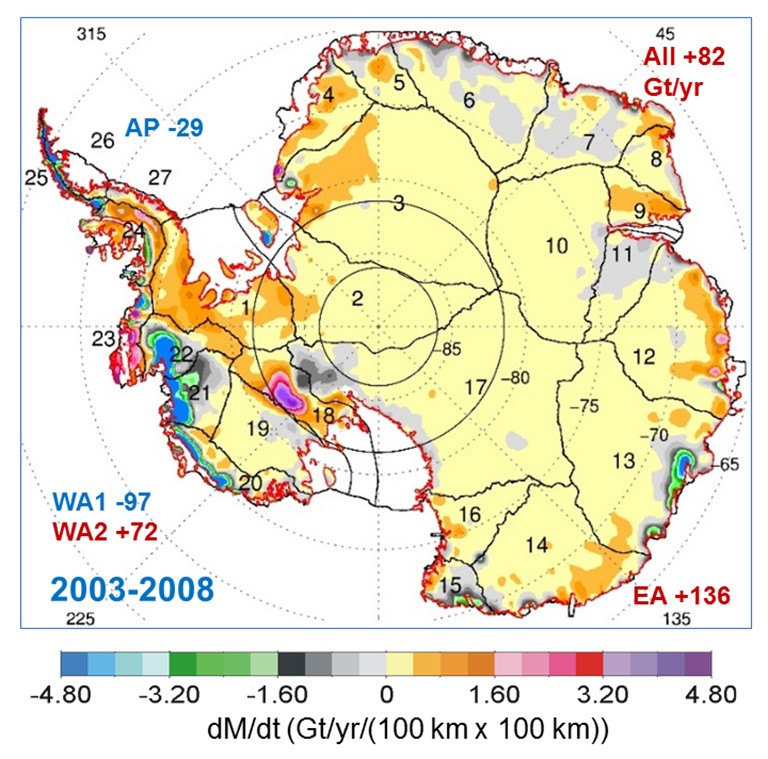
Absolutely amazing that a 40 million year old ice age that grows a new "ice core layer" every year is "losing ice mass." In theory, now 8 million cubic miles of ice, that Antarctica would eventually reach an "equilibrium" regarding the growth of the new ice core layer minus iceberg losses (and icebergs are also still frozen, no "melting" until in the ocean) would equal zero. That hasn't happened yet. Antarctica is still adding ice and has done so each year CO2 FRAUD has lied about it. And THAT is why

1. your side cannot show us one single photo documenting any "ocean rise" at all
2. surface air pressure is flat to down, not up


"the Antarctic ice sheet showed a net gain of 112 billion tons of ice a year from 1992 to 2001. That net gain slowed to 82 billion tons of ice per year between 2003 and 2008."


“The good news is that Antarctica is not currently contributing to sea level rise, but is taking 0.23 millimeters per year away,” Zwally said. “But this is also bad news. If the 0.27 millimeters per year of sea level rise attributed to Antarctica in the IPCC report is not really coming from Antarctica, there must be some other contribution to sea level rise that is not accounted for.”

LOL!!!..... or, IPCC is just fudging data and lying....


  • The film suggests that the Antarctic ice covering is melting, the evidence was that it is in fact increasing.
 
15th post

Rethinking the “Levelized Cost of Energy”: A critical review and evaluation of the concept​


3.2. LCOE and comparability

A key issues is that the intermittency, non-dispatchable feature, and variable output of VREs makes their integration currently unsatisfactory [31]. For VREs where the output varies by the minute, this averaging of the costs as suggested by the traditional usage of the LCOE formula, becomes fundamentally wrong because it ignores the opportunity costs that can be significant [32].

Note that in economics, opportunity cost has two related interpretations [33]: It can be “the alternative that must be foregone when something is produced” or “the amount that an input could earn in its best alternative use”. It is therefore different from accounting costs that are explicit whereas opportunity costs include explicit as well as implicit costs that are foregone. Hence, value is a key aspect of opportunity cost [34], but value is more than the narrowly defined value discussed in Section 4.3.

Also note that the proper measurement of integration costs is a hotly debated subject in academic as well as policymaking circles, and a generally accepted definition of “integration costs” does not exist and calculations are subject to large uncertainties and controversies, including predictions about future development of power systems [35]. There is a range of terms used today including “hidden cost” [36], “balancing cost” [37], “system level cost” [38], “variability cost” [39], and also the term “integration cost” is widely adopted but the definitions vary [40]. Irrespectively of terms, these costs are commonly socialized in the power system [40].

One of the people to discuss these topics early is Joskow [41], and since then a number of refinements have been proposed such as including price variations [42], use reference scenarios and provide a comparative LCOE analysis [43], explicitly model the uncertainty [44,45], include Power Purchase Agreements (PPA) [46] and we can take an investor's view and assume investment positions and various ownership stakes through different phases of the life cycle of a wind power plant [44].

Indeed, by using audited information from Special Purpose Vehicle companies – which many wind power plants are defined to manage risks – Aldersey-Williams et al. [47] find an accurate way to calculate the LCOE for given years, on asset level. The results reveal that open domain data are unreliable. For example, they found that new wind power plants were achieving a LCOE of around 100 GBP/MWh which was considerably higher than implied by the CfD bids of 57.50 GBP/MWh at the time. The problem is that these LCOE calculations are retrospective.

Unfortunately, none of these refinements sufficiently address system costs. There are a few ways of overcoming this shortcoming. First, the LCOE can be augmented into a ‘System LCOE’, as suggested by [48,49]. However, without an explication of the system effectiveness we may have improved the integration cost issues but not addressed the opportunity costs.

An interesting approach is to actually include other revenues than those related to selling the energy as suggested by de-Simón-Martín et al. [50]. The ‘other revenues’ are the possible yearly benefits that may reduce the costs including incentives, internalities intended as indirect benefits, avoided externalities, as well as other indirect benefits for a third party. These ‘other revenues’ are essential some of the costs society is carrying on behalf of the asset in question. The same approach can also handle uncertainty [51]. It is developed for Renewable Energy Communities and Sustainable Energy Communities (essentially small grids). While the systems costs are not handled directly since they are socialized to a broader extent than subsidies, it augments the Asset LCOE to probably the most complete Asset LCOE this author has identified.

A simpler approach that addresses the entire grid is offered by Emblemsvåg [52] who essentially model the consequences of geographical diversification in terms of how many wind power plants are required to guarantee a specific output given perfectly uncorrelated weather systems. Using backup power to fill any production gaps on top, the results show that the System LCOE is roughly 3 times higher than the Asset LCOE at the best case. This is a simpler, top-down approach than the bottom-up approach suggested by Reichenberg et al. 2018 [48] and Ueckerdt et al. [49], and as such more inaccurate. However, it captures a larger part of the opportunity costs because it focuses on the cost of guaranteeing an output as opposed to an upward aggregation where there is no clearly defined system performance requirements associated with the asset under discussion. The same author, also offered a third approach of using Battery Energy Storage Systems (BESS) in combination with Solar Photovoltaics (PV) [32]. Again, the System LCOE became much higher than what the industry uses.

Bank of America has lately performed an analysis of energy technologies where they have added the system costs, and they end up with the results shown in Fig. 1. Compared to the standard LCOE, we see that the Levelized Full System Cost of Energy (LFSCOE) is far larger for VREs. As expected, the LFSCOE will change depending on the system costs. Sadly, the report is short on methods and explanations. However, the report does seriously question the realism of the LCOE estimates used today for policymaking.


View attachment 1237378

So that is why the ultra liberal state of Texas is investing so heavily in solar and wind. LOL

Texas has made significant investments in solar and wind energy, contributing to its status as a renewable energy capital in the U.S. The state has added approximately 9,700 megawatts of solar and 4,374 megawatts of battery storage in 2024, surpassing other energy sources in new generation capacity. These investments are expected to generate over $20 billion in total tax revenue and $29.5 billion in payments to landowners over the projects' lifetimes. The growth of renewables has been a significant source of revenue for local jurisdictions and landowners across Texas, with over 75% of Texas counties expected to receive tax revenues from these projects.

conservativetexansforenergyinnovation.org+2


conservativetexansforenergyinnovation.org
The Economic Impact of Renewable Energy and Energy Storage Investments ...


businessintexas.com
Texas Leads U.S. Renewable Energy Growth | TxEDC


"the Antarctic ice sheet showed a net gain of 112 billion tons of ice a year from 1992 to 2001. That net gain slowed to 82 billion tons of ice per year between 2003 and 2008."


“The good news is that Antarctica is not currently contributing to sea level rise, but is taking 0.23 millimeters per year away,” Zwally said. “But this is also bad news. If the 0.27 millimeters per year of sea level rise attributed to Antarctica in the IPCC report is not really coming from Antarctica, there must be some other contribution to sea level rise that is not accounted for.”

LOL!!!..... or, IPCC is just fudging data and lying....


  • The film suggests that the Antarctic ice covering is melting, the evidence was that it is in fact increasing.
Date on that article;

Nov 05, 2015

LOL Now for more facts. And I think that all find NASA much more trustworthy than EMH.

Antarctica's​

The Antarctic Ice Sheet has experienced significant changes over the last decade. Between 2002 and 2025, Antarctica shed approximately 135 gigatons of ice per year, causing global sea level to rise by 0.4 millimeters per year. This includes modest gains in East Antarctica due to increased snow accumulation, but these are offset by significant ice mass loss on the West Antarctic Ice Sheet. The average flow lines of Antarctica’s ice converge into the locations of prominent outlet glaciers, coinciding with areas of highest mass loss, such as the Pine Island and Thwaites glaciers in West Antarctica.

NASA


NASA
NASA SVS | Antarctic Ice Mass Loss 2002-2025


Australian Antarctic Program
New study confirms “abrupt changes” underway in Antarctica
 
Back
Top Bottom