Unless he was wielding it in a threatening manner - this is completely irrelevant. Declaring ANY knife illegal is just ******* stupid - the kind of shit gun grabbers do.
The knife WAS NOT illegal. That was only some bozo's opinion.
Obviously didnt reaD THE LINK
Yes, I did read the link.
Here's another link for you to read:
Maryland Knife Laws
Maryland’s knife laws are somewhat archaic and cryptic. This article will clear the matter for you in everyday English. It gives you an outline of what is allowed and what is not allowed along with law citations and case examples. It than goes into detail about how the law works so that you can understand Maryland knife law inside and out.
What is Legal to Own
- It is legal to own a balisong knife, also called butterfly knife.
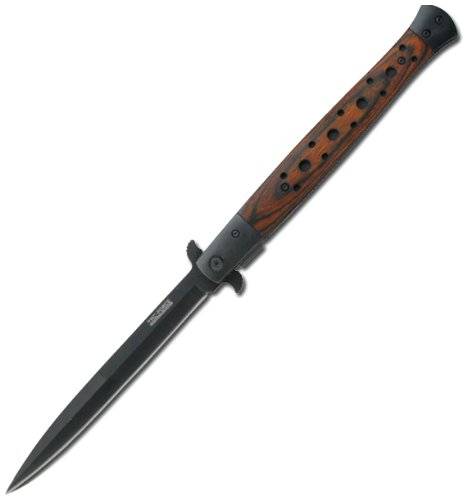
- it is legal to own dirks, daggers, stilettos, and other slim knives.
- It is legal to own switchblades, gravity knives, and automatic knives.
- It is legal to own ballistic knives.
- It is legal to own disguised knives like belt knives and lipstick knives.
- It is legal to own throwing stars and throwing knives.
- It is legal to own undetectable knives.
- It is legal to own Bowie knives and other large knives.
There are no limitation on the type of knife you can own in Maryland.
Limits on Carry
- You can not conceal carry a throwing star, dirk, switchblade, gravity knife, or bowie knife.
- You can not open carry a throwing star, dirk, switchblade, gravity knife, or bowie knife with the intent to harm someone.
- You can open or conceal carry any sized pocket knife you wish.
If a knife is not listed above, it is most likely to be legal for concealed or open carry. Read on to see why.
What the Law States
Dangerous Weapons Defined
Md. CRIMINAL LAW Code Ann. § 4-101 (2012)
§ 4-101. Dangerous weapons
(a) Definitions. —
(4) “Star knife” means a device used as a throwing weapon, consisting of several sharp or pointed blades arrayed as radially disposed arms about a central disk.
(5) (i) “Weapon” includes a dirk knife, bowie knife, switchblade knife, star knife, sandclub, metal knuckles, razor, and nunchaku.
(ii) “Weapon” does not include: 1. a handgun; or 2. a penknife without a switchblade.
(c) Prohibited. —
(1) A person may not wear or carry a dangerous weapon of any kind concealed on or about the person.
(2) A person may not wear or carry a dangerous weapon, chemical mace, pepper mace, or a tear gas device openly with the intent or purpose of injuring an individual in an unlawful manner.
(3) (i) This paragraph applies in Anne Arundel County, Baltimore County, Caroline County, Cecil County, Harford County, Kent County, Montgomery County, Prince George’s County, St. Mary’s County, Talbot County, Washington County, and Worcester County.
(ii) A minor may not carry a dangerous weapon between 1 hour after sunset and 1 hour before sunrise, whether concealed or not, except while:
1. on a bona fide hunting trip; or
2. engaged in or on the way to or returning from a bona fide trap shoot, sport shooting event, or any organized civic or military activity.
(d) Penalties. —
(1) A person who violates this section is guilty of a misdemeanor and on conviction is subject to imprisonment not exceeding 3 years or a fine not exceeding $ 1,000 or both.
(2) For a person convicted under subsection (c)(1) or (2) of this section, if it appears from the evidence that the weapon was carried, concealed or openly, with the deliberate purpose of injuring or killing another, the court shall impose the highest sentence of imprisonment prescribed.
This law bans the concealed carry of dangerous weapons and the open carry of dangerous weapons with intent to harm. The law states that dirks, Bowies, throwing stars, and switchblades are types of knives considered to be dangerous weapons per se. The law also says that a penknife without a switchblade can never be a dangerous weapon.
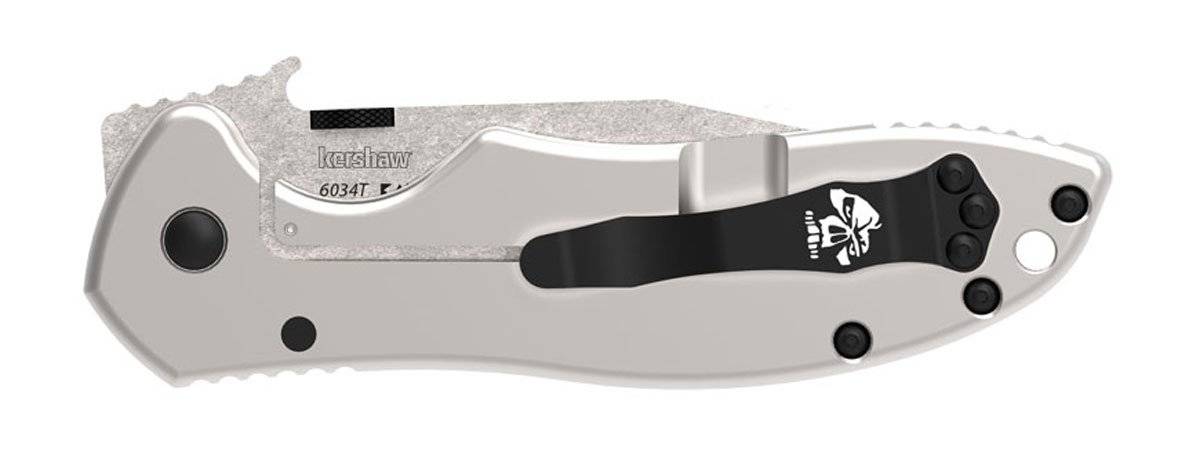
What is a penknife? Penknives are similar to modern day pocket knives. A penknife is an archaic term that is rarely heard of outside knife collecting circles. Back in the day when people wrote letters with feathers, they needed pen knives to sharpen the quills. Originally pen knives looked kind of like old-fashioned x-acto knives but, after time, they transformed into folding knives.
The case of Bacon v. State in 1991 found that a penknife is still a penknife even if it is huge or small, open or closed, has a lock or not, and carried concealed or in the open. Bacon was found not guilty of carrying a dangerous weapon when he was carrying a Buck knife. A Buck knife is a folding knife that locks into place in the open position.
What this means is that you can carry any sized pocket knife you want as long as it does not have a switch that automatically opens it (or you have the intent to harm someone). Stanley v. State in 1997 also stated that the it is the state’s job to prove that the knife is not a penknife. If the opposite was true, it would be the convicted’s job to prove that his/her knife is a penknife. By placing the burden of proof on the state, the category of “penknife without a switchblade” would include more knives than if the burden of proof was on the defendant. This also reduces the defendant’s lawyer fees as well.
From here, we know that dirks, switchblades, Bowies, and throwing stars are always illegal to carry concealed. We also know that pocket knives of any size (“penkives”) are always legal to carry. What does that mean for knives that are not in either of these categories? Case precedence clarifies the issue.
How a Knife is Determined to be a Dangerous Weapon
The case of Savoy v. State in 1964 found that a gravity knife is similar enough to a switchblade that it is a dangerous weapon per se. A switchblade is a knife that opens when the user presses a button. The button releases a spring and the blade extends. A gravity knife is a knife that opens when a user presses the button as well. Instead of a spring, the gravity knife uses the force of gravity to extend the blade. Because of this case, gravity knives are banned in Maryland as well.
Now we know that gravity knives, switchblades, dirks, and Bowies are always illegal to carry concealed. However, there are still more knife types (read about
all the types of knives that exist) in the market than that. The law doesn’t state exactly what other types are dangerous per se but case law gives us an outline of the legal process of determining if a knife is a dangerous weapon or not.
First off, the state must prove that the item is a weapon. The case of Anderson v. State (1992) found that, if an item is not listed as a weapon per se in the law, the state has the burden of proof to show that the item falls in the category of weapons. The burden of proof required is beyond a reasonable doubt (Mackall v. State 2978). We’ve also stated earlier that the state must also prove, even if the item is a weapon, that it is not a weapon that would be considered a “penknife without a switchblade.”
What this means is that a frying pan is never a weapon and, if you hit someone on the head with a frying pan, you will not be guilty of carrying a dangerous weapon in an unlawful manner (but you’ll probably be guilty of something else). This would also mean that most knives designed for a utility purpose would never be considered weapons.
Once the state proves that the item is in fact a weapon, it must prove that the item is a dangerous weapon. The state must show that the item is capable of being deadly or dangerous and that the item was used in a way that would make it deadly and dangerous (Handy v. State 2000).
The state must go on to prove, beyond a reasonable doubt, that there was intent to use the knife to harm others (Anderson v. State 1992). Just merely having a knife on you is not a crime no matter how large or menacing the knife looks. However, if you are carrying a knife when you are duct behind a bush with gloves and a mask on, it might be a different story.