
munkle
Diamond Member
- Dec 18, 2012
- 6,219
- 10,919
- 2,130
"Why won't somebody think of the children" is the slimiest gaslight ever. The Epstein class does not give a crap about children.
This is definitely good news.
 ralplopez.substack.com
Federal Court Strikes Down Law Requiring Digital ID to Log Onto Internet as "Unconstitutional," Not Effective for "Child Safety"
ralplopez.substack.com
Federal Court Strikes Down Law Requiring Digital ID to Log Onto Internet as "Unconstitutional," Not Effective for "Child Safety"
A federal court has struck down as “unconstitutional” an Arkansas law, which mirrors many springing up across the country, which requires users of the Internet to identify themselves, purportedly to verify that they are old enough to view certain content.
The court held that parental control tools are already available that do a better job of protecting children than invasive, privacy-shredding age-verification laws.
[PDF of Decision]
Thanks for reading Hermes! Subscribe for free to receive new posts and support my work.
Subscribed
The April 2026 ruling reaffirmed a 2025 ruling after state legislators then tweaked the original law. The judge held to his original position.
Judge Timothy Brooks of the United States District Court Western District of Arkansas, indicated that Americans have the absolute right to participate in speech without identifying themselves. He wrote in the decision that existing parental controls tools, which he calls “filtering regimes,” are more effective at protecting children from harmful content and still allow adults to:
“gain access to speech they have a right to see without having to identify themselves.”
Judge Brooks notes that there are:
“myriad avenues for parents to control their children’s social media use…Most minors cannot access social media without a parent-funded device and internet connection, and “parents who care about the matter” have many tools at their disposal to restrict and monitor their children’s internet use. ”
Judge Brooks lays out his momentous ruling in a mere 42-pages of remarkably lucid prose. The lawsuit was filed in 2023 by Internet free speech First Amendment advocates. The Arkansas law which was struck down is heavily back by Governor Sarah Hucklebee Sanders, who vows to keep fighting for “age verification.”
The decision comes at a moment when Internet age verification laws are picking up steam in state houses across the nation, but are also facing legal challenges, including in Florida, Georgia and Louisiana.
This year, for the first time, a proposed federal law is winding its way through Congress, the “Parents Decide Act” H.R. 8250, sponsored by Rep. Josh Gottheimer [D-NJ-5], Rep. Elise Stefanik [R-NY-21], and Rep. Brian Fitzpatrick [R-PA-1.]
Although the “Parents Decide Act’s” sponsors are bipartisan, so is the bill’s opposition. The push to collect identification data on every American who uses the Internet, even if only for bill payments and email, is being fiercely opposed by groups ranging from the conservative American Enterprise Institute (AEI) to the ultra-liberal DailyKos.
“JoshHacks”at DailyKos write of the Parents Decide Act:
““Won’t somebody please think of the children?” If you have spent any time watching American politics, you know that line. Helen Lovejoy yelling it on the floor of a town hall in The Simpsons has become the shorthand for a specific kind of political move: invoke kids, skip the substance, get the policy through. It works because nobody wants to be the person who voted against children. The frame does the legislative work that the actual evidence cannot.”
Critics of the Orwellianly-named Parents Decide Act, Orwellian because it relies on the opposite of parent involvement, government involvement, say it is a “backdoor” to the hotly debated “digital ID” for Americans, most recently dubbed the “Real ID.”
All indications are that the federal government wants identification to be based on a high-resolution facial recognition scan, linked to a distributed, master database holding all medical, financial, and personal records on every person, including private communications. The Parents Decide Act is notably short on the details of implementation, leaving it up to the FTC to decide if and which biometric data will be collected, what documents will be accepted as official ID.
In 2013, Edward Snowden, revealed that the NSA, after enactment of the Patriot Act, had been sweeping up the communications of millions of Americans, with no probable cause or warrants.
Such a system is in place in China, and has succeeded in squashing all political dissent with the regime in power. Because the system is tied to one’s ability to spend the cashless society’s government controlled digital currency, political outsiders now find themselves homeless and hungry, unable even to buy food.
Banned, Broke, and Homeless: The Human Cost of China’s Social Credit System
``
Global awareness is growing of the import of what will become, in essence, a global, transnational system of total surveillance and control, based on a facial scan or other biometric, digital ID.
By striking down as unconstitutional the Arkansas version of the law in such a clear and concise fashion, Judge Brooks has opened the door to further legal actions and galvanized growing opposition.
The cybersecurity website MyPrivacy.blog says in a 2025 article regarding “age verification” laws:
“The Supreme Court has repeatedly held that anonymous speech is protected under the First Amendment, recognizing that identification requirements deter legitimate expression.”
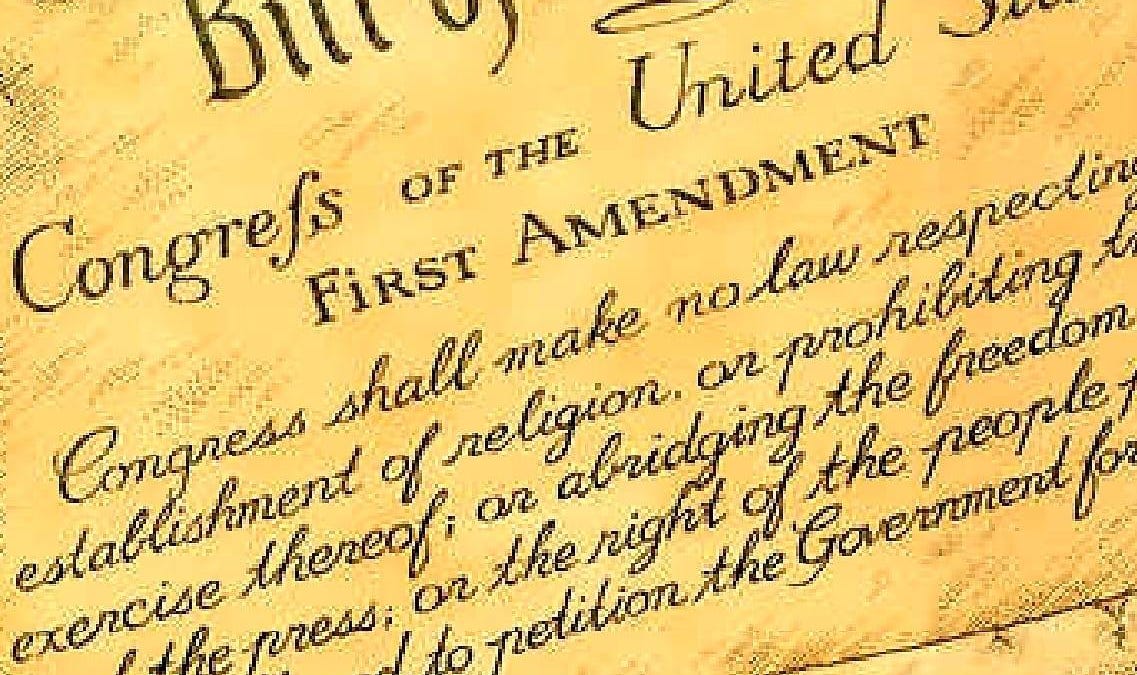
As Judge Brooks indicated, no fig leaf invoking “child safety” can be used to override Americans’ fundamental right to participate in First Amendment, protected speech “without having to identify themselves.”
December 13, 2025, mass protests in UK against China-style digital ID
....MORE
This is definitely good news.
Federal Court Strikes Down Law Requiring Digital ID to Log Onto Internet as "Unconstitutional," Not Effective for "Child Safety"
A federal court has struck down as “unconstitutional” an Arkansas law, which mirrors many springing up across the country, which requires users of the Internet to identify themselves, purportedly to verify that they are old enough to view certain content.
ralplopez.substack.com
A federal court has struck down as “unconstitutional” an Arkansas law, which mirrors many springing up across the country, which requires users of the Internet to identify themselves, purportedly to verify that they are old enough to view certain content.
The court held that parental control tools are already available that do a better job of protecting children than invasive, privacy-shredding age-verification laws.
[PDF of Decision]
Thanks for reading Hermes! Subscribe for free to receive new posts and support my work.
Subscribed
The April 2026 ruling reaffirmed a 2025 ruling after state legislators then tweaked the original law. The judge held to his original position.
Judge Timothy Brooks of the United States District Court Western District of Arkansas, indicated that Americans have the absolute right to participate in speech without identifying themselves. He wrote in the decision that existing parental controls tools, which he calls “filtering regimes,” are more effective at protecting children from harmful content and still allow adults to:
“gain access to speech they have a right to see without having to identify themselves.”
Judge Brooks notes that there are:
“myriad avenues for parents to control their children’s social media use…Most minors cannot access social media without a parent-funded device and internet connection, and “parents who care about the matter” have many tools at their disposal to restrict and monitor their children’s internet use. ”
Judge Brooks lays out his momentous ruling in a mere 42-pages of remarkably lucid prose. The lawsuit was filed in 2023 by Internet free speech First Amendment advocates. The Arkansas law which was struck down is heavily back by Governor Sarah Hucklebee Sanders, who vows to keep fighting for “age verification.”
The decision comes at a moment when Internet age verification laws are picking up steam in state houses across the nation, but are also facing legal challenges, including in Florida, Georgia and Louisiana.
This year, for the first time, a proposed federal law is winding its way through Congress, the “Parents Decide Act” H.R. 8250, sponsored by Rep. Josh Gottheimer [D-NJ-5], Rep. Elise Stefanik [R-NY-21], and Rep. Brian Fitzpatrick [R-PA-1.]
Although the “Parents Decide Act’s” sponsors are bipartisan, so is the bill’s opposition. The push to collect identification data on every American who uses the Internet, even if only for bill payments and email, is being fiercely opposed by groups ranging from the conservative American Enterprise Institute (AEI) to the ultra-liberal DailyKos.
“JoshHacks”at DailyKos write of the Parents Decide Act:
““Won’t somebody please think of the children?” If you have spent any time watching American politics, you know that line. Helen Lovejoy yelling it on the floor of a town hall in The Simpsons has become the shorthand for a specific kind of political move: invoke kids, skip the substance, get the policy through. It works because nobody wants to be the person who voted against children. The frame does the legislative work that the actual evidence cannot.”
Critics of the Orwellianly-named Parents Decide Act, Orwellian because it relies on the opposite of parent involvement, government involvement, say it is a “backdoor” to the hotly debated “digital ID” for Americans, most recently dubbed the “Real ID.”
All indications are that the federal government wants identification to be based on a high-resolution facial recognition scan, linked to a distributed, master database holding all medical, financial, and personal records on every person, including private communications. The Parents Decide Act is notably short on the details of implementation, leaving it up to the FTC to decide if and which biometric data will be collected, what documents will be accepted as official ID.
In 2013, Edward Snowden, revealed that the NSA, after enactment of the Patriot Act, had been sweeping up the communications of millions of Americans, with no probable cause or warrants.
Such a system is in place in China, and has succeeded in squashing all political dissent with the regime in power. Because the system is tied to one’s ability to spend the cashless society’s government controlled digital currency, political outsiders now find themselves homeless and hungry, unable even to buy food.
Banned, Broke, and Homeless: The Human Cost of China’s Social Credit System
``
Global awareness is growing of the import of what will become, in essence, a global, transnational system of total surveillance and control, based on a facial scan or other biometric, digital ID.
By striking down as unconstitutional the Arkansas version of the law in such a clear and concise fashion, Judge Brooks has opened the door to further legal actions and galvanized growing opposition.
The cybersecurity website MyPrivacy.blog says in a 2025 article regarding “age verification” laws:
“The Supreme Court has repeatedly held that anonymous speech is protected under the First Amendment, recognizing that identification requirements deter legitimate expression.”
As Judge Brooks indicated, no fig leaf invoking “child safety” can be used to override Americans’ fundamental right to participate in First Amendment, protected speech “without having to identify themselves.”
December 13, 2025, mass protests in UK against China-style digital ID
....MORE


