
excalibur
Diamond Member
- Mar 19, 2015
- 29,225
- 59,178
- 2,290
Written by Germany’s own Economy and Energy Minister, Katherina Reiche.
What many have been saying.
 www.faz.net
What many have been saying.
...
Many are therefore calling for the immediate phase-out of oil and gas. You only have to expand wind and solar energy faster – and the matter would be solved.
Well, it's not that simple.
On the facts: Germany has a total energy requirement of 2,900 terawatt hours for electricity, heat, mobility and industrial processes. Electricity is accounted for by just under sixth, more than half of which comes from renewable energies. However, the share of renewables in total energy consumption in 2025 was just under a fifth.
For years we have calmed down with ambitious goals. 80 percent of the electricity from renewables by 2030, climate neutrality by 2045 – beautiful figures that soothe our guilty conscience. But as we clung to those targets, electricity prices exploded. German households pay up to 37 cents per kilowatt hour – a good nine cents above the EU average. Our industry is bleeding out. Deindustrialization is accelerating.
Compensation if your product is no longer needed
Yes, wind and sun do not send a bill. But the overall system is very well: EEG costs, capacity reserve, grid reserve, redispatch costs, grid subsidies, subsidies for the reduction of energy prices – all this adds up to system costs of over 36 billion euros per year. That's 430 euros for every German.
We pay almost three billion euros alone to ensure that wind turbines and solar systems are regulated, because the grids cannot absorb the electricity. There is no other industry that receives funding guaranteed for over 20 years and even collects compensation if its product is not needed.
It can't go on like this. The renewable industry has grown up and now has to take responsibility – systemically and financially. By 2035, system costs will rise to 90 billion euros a year. The problem is structural: we have shut down 20 gigawatts of secured, low-carbon nuclear power. In addition, there are massive, politically driven network investments and a market design that ignores reality.
One fact has been concealed for too long: an energy transition that ignores system costs will ruin the country that it pretends to save.
...
Many are therefore calling for the immediate phase-out of oil and gas. You only have to expand wind and solar energy faster – and the matter would be solved.
Well, it's not that simple.
On the facts: Germany has a total energy requirement of 2,900 terawatt hours for electricity, heat, mobility and industrial processes. Electricity is accounted for by just under sixth, more than half of which comes from renewable energies. However, the share of renewables in total energy consumption in 2025 was just under a fifth.
For years we have calmed down with ambitious goals. 80 percent of the electricity from renewables by 2030, climate neutrality by 2045 – beautiful figures that soothe our guilty conscience. But as we clung to those targets, electricity prices exploded. German households pay up to 37 cents per kilowatt hour – a good nine cents above the EU average. Our industry is bleeding out. Deindustrialization is accelerating.
Compensation if your product is no longer needed
Yes, wind and sun do not send a bill. But the overall system is very well: EEG costs, capacity reserve, grid reserve, redispatch costs, grid subsidies, subsidies for the reduction of energy prices – all this adds up to system costs of over 36 billion euros per year. That's 430 euros for every German.
We pay almost three billion euros alone to ensure that wind turbines and solar systems are regulated, because the grids cannot absorb the electricity. There is no other industry that receives funding guaranteed for over 20 years and even collects compensation if its product is not needed.
It can't go on like this. The renewable industry has grown up and now has to take responsibility – systemically and financially. By 2035, system costs will rise to 90 billion euros a year. The problem is structural: we have shut down 20 gigawatts of secured, low-carbon nuclear power. In addition, there are massive, politically driven network investments and a market design that ignores reality.
One fact has been concealed for too long: an energy transition that ignores system costs will ruin the country that it pretends to save.
...
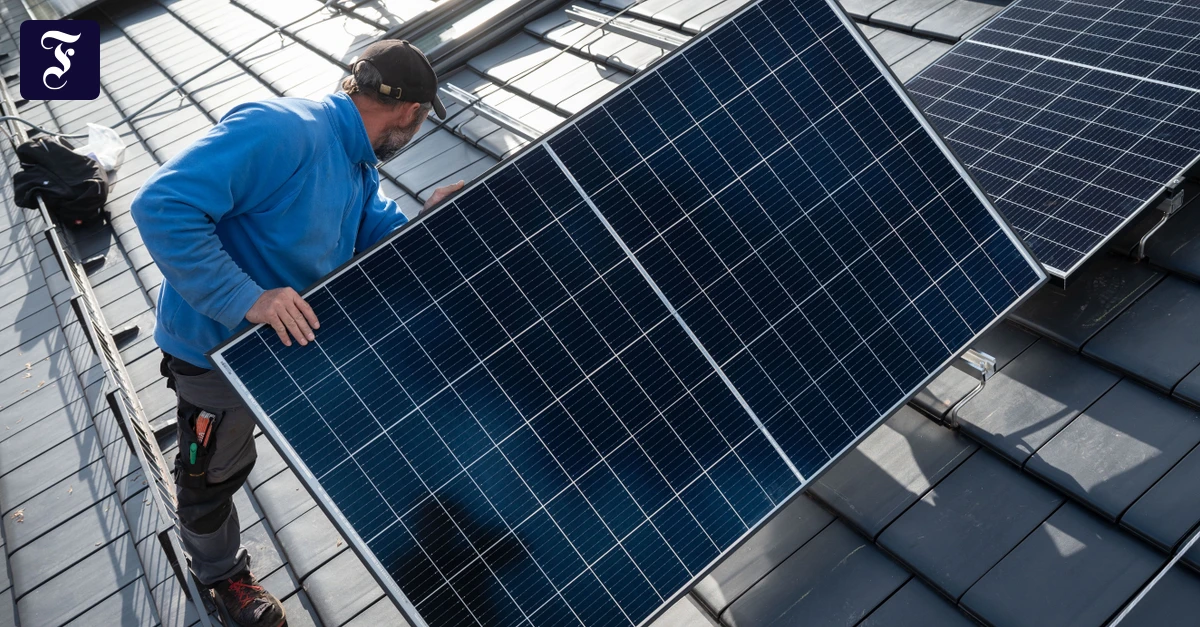
Katherina Reiche: Jetzt ist Zeit für ernsthafte Energiepolitik
Deutschland deckt erst ein Fünftel seines Energieverbrauchs mit Erneuerbaren. Die Industrie leidet unter gestiegenen Preisen. Jetzt ist Zeit für ernsthafte Energiepolitik, schreibt die Bundeswirtschaftsministerin – und erläutert ihre Strategie.
www.faz.net


