Navigation
Install the app
How to install the app on iOS
Follow along with the video below to see how to install our site as a web app on your home screen.
Note: This feature may not be available in some browsers.
More options
Style variation
You are using an out of date browser. It may not display this or other websites correctly.
You should upgrade or use an alternative browser.
You should upgrade or use an alternative browser.
Discipline
- Thread starter Unkotare
- Start date

The Irish Ram
LITTLE GIRL / Ram Tough
You forget that the majority of the people here went to school. You may not remember a time when classes were orderly, but I assure you that time existed, and it needs to be reconceived...
The Irish Ram
LITTLE GIRL / Ram Tough
Whether it was yesterday, or 100 years ago, we were disciplined and got an education. Now our children can't read or write. They are idiots...

The Irish Ram
LITTLE GIRL / Ram Tough
Fast Facts: International comparisons of achievement (1)
The NCES Fast Facts Tool provides quick answers to many education questions (National Center for Education Statistics). Get answers on Early Childhood Education, Elementary and Secondary Education and Higher Education here.
nces.ed.gov

Unkotare
Diamond Member
- Aug 16, 2011
- 147,042
- 33,391
- 2,180
- Thread starter
- #28
"Now"? When was the last time you were in a classroom observing with your own two eyes what is going on "now"?Whether it was yesterday, or 100 years ago, we were disciplined and got an education. Now our children can't read or write. They are idiots...

Seymour Flops
Diamond Member
Unkotare this is an important issue. I have much disagreement with the words in the article and some with your words that follow.
However, since I cannot debate the writer of the article, I'll not comment on it. But I will respectfully comment on your words.
Also in that typical class are a small number of students who not only do not want to be there, but are not disciplined by parents any further than making them go to school. They do not get "in trouble," if their parent is called over their behavior, and they are unaffected by any consequence the school can give them. Sometimes called "bad kids."
About 80% are there because that's what one does at that age, and they do what they need to do to get by, pass classes, and not get in trouble. They show interest in lessons that interest them, and wade though those that don't.
Those ten percent of "bad kids" can indeed cause a class to break down. They will distract the middle 80 percenters, who will not be upset much if the teacher cannot teach, so long as it isn't their fault, and will likely pay attention to the attention seekers.
The outlier "bad kids" will leave the class at the end of the period having learned nothing. The outlier "smart kids" will leave the class having learned something they basically already knew, or learned something they could have taught themselves if simply handed a set of instructions or an instructional video.
Who loses? The majority, the many, the mainstream, the typical, however you describe these kids. They leave the class having learned much less than they could have in a more focused classroom.
The solution is for the "smart kids" to go into advanced classes and the "bad kids" to be instructed in small groups, such as alternative campuses, where they will have a better chance of learning, and if they don't, at least they will not have stolen other children's educations.
The 80 percenters will not want to be just kicked out, because Mom. The "Smart kids" already understand that the class clowns and anger issue kids will be mounting new tires for them, or sweeping the school hallways in fifteen years. So they ignore them.
When kids disrespect the teacher, bully their fellow students, make jokes that are laughed at for the disruption rather than the humor, and distract students who are trying to make an effort, the fault does not lie in any culture created by the teacher.
The fault is with the parents for not preventing this behavior, and with administration for allowing it to go on. Administrators can create a culture that focuses on learning by removing those who refuse to do so.
Some teachers are more talented than others, and some are able to maintain discipline with groups of students where other teachers cannot. I know some teachers like that and they are awesome.
But the majority are average teachers, as the math says that they will be.
The average teacher cannot cope with a class in which 3 out of 30 are acting for their own entertainment or out of rage, with no concern for what they are supposed to be doing.
It makes no sense to leave disruptive students in failing classrooms while we wait for average teachers to create this culture you speak of.
However, since I cannot debate the writer of the article, I'll not comment on it. But I will respectfully comment on your words.
In a typical class, there is a small number - often around ten percent, but with a wide range of possibilities - of students who are polite, enjoy learning, and pick up material taught quickly, often as if they already knew it, or understand it merely be being introduced to the topic, or shown the algorythm once. Sometimes called "smart kids."
I Used to Be One of Those Teachers
I get it—I really do. I used to be one of those teachers who thought removing “problem kids” was the answer. Early in my career, I believed that getting rid of disruptions would make my class run smoothly.
Also in that typical class are a small number of students who not only do not want to be there, but are not disciplined by parents any further than making them go to school. They do not get "in trouble," if their parent is called over their behavior, and they are unaffected by any consequence the school can give them. Sometimes called "bad kids."
About 80% are there because that's what one does at that age, and they do what they need to do to get by, pass classes, and not get in trouble. They show interest in lessons that interest them, and wade though those that don't.
Those ten percent of "bad kids" can indeed cause a class to break down. They will distract the middle 80 percenters, who will not be upset much if the teacher cannot teach, so long as it isn't their fault, and will likely pay attention to the attention seekers.
The outlier "bad kids" will leave the class at the end of the period having learned nothing. The outlier "smart kids" will leave the class having learned something they basically already knew, or learned something they could have taught themselves if simply handed a set of instructions or an instructional video.
Who loses? The majority, the many, the mainstream, the typical, however you describe these kids. They leave the class having learned much less than they could have in a more focused classroom.
The solution is for the "smart kids" to go into advanced classes and the "bad kids" to be instructed in small groups, such as alternative campuses, where they will have a better chance of learning, and if they don't, at least they will not have stolen other children's educations.
My solution would not have them come back in a day or two. Disrupting a class is a serious act. It has serious consequences to the class members, so it should have serious consequences for the disrupter.And yes, for a day or two, it was quiet. But you know what happened next? Those same kids came back angrier, more frustrated, and more determined to push back.
They learn the very important lesson that people don't want to be around you, or you around them, when you act a fool. Failure to learn that lesson has created a generation that can best be described as jerks.And the rest of the class?
They learned that if you mess up enough, you just get kicked out. No growth. No learning. Just punishment.
The 80 percenters will not want to be just kicked out, because Mom. The "Smart kids" already understand that the class clowns and anger issue kids will be mounting new tires for them, or sweeping the school hallways in fifteen years. So they ignore them.
This is where we part company significantly. Those don't sound like the words of a teacher. They sound like indoctrination at a 'Professional Development' by a highly paid presenter chosen by the Superintendent and the Director of Instruction, neither of whom has been responsible for a classroom in a couple of decades.It took me years to realize that the real work isn’t in removing students; it’s in creating a classroom culture that makes removal unnecessary in the first place."
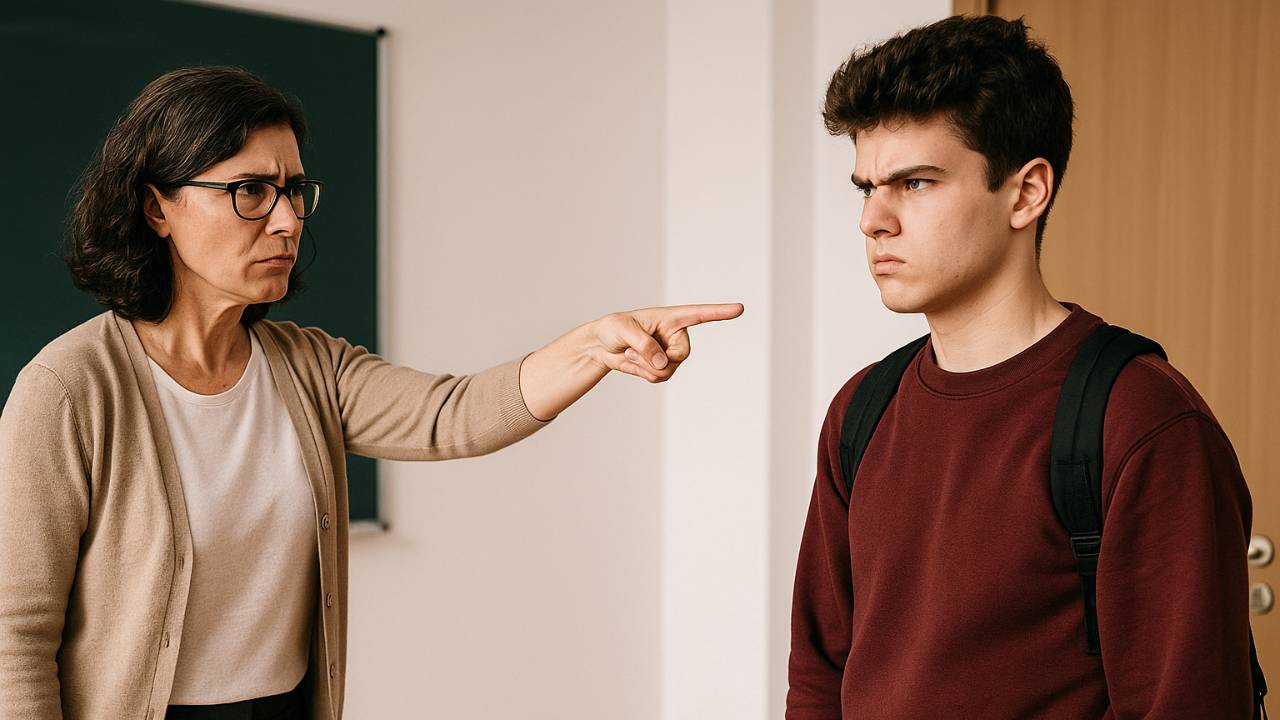
I’m Done Watching Teachers Give Up on Kids
Fed up with teachers giving up on kids? Discover why removing “disruptive” students fails everyone—and how building classroom community changes everything.www.10publications.com
When kids disrespect the teacher, bully their fellow students, make jokes that are laughed at for the disruption rather than the humor, and distract students who are trying to make an effort, the fault does not lie in any culture created by the teacher.
The fault is with the parents for not preventing this behavior, and with administration for allowing it to go on. Administrators can create a culture that focuses on learning by removing those who refuse to do so.
Some teachers are more talented than others, and some are able to maintain discipline with groups of students where other teachers cannot. I know some teachers like that and they are awesome.
But the majority are average teachers, as the math says that they will be.
The average teacher cannot cope with a class in which 3 out of 30 are acting for their own entertainment or out of rage, with no concern for what they are supposed to be doing.
It makes no sense to leave disruptive students in failing classrooms while we wait for average teachers to create this culture you speak of.
Last edited:
The Irish Ram
LITTLE GIRL / Ram Tough
"Now"? When was the last time you were in a classroom observing with your own two eyes what is going on "now"?
They don't even know how to write. In fact, they don't even have to go to school anymore. We have let our children down.Fast Facts: International comparisons of achievement (1)
The NCES Fast Facts Tool provides quick answers to many education questions (National Center for Education Statistics). Get answers on Early Childhood Education, Elementary and Secondary Education and Higher Education here.nces.ed.gov
Unkotare
Diamond Member
- Aug 16, 2011
- 147,042
- 33,391
- 2,180
- Thread starter
- #32
From whence did you pull that percentage?...
In a typical class, there is a small number - often around ten percent, but with a wide range of possibilities - of students who are polite, enjoy learning, and pick up material taught quickly...
Unkotare
Diamond Member
- Aug 16, 2011
- 147,042
- 33,391
- 2,180
- Thread starter
- #33
"Now"? When was the last time you were in a classroom observing with your own two eyes what is going on "now"?They don't even know how to write. In fact, they don't even have to go to school anymore. We have let our children down.
Seymour Flops
Diamond Member
LoL!None of them were my words, as I stated in the OP.
There was a break before the part I quoted, which I thought were your comments on the article.
Oh, well, I said my piece.
Walmart has School Supplies already displayed in front!
Whoop!
Unkotare
Diamond Member
- Aug 16, 2011
- 147,042
- 33,391
- 2,180
- Thread starter
- #36
So many percentages pulled out of thin air.Unkotare this is an important issue. I have much disagreement with the words in the article and some with your words that follow.
However, since I cannot debate the writer of the article, I'll not comment on it. But I will respectfully comment on your words.
In a typical class, there is a small number - often around ten percent, but with a wide range of possibilities - of students who are polite, enjoy learning, and pick up material taught quickly, often as if they already knew it, or understand it merely be being introduced to the topic, or shown the algorythm once. Sometimes called "smart kids."
Also in that typical class are a small number of students who not only do not want to be there, but are not disciplined by parents any further than making them go to school. They do not get "in trouble," if their parent is called over their behavior, and they are unaffected by any consequence the school can give them. Sometimes called "bad kids."
About 80% are there because that's what one does at that age, and they do what they need to do to get by, pass classes, and not get in trouble. They show interest in lessons that interest them, and wade though those that don't.
Those ten percent of "bad kids" can indeed cause a class to break down. They will distract the middle 80 percenters, who will not be upset much if the teacher cannot teach, so long as it isn't their fault, and will likely pay attention to the attention seekers.
The outlier "bad kids" will leave the class at the end of the period having learned nothing. The outlier "smart kids" will leave the class having learned something they basically already knew, or learned something they could have taught themselves if simply handed a set of instructions or an instructional video.
Who loses? The majority, the many, the mainstream, the typical, however you describe these kids. They leave the class having learned much less than they could have in a more focused classroom.
The solution is for the "smart kids" to go into advanced classes and the "bad kids" to be instructed in small groups, such as alternative campuses, where they will have a better chance of learning, and if they don't, at least they will not have stolen other children's educations.
My solution would not have them come back in a day or two. Disrupting a class is a serious act. It has serious consequences to the class members, so it should have serious consequences for the disrupter.
They learn the very important lesson that people don't want to be around you, or you around them, when you act a fool. Failure to learn that lesson has created a generation that can best be described as jerks.
The 80 percenters will not want to be just kicked out, because Mom. The "Smart kids" already understand that the class clowns and anger issue kids will be mounting new tires for them, or sweeping the school hallways in fifteen years. So they ignore them.
This is where we part company significantly. Those don't sound like the words of a teacher. They sound like indoctrination at a 'Professional Development' by a highly paid presenter chosen by the Superintendent and the Director of Instruction, neither of whom has been responsible for a classroom in a couple of decades.
When kids disrespect the teacher, bully their fellow students, make jokes that are laughed at for the disruption rather than the humor, and distract students who are trying to make an effort, the fault does not lie in any culture created by the teacher.
The fault is with the parents for not preventing this behavior, and with administration for allowing it to go on. Administrators can create a culture that focuses on learning by removing those who refuse to do so.
Some teachers are more talented than others, and some are able to maintain discipline with groups of students where other teachers cannot. I know some teachers like that and they are awesome.
But the majority are average teachers, as the math says that they will be.
The average teacher cannot cope with a class in which 3 out of 30 are acting for their own entertainment or out of rage, with no concern for what they are supposed to be doing.
It makes no sense to leave disruptive students in failing classrooms while we wait for average teachers to create this culture you speak of.
Seymour Flops
Diamond Member
Pulled out of seventeen years of public school experience both in the classroom and working with the "bad kids" after three years teaching at a private high school whose students had all been pressured out of public school.So many percentages pulled out of thin air.
If I didn't make it clear, those were typical with a wide range.

- Jan 19, 2010
- 85,045
- 85,806
- 3,605
I am on campus every day of the week.. even during summer school... and I also talk with teachers.... idiot....No, you don't! If you coach golf, you are teaching the cream of the crop, you idiot!
- Jan 19, 2010
- 85,045
- 85,806
- 3,605
Maybe a view from a non teacher is what's needed... My assistant coach is a biology teacher and a very good friend... guess what.... he and many more teachers agree with me...Not when you comment on classrooms you don't manage.

Admiral Rockwell Tory
Diamond Member
You are not a teacher, so don't pretend you know anything about classroom discipline, you fake!I am on campus every day of the week.. even during summer school... and I also talk with teachers.... idiot....
Similar threads


- Replies
- 71
- Views
- 2K


New Topics
-
 Israel coordinated with US attack on Islamic Republic of Iran
- Started by Sayaras
- Replies: 2
-
 Israel Strikes Iran After Iranian Missile Attack, Defying Trump's Request to Hold Off
- Started by Doc7505
- Replies: 0
-

-
 Zone1 COEXIST? Simple truths that can manifest all truth.
- Started by Ace Nova
- Replies: 0
-


