Propaganda is cheap to produce on the web. And a purposeful lie in an age of "viral content" not only can race around the world in a day but resurface time and time again with surprising resiliency.
Such is the case with the myth of "Irish slaves," an ahistorical reimagining of real events weaponized by racists and conspiracy theorists before the Web and now reaching vast new audiences online.
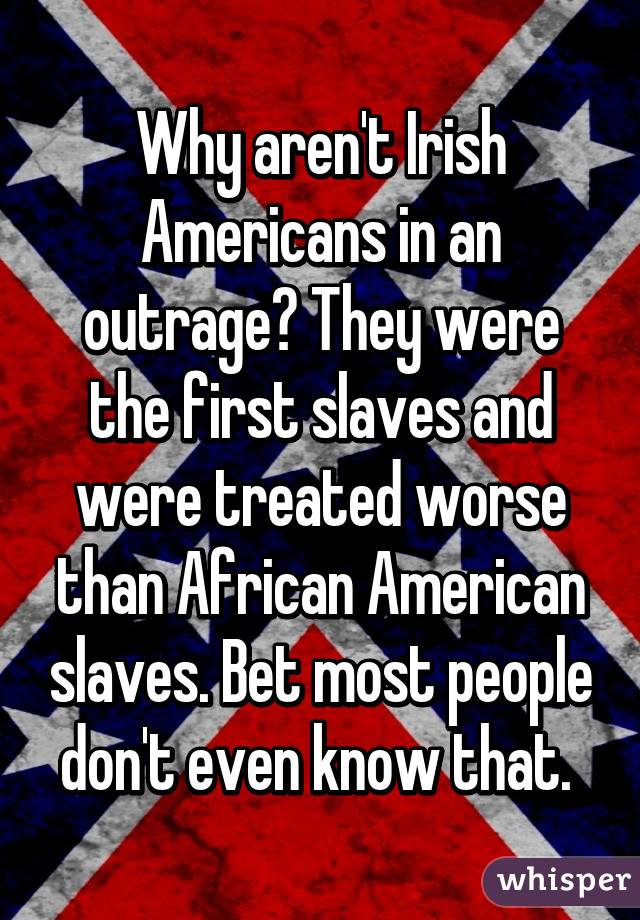
In short, the "Irish slaves" myth argues that the first slaves brought to the Americas were Irish, that they were white, and that this fact, covered up by liberal historians, undermines the legacy of the African slave trade and proves that modern theories of racial inferiority are true.
Predictably, this revisionism has attracted Neo-Nazis, White Nationalists, Neo-Confederates, and even Holocaust deniers, while racist trolls have deployed the myth to attack the Black Lives Matter movement. More worrisome, though, is its widespread adoption by principally American Internet users as if it were a point of "Irish pride."
Irish scholar Liam Hogan has been tracking and debunking this reincarnated meme since he first saw it in 2013. Last year, Hogan published an impressive five-part series exposing the myth and provided a detailed historical analysis of the origins and evolution of the meme.
What’s your academic background particularly as it applies to the study of systems of slavery?
I’m a research librarian at the Limerick City Library and an independent scholar. I am particularly interested in the complex historical relationship between Ireland and the Transatlantic Slave Trade. While researching this, I noticed that there existed many common misconceptions about what is termed “Irish slavery,” which is applied in various ways to the Irish experience in the Anglo-Caribbean, Colonial America and the United States. I’ve since tried to contextualize this important part of Irish diasporic history for the general public while debunking some of the more egregious pieces of disinformation that are currently en vogue. I also track white nationalist groups and others who have purposefully spread “white slavery” or “Irish slavery” propaganda online since at least 1998.
And let’s clear the air: Are you Irish?
Yes. I’m from Youghalarra, which is a village near Lough Derg in Co. Tipperary.
Briefly stated, what are the historical claims behind the “Irish slaves” meme?
It broadly claims that indentured servitude and penal servitude can be equated with racialized perpetual hereditary chattel slavery. It proclaims that an “Irish Slave Trade” was initiated in 1612 and not abolished until 1839, and that this concurrent transatlantic slave trade of “white slaves” has been covered up by “liberal," “cultural Marxist” or “politically correct” historians.
The various memes make many claims including (but not limited to) the following; that “Irish slaves” were treated far worse than black slaves; that there were more “Irish slaves” than black slaves; that “Irish slaves” were worth less than black slaves, that enslaved Irish women were forced to breed with enslaved African men, and that the Irish were slaves for much longer than black slaves.
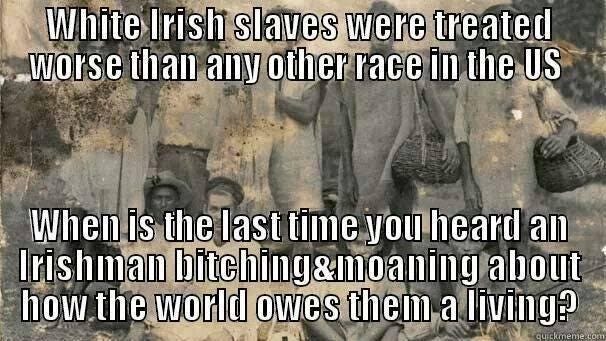
This is then invariably followed up by overtly racist statements, e.g. “yet, when is the last time you heard an Irishman bitching and moaning about how the world owes them a living?” The “Irish slaves” meme is a subset of the “white slavery” contemporary discourse which emphasizes class over race and is fueled by a potent cocktail of bad history, false equivalence, conspiracy theories, and reductionist fallacies.
There was almost no situation where the meme was not used to derail discussions about the legacy of slavery or ongoing anti-black racism. Starting with Ferguson and with almost every subsequent police killing of an unarmed black person from late 2014 through 2015, the meme was used to mock and denigrate the Black Lives Matter movement. It is in a sense the “historical” version of the disingenuous All Lives Matter response to demands for justice and truth telling. I have seen it used to derail conversations about Sandra Bland, the McKinney pool party incident, the Spring Valley High incident and so on. I have collected hundreds of examples of it on Twitter (
here) but it is a more common on Facebook where it continues to incubate. Some of these racist memes on Facebook have garnered over 200,000 shares so far and
one in particular was shared nearly 100,000 times in just over a week.
How the Myth of the "Irish slaves" Became a Favorite Meme of Racists Online
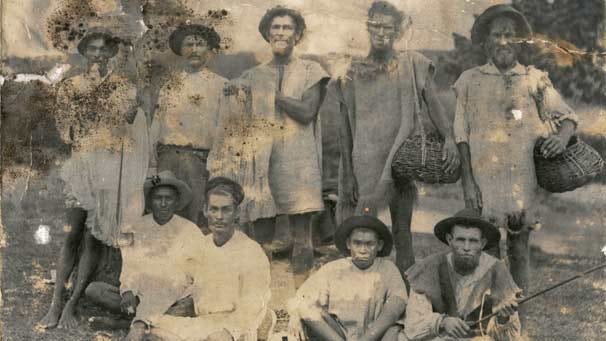
Debunking the imagery of the “Irish slaves” meme – Liam Hogan – Medium
Racism has distorted reality for many whites. Teachings about history, the world, the pursuits of thought, expressions of culture, and personal relationships have for most whites been both limited and false.