Navigation
Install the app
How to install the app on iOS
Follow along with the video below to see how to install our site as a web app on your home screen.
Note: This feature may not be available in some browsers.
More options
Style variation
You are using an out of date browser. It may not display this or other websites correctly.
You should upgrade or use an alternative browser.
You should upgrade or use an alternative browser.
COVID-19’s Biological Politics
- Thread starter badger2
- Start date
- Thread starter
- #1,323
The HIV-1 sequences (above) are from India and Kenya.
Vandongen makes interesting connections with HIV-1:
1 Nov 2022
'....appears to cloak the novel coronavirus from white blood cells, a characteristic also found in HIV-1.'
Vandongen refers to this study, and ref #52 therein:

 pubmed.ncbi.nlm.nih.gov
'Ref #52 (Guandong) : 'The Orf8 protein of SARS-Cov-2 mediates immune evasion through potently downregulating MHC-1....In addition, Orf8 showed strong co-localization with calnexin+ ER and LAMP1+ lysosome.'
pubmed.ncbi.nlm.nih.gov
'Ref #52 (Guandong) : 'The Orf8 protein of SARS-Cov-2 mediates immune evasion through potently downregulating MHC-1....In addition, Orf8 showed strong co-localization with calnexin+ ER and LAMP1+ lysosome.'
We'll return to LAMP1 later.
Vandongen continues @ 1Nov: 'And the second preprint identifies a region of the spike-protein gene found in no other bat-borne coronavirus that is nearly identical to superantigenic and neurotoxic motifs found in some bacteria, which may contribute to the immune overreaction that leads to the Kawasaki-like multisystem inflammatory syndrome in children, and cytokine storms in adults.'
Vandongen is referring to this report:
pubmed.ncbi.nlm.nih.gov
MIS-C and Kawasaki disease was posted to USMB on 8 Jul 2020:
Post #700

 www.usmessageboard.com
'.....Fortunately, doctors and researchers have been racing to understand the mysterious syndrome, which can cause life-threatening complications, including coronary artery aneurysms and toxic shock syndrome.
www.usmessageboard.com
'.....Fortunately, doctors and researchers have been racing to understand the mysterious syndrome, which can cause life-threatening complications, including coronary artery aneurysms and toxic shock syndrome.
"We don't know the risk factors - which kids get this and which kids don't, it's hard to know. Especially because most have been previously healthy," said Dr. Nadine Choueiter, a pediatric cardiologist and Director of the Kawasaki Disease Program at the Children's Hospital at Montefiore in New York City.'
Vandongen makes interesting connections with HIV-1:
1 Nov 2022
'....appears to cloak the novel coronavirus from white blood cells, a characteristic also found in HIV-1.'
Vandongen refers to this study, and ref #52 therein:
Might SARS-CoV-2 Have Arisen via Serial Passage through an Animal Host or Cell Culture?: A potential explanation for much of the novel coronavirus' distinctive genome - PubMed
Despite claims from prominent scientists that SARS-CoV-2 indubitably emerged naturally, the etiology of this novel coronavirus remains a pressing and open question: Without knowing the true nature of a disease, it is impossible for clinicians to appropriately shape their care, for policy-makers...
pubmed.ncbi.nlm.nih.gov
We'll return to LAMP1 later.
Vandongen continues @ 1Nov: 'And the second preprint identifies a region of the spike-protein gene found in no other bat-borne coronavirus that is nearly identical to superantigenic and neurotoxic motifs found in some bacteria, which may contribute to the immune overreaction that leads to the Kawasaki-like multisystem inflammatory syndrome in children, and cytokine storms in adults.'
Vandongen is referring to this report:
Superantigenic character of an insert unique to SARS-CoV-2 spike supported by skewed TCR repertoire in patients with hyperinflammation - PubMed
Multisystem Inflammatory Syndrome in Children (MIS-C) associated with COVID-19 is a newly recognized condition in children with recent severe acute respiratory syndrome coronavirus 2 (SARS-CoV-2) infection. These children and adult patients with severe hyperinflammation present with a...
pubmed.ncbi.nlm.nih.gov
MIS-C and Kawasaki disease was posted to USMB on 8 Jul 2020:
Post #700
Snake Meat......source of chinese virus
At Pubmed, there is only one entry for chloroquine use in the suspected COVID-19 intermediate host, Chrysemys: (1985) Chrysemys / Thyroid / Chloroquine https://www.ncbi.nlm.nih.gov/pubmed/3905504 '....chloroquine or bacitracin inhibited the degradation activity.'
www.usmessageboard.com
"We don't know the risk factors - which kids get this and which kids don't, it's hard to know. Especially because most have been previously healthy," said Dr. Nadine Choueiter, a pediatric cardiologist and Director of the Kawasaki Disease Program at the Children's Hospital at Montefiore in New York City.'
- Thread starter
- #1,324
Vandongen's superantigenic report may link to snakes, so Vandongen's first-mentioned report for LAMP1 prompts further investigation. In the superantigen report, scroll down to Fig 2 D which compares snake toxins: 'alpha-cobratoxin, alpha-bungarotoxin, rabies G protein, HIV-1 gp120.'
Further along in the article, it states:
'A rare mutation D839Y, recently observed in a SARS-CoV-2 strain from Europe may contribute to stabilizing the interaction of TCR (T cell receptors). Interestingly, SARS-CoV-2 binding region harbors three residues that have been recently reported to have mutated in new strains from Europe and the U.S.: D614G, A831V and D839Y/N/E. The former two may potentially interact with MHC II.
The Ft. Detrick report from 1988 (already posted to USMB) links chloroquine to bungarotoxin: chloroquine increases bungarotoxin potency 17-fold.
Further along in the article, it states:
'A rare mutation D839Y, recently observed in a SARS-CoV-2 strain from Europe may contribute to stabilizing the interaction of TCR (T cell receptors). Interestingly, SARS-CoV-2 binding region harbors three residues that have been recently reported to have mutated in new strains from Europe and the U.S.: D614G, A831V and D839Y/N/E. The former two may potentially interact with MHC II.
The Ft. Detrick report from 1988 (already posted to USMB) links chloroquine to bungarotoxin: chloroquine increases bungarotoxin potency 17-fold.
- Thread starter
- #1,325
The HIV sequences we've been posting link to Baric connections:
' @ 1h: Amy Sims (protege of Ralph Baric, also part of DEFUSE), had a grant to place SIV inserts on OC43 coronavirus as a HIV vaccine.'
' @ 1h: Amy Sims (protege of Ralph Baric, also part of DEFUSE), had a grant to place SIV inserts on OC43 coronavirus as a HIV vaccine.'
- Thread starter
- #1,326
- Thread starter
- #1,327
This was reported in March:
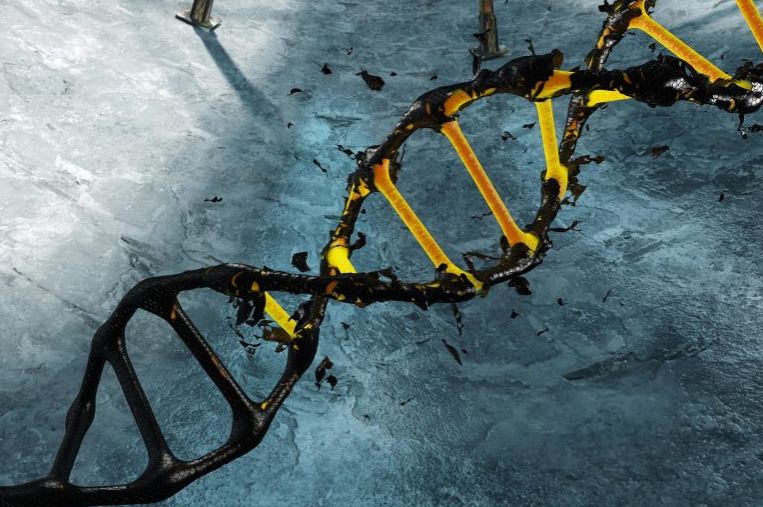
4 Mar 2022 Pfizer Vaccine Integrates Into Our DNA
Study: Pfizer mRNA Vaccine Integrates Into Our DNA | Armstrong Economics
A new Swedish lab study shows that the mRNA vaccine integrates into our DNA at the cellular level – permanently. Study abstract: "Furthermore, a recent study showed that SARS-CoV-2 RNA can be reverse-transcribed and integrated into the genome of human cells. In this study, we investigated the...
 armstrongeconomics.com
- Thread starter
- #1,328
The RGD motif, mentioned previously, is shown at 13h timepoint:
'....SC spike and rats, Rattus norvegicus....SFVIRGD.'
RGD is also shown on Quay's Twitter page.
USMB search: rgd motif
'....SC spike and rats, Rattus norvegicus....SFVIRGD.'
RGD is also shown on Quay's Twitter page.
USMB search: rgd motif
- Thread starter
- #1,330
Flutrackers, 4:04 AM, Mon 7 Nov 2022
Rupintrivir / AG7404 Inhibits SARS 1&2 Mpro
'....Mpro'
We mentioned rosuvastatin inhibition of Mpro on 7 Aug 2021:
Post #34
Rupintrivir / AG7404 Inhibits SARS 1&2 Mpro
Antiviral Res . Structure and inhibition of SARS-CoV-1 and SARS-CoV-2 main proteases by oral antiviral compound AG7404 - FluTrackers News and Information
Antiviral Res . 2022 Nov 3;105458. doi: 10.1016/j.antiviral.2022.105458. Online ahead of print. Structure and inhibition of SARS-CoV-1 and SARS-CoV-2 main proteases by oral antiviral compound AG7404 Montserrat Fàbrega-Ferrer...
flutrackers.com
We mentioned rosuvastatin inhibition of Mpro on 7 Aug 2021:
Post #34
Cholesteral drug reduces Covid
That's not what he says about them. The point is that Biden takes credit for them and then lied about not having been vaccinated before he was inaugurated. Now he wants to force everybody with exception of illegal aliens to wear masks, social distance, take the shots...or cease to participate...
www.usmessageboard.com
- Thread starter
- #1,331
Breakfast Dogs has a focus on the ADE (antibody-dependent enhancement) paper, and shows an interesting format when investigating authors, shown in red. BD apparently misses the calu-3 connection to one author, Lei He, which may be the true source Sorensen and Dalgleish ask about Baric's use of calu-3 cells. We will digress further on this ADE-calu-3 assemblage. If the reader does not yet lnow what calu-3 cells are, USMB search may help.
BD says that the article is the final paper published before the pandemic outbreak by the Wuhan Institute of Virology, New York Blood Center and the Chinese PLA. Note that BD does indeed show the use of an alias institution linking to the Chinese military.
The reader may scroll down to 6 Nov for the article, "Molecular Mechanism for Antibody-Dependent Enhancement of Coronavirus Entry"
BD says that the article is the final paper published before the pandemic outbreak by the Wuhan Institute of Virology, New York Blood Center and the Chinese PLA. Note that BD does indeed show the use of an alias institution linking to the Chinese military.
The reader may scroll down to 6 Nov for the article, "Molecular Mechanism for Antibody-Dependent Enhancement of Coronavirus Entry"
- Thread starter
- #1,333
Dr. McCullough's 9 Nov publication implicates vaccine-induced kidney damage:
9 Nov 2022
'....Glomerular kidney disease can worsen to complete kidney failure and dialysis, so the consequences are significant if there is a problem with mRNA, spike protein, and progression of disease. As shown in the table, for the double vaccinated, there was more than a two-fold increase in progression of kidney disease.'
We have already posted on glomerular connections to the RGD motif. There is an RGD motif on the spike protein of SARS-CoV-2, and no one seems to have noticed. It is located at positions 403-405. The sequence is
SFVIRGDEVRQIA.
The RGD motif likely remains in the mRNA vaccine.
9 Nov 2022
'....Glomerular kidney disease can worsen to complete kidney failure and dialysis, so the consequences are significant if there is a problem with mRNA, spike protein, and progression of disease. As shown in the table, for the double vaccinated, there was more than a two-fold increase in progression of kidney disease.'
We have already posted on glomerular connections to the RGD motif. There is an RGD motif on the spike protein of SARS-CoV-2, and no one seems to have noticed. It is located at positions 403-405. The sequence is
SFVIRGDEVRQIA.
The RGD motif likely remains in the mRNA vaccine.
- Thread starter
- #1,334
Dr. McCullough's article can be viewed at BioAnon, 9 Nov. It can be read (scrolled) without clicking on the subscribe prompt:
9 Nov
We were analyzing the RGD motif of ZC45 (Dr. Quay's Twitter page) when posting on glomerular basement membrane parameters:
28 Oct 2022 Post # 1,275
This integrin-binding/organization in glomerular basement membrane of post # 1,275 links to the RGD motif of SARS-CoV-2 (positions 403-405).
Another Chinese link is the RGD motif at positions 341-343 of the HCov-229E coronavirus spike protein.
9 Nov
We were analyzing the RGD motif of ZC45 (Dr. Quay's Twitter page) when posting on glomerular basement membrane parameters:
28 Oct 2022 Post # 1,275
COVID-19’s Biological Politics
The report in post #1,260 mentions similarity of SARS-CoV-2 to human ENaC. 2016 Israel / Human ENaC https://pubmed.ncbi.nlm.nih.gov/26772908 '....Keywords: Renin-Angiotensin-Aldosterone system.' We linked the aorta to this system in post #62 of this thread...
www.usmessageboard.com
This integrin-binding/organization in glomerular basement membrane of post # 1,275 links to the RGD motif of SARS-CoV-2 (positions 403-405).
Another Chinese link is the RGD motif at positions 341-343 of the HCov-229E coronavirus spike protein.
- Thread starter
- #1,335
The pertinent article for glomerular disease post-vaxx was from British Columbia and Ontario, posted on 4 Nov 2022:
4 Nov 2022 A Population-Based Analysis of Risk of Glomerular Disease Relapse After COVID-19 Vaccination
pubmed.ncbi.nlm.nih.gov
4 Nov 2022 A Population-Based Analysis of Risk of Glomerular Disease Relapse After COVID-19 Vaccination
A Population-Based Analysis of the Risk of Glomerular Disease Relapse after COVID-19 Vaccination - PubMed
In a population-level cohort of patients with glomerular disease, a second or third dose of COVID-19 vaccine was associated with higher relative risk but low absolute increased risk of relapse.
pubmed.ncbi.nlm.nih.gov
- Thread starter
- #1,336
More and more evidence is pointing to a cover-up:
@3h
' Fauci, his former boss Francis Collins and everyone else who attempted to squash discussion of the 'lab leak' are on the wrong side of history.'
@3h
' Fauci, his former boss Francis Collins and everyone else who attempted to squash discussion of the 'lab leak' are on the wrong side of history.'
- Thread starter
- #1,337
' "Not only does CGG CGG not occur anywhere else in the SARS2 genome, it doesn't occur anywhere in any SARS-like virus! But the CGG triplet is the preferred code used by genetic engineers to produce proteins containing arginine (R) in human cells." '
Via Emily Kopp's Twitter page, as the conference closes, EC Holmes has this to say:
 nature.com
' The chances of finding a direct ancestor "are close to nil," says Edward Holmes, evolutionary virologist at the University of Sidney in Australia. "That ship has sailed." '
nature.com
' The chances of finding a direct ancestor "are close to nil," says Edward Holmes, evolutionary virologist at the University of Sidney in Australia. "That ship has sailed." '
Via Emily Kopp's Twitter page, as the conference closes, EC Holmes has this to say:
Chances of finding COVID-virus ancestor ‘almost nil’, say virologists
Genome analysis finds SARS-CoV-2 and bat coronaviruses shared an ancestor just a few years ago, but extensive recombination has muddied the picture.
nature.com
- Thread starter
- #1,338
It should be mentioned that Edward Holmes (post #1,337) is honorary visiting professor of Fudan University, China, and his buddy and co-author, Yong-Zhen Zhang (Beijing CDC) is not far away.
Has Big Pharma Hijacked Evidence Based Medicine?
Has Big Pharma Hijacked Evidence Based Medicine?
- Thread starter
- #1,339
This report came from Stanford University in 2017:
Ap 2017 Evidence Based Medicine
pubmed.ncbi.nlm.nih.gov
Ap 2017 Evidence Based Medicine
Hijacked evidence-based medicine: stay the course and throw the pirates overboard - PubMed
The article discusses a number of criticisms that have been raised against evidence-based medicine, such as focusing on benefits and ignoring adverse events; being interested in averages and ignoring the wide variability in individual risks and responsiveness; ignoring clinician-patient...
pubmed.ncbi.nlm.nih.gov
Similar threads

- Replies
- 7
- Views
- 616

- Replies
- 17
- Views
- 396
- Replies
- 9
- Views
- 422

- Replies
- 23
- Views
- 2K

New Topics
-

-
 Dems Accuse Spencer Pratt Of Not Wanting To Destroy California
- Started by Votto
- Replies: 1
-
Democrats, which assassination, or attempted assassination, was staged or fake?
- Started by Votto
- Replies: 9
-

-
 When Trump says things like "I got the highest vote in the history of Texas"
- Started by Dante
- Replies: 25


