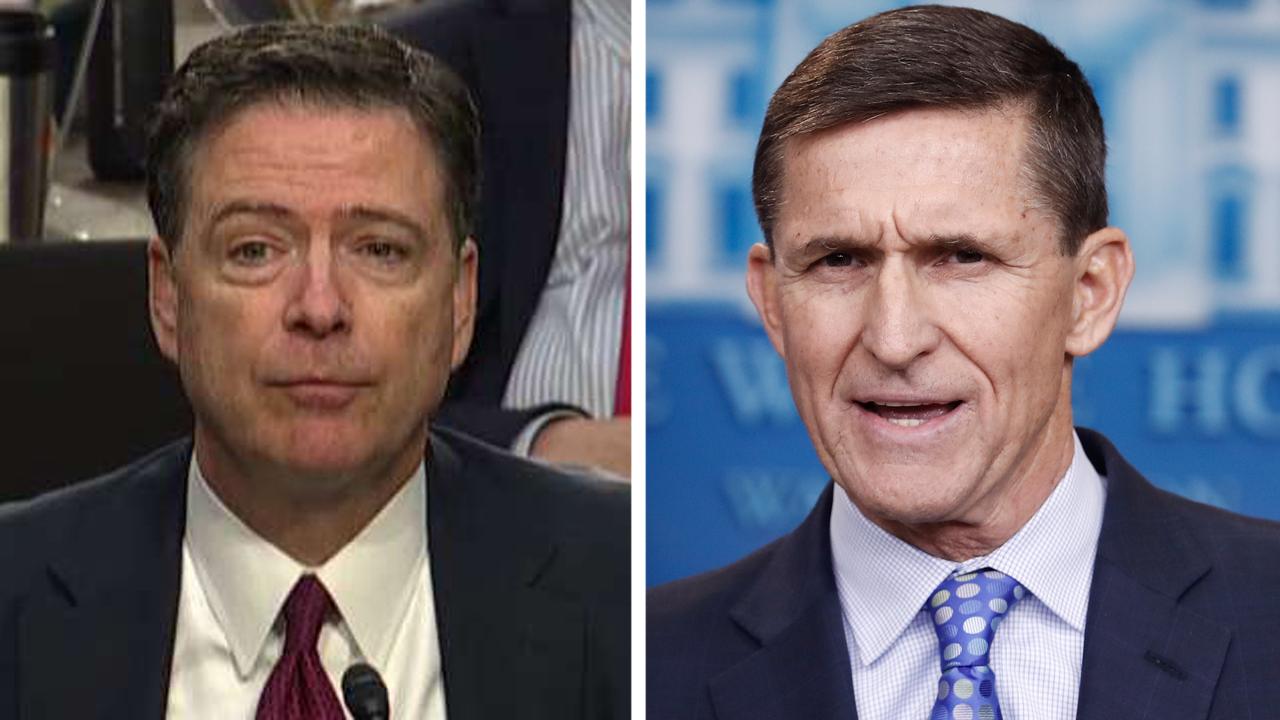
"Key to the Justice Department’s argument in its motion to dismiss is the fact that, after four months of investigation without finding any derogatory information, the FBI was prepared to close its case on Flynn. A draft internal FBI document dated Jan. 4, 2017, shows that the bureau had sketched out a memo closing the probe, though the document includes the usual caveat that if new information were identified, the FBI would consider reopening the investigation.
But before the case was actually closed, the FBI learned that Flynn had spoken to Russian Ambassador Sergey Kislyak in late December 2016. According to the Justice Department’s motion, the FBI had transcripts of the relevant calls, likely obtained through surveillance of Kislyak authorized by the Foreign Intelligence Surveillance Court. By this time, Flynn had been named as Trump’s national security adviser.
In those calls, Flynn had asked Russia not to retaliate for sanctions imposed by the Obama administration as punishment for election interference. Flynn had also asked Russia to vote against a United Nations resolution regarding Israeli settlements. On their face, these calls potentially undermined the foreign policy of the United States. What’s more, on Jan. 15, 2017, Mike Pence, then the vice president-elect, made public statements that contradicted the transcripts of Flynn’s calls— a fact that, as documented in the Mueller report, “
alarmed senior DOJ [Department of Justice] officials.” And so, the FBI decided to keep the investigation open. FBI agents interviewed Flynn on Jan. 24, four days after Trump took office. During that interview, Flynn falsely denied his statements regarding sanctions and the U.N. vote. He later pleaded guilty to one count of false statements for telling these lies."
Why the Flynn Interview Was Predicated
The Justice Department’s motion to dismiss the case against former National Security Adviser Michael Flynn is flawed in many ways, but one of its weakest arguments is that the investigation of Flynn was not properly “predicated.”
www.lawfareblog.com